The Art of Saying Nothing: What the Spider-Man Premiere Reveals About Marvel's Silence Machine
Jacob Batalon, Michael B. Jordan, Sadie Sink, and Tom Holland all showed up to the Brand New Day premiere. And collectively told the world almost nothing. That discipline is worth examining as a business asset.
The red carpet for Spider-Man: Brand New Day, held on July 28th, was a masterclass in managed chaos. Stars arrived in custom looks, memes were addressed, surprise guests materialized in branded T-shirts. And at the end of it all, Marvel Studios walked away having generated enormous coverage without surrendering a single plot point. That is not an accident. That is infrastructure.
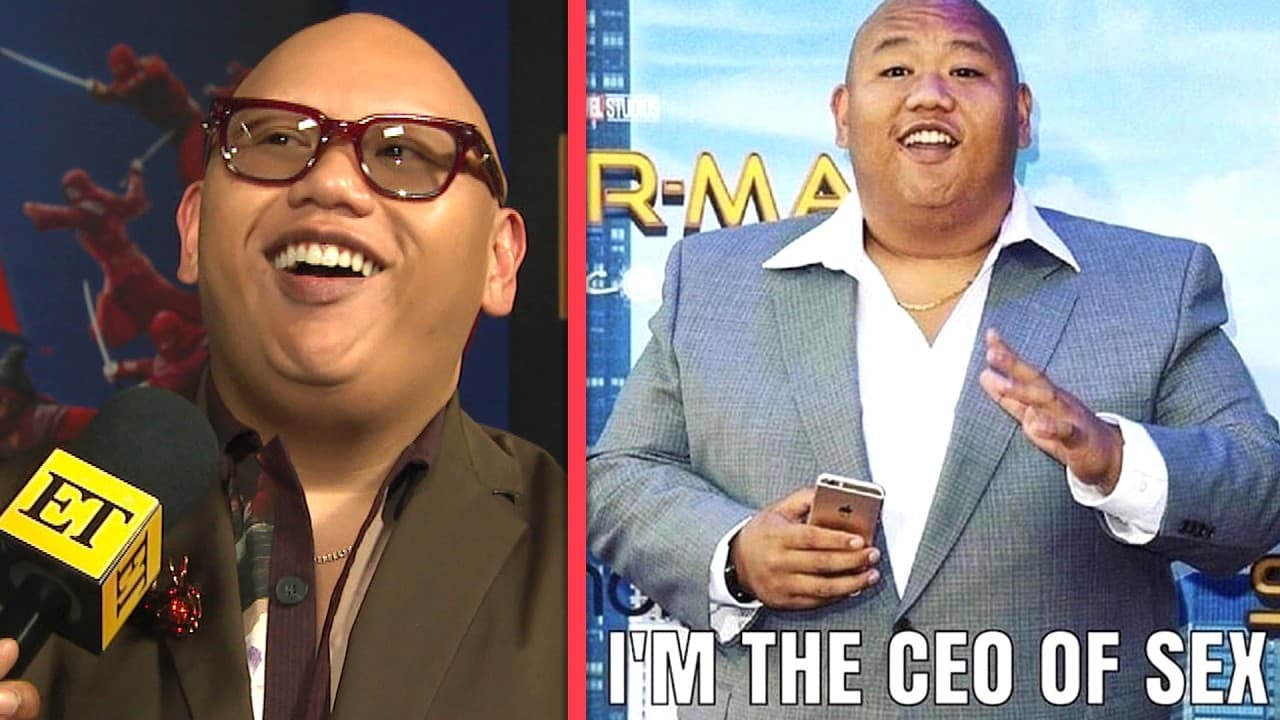
Jacob Batalon, the actor who has played Ned Leeds across three Holland-era Spider-Man films, stood at the microphone and told Entertainment Tonight with disarming good humor that he genuinely did not know what the 'CEO of Sex' meme was about. He called it flattering, batted away a follow-up, and pivoted cleanly to praising Tom Holland and Zendaya. Michael B. Jordan appeared. Unannounced, in a Spider-Man T-shirt. Praised the new Black Panther casting, confirmed he already has blisters from rehearsing Fred Astaire's dance moves, and refused to name his co-star in the biopic. Sadie Sink, whose character has been kept under wraps since before production began, smiled and said the world was 'so close' to finding out. Nobody said anything. Everybody made news.
What looks from the outside like a very fun press junket is, when you pull back the frame, a precise machine. One that turns controlled ambiguity into ticket sales, turns a meme into a humanizing moment, and turns a surprise appearance into a news cycle. The mechanics underneath deserve a closer look.
Jacob Batalon's meme moment is a calculated image reset
Batalon's self-deprecating 'CEO of Sex' response at the Brand New Day premiere served as a low-stakes, high-return image event. Transforming an awkward internet joke into a warmth signal that reminds audiences he is likable, approachable, and unbothered.
The 'CEO of Sex' meme had been circulating before the premiere, attaching itself to Batalon with the particular momentum that internet culture generates around actors who are neither A-list enough to be heavily managed nor obscure enough to be ignored. It is the kind of thing a publicist loses sleep over. Not because it is truly damaging, but because there is no clean script for it. Do you lean in? Deny it? Laugh? Get ahead of it?
Batalon's answer, as he told Entertainment Tonight on the carpet, was to claim genuine bafflement. 'I honestly don't know what it's about'. While immediately conceding that it was flattering. It was a perfect three-beat response: feigned ignorance, gracious acceptance, clean exit. The joke lands. The subject moves on. Nobody gets hurt. And crucially, nobody writes a piece about Batalon being a diva or a try-hard. He comes across as someone comfortable enough in his own skin to let the internet have its fun.
For an actor at Batalon's career tier, that kind of likability maintenance is not decorative. It is functional. Ned Leeds is a supporting role. The character's cultural staying power depends almost entirely on the audience's genuine affection for the human being playing him. A mishandled meme moment. Snide deflection, corporate non-answer, visible discomfort. Erodes exactly the asset that keeps Batalon employed in a franchise this large. The way he handled it was, in the quietest possible way, professional.
What is also worth noting is the tail end of that exchange: Batalon declaring that the meme is 'done,' that he has 'missed his opportunity.' He is closing the door himself, on his own terms, before the joke has a chance to curdle. That is not instinct. That is image awareness operating in real time.
The Marvel NDA is not just a legal document. It is a marketing strategy
Marvel's nondisclosure apparatus functions as an active publicity engine: by keeping cast members visibly unable to reveal plot details, the studio generates anticipation and press coverage simultaneously, turning secrecy itself into a form of promotion.
Both Batalon and Sadie Sink acknowledged, on camera, that they could not speak about their characters or the film's story. Batalon joked about a 'gun right behind the camera.' Sink said the world was 'so close' but held firm. Michael B. Jordan, a surprise guest with no confirmed role in the film, deflected questions about the Black Panther franchise with the practiced ease of someone who has been doing this for a decade. The NDA was mentioned, laughed about, and then immediately demonstrated. Live, in public, on a red carpet — see Quinta Brunson's Red-Carpet Ambush Reveals How Abbott Elementary Stays Culturally Alive.
This is a more sophisticated operation than it first appears — see Selena Gomez Built a Billion-Dollar Brand. Music Is Now the Side Project.. The studio does not just prohibit cast members from talking. It trains them. Through years of press cycles, through the buddy-system accountability Jordan described. To make the silence itself entertaining. When an actor says 'there's a gun right behind the camera,' they are both complying with the NDA and generating a quotable moment. The restriction and the press beat are the same event.
The strategic value here builds up across the release window. Last-night premiere screenings for fans meant that genuine audience reactions were already circulating on social media by the time the carpet interviews posted. Marvel controls the top of the funnel. The official footage, the talent appearances. While seeding the bottom of the funnel with fan-driven word of mouth. The NDA keeps the official talent from contaminating the organic conversation. It is, built that way, a two-track system.
Sink's case is the sharpest illustration. Her character has been kept entirely secret. She was cast, per the ET report, without an audition or a script, which is itself an unusual enough detail to drive a full news cycle. The secrecy around her role has, paradoxically, made her the most-discussed cast member in the film's pre-release conversation. Marvel found a way to make a 24-year-old's silence worth more than most actors' press tours. You can read more about the strategic dimensions of that particular bet in our deeper look at Sadie Sink's Marvel moment.
"The restriction and the press beat are the same event. Marvel found a way to make silence worth more than most actors' entire press tours."
Michael B. Jordan's surprise appearance is a franchise loyalty signal with real business…
Jordan's unannounced attendance at the Brand New Day premiere. In a Spider-Man T-shirt. Was a intentional visibility play that reinforces his standing within the Marvel ecosystem at the precise moment his own franchise future is being reshuffled by new Black Panther casting.
Showing up to the premiere in a branded T-shirt, conspicuously not in a suit, Jordan was signaling membership rather than competition. The move says: I am here as a fan, as family, not as a star with a rival ticket to sell. It is the kind of optics play that looks casual and is anything but.
The timing matters. David Johnson has been announced as the actor taking on the Black Panther mantle from the late Chadwick Boseman. A transition that inevitably raises questions about what happens to Erik Killmonger, the role that made Jordan a genuine movie star in 2018. Jordan's response on the carpet. 'I love it, it's amazing, I can't wait'. Was warm and unequivocal. That too is functional. It closes off a narrative about Jordan being displaced or resentful, and it keeps his relationship with Marvel visibly warm at a moment when that relationship's next chapter is undefined.
Jordan's other headline from the evening. Already dancing, already getting blisters, for the Fred Astaire biopic. Is a different kind of signal entirely. It is a reminder that his dance card is full, that he is an actor building a body of work rather than waiting on a Marvel callback. The two beats together, the franchise loyalty and the independent project heat, are almost ideally balanced for someone getting through a complex moment in a long career. Our film wealth profiles track how actors at Jordan's level manage exactly these transitions between franchise anchor and standalone prestige. The balance is rarely as clean as it looked on that carpet.
Zendaya's fashion choices are being read as narrative. And Marvel is not correcting that
Zendaya's custom black satin gown with spider-detailing and a spider motif on her heels ignited fan speculation that her character MJ may turn villainous. Speculation Marvel has neither confirmed nor denied, effectively extending the premiere's news cycle for free.
The gown was custom, the detailing was intentional, and the spider on her heel was specific enough to prompt immediate fan analysis. 'Is she the villain?' and 'This is giving Venom vibes' are not random internet noise. They are the sound of a highly engaged fanbase doing Marvel's marketing work for the studio. When fans speculate, they invest emotionally. When they invest emotionally, they buy tickets.
Fashion at this level of event is never purely aesthetic. Zendaya's stylist team has operated at the highest tier of red-carpet strategy for years. The looks are coordinated months in advance, as Tom Holland confirmed on the carpet, down to the specific heels. The idea that a spider motif on a custom shoe is accidental is not serious. Whether it is a genuine plot hint or a sophisticated piece of misdirection is almost beside the point. Either way, it works.
What is notable is what Marvel chose not to do. The studio could have quietly discouraged that level of sartorial coding. Could have dressed Zendaya in something that generated fashion coverage without generating narrative speculation. Instead, the look walked directly into the intersection of fashion press and fan theory, occupying both spaces simultaneously. The brand gets Vogue coverage and Reddit threads from the same dress. That is a return on a styling investment that most film marketing budgets could not buy outright.
It is also worth observing how much of the premiere's cultural footprint was generated by people who said essentially nothing quotable. Zendaya's carpet presence produced enormous coverage; her actual quoted remarks, at least in the footage surfaced by ET, were minimal. The outfit spoke instead. That is a form of message discipline as rigorous as any NDA.
Sadie Sink was cast without an audition. What that tells us about Marvel's talent…
Marvel casting Sadie Sink without an audition or a script signals a shift toward relationship-driven acquisition of talent. Poaching actors whose established audience and cultural cachet reduce the studio's marketing risk before a single frame is shot.
The detail, surfaced in ET's premiere coverage, is unusual enough to land: Sink was not asked to read for the role. She was offered it. That is not standard practice. Not at this budget level, not for a role that has been kept this secret. What it reveals about how Marvel now operates its talent acquisition is worth examining — see The Reverse Megxit: What Meghan's Return to Acting Reveals About the Sussex Business Model.
Sink arrived at this moment carrying the full weight of Stranger Things fandom and a performance in The Whale that demonstrated genuine range beyond genre work. She was a known quantity with a built-in audience and critical credibility. For Marvel, casting her is not a bet on an unknown. It is an acquisition. The studio is importing an established fanbase, attaching it to a project that already has its own gravitational pull, and doubling the size of the audience it can reach through organic channels on premiere night alone.
The no-audition casting practice also tells us something about the studio's confidence in its own franchise as a talent magnet. When the project is Spider-Man, you do not need to compete for actors through the traditional process. You extend an invitation, and serious actors accept it. The asymmetry of that dynamic is enormous. Sink could have said no; the fact that she said yes without even seeing a script speaks to how much franchise association is worth to an actor at the midpoint of a career still being defined.
The secrecy around her character amplifies all of this. Every fan theory about MJ's fate, every 'Venom vibes' tweet about Zendaya's dress, redirects attention toward the question of what Sink's character is and what she does. She is the variable that the audience cannot solve for, which makes her, in terms of opening-weekend curiosity, possibly the single most valuable element of the marketing campaign.
Tom Holland's Fred Astaire biopic is the most consequential news from the premiere
Holland's Fred Astaire biopic represents the most significant career pivot disclosed at the Brand New Day premiere. A franchise actor betting on a prestige biopic to expand his range and demonstrate that his value extends beyond the Spider-Man suit.
It was mentioned almost in passing. 'Already dancing. I've already got blisters on my toes'. But the Astaire biopic is, in terms of Holland's long-term career architecture, the story of the evening. Spider-Man made Holland a global star. The biopic is the project that will define whether he can hold that status without the suit.
The pattern is familiar. Franchise anchors who do not make credible bids for standalone prestige work risk being permanently identified with a single character. Beloved but limited. The actors who get through the transition best tend to do it while the franchise is still running hot, not after it has wound down. Holland, at this premiere, is still in Spider-Man mode. But the blisters are real, the dancing has started, and the message is clear: the next act is already in rehearsal.
The casting question. Who plays Ginger Rogers. Was the only secret Holland kept that did not feel Marvel-mandated. It felt genuinely personal, the kind of thing an actor guards because the choice matters to him, because the collaboration he is about to enter is one he has chosen rather than been assigned. That distinction, between franchise obligation and creative agency, is exactly what a biopic is supposed to signal. Holland appears to understand that fully.
For a sense of how the business of longevity works for actors getting through franchise fame into something more durable, it is worth reading how figures like William Shatner have managed the long arc of identity beyond a single iconic role. The mechanics differ across generations, but the core tension between franchise identity and artistic range is remarkably consistent.
Batalon's praise for Holland reveals the franchise's internal social contract
Batalon describing Holland as 'the most deserving' and praising both Holland and Zendaya as collaborative and welcoming on set is not merely polite. It signals a stable internal hierarchy that protects the franchise's public image by keeping supporting players visibly invested in the leads' success.
It would be easy to dismiss Batalon's remarks about Holland as standard carpet diplomacy. But the specificity of what he said is worth attention. He did not offer a generic compliment. He said Holland is 'a really great representative' for his fans, that he has watched Holland and his fans grow together over time, that the success is 'most deserved.' Those are the words of someone who has been inside a franchise long enough to have formed a genuine opinion, not the words of someone reading from a green-room bullet point.
That kind of public loyalty from a supporting player is worth real money to Marvel. One disgruntled supporting cast member. One interview where the subtext is 'I should be getting more'. Can generate a week of negative coverage that no marketing budget fully neutralizes. The franchise needs its Ned Leeds to want Spider-Man to win. Batalon's remarks on that carpet were, functionally, an asset protection event.
The broader social contract of a long-running franchise operates on exactly this logic. The leads get the covers, the pay, the award campaigns. The supporting players get the job security, the global recognition, the association with something that matters culturally. As long as both sides understand the arrangement. And as long as the leads are, as Batalon suggests, genuinely warm and collaborative on set. The machinery holds. The premiere was evidence that it is still holding, deep into the third Holland film.
What the premiere's total information output tells us about modern franchise marketing
The Brand New Day premiere generated a full 48-hour news cycle across fashion, memes, surprise appearances, fan theory, and casting speculation. While revealing zero plot details, a ratio that reflects the maturation of Marvel's premiere playbook into a precision-engineered media event.
Count the headlines the July 28th premiere produced without counting the ones that contained actual film information. There were none of the latter. Every story. The meme, the NDA jokes, Zendaya's gown, Jordan's T-shirt, Sink's silence, Holland's blisters. Was a story about the event, not about the film. The film remains, as of the premiere, completely unreviewed in public and completely unnarrated by its own cast.
That is a remarkable discipline to maintain across a cast of this size, with a press corps this hungry. The fact that it held. That nobody slipped, that every deflection was graceful rather than awkward. Is evidence of how thoroughly Marvel has industrialized the process. The 'buddy system' Jordan described, where cast members hold each other accountable for keeping secrets, is not a metaphor. It is an operational structure.
The business logic underneath is straightforward. Opening-weekend box office is disproportionately driven by anticipation rather than critical response, particularly for franchise films with established audiences. Every piece of genuine plot information that leaks before opening weekend potentially siphons ticket-buyers who decide they have already gotten what they came for. Silence is not just brand protection. It is revenue protection.
The latest reporting from the premiere circuit suggests that this model. Maximum event, minimum disclosure. Is now the standard playbook for tentpole releases, not a Spider-Man idiosyncrasy. But Marvel executes it at a level that other studios have not yet matched, partly because the franchise has been running long enough to train its talent in the discipline, and partly because the films have been good enough that actors are genuinely motivated to protect the experience. When the product works, the NDA enforces itself. You can track how franchise economics translate into measurable wealth for the talent involved across our full film wealth profiles. The numbers, when they are available, tend to confirm what the carpet optics already suggest.