Sadie Sink's Marvel Moment: What Her Spider-Man Silence Reveals
At the world premiere of the new Spider-Man film, a 22-year-old who learned secret-keeping on a Netflix set walked the line between revelation and restraint. And in doing so, mapped the shape of her next decade.
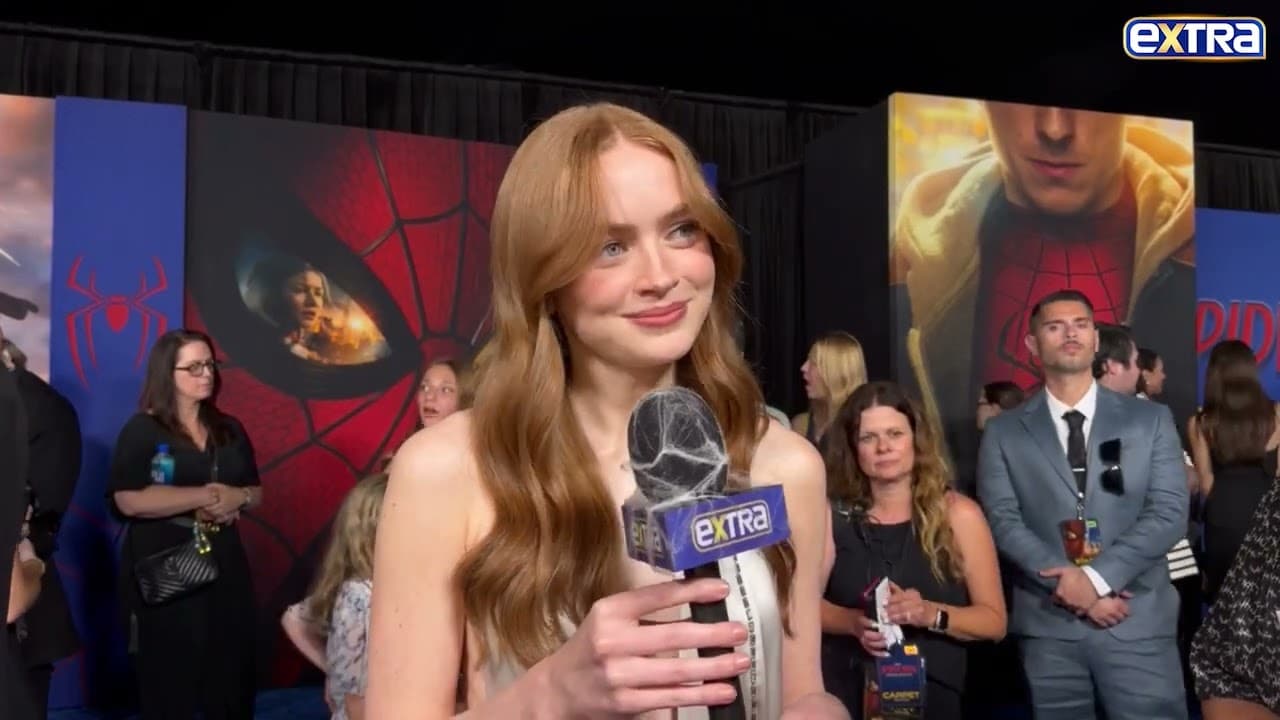
She hadn't even seen the clip. Ryan Reynolds had shown up to San Diego Comic-Con in a Jean Grey, themed Deadpool tuxedo. The kind of stunt that floods entertainment feeds within minutes. And Sadie Sink, standing at the world premiere of the new Spider-Man film, had genuinely missed it. When Extra's camera crew pulled it up on a phone in front of her, her reaction was unguarded: wide-eyed, delighted, a little incredulous. It was, briefly, the most unscripted moment in an otherwise very scripted night.
That flash of authenticity matters because the rest of the interview, conducted red-carpet-side this week, was a masterclass in what the Marvel machine asks of its new recruits: say enough to generate headlines, give away nothing that matters. Sink's character. Whose name, powers, and precise role in the film remain under embargo. Comes with rumors of mind control attached. Whether those rumors point toward Jean Grey, a legacy character now formally inside the MCU's gravitational field, or toward some other psychically gifted figure from Marvel's bench, Sink was not about to say. 'That is a good question,' she told Extra's correspondent. 'One that I don't think I can answer.'
The deflection was practiced. But the career calculation underneath it is worth unpacking, because what Sink is doing right now. Bridging a prestige TV era and a franchise era. Is one of the harder pivots in the entertainment business, and she's attempting it at an age when most actors are still figuring out which agent to trust.
Why Sadie Sink joining the MCU is a bigger deal than it looks
Sadie Sink enters the MCU at the precise moment the franchise is trying to rebuild audience trust after a string of underperforming titles, making her casting a signal of creative ambition rather than a routine fill-the-roster move.
The Marvel Cinematic Universe has had a complicated few years. Phase Four and early Phase Five produced a string of titles that, whatever their individual merits, failed to generate the cultural conversation that the Infinity Saga did almost automatically. Sony's Spider-Man corner of the Marvel map, operating under its separate licensing arrangement, has fared better. No Way Home remains one of the highest-grossing films ever made. But even that goodwill carries an expiration date. Into this environment, Marvel and Sony have placed a young actor whose cultural stock is high but whose film-franchise footprint is essentially zero.
That is not an accident. The post-Stranger Things career window. The period when a streaming-native star tries to cross into theatrical. Is one the industry watches closely, because it fails more often than it succeeds. For every Millie Bobby Brown who lands a franchise, there are actors who discover that Netflix fame and opening-weekend muscle are different currencies. Sink, at the premiere this week, is right at that crossing.
What she has going for her is specificity. She is not generically famous; she is famous for a particular kind of performance. Emotionally precise, physically committed, capable of carrying scenes that ask for silence as much as dialogue. Those are qualities a Spider-Man film with a psychically complex supporting character genuinely needs. Whether the film uses them well is the question no embargo can answer yet.
Sadie Sink's path from The Glass Castle to Marvel: the Destin Daniel Cretton connection
Sadie Sink worked with director Destin Daniel Cretton on The Glass Castle when she was 14 years old. Roughly a decade before he helmed her Marvel debut. Giving their collaboration a depth of trust that most actors only develop after years inside a franchise.
Sink mentioned it almost in passing, the way you mention something whose significance you don't need to oversell: she was 14 when she made The Glass Castle with Cretton, and the reunion on Spider-Man carried real meaning for her. 'Ten years have passed,' she told Extra, noting that she found comfort in having 'that connection' on a set as large and technically demanding as a Marvel production.
Cretton's trajectory is its own story. He directed Short Term 12, one of the most admired American indie films of the last fifteen years, before Marvel brought him in to helm Shang-Chi and the Legend of the Ten Rings. A film that arrived during the pandemic and still crossed $400 million globally, proving that a new hero with no prior MCU screen time could open. He knows how to introduce characters who carry weight without the crutch of existing audience attachment.
That expertise is directly relevant to what Sink needs from him. A first MCU appearance for a character with disputed or speculative identity. Is she Jean Grey? someone adjacent? an entirely new figure?. Requires direction that builds audience investment without over-explaining. Cretton built that, once, with Simu Liu. The fact that he and Sink have a decade of professional trust behind them suggests the performance, at minimum, will not be the film's problem.
"Every 'I can't answer that' in a premiere interview is a reminder that there is something worth protecting. The performer who holds a secret is doing promotional work just by keeping quiet."
What the Jean Grey rumors would mean for the MCU's mutant strategy
If Sadie Sink is playing Jean Grey in the new Spider-Man film, it would mark the MCU's first serious attempt to embed an X-Men legacy character into its core theatrical spine. A structural choice with franchise economics worth hundreds of millions of dollars.
Ryan Reynolds appeared at Comic-Con this past weekend in a Deadpool suit styled after Jean Grey. A flame-and-red confection that set the rumor mill spinning before the costume had been fully photographed. Reynolds, whose Deadpool persona runs entirely on knowing winks and fourth-wall destruction, was not going to confirm or deny anything useful. But the stunt did its job: it kept the question alive and in front of an audience that will be in theaters on opening weekend.
The question matters beyond casting trivia. Jean Grey is one of the five or six most recognizable characters in the X-Men canon. A figure who has been adapted twice on film (by Famke Janssen in the Fox era and by Sophie Turner in the rebooted timeline), both times with results that ranged from beloved to catastrophic. The MCU acquiring her. If that is what this is. Would signal that Kevin Feige's team is ready to stop teasing the mutant integration and start executing it at the level of the main franchise rather than in Disney+ corridors.
Sink's alleged mind-control powers track with Jean Grey's telepathy and telekinesis. They also track with a dozen other Marvel characters, which is presumably the point. The studio gets the speculation without the commitment. But the economics of a correct guess are significant: if audiences walk into this Spider-Man film, see Sink, and register 'Jean Grey is in the MCU now,' the downstream value in merchandise, sequel setup, and X-Men franchise positioning is enormous. For a closer look at how that kind of franchise IP builds up into wealth, the film wealth profiles we track tell the fuller story.
How Marvel trains actors to keep secrets. And why that skill has market value
Marvel's secrecy apparatus. NDAs, compartmentalized scripts, embargo schedules. Functions as an on-the-job training program in crisis communication that increases an actor's long-term commercial value by conditioning them to handle high-stakes information environments.
Sink described the premiere as 'a huge relief'. The moment when she could finally begin talking about what she does in the film. The phrase reveals something about the preceding months: a sustained period of social performance in which every public appearance required her to be interesting without being informative. That is genuinely hard, and most actors who haven't done it before find it uncomfortable.
Sink, of course, has done it before. Stranger Things built one of the most aggressive spoiler-suppression cultures in streaming television. Cast members have spent nearly a decade fielding questions about plot while giving nothing away that the Duffer Brothers haven't cleared. By the time she walked onto a Marvel set, the mental muscle was already there.
The market value of that muscle is real. Studios pay a premium. In casting preference if not always in immediate salary. For actors who can be trusted inside a complex production without becoming a liability in the press cycle. It is one of the reasons franchise slots tend to recirculate among a relatively small group of actors: once you've proved you can handle the information environment, you get invited back in. Sink, by all visible evidence, has passed that test.
The irony is that the secrecy itself becomes part of the marketing. Every 'I can't answer that' in a premiere interview is a reminder that there is something worth protecting. That the film contains actual surprises. In an era when trailers routinely give away third-act reversals, the performer who successfully holds a secret is doing promotional work just by keeping quiet.
Tom Holland's leadership on set and what it signals about Spider-Man's franchise culture
Sadie Sink specifically credited Tom Holland for making her feel welcome on the Spider-Man set. A small data point that, read against Holland's decade-long tenure as the MCU's most bankable young star, says something about how Sony and Marvel have built this franchise's internal culture.
When Extra asked Sink about leaning on cast members during production, she went straight to Holland: 'Tom is such an incredible leader,' she said, and the phrasing. Leader, not co-star, not friend. Was particular. It is the language you use for someone whose ownership of a set is structural, not personal. Holland has been Spider-Man since Captain America: Civil War. He has made three solo films in the role and appeared in several Avengers productions. On this set, he is not a peer; he is the institution.
That dynamic has business implications. A well-led franchise set. Where the lead actor sets a tone of professionalism and generosity. Produces better performances from supporting players, generates fewer on-set crises, and tends to earn studios the kind of post-production goodwill that makes reshoots and press tours smoother. It is not glamorous, but it is infrastructure.
Sink also mentioned J'Kierro Tillman, a new cast member, and noted the particular comfort of being in the same position as someone else. Both newcomers to the franchise, both figuring out the scale of it. That kind of bond between supporting cast members is the social glue that turns a technically proficient ensemble into something an audience can feel on screen. Whether it translates is always a question. But the conditions, by Sink's account, were right.
Sadie Sink's Marvel Mount Rushmore reveals how seriously she's studied the universe
Sadie Sink named Black Widow, the Hulk, Iron Man, and Spider-Man as her Marvel Mount Rushmore. A list weighted toward the founding Avengers rather than newer characters, suggesting a fan relationship with the source material that predates her casting.
The Marvel Mount Rushmore question is a press-circuit staple. A low-pressure way to generate a usable quote. But the answer, in this case, was genuinely telling. Sink went with Black Widow, the Hulk, Iron Man, and Spider-Man. Four of the six original Avengers. No X-Men. No newer Phase Four additions. The choices of someone who grew up watching the Infinity Saga rather than someone who has been briefed on the franchise's current direction.
That authenticity, small as it is, matters for the story the studio wants to tell. When an actor joins a franchise and immediately starts performing fandom. Citing deep-cut characters, name-dropping writers from the comics. It often reads as coached. Sink's list reads as real. She liked the movies that most people liked. She knows why audiences showed up for those characters. Now she is one of those characters, at least in this film.
The interviewer's parting observation. 'Maybe soon yourself'. And Sink's 'maybe so, we'll see' is the correct answer from someone who hasn't yet seen how the audience receives her. A more confident declaration would have been a mistake. A flat denial would have been its own kind of tell. The hedge is the right move, and it happens to be true: the question of whether Sink earns franchise permanence from this film will be settled in the opening-weekend data and the reviews, not in a red-carpet interview.
The business of bridging streaming fame and theatrical franchises. Who profits when it…
When a streaming-era star successfully crosses into theatrical franchises, the primary financial beneficiaries are the studio (expanded opening-weekend audience) and the actor's representation (renegotiated sequel deals), with the actor's own upside tied largely to backend and sequel participation rather than first-film salary.
The transition Sink is attempting has a fairly well-documented economics. Netflix fame. The kind built through Stranger Things. Is genuinely global and genuinely intense, but it does not automatically translate into theatrical opening-weekend pull. Streaming audiences are habituated to finding a show when it's convenient for them, not showing up on a specific Friday because the marketing cycle demanded it. Franchises run on the latter.
What Sink gains from this film, assuming it performs, is proof of the crossing. One good opening weekend attached to her name. Even as a supporting player in a franchise that would have opened big regardless. Gives her representation a data point for every subsequent negotiation. It changes the conversation about what films she can open, which productions she can attract, and what her quote looks like on the call sheet.
The studio's calculation runs the other way. Sony and Marvel do not need Sadie Sink to open Spider-Man. They need Spider-Man to open Sadie Sink. To place her in front of the theatrical audience that hasn't yet connected her streaming reputation to a ticket purchase. If it works, they have a new franchise asset whose sequel contract they can lock before she has full market information about her own value. That is a familiar dynamic in the business of film, and it is one of the reasons first-franchise deals for rising stars tend to look modest in retrospect.
The parallel to other career pivots in the latest reporting we've covered is instructive. Actors who enter franchises with cultural credibility but limited box-office history almost always trade some near-term upside for long-term positioning. The ones who manage it well. Who choose the right character, the right director, the right moment. End up with a decade of optionality the franchise provides. The ones who miscalculate are forgotten faster than the character they played.
What Sink's premiere composure signals about her long-term career management
Sadie Sink's red-carpet interview at the Spider-Man world premiere showed a performer who has internalized the difference between being likable and being revealing. A distinction that separates actors who build durable careers from those who peak in a single press cycle.
There is a version of this interview that goes badly. An actor who is nervous about their first major franchise appearance either overcorrects into blankness. Every answer a corporate non-answer. Or undercorrects into oversharing, giving away story details in the excitement of the moment. Sink did neither. She was warm, she was specific about her relationships (Cretton, Holland, Tillman), she expressed genuine emotion about the relief of finally being able to talk, and she revealed exactly nothing about the film's plot.
That balance is harder than it looks, and it is increasingly part of what studios and talent agencies evaluate when they think about a performer's long-term viability inside a franchise ecosystem. The press tour for a Marvel film is not a reward for good work on set; it is itself a job, and it runs for months across multiple continents and media formats. An actor who cannot carry that tour without creating problems is a liability regardless of how good the performance is.
Sink's Stranger Things training. Years of getting through the specific pressures of a show whose fan base treats every cast appearance as a potential spoiler event. Has clearly prepared her for this. You can see it in the precision of her deflections: not cold, not evasive, just redirected toward something she can actually say. That skill, more than any single role, is what gets you invited into the next room. For a fuller picture of how career capital like this builds over time, our Atlas tracks the trajectories of the industry's most valuable names.
The unguarded moment. The Ryan Reynolds tuxedo on the phone, the genuine 'Oh, that's amazing'. Was not a slip. It was the punctuation that made everything else believable. A performer who is completely controlled reads as inauthentic. One flash of real reaction, and the audience trusts the rest of the performance. Even on a red carpet, that is still a performance — see Quinta Brunson's Red-Carpet Ambush Reveals How Abbott Elementary Stays Culturally Alive. Sink, at 22, has figured that out.