William Shatner at 95: What a Life in Photos Reveals About Fame, Legacy, and the Business of Longevity
A People sit-down with his daughter Melanie is more than a nostalgia reel. It's a case study in how one man built a career architecture so durable it outlasted the show that made him famous. And what that model means for every celebrity trying to survive their own origin story.
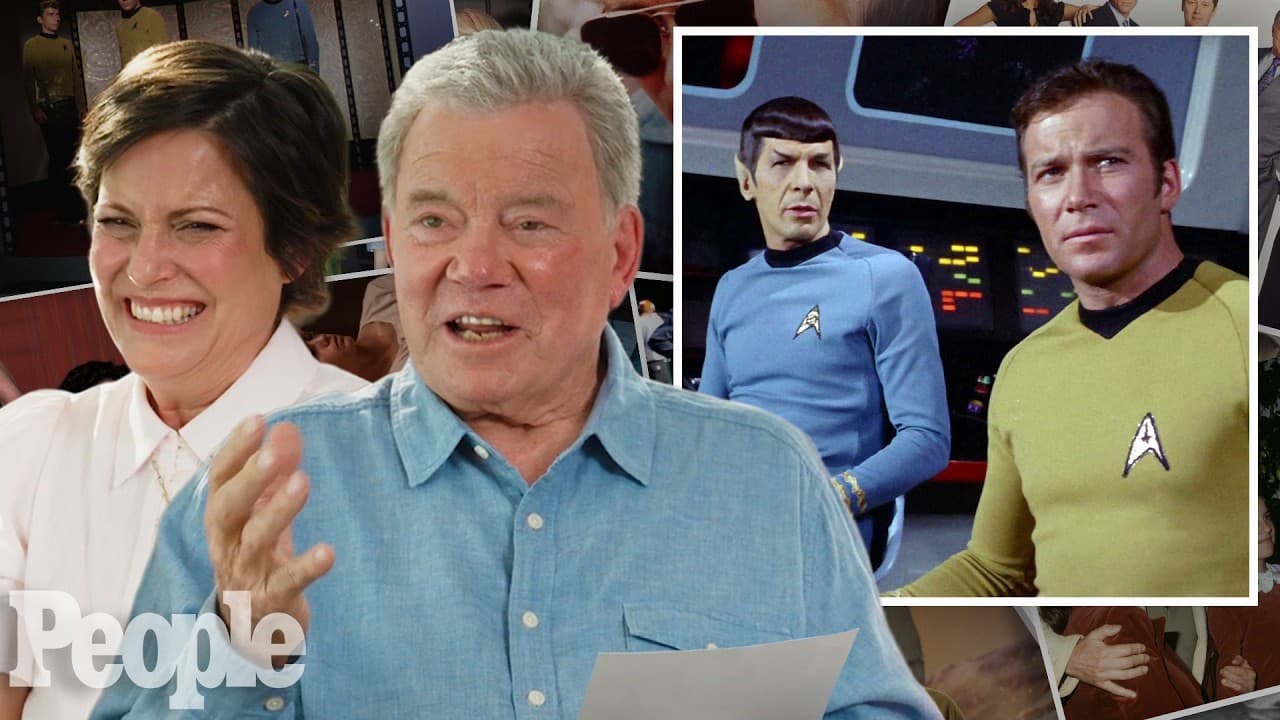
The show ran three years. It was canceled on mediocre ratings and sat off the air for six years afterward. William Shatner knew that. He said it plainly, without defensiveness, sitting beside his daughter Melanie for a photo-reaction segment with People this week. And the plainness of it was the whole point. Most actors who anchor a franchise spend the rest of their lives pretending it was inevitable. Shatner, at 95, has earned the right to describe the machinery without flattering it.
Star Trek did not rescue a failing career. It interrupted a working one. That distinction, which Shatner draws carefully in the People conversation, is the load-bearing fact of his entire professional biography. He had done Broadway. He had done live television at a time when live television required a kind of disciplined physical precision that most of his American contemporaries could not supply. He had done Twilight Zone episodes that became landmarks. He arrived on the Enterprise bridge already formed. What the show gave him was not craft. It was scale. Syndication turned three canceled seasons into a cultural monument, and the monument eventually justified films, spin-offs, and a pop-culture position that has now compounded for six decades.
The People segment, framed as a father-daughter photo retrospective, is the kind of soft-format access piece that celebrity publicists deploy when the goal is warmth over news. But inside it, Shatner keeps pulling the curtain back. On the mechanics of live TV, on the stunt craft of T.J. Hooker, on the handbrake technique he learned from stunt coordinators to slide a car at 90 miles an hour into a mark. He is constitutionally incapable of letting an anecdote sit without explaining how the trick was done. At 95, that impulse is the story.
Star Trek's ratings were mediocre. And Shatner never pretended otherwise
Star Trek: The Original Series ran for 79 episodes across three seasons before cancellation due to mediocre ratings; it spent six years off-air before syndication transformed it into a franchise worth multiple film series and decades of spin-offs.
The received mythology of Star Trek is one of instant, self-evident greatness. A visionary show killed by network philistinism, rescued by fans, vindicated by history. Shatner's version is blunter. Three years, moderate numbers, canceled, done. He went off and did 17 other projects in the gap. The resurrection came from syndication's economics, not from any single act of fan advocacy or studio rethinking. Local stations needed cheap, packaged content; Star Trek filled that slot; daily exposure built the audience that NBC's Thursday-night schedule never could.
That process. A property failing in its first commercial window and then finding its real audience in a secondary market. Was not unique to Star Trek, but the franchise became its canonical example. The economics of rebroadcast favored dense, serializable material with an internal mythology large enough to reward repeated viewing. Star Trek had that in abundance, partly because its best science-fiction writers, as Shatner notes in the People conversation, contributed the underlying stories even when staff writers handled the dialogue. The mythology ran deeper than any single episode's execution — see Miranda Lambert's Roots Run Deeper Than Any Song She's Written.
What Shatner draws from this is not resentment toward the network that canceled him or nostalgia for the show's original run. He draws something stranger and more useful: perspective on the gap between a work's initial commercial performance and its eventual cultural weight. He calls himself 'thunderstruck' that people have made life decisions based on three years of television he made in his thirties. The thunderstruck-ness reads as genuine. It is also the psychological infrastructure that allowed him to keep working without the show becoming a cage.
How Shatner's stage training gave him a structural advantage in live television
Shatner's classical stage training in Canada and his subsequent Broadway work gave him the physical mark-hitting and camera discipline that live American television demanded in the 1950s. A skill set most Hollywood-trained actors of the era simply did not have.
Live television in the 1950s was a technical problem as much as a performance problem. The cameras were enormous. 'the size of a sofa,' Shatner says, with the involuntary precision of a man who actually navigated around them. And they moved on predetermined tracks toward predetermined marks. An actor who drifted, who paused wrong, who turned upstage at the wrong moment, would blow the shot. The margin for error was near zero, and the only preparation for it was stage training, where you learned to find your light and hold your position under pressure with no safety net.
Shatner had come through the classical company in Canada, then Broadway, then the New York live television ecosystem. When the industry migrated to Los Angeles, he migrated with it. And he arrived already calibrated for the format's demands. That calibration is what got him the Twilight Zone work, which required not only technical precision but the ability to carry a half-hour of television on sheer presence, often with minimal supporting cast.
This is the career detail that the franchise narrative tends to erase. By the time Shatner took command of the Enterprise, he was not a television novice being handed his break. He was a proven live-television performer being offered his first ongoing series lead. The distinction matters for understanding why the performance held up across 79 episodes under production conditions that would have broken a less technically grounded actor.
"The franchise is not the legacy. The Sunday dinners are. At 95, with the receipts of six decades behind him, that is not a platitude. It is a conclusion."
T.J. Hooker and the stunt-craft economics of an action franchise
On T.J. Hooker, Shatner learned a handbrake car-sliding technique from stunt coordinators that let him perform high-speed driving scenes himself. A physical commitment that became a franchise trademark and extended the show's action credibility across its run.
The People segment includes a moment that reads, at first, as an older man enjoying a war story. Shatner describes approaching a mark at 90 miles an hour, left foot on the handbrake to lock the rear wheels, right foot poised on the foot brake, sending up 'blue clouds of burning tire' before hitting the mark exactly. It is delivered with a technician's precision. That precision is the point.
On T.J. Hooker, Shatner's physical performance. Doing his own high-speed driving, hanging from car hoods. Became a production trademark that the show's marketing leaned into. This is a straightforward cost-benefit calculation in television production: a lead who can perform moderate stunt work expands the range of what a director can shoot without adding the layered expense of stunt doubles, coverage angles to hide the swap, and the scheduling friction that comes with them. Shatner's willingness to learn the technique was, among other things, a contribution to the show's budget efficiency.
The handbrake detail also says something about how Shatner understands his own career. He does not describe T.J. Hooker as a lesser entry in his filmography or as a commercial project he endured between more serious work. He describes it as a physical pleasure, a craft challenge, a context in which he liked everyone he worked with and enjoyed the specific demands the role made on him. That disposition. Finding the technical problem inside the commercial project and mastering it. Is a consistent pattern across the People conversation and, by extension, across six decades of working life.
The bromance structure: why Shatner's most successful projects share a chemistry template
Across Star Trek, T.J. Hooker, and Boston Legal, Shatner's best-received work has centered on an intense male partnership. Spock, Adrian Zmed, James Spader. A dynamic his daughter Melanie identifies as a structural constant and Shatner attributes to the rhythm of two technically capable actors playing off each other.
Melanie Shatner raises this observation in the People conversation without apparent prompting: there is always a bromance. Kirk and Spock. Hooker and Romano. Denny Crane and Alan Shore. She frames it as a puzzle. 'I don't know what that is'. But the answer is embedded in Shatner's own explanation of how good on-screen partnerships work. He compares it to tennis. Two players who know what they are doing create a rhythm that neither could generate alone. The audience feels the rally.
What Melanie is actually identifying is a casting and character-design strategy that has served Shatner's producers well across multiple decades. The dynamic requires a specific kind of co-star: technically strong, comfortable with comedic deflation, willing to play the slightly cooler or more internally coherent partner to Shatner's louder, more expansive lead. Leonard Nimoy's Spock provided the restraint that made Kirk's intensity legible. James Spader on Boston Legal. A role that earned Shatner Emmy recognition. Provided the wit and the moral ambiguity that gave Denny Crane room to be both ridiculous and genuinely affecting.
From a casting-economics perspective, the template is also risk management. A strong bilateral dynamic gives the writers a reliable engine that does not depend on plot. When the case-of-the-week or the planet-of-the-week fails, the partnership can carry the episode. That structural reliability is one reason Shatner's most successful series have run long. It is not an accident that the shows Melanie lists. The ones with the bromances. Are the ones still discussed.
Melanie Shatner's cancer survival and the making of a public voice
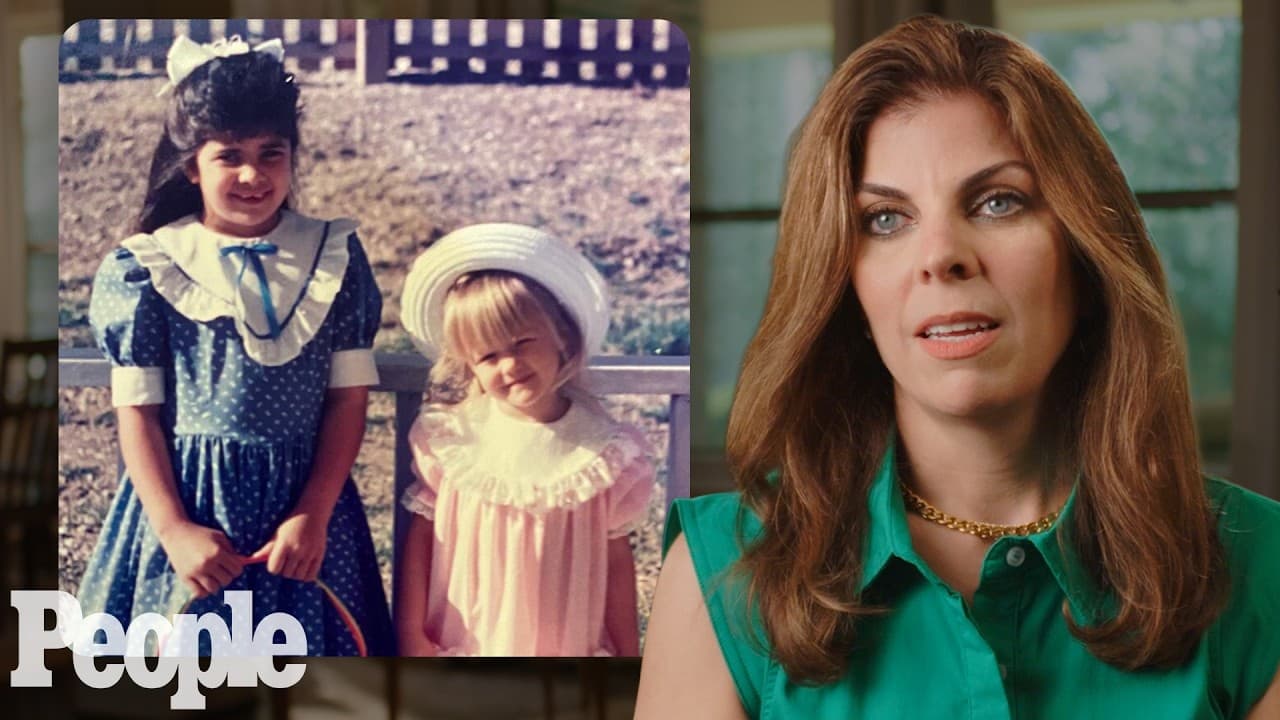
Melanie Shatner was diagnosed with stage four breast cancer in 2022, underwent chemotherapy, a double mastectomy, radiation, and a year of immunotherapy, and has since entered remission. A journey that led her to deliver a public speech at a Susan G.
The People segment does not position Melanie Shatner's cancer diagnosis as a secondary detail. It sits at the emotional center of the final act of the conversation. Stage four in 2022. The full protocol: chemo, double mastectomy, radiation, a year of immunotherapy. Remission. The Susan G. Komen walk, thousands of people in the crowd, a speech she gave without notes, without nerves she could not explain, and with what she describes as a clarity that only arrived after cancer forced her to stop treating meaningful experiences as optional.
Her father's read on it. And this is where William Shatner's specific competence applies. Is purely technical. She was not nervous, he says, because she was prepared. She knew the subject from the inside. That is his theory of performance anxiety in one sentence, and it is not a bad one. Preparation and proximity to the material are the only reliable antidotes to stage fright. Melanie had both.
What is more interesting, from the perspective of how celebrity-adjacent figures build public platforms, is the use to which she is putting the experience. She is not positioning herself as a health influencer or a patient advocate in the managed, brand-partnership sense of that term. She is describing a philosophical reorientation. Say yes to meaningful experiences, live boldly, give the message priority over self-consciousness. That reads as genuine precisely because it is grounded in a specific, verifiable ordeal. In the current landscape of celebrity wellness content, that specificity is rare and, commercially speaking, considerably more durable than the generic.
The Sunday dinner table: how Shatner maintains family capital across divorce and distance
Despite divorcing the mother of his three daughters decades ago, William Shatner has maintained a weekly Sunday family dinner that now seats approximately 15 people. A structure his daughter Melanie credits as the primary mechanism through which he has held the extended family together.
Divorce is the default disaster narrative in Hollywood parenting, and Shatner's separation from his daughters' mother could have followed that script easily. The People conversation gestures at the friction. The custody Sundays, the radio DJ mocking divorced fathers at Kiddieland, the on-air humiliation that caused Shatner to turn the car around mid-route and improvise a better plan. Africa. Hawaii. Horseback riding. La Scala for spaghetti. The refusal to accept the minimum-viable parenting template that the court calendar suggested.
That improvisational instinct appears to have compounded. The Sunday dinner table started as a divorced father's workaround. It now seats 15. Melanie describes it as a standing institution, a thing still done, a weekly structure that has absorbed spouses, grandchildren, and whoever else belongs to the family at any given moment. That kind of durable family infrastructure is, in the celebrity context, genuinely unusual. The forces that pull famous families apart. Competing schedules, geographic dispersion, the gravitational eccentricity of one member being far more famous than all the others. Tend to erode informal rituals faster than they erode formal ones.
Shatner calls himself 'the big kahuna' without apparent irony and without apparent vanity. Melanie says it affectionately: you get in line, you don't interrupt, he is the boss. The patriarch role in a celebrity family is often a fiction maintained for press. Here it reads as functional. He is, at 95, still the organizing principle of a domestic structure that he built out of the rubble of a failed marriage. That is a different kind of legacy than a franchise.
Shatner's theory of legacy. And why it rejects the monument model entirely
William Shatner argues that legacy does not exist as a durable external monument. Statues fall, gravestones get knocked over. And that the only meaningful version of legacy is accumulated acts of kindness whose effects propagate forward through the butterfly principle.
The legacy question arrives near the end of the People segment, and Shatner approaches it with the energy of a man who has been thinking about this problem for a long time and arrived at an answer he finds genuinely satisfying. He does not want statues. Statues get torn down. He does not want gravestones. Someone kicks them over. The franchise will outlive him regardless of what he thinks about it; he has already acknowledged that, with appropriate wonder, by describing himself as thunderstruck that people built their lives around three years of television he made before the moon landing.
What he proposes instead is the butterfly model of consequence: small acts of kindness whose effects propagate in ways the original actor cannot trace or predict. This is philosophically modest and practically useful, because it is the only theory of personal legacy that does not require the person in question to become a brand. It asks nothing of an estate, nothing of a licensing deal, nothing of a social media team tasked with maintaining a dead person's voice. It asks only for the behavior itself.
For the celebrity industrial complex, this is almost a subversive position. The entire machinery of film industry wealth and fame management. The foundation, the eponymous award, the authorized biography, the carefully maintained archive. Is built on the premise that legacy is something you can construct and protect. Shatner is saying it isn't. He is saying the franchise is not the legacy. The Sunday dinners are. That distinction, made at 95, with the receipts of a six-decade career behind him, is not a platitude. It is a conclusion.
What Shatner's career model tells us about franchise survival in the modern era
Shatner's career demonstrates that surviving a defining franchise requires treating it as a launchpad rather than an identity. Continuing to build in adjacent formats, maintaining technical craft, and never allowing the original property to become the ceiling of one's professional self-concept.
The trap that franchise stardom sets is seductive and nearly invisible from the inside. The franchise provides income, recognition, and a public identity that the market will reward for decades. What it takes in exchange is the actor's ability to be perceived as anything else. The ones who escape the trap. Who remain working, award-winning, culturally present across multiple generations. Tend to share one habit: they refuse to perform gratitude for the franchise at the expense of everything they were before it and everything they built after.
Shatner's version of this is almost clinical in its self-awareness. He tells the People camera that he recognizes Star Trek as 'the progenitor' and that he is grateful for it. He also notes, in the same breath, that he never lacked for work afterward, never lacked for awards, never lacked for money. The gratitude is real and circumscribed. The franchise is the origin story, not the whole story — see Jordyn Woods and Karl-Anthony Towns Got Married. And the Guest List Told the Whole Story. That distinction. Held consistently over six decades. Is what allowed him to do Twilight Zone work that holds up independently, to win Emmy attention for Boston Legal, to build a domestic life that has nothing to do with the bridge of a starship.
The commercial dimension of this model is worth naming plainly. Talent that cannot be reduced to a single property is more expensive to acquire and harder to replace. But it also generates returns across a longer time horizon. Shatner has remained a licensable, bookable, culturally relevant figure across six decades partly because he is not only Captain Kirk. He is also the guy from Twilight Zone, the guy who slid cars on handbrakes in Los Angeles, the Emmy winner, the father of a cancer survivor who gave a speech at the Komen walk. That breadth is not accidental. It is the product of a specific professional philosophy, held early and maintained stubbornly.
For a deeper look at how career longevity translates into lasting financial architecture, our full wealth tracking atlas maps the cumulative economics of entertainment careers at every stage. The Shatner model. Diversify the identity, own the craft, treat the flagship property as a foundation rather than a ceiling. Appears, in our analysis across comparable careers, to be among the most reliable routes to the kind of longevity that builds up. Not many people are still working at 95. Fewer still are still interesting.
The People format as image strategy: what a photo-reaction segment is actually doing
A celebrity photo-reaction segment with a family member serves a specific image function. Humanizing, de-commercializing, and creating emotional access points. That traditional press junkets and awards-circuit interviews built that way cannot provide.
People's photo-reaction format is a well-engineered piece of access journalism. The premise. Sit with someone and respond to pictures from their past. Creates natural disclosure. The subject is not being asked to make an argument or defend a position. They are being asked to remember. Memory produces affect, and affect produces the kind of candid, slightly unguarded material that a straight interview rarely yields. A celebrity who has given ten thousand interviews still surprises himself, and the camera, when a photograph of his baby daughter's terrified face makes him laugh for what is clearly the hundredth time.
The inclusion of Melanie Shatner as the conversation partner is the structural move that makes the segment land. She is not a journalist. She is not neutral. She is someone who remembers the same photographs from the inside. Who was, literally, in some of them. That changes the dynamic completely. Shatner cannot perform for her in the way he would perform for a stranger. She pushes back, gently: 'You never told me that — see The Sheriff Who Frames People and the FBI That Pushes Back: What Blaine Rutherford's New Drama Reveals.' She adds details he has forgotten. She names the thing he does in all his shows. The bromance. That he has apparently never articulated to himself. The result is something that reads as actual conversation rather than managed narrative.
From an image-management perspective, the timing is notable. Shatner at 95 is at an age where the public conversation around a celebrity inevitably begins to incorporate mortality, decline, and legacy. The closing-chapter framework that the press defaults to for anyone in their nineties. The People segment pre-empts that framing by being aggressively alive. He is sharp, funny, technically precise about stunt driving, emotionally present with his daughter, and constitutionally interested in how things work. The implicit argument of the piece is not 'here is a man preparing to be remembered.' It is 'here is a man still paying attention.' That is a much stronger image position, and it does not happen by accident. You can follow the latest reporting on similar celebrity image pivots as they develop across the industry.