Duncan Sheik Spent 30 Years Outrunning One Song. He Succeeded.
The "Barely Breathing" singer died at 56 with two Tony Awards and a Grammy to his name. What his arc reveals about the rarest trick in pop: escaping the hit that made you.
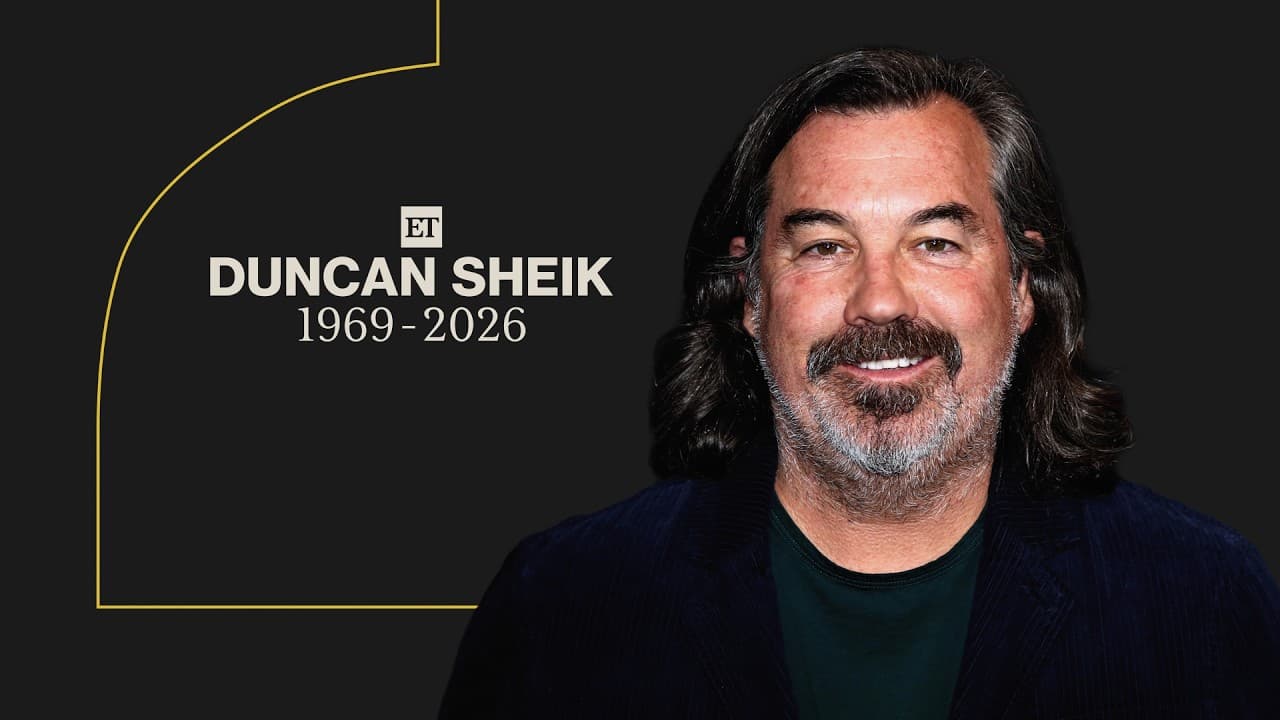
The song came out quickly. That much Duncan Sheik was always upfront about. 'Barely Breathing' was written fast, landed on radio harder than he expected, and then stayed, outlasting the album, the tour cycle, and most of his contemporaries from that particular 1996 wave of adult-alternative feeling. It became, as he put it to Entertainment Tonight across multiple conversations spanning nearly three decades, 'a double-edged sword and a cross to bear.'
He was 56 when he died Thursday night at a Manhattan hospital, surrounded by his partner Nora and their daughter Enz. His mother, Suzanne, told the New York Times the cause was organ failure. The announcement came one day after his Instagram account had informed followers he was in critical but stable condition. There was no prepared statement ready. There rarely is.
What there is, now, is a body of work that almost defies clean summary, and that is precisely the point. Sheik was a pop star who became a theater composer, a Buddhist practitioner who won eight Tony Awards for a rock musical, a reluctant heartthrob who co-created one of the most formally adventurous Broadway productions of the 2000s. The career arc is not a fall from pop grace. It is something rarer: a intentional, disciplined escape from a single defining moment, and a blueprint for how artists with genuine craft can reshape their own narrative over decades.
How 'Barely Breathing' became a hit Sheik never quite claimed
Duncan Sheik described 'Barely Breathing' as 'the most pop thing' on his 1996 debut and acknowledged it lived on radio more than he would have preferred. He saw it primarily as a commercial entry point for an album he considered artier and more personal.
Sheik's self-titled debut arrived in 1996 on Elektra Records, when adult-alternative radio was a genuine commercial ecosystem, a lane that could park a quiet, guitar-driven track for months and call it a hit. 'Barely Breathing' fit the format almost by accident. He told Entertainment Tonight it was written quickly, chosen as a radio single because it was the most immediately accessible thing on the record, and then used as the album's introduction to program directors who might have been puzzled by the rest of it.
The song peaked high enough to earn a Grammy nomination. That alone separated Sheik from dozens of contemporaries who moved similar units and then disappeared. But the nomination was also a kind of trap. When an artist's most complicated achievement, critically speaking, is a song he considered a commercial concession, the industry's memory tends to flatten everything else. Sheik spent years getting through that flatness.
His relationship with the song evolved over time. By the 2010s he had arrived at something close to affection for it, playing it live, including it on a 2020 live album, even making fun of it onstage in a way that signaled ownership rather than resentment. That shift matters analytically. Artists who fight their hits tend to lose. Artists who absorb them, and then visibly exceed them, change the frame. Sheik chose the latter path, and it took roughly a decade of theater work before the frame actually changed.
Why the Brown-to-LA trajectory shaped everything that followed
Sheik graduated from Brown University, drove cross-country to Los Angeles with a demo tape, and signed to a label in 1993, spending several years in development limbo before his debut finally released in 1996. That Ivy League foundation informed both his compositional ambition and his patience with slow-build careers.
The Brown detail is not incidental. Sheik attended the university alongside Lisa Loeb, with whom he played guitar before they each pursued separate careers. That shared starting point, two artists who met in an academic environment, split, and both surfaced on radio in the mid-1990s, says something about the particular cohort of musicians who arrived in pop with literary and compositional training already in place. Loeb had 'Stay (I Missed You).' Sheik had 'Barely Breathing.' Neither was an overnight story.
After graduation, Sheik drove to Los Angeles with a college-made demo. He signed to a label in 1993. Then came what he described as 'a slightly strange business limbo', years of development with no release date, no album, no public presence. Most artists experience that period as pure loss. Sheik reframed it as necessary. The time, he reflected later, let him develop material he would not have been ready to record otherwise. That capacity to metabolize waiting is not common in the industry, and it recurred throughout his career.
The patience showed up again in theater. Sheik spent years developing 'Spring Awakening' before it ever reached a stage. The willingness to let a project mature, to resist the pressure to deliver, traced directly back to those early limbo years in Los Angeles. The business of pop rewards speed. The business of musical theater rewards endurance. Sheik turned out to be temperamentally suited to both, just in sequence.
"He was building the escape route while the original industry was still functional, the move most artists fail to make."
What 'Spring Awakening' actually proved about Sheik's range
Spring Awakening received 11 Tony nominations and won 8, including two for Sheik for Best Original Score and Best Orchestrations. The production debuted in 2006 after roughly eight years of development, signaling Sheik's full transition from pop recording artist to major theatrical composer.
Steven Sater brought the Frank Wedekind play to Sheik sometime in the late 1990s. The source material, a German expressionist drama about adolescent sexuality and repression, written in 1891, was not an obvious vehicle for an adult-alternative singer-songwriter still associated with a mid-decade radio hit. Sheik hesitated. Then he read the play and recognized something: teen angst expressed in indie rock was not a mismatch at all. It was the only honest fit.
The production that eventually opened on Broadway in 2006 starred Jonathan Groff and Lea Michele, both then largely unknown. It broke formal rules deliberately. Sheik and Sater wanted the show to push audiences, to make them think and feel simultaneously rather than simply experience the comfortable catharsis of conventional musical theater. Eleven Tony nominations confirmed that ambition had registered. Eight wins confirmed it had landed. Two of those awards went to Sheik directly.
The Grammy came the following year, for the cast recording. That meant Sheik had now received Grammy recognition in two entirely different contexts, once for a pop single, once for a theatrical score, separated by roughly a decade. Very few careers contain that particular span. It is the kind of range that gets described as 'versatility' in obituaries, but it was actually something more structural: a genuine second act built on craft that had nothing to do with the machinery of the first.
The 'day job and night job' model and what it costs artists who run it
Sheik maintained parallel careers as a touring recording artist and a Broadway composer simultaneously for years, describing the arrangement as having 'a day job and a night job' without being certain which was which.
Dual-career structures are more common in music than the industry's star-making machinery suggests. Composers who also perform, producers who also record, session players who front their own acts, the overlap is widespread. But Sheik's particular version was unusually public-facing on both sides. He was not a behind-the-scenes composer who occasionally released solo material. He toured. He made records. He also wrote and orchestrated for Broadway at the highest level. Both identities were fully inhabited.
The financial logic is worth examining. Pop recording careers, particularly for artists whose commercial peak arrived in the mid-1990s, generate diminishing streaming revenue as catalogs age outside the algorithmic spotlight. Theater composing, by contrast, produces licensing income every time a production mounts anywhere in the world. A show like 'Spring Awakening' has had multiple revivals and international productions. That royalty stream builds up quietly over time in ways that radio play does not. Our Music wealth profiles track this pattern across dozens of careers where theater and performance income diverge sharply from pop-era expectations.
The cost, as Sheik acknowledged, was constant motion. He described living in fifty cities. He described the strange inversion of knowing which identity was primary at any given moment. That kind of sustained dual operation requires not just talent but organizational clarity, an ability to shift registers, literally and figuratively, that most artists do not develop because they never need to.
Buddhist practice as creative infrastructure, not lifestyle branding
Sheik identified as a practicing Buddhist and described his faith as initially a means to 'unlock creative energy' rather than a spiritual identity adopted for public image. That framing positioned Buddhist practice as a functional tool within his creative process, not a brand element.
The distinction Sheik drew is sharper than it sounds. Celebrity Buddhism has a long history of functioning primarily as image management, a signal of depth, contemplative seriousness, or Eastern-inflected cool that communicates something to an audience without necessarily informing the work itself. Sheik described something different. He came to Buddhist practice, he explained in his ET interview, as a way to access creative energy he could not reach otherwise. The altar in his New York apartment was functional in his account, not decorative.
That framing connects to the quietness that defined his public persona throughout his career. He described himself as a 'pretty internal person' for whom music was the only reliable form of externalization. He was self-conscious about his voice. He was nervous about public speaking even on the night he won his Tony Awards. The interiority was not performed modesty. It appeared to be structural, a genuine orientation toward inward processing that Buddhist practice systematized and amplified.
For analysts of the celebrity image economy, that coherence is notable. Artists whose public identity matches their stated private orientation tend to project a particular kind of authenticity that audiences find durable. Sheik never marketed himself as a spiritual figure. He simply mentioned the altar and moved on. Thirty years later, that restraint read as the opposite of image management, which is, of course, its own form of very effective image management.
How Sheik's arc fits the broader pattern of 1990s pop artists who rebuilt
A cohort of mid-1990s adult-alternative artists who achieved single radio hits faced the structural collapse of that format by the early 2000s. Those who survived as working artists, rather than nostalgia acts, generally did so by developing parallel craft identities in theater, film scoring, or production work.
Adult-alternative radio peaked commercially in roughly 1994 to 1999. The format built careers for artists with melodic craft and lyrical ambition who did not fit the harder edges of alternative rock or the full production values of mainstream pop. When the format contracted, squeezed by consolidation, then by digital disruption, it left an entire generation of artists without their primary commercial channel.
Some went the nostalgia-circuit route, which is economically viable but creatively terminal. Others attempted to adjust their sound toward whatever format was ascendant, which rarely worked and often damaged the authentic goodwill they had accumulated. A smaller group, and Sheik belongs here, found adjacent industries where the underlying craft transferred. The 2026 Emmys analysis noted a similar dynamic in television acting: the artists who outlast their defining moment are almost always the ones who found a second craft context before the first one closed completely.
Sheik found theater before he needed it. That timing was not accidental. The 'Spring Awakening' project began in the late 1990s, while 'Barely Breathing' was still recent enough to open label doors. He was building the escape route while the original industry was still functional. That is the move most artists fail to make, not because they lack the talent but because the urgency is not yet visible.
What his death means for the catalog, the estate, and the royalties
Upon Duncan Sheik's death, ownership of his songwriting royalties and theatrical composition rights passes to his estate, which now includes his longtime partner Nora and their daughter Enz, born in 2018.
The business reality of any working composer's death is that the catalog does not stop earning. It may accelerate, briefly, as streaming platforms and theater bookers respond to the attention a public death generates. 'Barely Breathing' will trend on streaming services this week. Productions of 'Spring Awakening' worldwide will receive renewed interest from licensing administrators. The short-term bump is real and measurable.
The longer-term picture depends on how the estate is structured and managed. Theatrical composition rights, particularly for a Tony-winning show with a proven revival history, are among the more valuable and stable assets in music publishing. Unlike a pop song that depends on algorithmic placement or sync licensing from advertising, a musical score generates income every time any theater company, school, or touring production mounts the show anywhere in the world. Sheik's work across both Broadway and international productions created a geographically distributed royalty base. You can track how these catalog structures compare across working musicians and composers on our Atlas.
Enz, born in 2018, was six at the time of her father's death. The estate planning considerations for a child beneficiary in that situation are distinct from those for an adult heir, typically involving trust structures that protect assets over a longer distribution horizon. None of that is publicly known in Sheik's case. What is known is that he left a catalog with genuine commercial depth on both its pop and theatrical sides. That is not a given for most artists. It was the product of thirty years of intentional diversification.
The lesson Sheik's career offers working artists right now
Duncan Sheik demonstrated that a single radio hit does not define a career unless the artist allows it to. He built a parallel identity in musical theater over eight years before 'Spring Awakening' opened, earning awards in both pop and theater, a diversification model increasingly relevant as streaming compresses pop-era…
The conversation around artist longevity tends to focus on reinvention, the pivot, the rebrand, the sonic shift that signals a new era. Sheik did not reinvent himself in that sense. He expanded. The pop artist and the theater composer were continuous versions of the same sensibility: introspective, melodically precise, structurally patient. The Selena Gomez analysis made a related point about artists who build adjacent identities without abandoning the original, though Gomez moved toward business while Sheik moved toward craft.
What distinguished Sheik's path was the timeline. Eight years from initial conversations with Steven Sater to opening night on Broadway. That is an extraordinary commitment of creative energy to a project with no guaranteed outcome. Working artists who read that timeline and see only sacrifice are missing the structural point: every year of that development was a year Sheik was not solely dependent on pop-era royalties for his professional identity. He was building the next platform before the current one wobbled.
For younger musicians getting through a streaming economy that pays fractions of fractions per play, the lesson is blunt. Catalog diversification is not optional strategy, it is survival infrastructure. Sheik figured that out in 1998, when the internet was still a novelty and no one was yet describing the economics in those terms. He simply had the craft and the patience to pursue a second discipline until it paid. It did. It paid eight Tonys and a Grammy and a royalty stream that will outlast the headlines this week. That is the whole point of doing the work.