Selena Gomez Built a Billion-Dollar Brand. Music Is Now the Side Project.
A People sit-down finds Gomez at 32 mapping a career pivot that most pop stars only manage in reverse, from artist to founder, and the business logic behind it is more rigorous than it first appears.
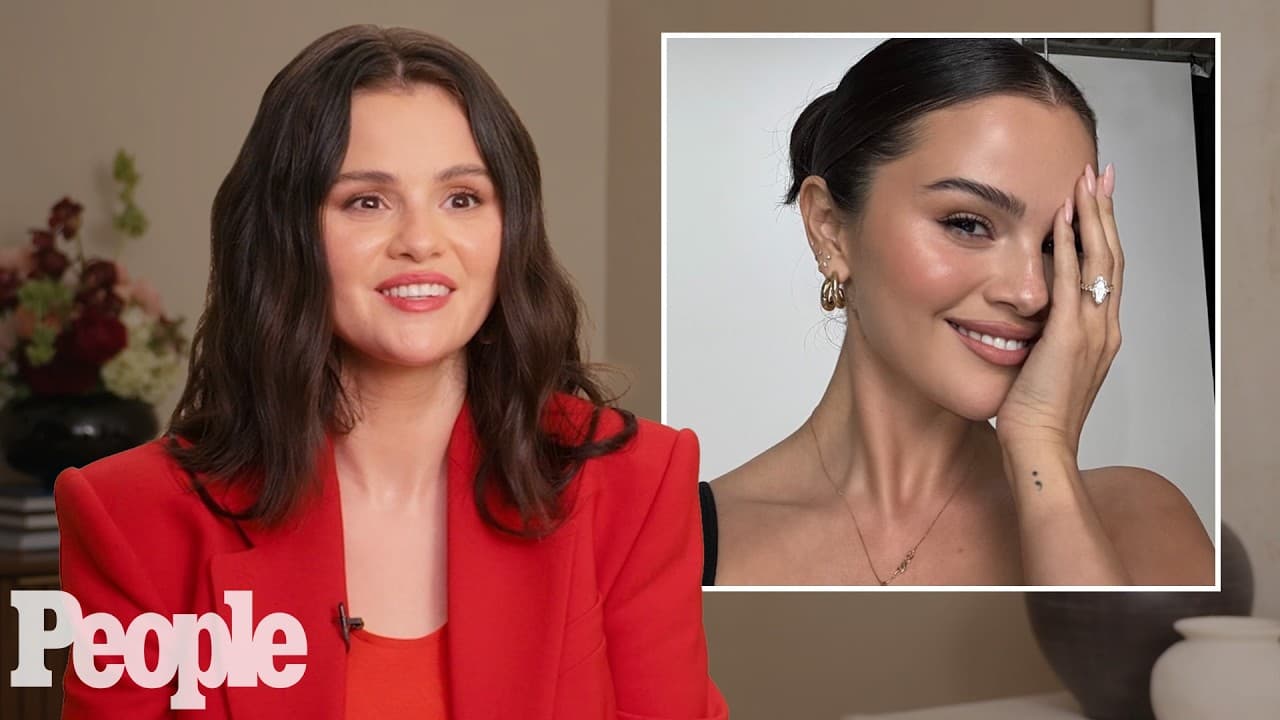
The foundation held through the crying. That is the detail Selena Gomez chose to share when describing what she wore on her wedding day, not the dress, not the venue, but whether the Rare Beauty product she helped engineer performed under pressure. It held. She sounded genuinely pleased about this, the way a founder would.
That instinct tells you something important about where Gomez sits right now. In a wide-ranging sit-down with People published this week, she covered her marriage to Benny Blanco, her intentional retreat from music, and the sixth birthday of Rare Beauty, and the piece that kept surfacing, across every topic, was ownership. Ownership of her schedule, her creative decisions, her image, and the company whose sales, by any credible external estimate, have reshaped what a celebrity beauty brand can actually be worth.
Most artists chase music first and pivot to business when the streaming numbers thin out. Gomez has inverted that sequence, on purpose, at the peak of her cultural visibility. The question is whether that inversion is a retreat or an advance. The business case for the latter is harder to argue against than her critics seem to realize.
Why Gomez stepped back from music now, not later
Selena Gomez says she pulled back from music because she needed to stop working at a pace that felt compulsory rather than joyful, and because Rare Beauty demands the kind of present, sustained focus that a recording and touring cycle actively prevents.
The framing she used in the People interview was specific. When she was younger, she told the magazine, it was ninety miles an hour and she only felt good when she was working. That read is not unusual for child performers, the hustle becomes identity, and stopping feels like disappearing. What is unusual is that she named it clearly at 32, while still commercially viable, and then acted on it.
Stepping back from music at this moment is not the same as stepping back from music when the options run dry. Gomez has use, the kind you can only spend once. She is using it to buy time and peace, not a comeback vehicle. That is a choice that costs real money in the short term. A major-label album cycle, with the streaming bonuses and touring revenue it trails, represents income that Rare Beauty does not fully replace on a per-project basis. But Rare Beauty builds up in a way an album cannot.
Benny Blanco, who is a significant producer and whose professional instincts she praised at length, reportedly offered guidance without ever taking control. She told People that she wanted him to take the wheel and he declined, insisting her decisions stay hers. Whether that reads as respectful or strategically clever probably depends on your priors. What is certain is that the album they made together gives her a creative record of the marriage without locking her into a music-first identity she has clearly outgrown.
The deeper logic is calendar math. Running a fast-growing beauty company while simultaneously maintaining a pop profile requires two full-time public personas. Gomez chose the one attached to an equity stake. That is not a sentimental choice. It is a business one.
Rare Beauty's sixth year: what the milestone actually signals
Rare Beauty turned six in September 2026, and the brand has grown from a celebrity cosmetics line into a mid-sized company with a philanthropic arm, the Rare Impact Fund, that Gomez describes as its most important output.
Six years is a meaningful threshold in the celebrity beauty space. Most celebrity-attached lines either fold or get sold by year four, once the initial earned-media wave recedes and the retail partner begins demanding performance data that pure star power cannot produce. Rare Beauty is still expanding its product range, the new foundation Gomez described in the People sit-down is her most technically considered launch yet, built around a specific application technique she observed from her makeup artist Hung. That is product development driven by craft observation, not brand extension for its own sake.
The Rare Impact Fund, which routes a portion of sales into mental health access programs, matters commercially as well as morally. Gomez is careful to distinguish between the act of donating and what she calls real evidence, meaning funded programs with measurable community reach. That distinction is not accidental. It is the language of a company that has learned how to tell a philanthropic story without letting it become a liability when the numbers get scrutinized.
The sixth-birthday framing she offered was also a neat piece of brand storytelling. Gomez noted the symmetry with Only Murders in the Building's sixth season, two projects hitting the same milestone in the same year. Coincidence, probably, but she saw it and said it, which is exactly the kind of light connective tissue that keeps a personal brand feeling cohesive rather than scattered.
For context on how the beauty-founder model has reshaped celebrity wealth more broadly, our full business wealth profiles track the structural shift happening across the sector, Gomez's arc is the clearest current example, but it is far from the only one.
"Gomez chose the pillar attached to an equity stake. That is not a sentimental choice. It is a business one."
The mental health disclosure strategy: personal or commercial
Gomez has been open about her bipolar disorder diagnosis and DBT therapy for several years, and she frames that openness as both personally necessary and directly tied to Rare Beauty's identity, a brand whose meaning depends on her credibility as someone who has actually needed the mental health services it funds.
She told People that understanding the logic behind mental health, even mid-episode, is something she keeps working on every day, grounded in DBT and ongoing therapy. That level of specificity is not typical for celebrity wellness statements, which tend to stay vague enough to be inoffensive. Gomez names the modality. She acknowledges the episodes. She describes the work as daily and incomplete.
This is not incidental candor. It is the load-bearing wall of her brand. Rare Beauty's differentiation from the rest of the prestige and masstige beauty market is not price point or shade range, though the 48-shade foundation suggests real inclusion rigor. The differentiation is the claim that the company exists because the founder needed something, access to mental health support, and used cosmetics revenue to fund it. If that backstory ever rings hollow, the philanthropic rationale crumbles.
The risk she runs is one every founder-with-a-mission faces: the story must keep evolving or it calcifies into PR. She manages this by continuing to share new dimensions, the DBT reference, the 'episode' language, the framing of growth as ongoing rather than resolved. Crucially, she stops short of claiming recovery. That restraint is probably genuine. It is also smart.
Gomez's approach to public mental health disclosure has become something of a template in celebrity culture, visible enough to be meaningful, specific enough to be credible, and bounded enough not to consume the brand. You can read about the broader image-management dynamics at play in this year's awards season cycle in our 2026 Emmys analysis, where controlled narrative was equally central.
How Benny Blanco fits the Gomez brand architecture
Benny Blanco functions in the Gomez public narrative as a grounding figure rather than a professional collaborator, a partner who happens to have music expertise but has been careful not to use it to redirect her career decisions.
The boat-to-London story she told People is worth sitting with for a moment. Blanco, apparently, took a boat to reach her while she was filming in London. She called it very romantic and equally stressful. That framing, warmth and mild exasperation in a single breath, is the signature of someone comfortable enough in a relationship to let it be complicated in public. It is also exactly the kind of anecdote that makes a celebrity marriage feel legible to an audience without revealing anything consequential.
What Gomez was clearer about is the professional dynamic. She praised Blanco's music industry knowledge, said she wanted him to take charge of decisions, and noted that he refused. He told her the choices had to be hers. This is the detail that gets underreported. Blanco has produced records for Katy Perry, Rihanna, and Ed Sheeran, among others. He knows how to steer an artist. The fact that he chose not to steer Gomez is either philosophically principled or tactically wise, or both. A wife who feels her creative identity was taken over by her husband-producer is a much harder story to live with than a wife who made her own album and loved making it.
She also said she would not necessarily make every future album with him. That quiet caveat does real work. It keeps the professional relationship optional, which keeps the personal one from becoming load-bearing for the business. If they work together again, it is a choice. If they do not, it is not a crack.
The child-star paradox: knowing everything about makeup and nothing about your face
Gomez says she was in a makeup chair at age seven and spent decades around professional cosmetics without learning to apply them herself, a gap that became the founding impulse for Rare Beauty, which is built around ease of use rather than professional technique.
The detail she shared about her own origin story is genuinely strange when you hold it up: a woman who spent her entire childhood and adolescence in professional makeup chairs, surrounded by artists and product, who nonetheless wanted to post YouTube tutorials with her friends because she was still figuring it out. The industry was always happening to her, not with her. She was the subject, not the student.
This is a more interesting founding story than the standard 'I couldn't find a product that worked for me' narrative that structures most celebrity beauty launches. Gomez's version is about reclaiming expertise over your own face, a face that had been managed by other people since she was seven years old. The brand's emphasis on ease of use and products that are, in her words, not complicated tracks directly back to that experience.
It also explains why inclusivity is not a marketing afterthought for Rare Beauty. The 48-shade foundation range, the accessible price points relative to prestige beauty, the tutorials in her own voice, these are the choices of someone who felt excluded from knowledge about her own appearance for a very long time. That personal history gives the brand a coherence that purely market-researched inclusion pledges tend to lack.
Her 13-year-old sister became the clearest distillation of the brand's intended message: try everything you want, but you do not need any of it to be beautiful. That is a surprisingly honest thing for a cosmetics company to say. Whether the honesty scales or eventually creates a tension with the growth targets is the more interesting long-term question.
Aging as brand strategy: why Gomez is leaning in rather than deflecting
Selena Gomez says she genuinely enjoys getting older and is untroubled by physical change, a position that, combined with her beauty company's messaging, functions as a differentiated brand stance in an industry built on anti-aging anxiety.
She told People she has no fear of aging. Things will sag. She will be alive. The casualness of that framing is partly temperament and partly, she credits her Only Murders co-stars, she name-checks Meryl Streep specifically, for demonstrating that older decades look good from the inside. She joked that she asks Streep acting questions as though consulting a ghost. She got genuine mentorship in return.
The commercial implications of this stance are not small. Rare Beauty operates in a market where a significant portion of advertising spend, across all players, is tied to the promise of looking younger. Gomez is the face of a brand that refuses that promise. She doubles down on the refusal each time she says she loves aging, each time she declines to mourn the 2016 version of herself that fans keep trying to resurrect.
She addressed that nostalgia directly with People, the fans who want to freeze her at a specific moment, who respond to throwback photos with an intensity she finds slightly bewildering. Her read is that the hectic period was more interesting to watch from outside. From inside, she says, it was just hectic. That boundary, between what makes good spectator content and what makes a livable life, is one she has clearly decided to hold.
For a beauty brand, an founder who models ease with physical change is either a liability or a long-term asset. The bet Gomez is making is that the next generation of beauty consumers is more sophisticated about that messaging than the current market assumes. Given that her audience skews younger, it is not an unreasonable bet. You can track how this plays against other celebrity wealth trajectories across our full Atlas.
Only Murders season six: the acting career as the third pillar
Only Murders in the Building's sixth season, which Gomez finished filming shortly before the People interview, represents the acting side of a three-part career structure that now includes beauty and music, with beauty first, acting second, and music third by her own stated priorities.
She said filming the new season was hard work but that she was with family, meaning the cast. The Streep anecdote is the richest piece of this section. Gomez describes watching Streep knit between scenes, laughing, never entirely off. She uses the word 'goat' without irony. What she is describing is what access to a 40-year career looks like from the middle of a 20-year one. It recalibrates the timeline.
The acting work matters to the overall Gomez business for a reason that gets obscured by the beauty headlines: it keeps her culturally present in a way that music, without touring, currently cannot. A successful streaming drama reaches people who do not follow pop charts and do not buy lipstick. It also reaches the Academy members and guild voters whose opinions eventually determine whether the career gets taken seriously in the way she clearly wants.
Only Murders is also, structurally, a very good vehicle for someone managing a public mental health narrative. The show is gentle, comedic, and warm. It does not demand that Gomez embody darkness or trauma for the camera. It asks her to be curious and a little self-deprecating, which appears to map fairly naturally onto who she actually is at 32.
The three-pillar arrangement, beauty company, prestige streaming drama, occasional music, is not an accident. It is the most diversified version of a celebrity career that exists in the current market. Each pillar has a different audience, a different revenue model, and a different kind of shelf life. Music fades fastest. A beauty company, if it reaches institutional scale, can outlast the founder's fame. Acting occupies the long middle. See how comparable multi-platform careers have been valued in our film wealth profiles.
What the Rare Impact Fund tells us about celebrity philanthropy's next phase
The Rare Impact Fund directs a portion of Rare Beauty's sales toward mental health access, and Gomez distinguishes between passive donation and active program-building, a distinction that reflects how celebrity philanthropic arms are evolving to meet higher public scrutiny.
She made a point of separating the act of donating from the evidence of impact. It is nice to donate, she told People, but real evidence of community work is what makes her proudest. That word, real, is doing precise work. It signals awareness that celebrity giving faces a credibility deficit. The question audiences now ask is not 'how much did you give?' but 'what did it produce?'
The Rare Impact Fund's focus on mental health access ties the philanthropy back to the brand's founding logic in a way that prevents it from feeling bolted on. A beauty company that donates to, say, ocean conservation is doing something admirable but structurally arbitrary. A beauty company whose founder has publicly navigated mental illness, and whose brand identity is built partly on that navigation, funding mental health programs, that is a coherent story. It holds under scrutiny in a way that scatter-shot celebrity giving rarely does.
Gomez also mentioned that the fund is actively looking for new partners and ideas in the mental health space. That language, 'looking for new people to start ideas with', suggests a program that has moved past the startup phase into something more like an institution. Institutions attract different kinds of attention: regulatory, journalistic, and competitive. How Rare Beauty manages that growth in the fund's next phase will be worth watching, especially as other beauty brands race to build comparable philanthropic infrastructure.
The broader shift here is toward what might be called proof-of-impact philanthropy, where celebrity funds are expected to report outcomes, not just intentions. Gomez's framing suggests she understands the assignment, and that Rare Beauty's marketing team understands it too. The fund is not an afterthought. It is, in her own ranking, the thing she is most proud of. That tells you everything about which part of the business she thinks will still matter in twenty years.