Miranda Lambert's Roots Run Deeper Than Any Song She's Written
A People interview with Lauren Combs reveals that the Lambert family's role in country music's most beloved origin story is not metaphor, it's a child-recovery operation that began the night a seven-year-old was taken to Jordan.
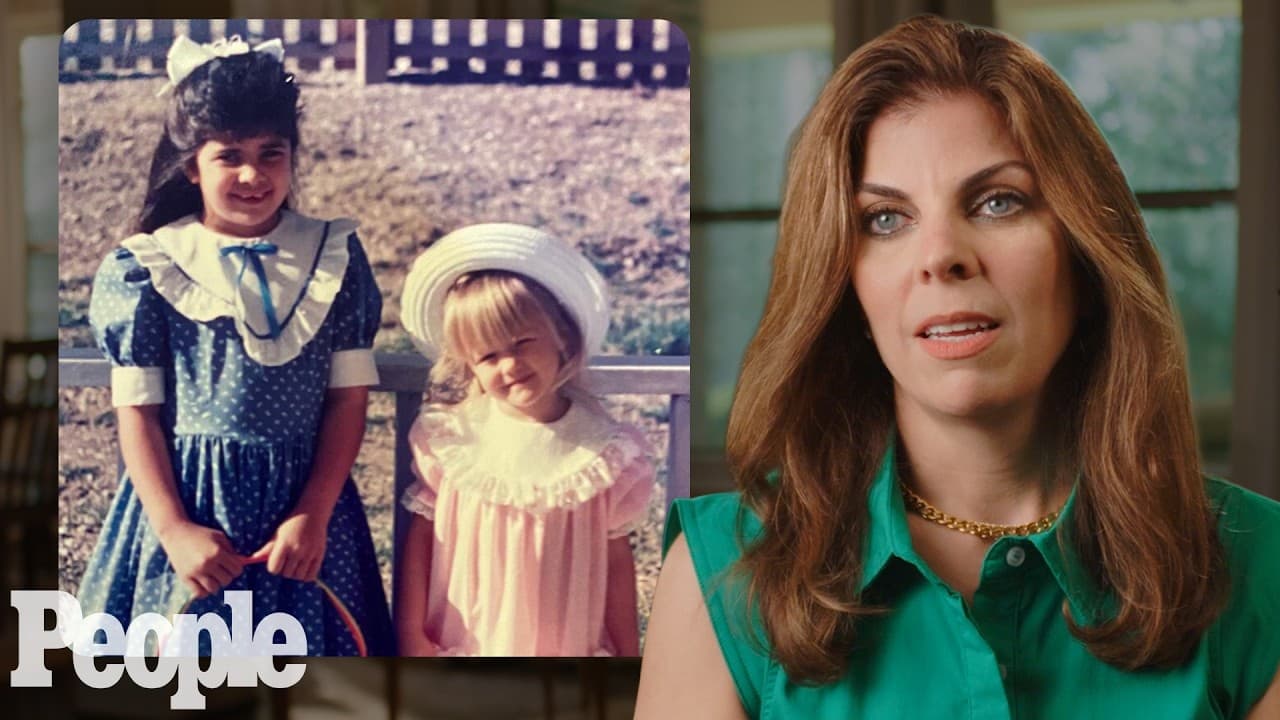
The house that built Miranda Lambert has always been the framing device, a small Texas farmhouse, a father in law enforcement, a mother who answered phones and kept records, a childhood that country radio turned into mythology. The song is thirty seconds of chorus and a lifetime of implication. But the actual story of what happened inside that house and around it, the story that gives the mythology its weight, belongs to someone else entirely.
Lauren Combs was seven years old in the fall of 1987 when her father, in a car she expected to be full of siblings and stepmother for Halloween trick-or-treating, told her they were going to the airport instead. He took her to Gash, Jordan, a small town where he was from, and didn't bring her back. Her mother, Melissa, spent $80,000 she didn't have, hired former Green Berets, flew to the Middle East in disguise, and pulled her daughter off a school bus. The Lambert family, Beverly, Rick, and a four-year-old Miranda, moved into Melissa's home the night Lauren disappeared and didn't leave until the mission was finished.
In a new sit-down with People published this week, Combs and her mother told the full story on camera for the first time in a way that makes the cultural stakes plain. This is not a celebrity adjacency story. It is a story about what the Lamberts actually were before Miranda Lambert became a brand, and what that backstory does, quietly and powerfully, to the image of one of country music's most carefully constructed careers.
What actually happened when Lauren was taken to Jordan
In October 1987, Lauren Combs's father told her they were going trick-or-treating, then drove her to a Dallas airport and flew her to Gash, Jordan, where she was enrolled in school, prevented from contacting her mother, and held for months before a private rescue operation extracted her.
The mechanics of the abduction were mundane in the way that makes them most chilling. Lauren's parents had divorced when she was six weeks old. Her mother, Melissa, held full custody but had an open-door policy on visitation, there were, as Melissa recalled, no warning signs, no red flags. Her father asked for the Halloween weekend. Melissa said yes.
What Lauren found when she got in the car was not the expected scene: no stepmother, no siblings, just her father and a suitcase she had packed for a weekend. He told her the plan in the car on the way to the airport, framing it as adventure, Jordan, his family, a big surprise. Her questions, Mom didn't mention this, she said I'd be at school Monday, were met with a kind of emotional coercion that she would only understand fully as an adult: he made his hurt visible until she stopped asking.
Jordan at seven meant a hole in the floor for a bathroom, a language she barely spoke, a cultural dress code imposed overnight, and a father who was, as she put it, simply a different person. The loving Dallas dad had been replaced by someone distant and cold, not cruel, but unreachable. She cried at night, hid her feelings, and waited. Months passed. School started. She understood, slowly, that this was not a vacation.
The controlled phone call Melissa was eventually permitted, scripted by the father, monitored in real time, every word of Lauren's coached in advance, produced a cassette tape that survived decades. When Lauren heard it as an adult, she did not recognize her own voice. The accent had already shifted. The emotional flatness was complete. The little girl on the tape was performing safety for a mother she desperately missed, under the direct supervision of the man who had taken her.
How Melissa mounted a private rescue with no government help
The U.S. State Department told Melissa Combs there was no extradition treaty with Jordan covering the case, leaving her to self-fund a covert extraction using former Special Forces operatives, a mission that cost $80,000 in 1987 dollars.
Melissa's first call after confirming the flight, Royal Jordanian Airlines confirmed her ex-husband and daughter were on a plane to Amman with less than an hour before landing, was to every official channel available. The State Department's answer was clean and devastating: no extradition treaty, no legal mechanism, no government extraction. She filed with a grand jury anyway, mostly because she had run out of other options.
The foreman of that grand jury turned out to be the hinge point. He was a former Texas Ranger, a retired general named Al Zapont, and after hearing Melissa's testimony he offered her his card. He knew people, he said, not the mercenary-magazine variety, but former special forces, green berets, men with records and reputations. They flew to Dallas, met Melissa at a hotel, studied every photograph and document she could produce, and flew to Jordan.
One operative spent more than a month on the ground without getting eyes on Lauren. The breakthrough came when a second man spotted a girl at a school bus stop whose eyes matched Melissa's. He didn't confirm the identification until Melissa herself flew over, disguised with a headscarf and without sunglasses because her light eyes might give her away. The moment of confirmation, Melissa on foot outside a farmhouse on the outskirts of town, the school bus rolling past, Lauren in her usual seat, lasted seconds.
The extraction from the bus was not clean. The escort chaperon grabbed Melissa. Melissa hit her between the eyes, bloodied her nose, grabbed her daughter, and ran. The operatives dealt with the bus driver and the ignition. Lauren described going into shock, she saw her mother at the window and thought she was dreaming, because her mother was in Dallas and this woman had her mother's eyes. The Israeli flag on a bridge marked the border. That was when both of them understood it was over.
"The Lambert family's mythology has always been about roots. The People interview reveals the roots go all the way down to a child-recovery operation in 1987 Jordan."
What the Lambert family's role actually was
Beverly and Rick Lambert, Miranda's parents, were Melissa Combs's closest friends and moved into her home the night Lauren disappeared, working their law-enforcement and private-investigation contacts around the clock for months to help plan and support the rescue operation.
Rick Lambert was a police officer. Beverly and Rick had also started a private investigation company. When Melissa realized Lauren was gone, one of her first calls was a 911 page to Rick. The Lamberts didn't send a casserole. They packed up and moved in, Miranda included, all of four years old, and stayed.
Their value was operational as well as emotional. Rick installed a recording device on the phone so that every call to Jordan, every call to the State Department, could be reviewed later for clues. He knew the emotional volatility of a mother in crisis would cause her to miss things on first listen. The cassette tapes that survived into Lauren's adulthood, the ones that allowed her to hear her own seven-year-old voice performing safety in an Arabic accent, exist because Rick Lambert was thinking like an investigator when everyone else was barely thinking at all.
The family connection ran deeper than friendship. Melissa had worked for Beverly's mother, Wanda, while pregnant with Lauren. When Melissa went into labor, her ex-husband was absent; it was Wanda and Beverly's brother Stan who drove her to the airport. The Lamberts were not peripheral figures who showed up for the drama. They had been present at the beginning of Lauren's life, and they showed up again when that life was threatened.
After the rescue, the relationship continued. Lauren lived with the Lambert family for a full year during high school, in the farmhouse, the literal 'house that built me' that Miranda later turned into one of country music's most enduring images. Rick Lambert walked Lauren across a football field as homecoming sweetheart. She wrote him Father's Day cards every year. Miranda and her brother Luke, she said, were always willing to share their father. That is the texture underneath the myth.
What Miranda Lambert's 'The House That Built Me' means now
Miranda Lambert's 2010 hit 'The House That Built Me,' which drew on the imagery of her childhood home and her father's steadiness, carries new biographical weight knowing that home was also a refuge for a kidnapping survivor and that Rick Lambert's role as a surrogate father extended well beyond his own children.
The song won the Country Music Association Award for Song of the Year in 2010 and remains the emotional centerpiece of Lambert's catalog, the piece of work that most directly equated her commercial persona with an authentic rural Texas upbringing. It worked because it felt specific. Listeners could hear that the house was real.
What the People interview adds is not a contradiction of the song's emotional truth, but a deepening of it. The house was also the place where a traumatized teenager began to heal from a cross-border abduction. The father who anchored that domestic image was the same man who had installed wiretap equipment on a phone line to help recover a kidnapped child. The rootedness that Lambert sells, and that the country music industry has rewarded her richly for, was built partly on an act of sustained, serious, extralegal bravery by her parents on behalf of someone else's daughter.
This is the kind of biographical depth that image teams usually spend years trying to manufacture. Lambert's team never had to manufacture it. It was simply there, untold, in the family archive, cassette tapes and all. The question worth asking is why it is being told now, and to whom the telling benefits most.
Why this story surfaces in 2026 and what it does for Lambert's brand
Lauren Combs's People interview arrives as Miranda Lambert navigates a mid-career phase where authenticity is her primary differentiator in a crowded country landscape, and a story this specific, this verifiable, and this emotionally resonant is exactly what that brand needs.
Lambert has never been the pop-crossover artist. She built her position on the opposite premise: unvarnished, Texas-rooted, resistant to the Nashville polish machine. That positioning has served her through a divorce from Blake Shelton that generated enormous tabloid coverage, a second marriage, and several albums of varying commercial performance. The brand stays coherent because the biographical raw material is so strong.
But mid-career is a dangerous place for a country artist whose identity is tethered to a specific set of origins. The origins have to keep paying emotional dividends, and the audience has to keep believing them. A story like Lauren's, independently verifiable, not laundered through a PR office, told by a woman who has her own life and her own reasons for speaking, functions as something money can't buy: third-party authentication of the mythology.
Lambert herself is not the central figure in the People piece. That is worth noting. Combs and her mother are the subjects. Lambert appears as context, as a child in the background of someone else's crisis. That structural distance is what makes the story credible. It is not Miranda Lambert saying 'my family is good people.' It is someone who lived inside the Lambert home for a year saying her life would have been fundamentally different without them.
For anyone tracking the latest reporting on how country's legacy artists are managing longevity in the streaming era, this is a case study in soft-power brand maintenance. No album cycle, no press junket, no branded content deal required. Just a friend's daughter, finally ready to tell the whole story on camera.
The economics of survival: what $80,000 in 1987 actually meant
Melissa Combs spent $80,000 in 1987 to fund the private extraction of her daughter from Jordan, a sum equivalent to roughly $215,000 in 2026 dollars, with no legal recourse, no government support, and no guarantee of success.
Eighty thousand 1987 dollars is not a figure that lands lightly. Adjusted for inflation, it sits somewhere north of $200,000, and it was spent by a single mother with, by her own account, nothing. The family had to change their last names after the rescue. They moved fourteen times before Lauren finished high school. The financial aftermath of the operation was, in practical terms, a second crisis layered on top of the first.
The operatives were not cheap, and they were not fast. One man was in Jordan for more than a month before the mission succeeded. Melissa flew over herself, adding her own travel and risk to the ledger. Every dollar went toward finding a child in a country where the U.S. government had formally declined to help.
What the $80,000 figure reveals about the broader landscape of international parental abduction is ugly and worth stating plainly. In 1987, the Hague Convention on the Civil Aspects of International Child Abduction had just come into force, 1983 for early signatories, but Jordan was not a signatory, and the practical enforcement mechanisms were thin even for countries that were. Melissa Combs's experience was not unusual in its contours. What was unusual was her access, through the grand jury foreman, to people who could actually help. Most parents in her position had nothing.
Lauren grew up to marry well, raise two sons, and build what she describes as a full life. The statistics for children returned from international abduction, particularly those held for extended periods, are not uniformly encouraging, emotional fractures, disrupted attachment, complex grief. That Lauren describes her outcome in terms of faith and gratitude rather than damage is, she makes clear, the result of exactly the kind of surrogate-family scaffolding the Lamberts provided. The economics of the rescue were devastating. The returns, measured in a human life, are incalculable.
What Beverly and Rick Lambert's private investigation work tells us about the family's…
Beverly and Rick Lambert ran a private investigation firm alongside Rick's law-enforcement career, giving them the professional infrastructure, contacts, recording equipment, investigative methodology, that made their help in Melissa Combs's crisis operationally valuable rather than merely emotional.
Country music biographies tend to flatten their subjects' parents into archetypes: the hardworking father, the sturdy mother, the wholesome rural household. The Lambert family has always fit that archetype almost too neatly. What the Combs interview restores is professional specificity. Rick Lambert was not just a good man with a badge. He was a trained investigator running a private firm. Beverly was his partner in that business.
That combination, law-enforcement authority, investigative methodology, and a personal stake in the outcome, is what made the Lamberts useful in a crisis that had already defeated official channels. Rick knew how to record phone calls legally. He knew how to listen to them analytically. He knew that a panicked mother would miss things that a trained ear would catch. These are not instincts that come from being a nice neighbor. They are professional skills.
For Miranda Lambert's public image, the parental biography has always been a source of credibility, the idea that her values were taught, not performed, by people who actually lived them. The specificity revealed in the People piece makes that claim concrete in a way that no press release could. Her parents did not just believe in community and loyalty. They demonstrated it under pressure, at cost, for months, in a foreign country where the U.S. government had declined to follow.
That kind of biographical depth is what separates durable celebrity from the more fragile kind, the sort that depends on continued novelty or managed narrative. Lambert's brand has survived because the foundation is real. Anyone writing about music wealth profiles and the long tail of a country career would do well to look at what sits underneath the catalog. In Lambert's case, what sits underneath is this.
Lauren Combs confronts her father: what the Halloween doorstep scene reveals about…
When Lauren Combs's father appeared unannounced at her family home on a Halloween, the anniversary of her abduction, she confronted him directly for the first time, telling him the precise cost of what he had done; his stunned response that he had no idea devastated her more than his absence had.
The Halloween reappearance had its own terrible symmetry: the same holiday, a glass door in a house deep in the country, a paralyzed teenager recognizing a face she had not seen in years. Her mother told her it was time. She opened the door, sat him down, and named every specific thing he had taken: her mother, her country, her language, her food, her friends, her childhood, the relationship between father and daughter that would never recover.
His response, stunned silence, then an admission that he had no idea, was more destabilizing than anger would have been. Anger would have given her something to push against. Incomprehension meant that the damage she had been carrying, cataloging, grieving on a specific date every year, had not registered for him at the same scale. The asymmetry of trauma is one of its cruelest features, and she articulated it with the precision of someone who has had decades to think about what that moment meant.
The arc from that confrontation to where Lauren Combs is now, married, two sons, a faith practice, a husband she describes as the answer to prayers she wrote in journals as a child, is the kind of resolution that a trauma narrative needs to be told safely. She is not speaking from inside the wound. She is speaking from a distance sufficient to see its shape clearly.
For anyone thinking about what stories like this one do in the celebrity economy, and it is worth thinking about, because image machinery this resonant rarely operates by accident, the answer is that they humanize the peripheral figures in a major star's story while asking nothing of the star herself. Miranda Lambert did not give this interview. Her parents did not give this interview. Lauren Combs gave it. And the collateral benefit to the Lambert brand is pure, unearned, and exactly what decades of genuine human decency actually look like when it finally surfaces.
What the story reveals about celebrity adjacency and the value of authentic biography
The Combs interview illustrates how a celebrity's brand equity can be deepened not by the celebrity but by independently credible witnesses to formative events, a dynamic that is more powerful and more durable than any managed press narrative.
There is an entire industry built around manufacturing the impression that a famous person's values are authentic. Crisis PR, brand consultants, carefully staged candid photographs, ghost-written memoirs, the apparatus is expensive and its results are often thin. The Combs interview is what it looks like when no apparatus is required.
Lauren Combs has her own life. She is not a celebrity. She has no management team, no album to promote, no tour announcement to time a story to. When she sits down with People and spends forty-plus minutes reconstructing a childhood trauma and its aftermath, she is doing it because the story is hers and she has decided to tell it. That independence is the entire source of its value to everyone it touches, including Miranda Lambert.
Compare this to the more typical mode of celebrity biography-building, the controlled chaos of a carefully timed press cycle, the brand narrative seeded through awards-show moments and social media, and the structural difference is obvious. Lambert has, throughout her career, benefited from biographical material she did not manufacture and cannot be accused of exploiting. The Lambert farmhouse was real before the song was written. Rick Lambert was a real investigator before he became a lyrical reference. And the girl he helped bring home from Jordan is a real person who grew up in his house and still writes him Father's Day cards.
That is not a brand asset in any conventional sense. It is something older and harder to acquire: a life lived in a way that, when it finally gets told, requires no editing. In a culture that has become expert at detecting performed authenticity, the real thing still lands differently. The celebrity image economy runs on the simulation of exactly what the Lambert family has always simply been. That gap, between simulation and the original, is the whole story.