When the Camera Stays On: What the Perez Hilton Crisis Reveals About Fame's Final Frontier
A custody filing, a Baker Act, and three children caught in the machinery of public collapse. The Perez Hilton story is a case study in what happens when the attention economy runs out of road.
The document that tells the real story isn't the one Perez Hilton's publicist put out. It's the one filed in a Florida courthouse. A petition for temporary custody of three children, ages 13, 11, and 8, signed by their grandmother while their father was, by the family's own account, still being held under Florida's Baker Act. That juxtaposition is worth sitting with for a moment. A man well enough to execute a legal document on a Friday. A family statement on Saturday confirming he remained on an involuntary psychiatric hold. The gap between those two facts contains almost everything you need to understand about both mental health law and the impossible bind of being famous in a crisis.
Perez Hilton built his entire brand on radical visibility. He was among the first to understand that the internet rewarded shamelessness. That if you were willing to say the thing nobody else would say, draw the circle on the photograph, publish the item the magazines were sitting on, you could aggregate an audience that the old gatekeepers never imagined. At his peak in the mid-2000s, he was not merely a gossip blogger. He was a distribution mechanism. Publicists feared him. Celebrities courted him. The machine was built on exposure, and for nearly two decades it ran.
Now the machine has exposed him. TMZ reported this week that his mother has filed for temporary custody of his children following what the outlet described as an apparent suicide attempt conducted on a live stream. A detail so loaded with implication about the platform economy that it almost defies a clean analysis. Almost. Let's try anyway.
What the custody filing actually signals about the recovery timeline
A temporary custody filing by Perez Hilton's mother signals that the people closest to him expect a prolonged recovery. Not a days-long hospitalization but a structural reorganization of his children's lives that requires legal backing.
Temporary custody orders do not get filed casually. They require paperwork, a lawyer, and a intentional decision to involve the courts in what is, at its core, a family arrangement that might otherwise be handled informally. The fact that Hilton's mother chose to formalize the arrangement tells you something the family's public statements do not: the inner circle does not expect him to be in a position to resume parenting responsibilities quickly — see Gayle King Said What the Room Was Thinking About Hayden Panettiere's Mother.
The practical logic is straightforward, as TMZ's legal analysts noted in their coverage. Without a court order in place, the moment Hilton leaves the hospital. However he leaves, in whatever condition. He retains the full legal right to demand his children be returned to him immediately. A temporary custody order inserts a buffer. It gives the grandmother the standing to make school enrollment decisions, medical decisions, the ten thousand daily administrative acts that constitute raising children. It also gives everyone, including Hilton, a structured path back rather than an abrupt snap back to a status quo that clearly wasn't working.
There is something almost quietly compassionate about how the legal mechanism functions here. The word 'temporary' does real work. This is not a termination of parental rights. It is a pause, with a built-in expectation that it gets revisited when circumstances change. Courts and families use these instruments all the time in far less public situations. The only difference here is that the filing is a public document, and the TMZ newsroom found it.
How Hilton could sign legal documents while under the Baker Act
Florida's Baker Act authorizes an involuntary 72-hour psychiatric hold for individuals who pose a danger to themselves or others, but it does not automatically strip a person of legal competency. Those are separate determinations under Florida law.
This is the detail that stopped the TMZ panel cold, and rightly so. Hilton's family issued a statement on a Saturday confirming he remained under the Baker Act. Court documents show he signed the custody paperwork the day before. The surface reading. He was held involuntarily and also signing legal documents. Feels contradictory. The legal reality is more nuanced.
The Baker Act is a safety intervention, not a competency adjudication. Being on a psychiatric hold means a clinician determined you were a danger to yourself or others, not that you lack the mental capacity to understand and execute a legal document. Those are separate legal standards that require separate proceedings to establish. A person can be in profound emotional distress, genuinely dangerous to themselves in a moment of crisis, and still possess the cognitive capacity to understand what a custody arrangement means and to consent to it.
In this case, that reading actually reflects well on Hilton, not poorly. Signing off on an arrangement that protects his children while he recovers is a coherent, rational act. It suggests that whatever crisis drove the live-stream incident has not obliterated his ability to think clearly about the people who depend on him. That is worth acknowledging, even as the broader narrative tends toward catastrophe.
"The incentive structure runs in one direction only: toward disclosure, toward vulnerability performed at volume. The self has limits."
Why the live-stream dimension changes everything about this story
Conducting a mental health crisis on a live stream transforms a private tragedy into a piece of content. One the platform's algorithm surfaced, amplified, and archived in real time, creating a set of business and ethical questions the attention economy has never cleanly resolved.
Perez Hilton did not accidentally go live during a moment of distress. He has been a professional content creator for the better part of twenty years — see Why That House M.D. Airplane Scene Still Lands Twenty Years Later. He understands the mechanics of live streaming. The notification that goes out to followers, the way the viewer count climbs, the comments scrolling in real time. The live format was his medium. And so the fact that this moment happened on a live stream is not incidental. It is, in the grimmest possible reading, the logical endpoint of a career built on the premise that everything is content.
This is not a judgment of him. It is an observation about what the platform economy does to the people most embedded in it. The creators who built audiences in the 2000s and 2010s did so by collapsing the distance between public persona and private self. The more you shared, the more the audience grew. The more the audience grew, the more the platform rewarded you. The incentive structure runs in one direction only: toward disclosure, toward vulnerability performed at volume. The platforms took no responsibility for what happened when that incentive met a person in genuine crisis.
Hilton is far from the first creator to reach that intersection. He is, however, among the most recognizable. Someone whose name is synonymous with a specific era of internet culture, which means the moment carries a retrospective weight that a younger creator's equivalent crisis might not. When the person who arguably invented the celebrity gossip blog has a public breakdown on a live stream, it functions as a kind of industry autopsy — see D4VD Had $11 Million and Now Has a Public Defender. The Music Business Explains Both Facts.. You examine it to understand not just what happened to one man but what the whole system produces.
What Hilton's career arc tells us about the cost of building a brand on exposure
Perez Hilton's career traced the full parabola of the attention economy. From kingmaker blogger to reality-TV fixture to live-stream creator. And the collapse of each platform cycle left him progressively more exposed with progressively fewer structural protections.
At his height, circa 2006 to 2009, Hilton had something that is genuinely rare in media: use. Record labels, publicists, and celebrity handlers all understood that a bad item on PerezHilton.com could metastasize in ways that traditional tabloid coverage could not. The site loaded fast, updated constantly, and existed outside the reach of the legal teams that kept certain stories out of print. He was a gatekeeper who had figured out how to operate without gates.
That use was always more fragile than it looked, because it was built entirely on audience attention rather than owned assets. A magazine owns its archive, its brand equity, its subscriber relationships. A blogger owns his URL and his reputation, both of which are subject to the whims of search-algorithm updates, platform pivots, and cultural mood shifts. When celebrities began building their own social media presences in the early 2010s, they no longer needed Hilton as an intermediary. The disintermediation was swift and nearly total.
What came after was a series of reinventions. Podcast ventures, reality-TV appearances, live streaming. Each one requiring Hilton to offer something more personal, more unfiltered, more him, because the alternative product, the celebrity gossip aggregation, had been commoditized beyond recognition. Every creator who has tried to survive a platform transition in the last decade knows this dynamic. The audience wants access. You give them more access. They want more. The only sustainable endpoint, absent a pivot into something with structural moat. Owned IP, a media company, a diversified business portfolio. Is the self. And the self has limits.
The caller who rang into the TMZ broadcast from Las Vegas put it in plain human terms: she'd bumped into Hilton at work and found him kind, generous, nothing like the 2007-era provocateur the internet remembered. People change. The brand, frozen in the amber of its own mythology, often does not. That gap. Between who someone has become and what the audience still expects them to perform. Is where a lot of creative careers quietly break.
The business of celebrity crisis: who profits when fame unravels publicly
When a celebrity's personal crisis goes public, the beneficiaries are almost never the celebrity. They are the platforms that host the coverage, the outlets that break the documents, and the adjacent creators who build content around the moment.
TMZ's coverage of the Hilton story this week was thorough, legally sophisticated, and. In the segment about the children. Notably humane. The outlet walked through the Baker Act's legal contours, explained the rationale for the temporary custody order, and declined to pile on a man who is clearly suffering. That restraint is worth noting because it is not universal. Elsewhere in the content ecosystem, the live-stream clip circulated without context, without care, and with comment sections that would make the 2007 Perez Hilton blush.
The platform economy has no mechanism for distinguishing between content that informs and content that exploits. Both generate watch time. Both trigger the algorithm. A thoughtful legal explainer about the Baker Act and a raw clip of someone in crisis produce the same commodity: engagement. The incentives do not reward the former over the latter. They reward whatever keeps a viewer watching.
For Hilton himself, there is a narrow but real possibility that this moment. Handled carefully, followed by a genuine and documented recovery. Becomes the foundation of a different kind of public presence. The influencer-who-survived arc is well-established as a content genre, and Hilton has the media fluency to execute it. But that calculation feels premature and, frankly, beside the point right now. Three children, ages 13, 11, and 8, are the story that matters. Their father's Q-score can wait.
The Lakers sale and Bob Iger: what a $12.5 billion bid signals about sports as status…
Bob Iger and Josh Kushner's $12.5 billion acquisition of the Los Angeles Lakers. Roughly 25 percent above the franchise's previous sale price. Reflects a broader truth: elite sports franchises now function as the premier status and wealth-storage assets for capital that has nowhere better to go.
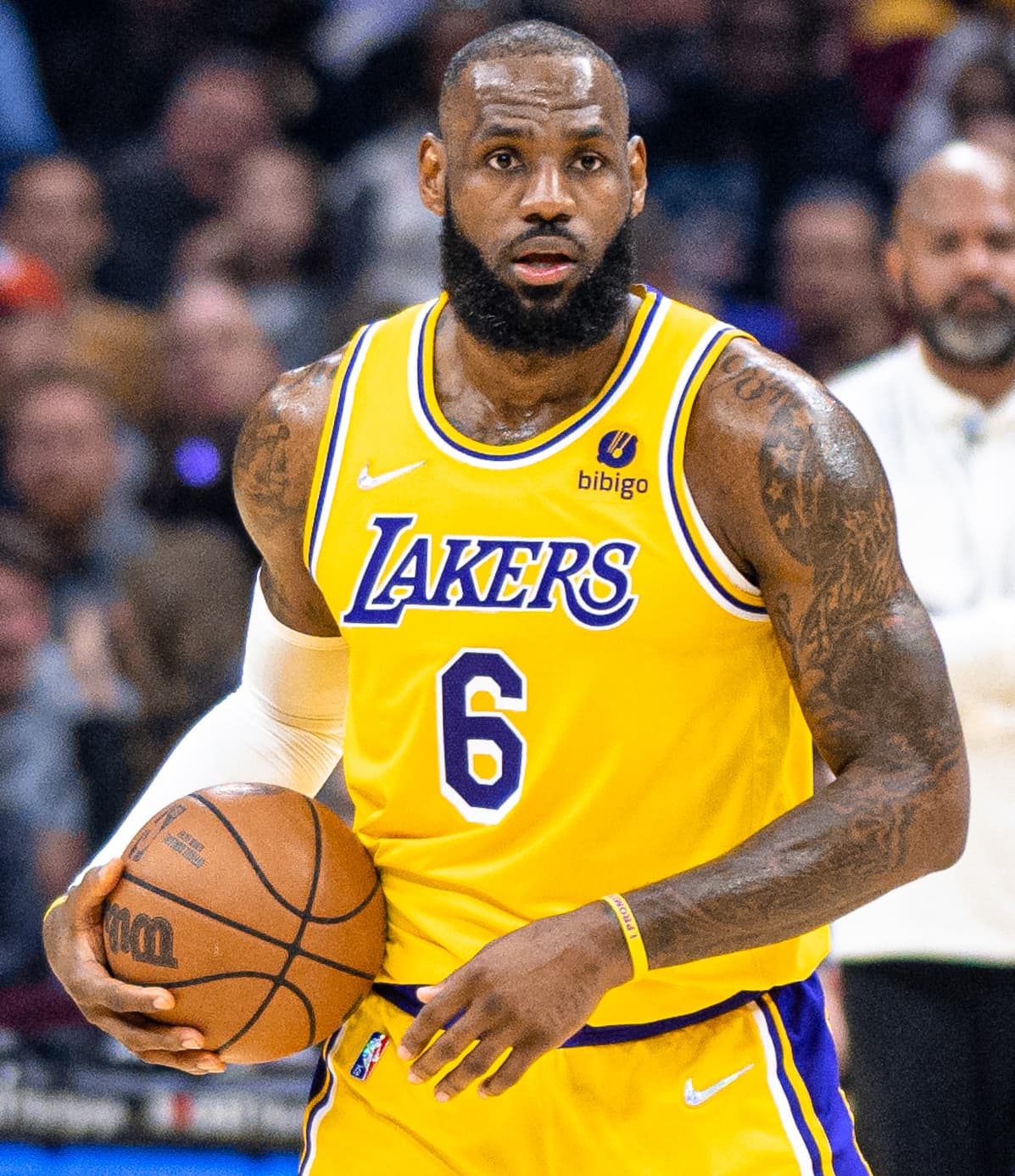
TMZ also covered the sale this week, and the numbers deserve a moment of quiet attention. The Lakers sold for approximately $10 billion in the prior transaction. Itself a figure that would have seemed absurd a decade ago. The new deal, at $12.5 billion, represents a roughly 25 percent appreciation in under 14 months. That is not a basketball-performance return. LeBron James left. The team missed a championship run. By any conventional sports-franchise valuation metric, the number should have moved sideways at best.
It didn't, because conventional valuation metrics don't apply here. The Lakers are not a sports team in the economic sense that a mid-market franchise is a sports team. They are a global brand with decades of stacking cultural equity. Magic, Kareem, Shaq, Kobe, LeBron. That generates licensing revenue, merchandise sales, and media rights value independent of what happens on the floor in any given season. The fan in Georgia who called into the broadcast explained the dynamic better than most analysts do: you're not paying for last year, you're paying for the history. He was right. The sports business at this price point is a bet on permanence, not performance.
Iger's involvement adds an interesting wrinkle. Here is a man who spent decades at the apex of Hollywood's content industrial complex, who understands IP valuation better than almost anyone alive, and who chose to deploy post-Disney capital into an NBA franchise rather than back into the film or tech sectors. That is its own kind of signal. When the person who ran Disney looks at the media landscape and decides a basketball team is the better store of value, you pay attention to what that implies about where the entertainment business thinks it is going.
The Luigi Mangione plea strategy: why a federal guilty plea might be the most legally…
Luigi Mangione's legal team is reportedly negotiating an open federal guilty plea that would allow them to argue mitigating circumstances at sentencing. And, crucially, potentially invoke double-jeopardy protections to block a separate state prosecution entirely.
The Mangione legal strategy, as TMZ's reporters laid it out this week, is counterintuitive enough that it requires unpacking. The defense is reportedly considering a federal guilty plea — see The December Reckoning: How Luigi Mangione Turned a Guilty Plea Into a Platform. Not in exchange for a sentencing agreement, but as an open plea where the judge determines the sentence. The logic is not about leniency at the federal level. It is about foreclosing a state prosecution.
The precedent the defense would lean on is the Paul Manafort double-jeopardy ruling from 2019, in which a New York state court determined it could not prosecute Manafort for conduct already resolved in federal court. If the Mangione team can replicate that outcome, the state case. With its diary evidence, its premeditation arguments, its New York jury pool. Simply never happens. The extreme-emotional-disturbance defense, which the team reportedly considered and rejected for the state trial because it would have complicated the federal case, becomes available again at the federal sentencing hearing, where mitigating circumstances are fair game.
TMZ's legal analysts were appropriately skeptical about the sentencing outcome. A federal judge, operating in a sober professional environment with an open sentence on the table, may not be receptive to arguments about corporate healthcare grievances as mitigation for murder. Life in prison remains a real possibility even if the strategy executes perfectly. But the analysts' own framing was correct: these are not good options. They are ranked bad options. And the option that eliminates the state trial. With its crushing evidentiary record and its symbolic resonance in the city where the crime occurred. Ranks higher than the alternatives.
AOC, the Clavvicular moment, and what political celebrities can extract from creator…
Alexandria Ocasio-Cortez's engagement with the 'Clavvicular' moment. However tangential. Illustrates the calculated logic by which politicians now use creator-economy virality to reach audiences that traditional campaign media cannot touch.
The segment is easy to dismiss as fluff. A streamer posted a thirsty comment about a congresswoman's breakup. TMZ brought him on. He admitted it was pure engagement-farming, almost immediately, with a candor that was genuinely refreshing. The TMZ hosts said as much on air.
But the layer underneath is worth a look. Clavvicular told the panel that politicians regularly approach him for collaborations. That the asymmetry of his audience reach makes him useful to people seeking to extend their message beyond their natural constituency. AOC, according to TMZ's DC reporters, was familiar with his work. That familiarity, in a politician with her media sophistication, is not accidental. She knows what the creator economy looks like from the inside. She has built her own version of it on social platforms for years. The question of whether she would ever collaborate with a politically agnostic looksmaxxing streamer is largely beside the point. The fact that the conversation happened at all. On TMZ, reaching an audience that does not consume political media. Is itself the collaboration.
This is the updated version of what Perez Hilton used to provide in the 2000s: access to an audience that the traditional media infrastructure could not reach. The mechanism is different. The underlying exchange. Attention for access, reach for relevance. Is identical. For a look at how other public figures get through the same latest shifts in the attention economy, the pattern repeats across every sector of the celebrity-industrial complex.
What the week's news cycle reveals about the attention economy's pressure points
A single week of TMZ coverage. Spanning a blogger's mental breakdown, a $12.5 billion sports sale, a murder plea strategy, and a viral political flirtation. Maps the exact fault lines where fame, capital, and the platform economy are under the most structural stress.
These stories are not unrelated. They share a common architecture: people who built their identities or their wealth inside an attention-driven system, now contending with what that system costs at the extremes. Perez Hilton built his career on the premise that visibility was the product. The Lakers are worth $12.5 billion partly because their visibility, across decades and markets, has never dimmed. The Mangione case would be a straightforward murder prosecution if it weren't for the cultural attention that turned a suspect into a symbol. Even the AOC-streamer segment exists only because both parties understand, fluently, how virality gets manufactured and harvested.
The through-line is this: the attention economy does not distribute its rewards evenly across time. It front-loads them. The blogger who gets famous in 2005, the franchise that dominates in the 1980s, the political figure who goes viral in the 2020s. They all accumulate something real and valuable in the hot moment. The question the system never answers in advance is what you do when the moment cools, what structural assets remain when the algorithm moves on, and whether the person inside the machine has built anything that can outlast it.
Perez Hilton's mother filing for temporary custody is the week's starkest answer to that question. Everything else. The Lakers deal, the plea negotiations, the streamer's honest admission that he was farming impressions. Is a variation on the same theme. Attention is the input. What you convert it into determines everything. Track the full economics of celebrity across our Atlas, where the conversions that stuck are the ones worth studying.