Why That House M.D. Airplane Scene Still Lands Twenty Years Later
A single viral clip from the "House" season-two bottle episode has resurfaced across social feeds this week. And the numbers behind its second life say something pointed about the economics of prestige TV nostalgia.
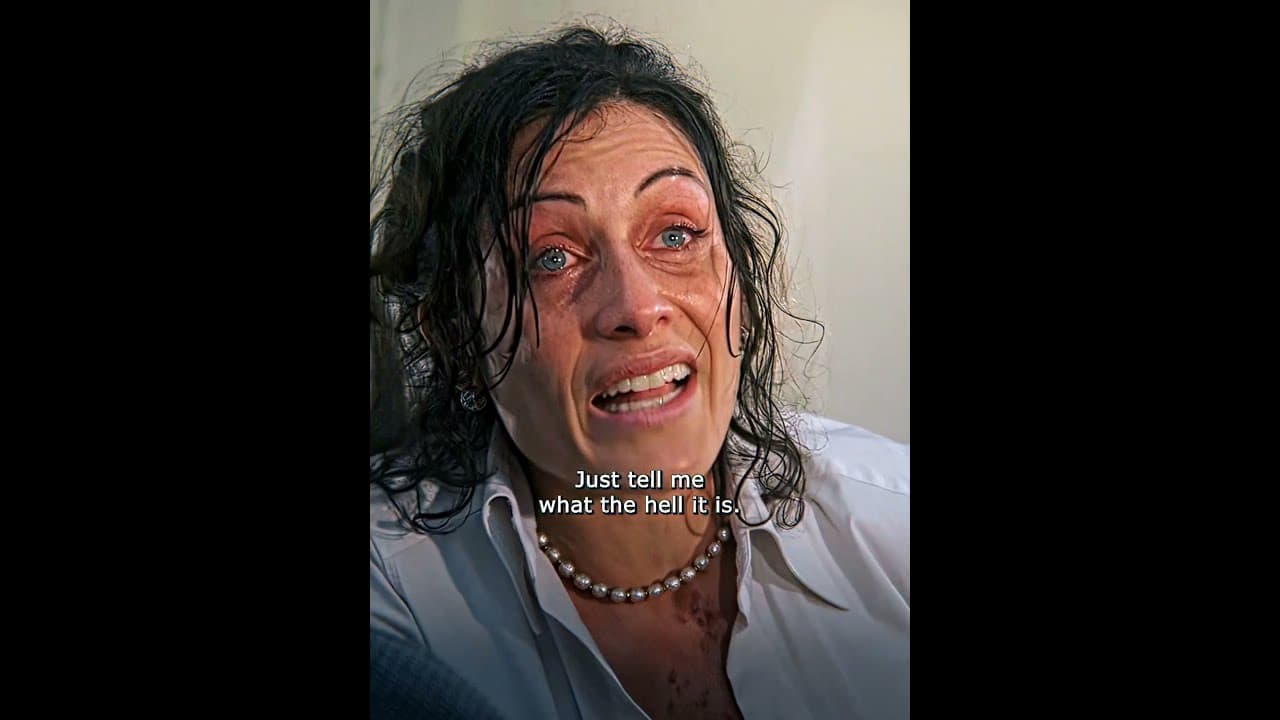
The scene opens mid-confrontation. House is already in seat 2A. Cuddy has been quietly re-routed to economy. The $500 fare reduction is presented as a solved expense report. Nobody asked for permission. That is, of course, the whole point.
Velvet Karol's short-form clip. Posted to YouTube this week and captioned, with characteristic understatement, 'Good Thing House Was on This Plane'. distills the episode's essential thesis into under four minutes: Gregory House does not comply with systems; he dismantles them while technically remaining inside the rules. The clip cycles through the plane's cascading crises. A herpes diagnosis before boarding, a passenger in decompression agony, a cabin full of women in conversion disorder. And House moves through all of it with the unhurried confidence of a man who has already solved the puzzle and is simply waiting for everyone else to catch up.
That this footage is circulating in August 2026, roughly two decades after it first aired, is not a nostalgia accident. It is a case study in how intellectual property accrues value over time, how streaming libraries function as appreciating assets, and why a single well-chosen clip can reignite licensing conversations, cast profiles, and platform subscriber metrics in ways that no marketing budget reliably replicates.
What the 'House on a Plane' episode actually is
The sequence is drawn from 'House M.D.' Season 3, Episode 18, 'Airborne,' in which House and Cuddy manage a medical emergency aboard a transatlantic flight without hospital resources, getting through mass hysteria, decompression sickness, and their own combative dynamic in a pressurized cabin.
Within the architecture of the series, 'Airborne' is what showrunners call a bottle episode. A story on purpose stripped of the show's usual sprawl, confined to a single unusual location to force character pressure and reduce production cost simultaneously. The airplane set functions as a crucible. Strip House of his whiteboard, his team, his hospital's diagnostic machinery, and what remains is the raw diagnostic instinct. And the sociopathic charm. That made Hugh Laurie's performance one of the defining character turns of 2000s television.
The medical beats move fast. A passenger surfaces decompression sickness after diving the day before and boarding a pressurized aircraft. Another passenger cluster falls into conversion disorder. Mass hysteria, as House announces to the cabin with characteristic bluntness, noting the gendered history of the diagnosis before the audience can object. Each diagnosis feeds the next. The plot is a chain of inference, not a series of separate problems, which is the structural signature that made the show's writers' room genuinely formidable at its peak.
What the Velvet Karol clip isolates, smartly, is the relational comedy threaded through the medical procedural. The fare reduction. The Vicodin and wine handoff. Cuddy's fury repurposed as a diagnostic instrument. These moments work independently of the medicine. You do not need to know what decompression sickness is to understand the power exchange in that first-class cabin. Or to want to watch the rest of it.
Why a clip from a 2007 episode is trending in 2026
Short-form platforms reward emotionally legible, self-contained moments regardless of their original air date, meaning catalog television from the 2000s now competes on the same algorithmic surface as content produced this week. And often wins on pure craft.
The mechanics here are worth unpacking. TikTok, YouTube Shorts, and Instagram Reels all operate on engagement-per-second metrics rather than recency. A scene that delivers a payoff inside ninety seconds. And 'Airborne' is dense with them. Is built that way advantaged over newer content that requires episode-level context to land. House diagnosing mass hysteria on a plane, then calmly instructing the pilot to descend so they can 'club baby seals out of the window,' is a complete comedic and medical idea. No prior viewing required.
This is what media analysts have begun calling the long-tail virality problem for studios: content they produced on a per-episode deficit model in the 2000s is now generating social impressions and platform watch-hours at essentially zero marginal cost. The intellectual property was already paid for. The sets were struck twenty years ago. Every stream is margin. Every viral clip is a trailer the studio didn't have to commission.
Velvet Karol's account operates in the specific micro-niche of re-contextualizing peak-era prestige TV for audiences who either missed it or who want the emotional shorthand of revisiting it — see What Zach Hickerson's Account Tells Us About Hayden Panettiere's Final Hours. That niche has real commercial weight. Accounts in this space routinely drive measurable spikes in platform search queries and, for studios with sophisticated analytics, correlate with upticks in full-series streams within 48 hours of a clip's peak engagement window.
"The clip does the work. The algorithm distributes it. The platform that holds the streaming rights collects the margin."
Hugh Laurie's performance and why it holds up
Hugh Laurie's House works in the airplane episode because Laurie plays the character's certainty as a physical condition. A man whose body has already arrived at the conclusion while his mouth is still forming the first sentence, a quality that reads as charisma rather than arrogance because the diagnoses keep proving correct.
British actors playing American characters carry a particular kind of performative load: they must convince an audience that the accent is not the performance. Laurie solved this problem by locating House's affect not in vocal patterns but in physical stillness. In the airplane sequence, as passengers panic and Cuddy manages logistics, House is almost immobile. He watches. He infers. The stillness is the character. A man who has learned that urgency is mostly noise.
The herpes scene that opens the clip is instructive. House delivers the diagnosis with no wind-up, no softening, no professional courtesy. 'You got herpes.' Then, spotting the Acyclovir in the man's bag: 'This must be your lucky day.' The comedy lives in the compression. The gap between what the moment socially requires and what House actually provides. Laurie's face does almost nothing. The scene's entire comedic architecture rests on his refusal to register the weight of what he's just said.
Two decades of streaming culture have recalibrated what audiences find sophisticated. The procedural rhythms of the 2000s. The team differential diagnosis, the wrong answer before the right one, the twist in act four. Can read as formulaic now. But House himself, as a character, escapes that critique because the formula always bends around his unpredictability. The airplane episode is the purest expression of this: remove the team, remove the hospital, remove every crutch, and the character still functions. That is the test of a truly constructed protagonist, and Laurie passes it cleanly.
The Cuddy dynamic and what it tells us about the show's business logic
Lisa Edelstein's Cuddy serves a structural function in 'House M.D.' that has direct commercial value: she is the character through whom the show explains itself, absorbing and redirecting House's behavior so that viewers understand the rules of the world without an authorial intrusion.
In the airplane sequence, Cuddy's displacement to economy is not merely a joke at her expense. It establishes, economically, what the show's writers needed the audience to feel about their dynamic: that House's affection expresses as competence on her behalf rather than deference. He does not give Cuddy the first-class seat. He gives himself the first-class seat and makes sure she is not stranded in economy for eighteen hours. These are different gestures. The scene is careful to make that distinction legible.
Lisa Edelstein brought enough authority to the role that Cuddy never collapsed into pure foil. She pushes back, manages, and in the airplane episode, she runs an entire parallel crisis. The patient logistics, the conversion disorder cluster. While House handles the decompression case. The show's writers split the dramatic labor on purpose. Cuddy's storyline is procedurally complete on its own terms. That structural equity is part of what made the series work as long as it did, and part of what makes clips like this one feel balanced rather than one-sided when extracted from context.
From a pure IP-valuation standpoint, the Cuddy character is an underappreciated asset in the show's catalog legacy. Series that produce viral second-life moments typically do so through a single dominant character. The show's 'face.' House clips overwhelmingly center on House. But the airplane episode's resonance on social platforms in 2026 is partly because the Cuddy tension gives the scenes a second axis. There is something to watch beyond the diagnosis. That textural richness is what separates catalog that builds up in value from catalog that simply ages.
The streaming economics of prestige TV's second life
Television series that aired between 2004 and 2012 now occupy a structural sweet spot in streaming libraries: they carry established cultural cachet, require no new production spend, and are being rediscovered by younger audiences for whom they are genuinely new content rather than reruns.
Studios do not typically disclose the streaming performance of catalog titles with the granularity they apply to new originals. But the competitive intelligence is visible in licensing behavior. When a title like 'House M.D.'. 177 episodes across eight seasons. Becomes the subject of recurring viral moments, it generates use in renewal and windowing negotiations that the studio could not manufacture through direct marketing. The clip does the work. The algorithm distributes it. The platform that holds the streaming rights benefits.
The broader pattern here connects to a shift in how entertainment companies value their back catalogs. Through the 2010s, the conventional wisdom held that new originals were the growth engine and older library content was essentially a retention tool. Something to keep subscribers from canceling between new releases. That calculus has partially inverted. Original production costs have reached levels that compress margins severely, while existing catalog, amortized years ago, delivers high-margin stream hours. For platforms carrying 'House M.D.,' every viral clip from a creator like Velvet Karol is effectively a cost-free marketing event.
For context on how this fits into the wider entertainment economy, our Film wealth profiles have tracked similar dynamics around catalog actors whose residual income streams have meaningfully expanded in the streaming era. A structural change that benefits the estates of deceased performers as much as working ones. The airplane episode, sitting inside a library of 177 episodes, is a recurring revenue event that requires nothing from its creators except for the original work to have been good enough to survive rediscovery.
What the mass hysteria diagnosis reveals about the show's tonal risk-taking
House M.D. Regularly used diagnostic conclusions as cover for social provocation. Having a character whose institutional authority is unimpeachable deliver statements the show's writers could not otherwise make without narrative consequence, a tactic that was commercially shrewd and critically divisive in equal measure.
In the airplane sequence, House announces conversion disorder to a cabin of passengers by noting that mass hysteria 'happens often in high anxiety situations, especially to women,' then immediately acknowledges the sexism and invokes scientific literature as a shield. It is a classically constructed House move: the provocation arrives wrapped in diagnostic precision, which means the show can have the line without fully owning it. House is the one saying it. The writers are simply reporting what the character would say.
This was the series' most consistent and most contested structural choice across its run. Shore and his writers built House to be a delivery mechanism for ideas the network drama format would otherwise sand smooth. The plane episode is a particularly dense example because the social pressure of a crisis in a sealed cabin. 200 strangers, no exit. Amplifies every statement House makes. He is performing for an audience within the story as much as for the one watching at home.
What is striking, watching the clip in 2026, is how the show's willingness to commit to the bit. To let the mass hysteria diagnosis play out with full clinical detail, including the sexism framing, without softening the resolution. Reads as confident in a way that much current prestige television does not. The series trusted its audience to hold the discomfort without requiring the characters to resolve it tidily. That trust was commercially validated by eight seasons of ratings. It is aesthetically validated by the fact that the moment still circulates, still provokes, still earns engagement twenty years later.
Velvet Karol and the creator economy around archive television
Short-form creators who build audiences around prestige TV clip curation occupy a commercially valuable but legally precarious niche. Their reach is genuinely promotional for the IP holders, but the fair-use boundaries of their operation are tested every time a clip performs well enough to attract rights-holder attention.
The creator ecosystem that has grown up around archived television is one of the more built that way interesting corners of the current content economy. Accounts like Velvet Karol's function as a form of distributed, audience-sourced curation. Identifying the scenes from large catalogs that carry the highest standalone emotional payload, then presenting them to audiences who may never watch the original series in full. The value creation is real. The legal position is complicated.
Fair use in the context of short-form clip curation is not settled territory. The four-factor test applied by US courts weighs the transformative nature of the use, the commercial character of the use, the amount of the original work used, and the effect on the market for the original. A four-minute clip from a 44-minute episode, posted to a monetized YouTube channel, with a caption that could be read as promotional or as commentary, sits in genuinely ambiguous legal territory. Studios have historically been inconsistent in pursuing takedowns of content that drives measurable traffic to their platforms.
The more interesting commercial question is why studios have not yet systematized the relationship. If a creator with meaningful reach is reliably driving streaming engagement for catalog IP, the logical structure is a licensing arrangement that formalizes the promotional value and captures some of the creator's ad revenue in exchange for explicit permission. That model exists in music, through platforms like Lickd and through direct deals between labels and large creators. Television has been slower to build the infrastructure. The House clip cycle suggests the demand is there.
What this moment means for Hugh Laurie's ongoing cultural position
Hugh Laurie's cultural standing in 2026 is anchored primarily in the House M.D. Archive rather than in new production. A common but strategically significant position for actors whose signature role was so dominant that it became the primary lens through which audiences understand them.
Laurie has continued to work consistently since House ended in 2012. 'Veep,' 'Avenue 5,' stage work in the UK. But no subsequent role has approached the cultural footprint of House. This is not a failure of effort or talent. It is the specific gravity of a character that ran for eight seasons at peak global viewership, was syndicated across dozens of markets, and whose diagnostic format was distinctive enough to generate a recognizable shorthand: the limping misanthrope who is always right. That shorthand now travels independently of Laurie the actor, which is both a form of legacy and a constraint on how audiences receive his newer work.
The viral clip cycle around 'Airborne' is, from a career-optics standpoint, a reminder of peak rather than a platform for new work. That distinction matters when thinking about an actor's ongoing commercial value. Laurie's Q Score. The industry metric that measures both familiarity and positive sentiment. Is presumably buoyed by the House nostalgia cycle even when he is not actively promoting anything. Brand partnerships, speaking engagements, and any future production deals will be priced partly against the recognition that the clip cycle keeps refreshing.
For a fuller picture of how actors in this position structure their commercial lives, the latest reporting on entertainment talent valuation across the streaming transition is instructive. The gap between peak-era residual structures and current streaming economics has meaningfully changed what catalog stardom is worth in real dollars, even as the cultural cachet remains high. Laurie's position is a case study in that gap: broadly recognized, genuinely beloved by an audience that is actively re-engaging with his best work, but doing so through a platform infrastructure that was not designed to compensate him for it.
The decompression sickness plot as a metaphor for prestige TV's own condition
The 'Airborne' episode's central medical mystery. A patient who surfaced too quickly from depth and then boarded a pressurized aircraft, stacking the physiological damage. Functions as an inadvertent metaphor for prestige television's current market position: content that ascended fast in the 2000s, then entered a…
The decompression case is the episode's structural backbone. A diver who ascended too quickly. Skipping the decompression stops that allow nitrogen to safely leave the bloodstream. Boards a plane whose cabin pressure is equivalent to 8,000 feet above sea level. The lower pressure accelerates the nitrogen bubble formation already underway. The environment he chose, believing himself recovered, is actively making him worse. House's solution is to lower the aircraft's altitude until external pressure rises enough to keep the patient stable, buying time to land.
The metaphor is not forced. Peak prestige television. 'The Sopranos,' 'House,' 'Mad Men,' 'The Wire'. Ascended quickly through a cultural environment that rewarded serialized complexity and was willing to sustain it commercially through advertising models and DVD sales. Streaming changed the pressure system. The economics that supported long-run serialized drama with 22-episode seasons gave way to shorter orders, lower episode counts, and a content volume that made individual series harder to sustain as cultural events. The shows that survived the transition to streaming with their reputations intact did so largely because the archive was already complete and the streaming environment had no power to damage what was already made.
'House M.D.' is in a privileged position here. The decompression, to extend the metaphor, already happened. The catalog exists. Its quality is fixed. What the streaming era offers it is not survival but renaissance. A new pressure environment in which the archive, paradoxically, is more visible and more commercially active than it was in the years immediately following the series finale. The Velvet Karol clip is a small data point in that larger story. But the business profiles of entertainment IP holding companies tell the same story at scale: the assets that endure are not always the ones built for endurance. Sometimes they are simply the ones that were good enough to survive being rediscovered.