D4VD Had $11 Million and Now Has a Public Defender. The Music Business Explains Both Facts.
The withdrawal of d4vd's private legal team, citing inability to pay, exposes how a record-label advance can make an artist look wealthy while leaving them functionally broke. A case study in music industry economics, at the worst possible moment.
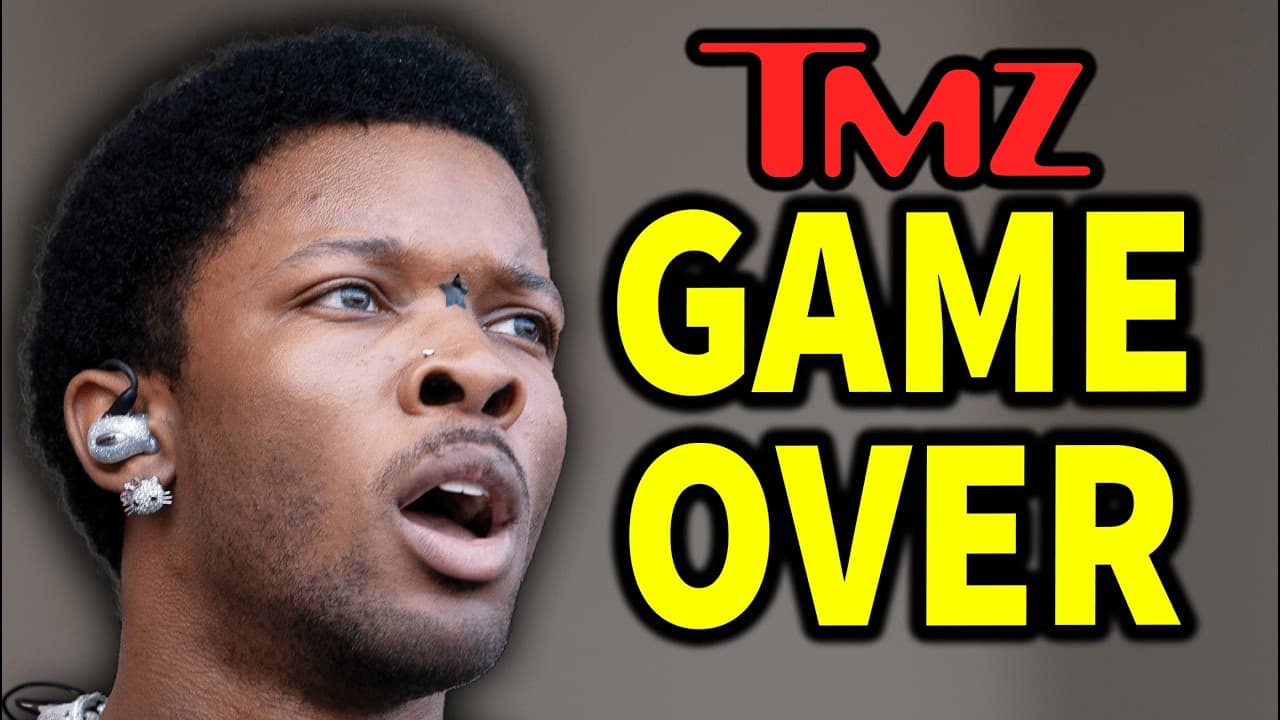
The number the court heard was $11 million. The word the court used was indigent. Both are true, and the gap between them is essentially a tutorial in how the modern record business works, one that most people never have to learn because it rarely surfaces this publicly, or under these circumstances.
D4VD, the Houston-bred bedroom-pop artist born David Anthony Burke, who went viral on TikTok and signed to Interscope before most people his age had a publishing deal, appeared in court this week without the private legal team that had been representing him in a serious murder case. His lawyers withdrew. The reason, as TMZ reported from the courtroom, was straightforward: he cannot pay them. A court found him eligible for a public defender. The $11 million Interscope contract that defined his commercial arrival, at least on paper, is apparently not accessible to him.
That last clause is the story. Not the legal drama, not the courtroom optics, but the structural reality underneath them, the one where an artist can earn eight figures on a contract and simultaneously be unable to write a check for his own defense. It happens more than the industry admits, and when it does, the mechanics are always roughly the same.
Why D4VD's Lawyers Withdrew From His Murder Case
D4VD's private legal team withdrew because he could not pay their fees. A court subsequently determined he qualifies for a public defender, meaning his available assets fall below the threshold required to fund a private defense.
The withdrawal was not a statement about guilt or strategy. It was a financial event. Private criminal defense attorneys, particularly the kind assembled for a high-profile, serious-charge case, bill at rates that can run well into six figures per month once you factor in investigators, expert witnesses, motions practice, and the sheer accumulation of hours a complex case demands. When the money runs out, counsel files to withdraw. Courts grant the motion. It is mechanical.
What made this withdrawal land differently is the publicly known contract sitting in the background. Eleven million dollars from Interscope is not a figure associated with indigence. It is a figure associated with, at minimum, the ability to sustain a legal defense. The court's eligibility finding, that d4vd qualifies for a public defender, means that whatever that $11 million represented, it does not currently represent accessible cash in his name.
His former attorneys, to their credit, were careful to say publicly that their departure reflects no judgment on d4vd himself. They framed it as a practical reality: this will be a long, difficult case, and extended representation without payment is not something any private firm can absorb indefinitely. That is honest. It is also a fairly clean summary of how legal abandonment tends to unfold, regardless of the underlying charges.
What an $11 Million Record Deal Actually Pays Out
A headline recording contract figure typically represents the maximum potential value of a multi-album deal, not a lump-sum payment. Artists receive advances, often a fraction of the total, which the label recoups from future royalties before the artist sees additional income.
This is the foundational misunderstanding that follows almost every major music signing announcement. When a label announces, or when the industry gossips about, a multi-million dollar deal, the number describes the ceiling of a multi-record commitment, not the floor of what lands in the artist's bank account on day one. The structure almost always involves advances: payments made before the music earns revenue, which the label then recoups from the artist's royalty share before the artist receives a cent in ongoing earnings.
The math builds up quickly against the artist. If Interscope paid d4vd a recording advance, that advance gets recouped from his share of streaming income, sync fees, and sales. Marketing costs are often recoupable too, meaning the label charges its own promotional spending against the artist's royalty account. Until that full balance is cleared, a state the industry calls being 'recouped', the royalty checks don't flow. For many artists, full recoupment never comes.
On top of that, there are management commissions, typically 15 to 20 percent of gross income, attorney fees, business management fees, and the standard cut taken by a booking agent. By the time those layers are stripped away, the in-pocket reality of an eight-figure deal can be a fraction of the headline number. None of that is fraud. It is, in a very real sense, the contract. But it produces exactly the kind of situation where a public figure with a famous contract number genuinely cannot fund a legal defense.
There is a further complication particular to d4vd's current circumstances. Labels are commercial entities. If Interscope had structured portions of the deal as future advances tied to album delivery and Interscope has reason to believe those albums will not arrive, a reasonable working assumption for any label whose artist is facing a serious criminal prosecution, the label may exercise contractual rights to withhold or claw back uncommitted funds. TMZ's reporting flagged exactly this question from the courtroom, and it remains unanswered. What portion of the $11 million was actually disbursed? What remains theoretical?
"A $11 million record deal and a public defender are not contradictions. In the music business, they are almost a logical sequence."
D4VD's Rise: How Fast the Money Moved and Where It Came From
D4VD built a following through TikTok-era bedroom pop, signed to Interscope Records, and generated revenue from both the label deal and touring before his legal situation halted his commercial trajectory.
The d4vd origin story is one the industry held up as a model for a while. A teenager from Houston making music in his bedroom, bypassing the traditional gatekeeping infrastructure, accumulating streams before he had a manager, landing a label deal that reflected genuine commercial use rather than desperate artist need. The Interscope signing looked, from the outside, like a case where the artist had real negotiating power, the numbers were already there.
That use matters in retrospect because it should have, in theory, produced better deal terms than an unknown act with no streaming history might command. Better royalty rates, higher advances, more favorable recoupment provisions. Whether d4vd's team negotiated those terms well is not publicly known. What is publicly known is that the outcome, an artist with an $11 million contract and no accessible funds, suggests either that the deal terms were less favorable than the headline implied, or that the money was spent, or both.
Touring income muddies the picture further. Concert revenue is typically paid directly to the artist's touring entity and is not subject to label recoupment. If d4vd was earning from live performance, and the TMZ reporting indicates he was, that money should have been cleaner, more accessible. Where it went is one of the more pressing open questions. His lifestyle, by all accounts from court reporting, was not conspicuously expensive. A rented home. A Tesla. Nothing that would suggest eight figures consumed in short order.
The Public Defender Question: What It Means for the Case
Public defenders are qualified attorneys with deep courtroom experience, but carry significantly larger caseloads than private counsel, which limits the time and investigative resources they can devote to any single case, a meaningful disadvantage in a complex murder prosecution.
The public defender comparison is one the legal community handles carefully, and for good reason: the institutional reflex to dismiss public defenders as second-tier representation is both elitist and factually wrong in important ways. Public defenders appear in court constantly. They know the judges. They know the prosecutors. They understand the local legal culture in ways that expensive out-of-town talent sometimes does not. They are, in the courtroom itself, often formidable.
The resource gap is real, though, and it is structural rather than personal. A public defender's office handles enormous volume. A serious murder case, the kind that requires forensic experts, independent investigators, extensive discovery review, and the sustained attention of senior attorneys, demands time that a caseload-constrained office may simply not have to give. That is not a knock on the lawyers. It is a description of a chronically underfunded system.
For d4vd, the practical implication is this: the transition from a privately retained, top-flight criminal defense team to a public defender's office is not neutral. It changes the resource profile of his defense at exactly the moment the prosecution, as the DA stated publicly after the withdrawal, intends to press forward without adjustment. The DA's office made clear that the change in representation does not alter the state's approach. That is, in itself, a posture worth noting.
The comparison to the Nick Reiner case, another high-profile defendant who ran into funding problems related to trust access, is instructive mostly for its differences. Reiner had identifiable assets in a trust that were, at least in principle, available with the right court intervention. D4VD's situation appears starker: the money may genuinely not exist in a form he can reach, independent of legal maneuvering.
How the Music Industry Structures Deals to Control Cash Flow
Record labels structure advances, recoupment clauses, and delivery-contingent payments in ways that give the label significant control over when and how much money an artist actually receives, often keeping artists in debt to the label long after the public perceives them as wealthy.
The architecture of a major-label deal is, at its core, a lending mechanism dressed as a partnership. The label fronts money for recording, marketing, and in some cases living expenses. The artist creates the product that earns back that money. The royalty rate, the artist's share of revenue, is typically set low enough that recoupment takes years, if it happens at all. Until it does, the label holds the economic high ground.
This is not a secret. Music lawyers, business managers, and trade publications have documented it exhaustively. What makes it persistently surprising in cases like d4vd's is the scale of the gap between public perception and financial reality. Eleven million dollars is a number that reads as wealth. The underlying structure that generated it may have left the artist with a fraction of that, on a timeline not of his choosing, subject to conditions he may not have fully absorbed when signing.
The broader music wealth landscape is littered with artists who moved significant contract numbers and emerged from label deals with little to show for it. The recoupment system, combined with the standard commission stack, creates a situation where an artist can be commercially successful, charting, touring, culturally present, and simultaneously unable to sustain basic financial obligations. D4vd's case is an extreme illustration, but it is not an anomaly in kind, only in visibility.
What separates this case from the standard industry cautionary tale is the legal context. Most artists who discover the gap between their deal value and their actual cash position do so in the relatively private setting of a business manager's meeting. D4VD is discovering it, or rather, the public is discovering it on his behalf, in open court, in the context of a murder case, under conditions where the financial reality has direct consequences for his liberty.
What Happens to an Artist's Label Deal During a Criminal Case
A serious criminal prosecution creates contractual uncertainty for a label, which may exercise rights to pause advance payments, restructure delivery obligations, or pursue recoupment of previously disbursed funds if the artist is unable to fulfill album and touring commitments.
Interscope, like every major label, operates on a commercial logic. The deal it signed with d4vd was predicated on an artist who could record, release, promote, and tour. A protracted criminal prosecution eliminates most of that pipeline immediately. Recording sessions don't happen from a detention facility. Promotional cycles don't function without the artist's participation. Tour dates get canceled.
The label's response to that reality depends on the specific contract language, force majeure provisions, suspension clauses, the definition of what constitutes a failure to deliver, and on the label's read of the artist's long-term commercial potential. If Interscope believes d4vd has a future worth protecting, they may find ways to keep the contractual relationship technically alive. If the commercial calculus has shifted, they have tools to accelerate recoupment or exercise termination rights.
What has not been established publicly is which path Interscope is taking, or whether the label has communicated its position formally. The open question flagged in court, whether any portion of the $11 million figure remains uncommitted and in Interscope's hands rather than d4vd's, is precisely the kind of detail that would clarify the picture. Without it, we know the headline number and we know the outcome, but the mechanism connecting them remains partially obscured.
For artists watching this situation from the outside, and plenty are, the lesson is not that major-label deals are traps. It is that the gap between contract value and accessible cash requires active management: a business manager who marks the distinction, legal counsel who understands both the entertainment and the personal financial implications, and a structure that doesn't leave an artist's liquidity entirely dependent on label disbursement schedules. That infrastructure costs money too, which is its own recursive irony.
The Plea Deal Calculation: Does the Money Problem Change It?
Financial pressure on a defendant's legal resources can increase the likelihood of plea negotiations, because mounting an aggressive trial defense requires sustained attorney time and investigative spending that a public defender's office may struggle to provide at the necessary scale.
The question surfaced in the TMZ coverage and it is a legitimate one: does the shift to public defense change the calculus on a potential plea deal? The answer, frustratingly, is: it might, but not in the ways that feel cleanest. The DA has publicly stated that the change in representation doesn't affect their prosecution posture. They are moving forward. That removes the option of a prosecution-side decision to negotiate in response to the defense's weakened position.
What changes is the defense-side pressure. A private legal team, especially one that has already assembled the infrastructure of a serious murder defense, carries institutional momentum. They have investigators on retainer, forensic relationships, a running theory of the case. A public defender inheriting a complex matter mid-stream has to reconstruct much of that, with fewer resources and competing cases pulling at the same hours.
Whether that pressure actually moves d4vd toward a plea depends on facts not yet public: the strength of the prosecution's evidence, the specific charges, the sentencing exposure he faces at trial versus the terms any plea might offer. Those are the variables that drive the decision in every serious criminal case, regardless of who is paying the lawyer. But the resource environment shapes how clearly the defendant can evaluate those variables, and how effectively his counsel can challenge the prosecution's framing of them.
The broader pattern, where financial crisis inside a criminal case accelerates outcomes that might otherwise take years longer, is well documented in legal scholarship, even if it rarely surfaces this visibly in pop-culture-adjacent cases. D4VD's situation is, among other things, an unusually public case study in how the economics of criminal defense interact with the economics of the music industry, both of which tend to favor institutions over individuals.
What This Case Reveals About Young Artist Financial Vulnerability
Young artists who sign major deals without solid business management infrastructure often lack visibility into the gap between contract value and accessible income, leaving them exposed when personal or legal crises require immediate liquidity.
D4vd was a teenager when the deal was struck. The velocity of his rise, bedroom to TikTok to Interscope in a compressed window, is exactly the kind of trajectory that can outpace the financial literacy and advisory infrastructure that should accompany it. This is not a unique circumstance. It is, if anything, a recurring pattern in the streaming era, where discovery can happen overnight and the business machinery scrambles to catch up.
The artists who get through this successfully tend to have one thing in common: someone in their corner who reads the contract and then explains what it actually means for cash flow. Not the headline number. The after-recoupment, after-commission, after-fee number. And then builds a financial structure, savings, investment, reserve, that insulates the artist from the period when label income is not flowing. That role is usually played by a business manager, occasionally by a particularly engaged entertainment attorney, and in the best cases by both.
Our ongoing coverage of music wealth profiles tracks artists across the full economic spectrum, and the pattern holds: the wealth that survives a career is almost never the deal value. It is the diversified, actively managed accumulation that happens around and after the deal. The artists who build that structure early, and the list is shorter than the industry would like to admit, are the ones who don't end up litigating their own indigence.
D4vd's case has become, almost incidentally, a public education in how the industry actually works. The $11 million figure will follow him. So will the word the court used. The distance between them is a curriculum. You can track the economics of emerging artists and established ones across our Atlas, where we maintain updated estimates for the public figures whose financial trajectories are most consequential to understand.
Who Wins and Who Loses as This Case Drags Forward
The prosecution enters an advantaged position as d4vd's defense resources diminish; Interscope faces a commercial asset frozen mid-career with no clear resolution timeline; and the broader music industry absorbs another data point on artist financial vulnerability that it has limited incentive to fix.
The prosecution is, in straightforward terms, better positioned today than it was before the withdrawal. A DA's office with its full resources facing a defense that is, at minimum, in transition, is a DA's office with structural advantages. Whether those advantages translate to outcome depends on evidence and law, but the resource asymmetry is not trivial.
Interscope's position is more complicated. A signed artist who cannot record, release, or tour is a frozen commercial asset, valuable on paper, generating nothing in practice. The label's options range from waiting out the legal process, to restructuring the deal, to exercising whatever exit provisions the contract contains. None of those options is clean. The most likely short-term outcome is that the deal sits in commercial suspension, which benefits no one.
The music industry's structural interest in this story is, characteristically, muted. The system that produced this outcome, advance-heavy, recoupment-laden deals signed with artists who lack independent financial counsel, is profitable for labels and largely invisible to the public until a case like this forces it into the open. There is no institutional pressure to reform it. The artists who would benefit from reform are, by definition, the ones with the least use to demand it.
For d4vd himself, the stakes are as serious as stakes get, and none of them are primarily financial anymore. The money question, how an $11 million contract produced a broke defendant, is a business story. What happens in that courtroom is something else entirely. The latest reporting on how courts, careers, and institutions collide in moments like this is precisely what cases like d4vd's make impossible to look away from.