The December Reckoning: How Luigi Mangione Turned a Guilty Plea Into a Platform
His lawyers didn't just negotiate a plea. They engineered a sentencing hearing that will function as a public trial of the American healthcare system. The legal mechanics, and what they reveal about image, use, and the strange economics of a cause célèbre.
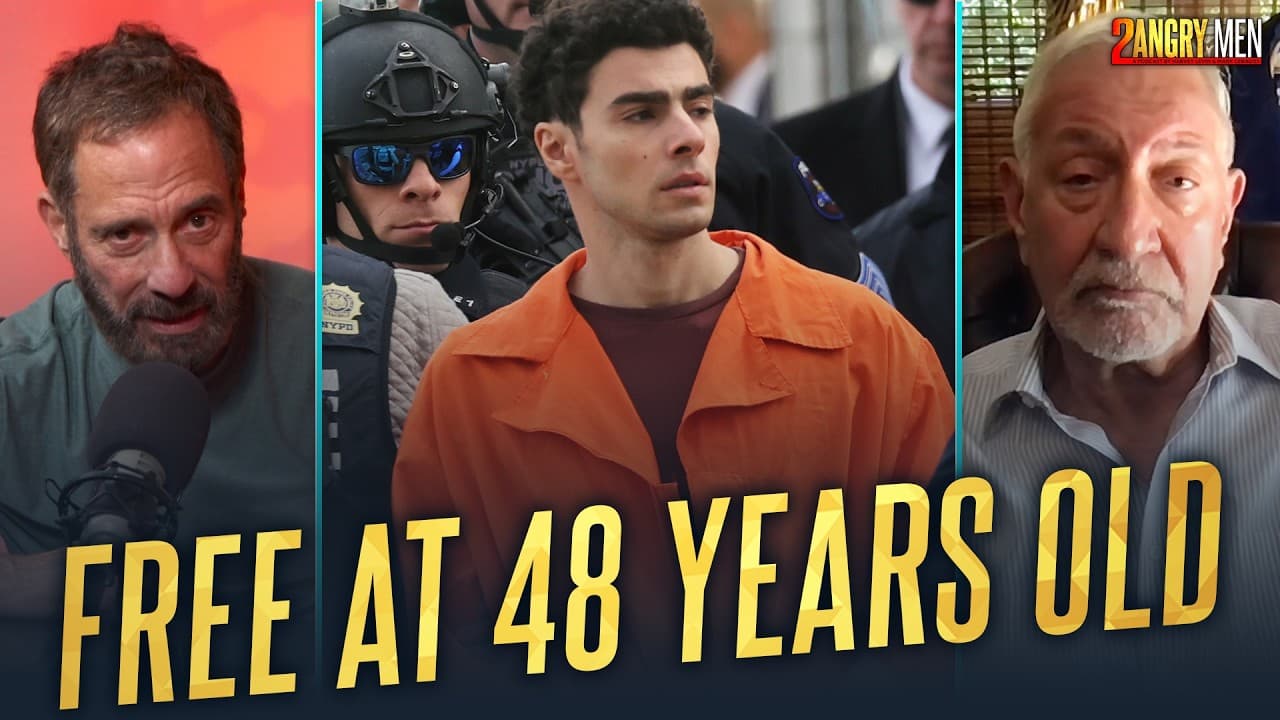
Luigi Mangione pleaded guilty to federal charges this week. That is the least interesting thing about what happened in that courtroom.
What his defense team actually built. And this is the part that requires a step back to appreciate fully. Is a vehicle. The guilty plea is the chassis. The December sentencing hearing is the engine. And the argument that Karen Agnifilo has telegraphed so clearly that even the prosecution can see it coming is the destination: a formal, judge-witnessed, witness-testimony-backed indictment of the American healthcare system, delivered inside a federal courthouse, on the record, attached forever to the most high-profile killing of a corporate executive in recent memory.
Mark Geragos and his co-host Arnie Becker broke down the full architecture of what happened in a detailed dissection for TMZ. And the picture that emerged is of a defense strategy operating on at least three simultaneous levels: legal, political, and theatrical. Understanding all three is the only way to understand what December is actually going to be.
What the guilty plea actually accomplished for the defense
By pleading guilty in federal court before any state trial, Mangione's defense team preserved the extreme emotional disturbance argument for sentencing. A mitigation strategy they would have lost if the state case had gone first.
The sequencing here was everything. As Geragos explained in considerable detail, Mangione faced a trap: if the state case in New York went to trial first, he would have deployed extreme emotional disturbance as a guilt-phase defense. That deployment would then have been on the record. An admission of sorts. Before the federal proceedings began, and the federal system does not recognize extreme emotional disturbance as a defense at the guilt phase. He would have surrendered the argument in the place where it could do him the most good.
By flipping the order. Pleading guilty federally before the state case reached trial. The defense preserved that exact argument for the federal sentencing hearing, where it functions not as a claim of innocence but as a claim of context. The distinction is enormous. A judge weighing mitigation can hear testimony about a defendant's mental and emotional state leading up to a crime without that testimony constituting a legal defense to the charge itself. Mangione already admitted the charge. Now the question is only what it means, and how long he should sit for it.
The practical ceiling of that calculus is striking on its own terms. The federal sentencing guidelines, as discussed in the TMZ breakdown, produce a range of roughly 24 to 30 years — see Duncan Sheik Spent 30 Years Outrunning One Song. He Succeeded.. If Mangione receives a sentence at the lower end, and serves it with standard reductions, he could be out before he turns 50. The government is asking for life, and will argue for an upward departure. But the defense has now positioned itself to contest every inch of that argument. In open court, with witnesses, with the kind of evidentiary record that gets written about for decades.
How December's sentencing hearing becomes a healthcare trial
Federal sentencing hearings permit witness testimony, victim impact statements, and detailed psychological and sociological evidence, meaning Mangione's lawyers can effectively stage a public examination of healthcare industry practices as mitigating context. With no jury to inflame and no guilt phase to muddy.
Agnifilo made her intentions plain enough that neither the prosecution nor the press had to speculate. The sentencing memo, which Geragos predicted will be one of the most complete documents of its kind in recent memory, will lay out a granular psychological and sociological history of the defendant. Expert witnesses will almost certainly testify. And the central argument. That Mangione's mind was so distorted by genuine, justified rage at a system that destroys lives that his moral culpability is meaningfully reduced. Will get its fullest airing.
There is a procedural elegance to this that the defense clearly spent months engineering. A criminal trial is bounded by rules of relevance; a sentencing hearing is a considerably wider canvas. The judge is explicitly invited to understand who this person is, what drove them, and what the act means in context. That contextual invitation is exactly what a healthcare grievance narrative requires. You cannot walk a jury through actuarial tables and claim denial statistics during a murder trial. You can walk a federal judge through them at sentencing.
The investor conference email that emerged during the plea allocution adds another dimension. Mangione admitted to sending an email feigning investment interest in order to obtain the location of the UnitedHealthcare conference where Brian Thompson would appear. Geragos noted that the defense will likely frame that email as evidence of the same grievance: a man who got an immediate, eager callback from an insurance company the moment money was mentioned. The same company that allegedly never returned calls about medical claims. It is a compact, emotionally legible piece of evidence. Judges are human beings, and that detail lands.
"The guilty plea is the chassis. The December sentencing hearing is the engine. The healthcare argument is the destination."
The corporate greed vs. Healthcare framing. And why the distinction matters legally
TMZ's own reporting, developed through a documentary and interviews with Mangione's associates, found that his primary obsession was corporate greed broadly. Not healthcare specifically. The defense is now narrowing that frame to healthcare, a shift that is legally strategic but factually contested.
Geragos was candid about a tension at the heart of the defense narrative. TMZ's own documentary work on the case, which involved conversations with people close to Mangione, produced a portrait of a man consumed by a general anti-corporate-greed ideology. He reportedly purchased 200 copies of a book on the subject written by an author based in Indonesia, flew there to meet the writer, and provided editorial notes aimed at getting the book onto a bestseller list. That is not the behavior of someone whose radicalization began with a denied insurance claim. It is the behavior of an ideologue.
The defense is threading a needle. A broad anti-corporate argument is philosophically interesting but legally thin. Judges do not sentence down because a defendant disliked capitalism. A specific, personal healthcare grievance is legally and emotionally more potent: it positions Mangione as a victim before he was a perpetrator, and it taps into documented, quantifiable suffering that extends well beyond his own circumstances. Agnifilo's framing. That Mangione is not the only person who has suffered this way. Is an attempt to transform individual pathology into social symptom.
Whether the judge accepts that transformation depends on how well the defense can substantiate it. If Mangione's back injury and treatment history can be documented as a genuine, prolonged encounter with healthcare system dysfunction. Rather than a philosophical protest by a man of privilege who had other options. The mitigation argument has traction. If the prosecution successfully establishes that he had the financial means to access care and chose not to, the noble-cause framing collapses. Both scenarios are plausible. The evidentiary record built over the next several months will determine which one the judge finds credible.
The double jeopardy fight and why Manhattan isn't going quietly
Under New York State's double jeopardy statute, a federal guilty plea covering the same set of facts may bar a subsequent state prosecution. And Mangione's federal allocution was carefully constructed to maximize that argument.
On the same day Mangione entered his federal plea, his defense firm dispatched a courier to file a motion seeking to block the state murder case. A piece of timing that was not accidental. The double jeopardy argument under New York State law requires that the defendant have been 'once in jeopardy' for the same conduct. The federal plea, with its detailed factual allocution in which Mangione explicitly stated he shot and killed Brian Thompson and knew it was wrong, creates the factual record the state court judge will need to make that determination.
A state court judge had previously denied an earlier double jeopardy motion as premature. Meaning the predicate event (a plea or acquittal) had not yet occurred. It has now occurred. That judge will have to revisit the question, and the legal landscape has meaningfully shifted. The Manhattan DA's office has been aware of this possibility since at least early July, when it filed its sealed opposition letter. More than a month before the plea was entered.
Geragos walked through a historical analogue: a case involving Paul Manafort, who successfully used a dual-sovereignty double jeopardy argument, represented by Todd Blanche. Who was this week confirmed as Attorney General. He noted that Karen Agnifilo was, at the time, an assistant in the Cy Vance DA's office that prosecuted that case. The institutional memory on both sides of this fight is long and specific. The Manhattan DA is not going to concede the point, and has reportedly explored whether a separate weapons charge. Not covered by the same factual basis. Could survive a double jeopardy ruling and result in a subsequent prosecution. That avenue, Geragos suggested, is very much alive.
Why Mangione's privileged background is a genuine legal liability
Federal judges weigh mitigating circumstances against the defendant's actual access to alternatives. Mangione's wealthy family background and demonstrated ability to travel internationally and pursue ideological projects directly undercuts the narrative that healthcare system failures left him with no recourse. And…
The defense's healthcare-grievance argument depends, at its foundation, on necessity. Or something close to it. It requires a judge to believe that Mangione was so ground down by a system that refused to help him that his judgment became genuinely distorted. That argument is harder to sustain when the record shows a man who flew to Indonesia on a book project, who had a family safety net available to him, and whose friends described a back injury that was painful and real but not the kind of treatment-denied crisis the defense narrative implies.
Geragos acknowledged this directly. In his experience defending clients of means, he has heard judges say. More than once. That a defendant 'had every advantage in the world' compared to most people who appear in their courtrooms. That observation, in a federal sentencing context, does not necessarily mean a longer sentence. But it does mean the mitigation narrative has to be built on something more specific than general frustration. The defense will need to show that Mangione's experience of the healthcare system was genuinely and specifically damaging, not that he sympathized philosophically with people who had been damaged by it.
This is where the public resonance that surrounds the case. The constituency of supporters, the viral moment of his arrest, the sustained cultural conversation he has generated. Cuts in an unexpected direction. That support exists partly because millions of Americans have their own healthcare grievances and have found in Mangione a vessel for that anger. But the judge will have to weigh whether the defendant personally suffered in the way he claims, not whether the general public's anger is justified. The broader resonance is emotionally real. Whether it is legally sufficient is an entirely different question.
What the prosecution's sentencing argument will look like
Federal prosecutors will seek an upward departure from guidelines, arguing that Mangione used dual-sovereignty legal maneuvering to escape a state murder conviction, that his case demands deterrence given the public support he has attracted, and that allowing a reduced sentence rewards what they will frame as manipulation of…
The government's argument in December will be built on two pillars. The first is deterrence. The classical sentencing rationale that a judge's sentence speaks to the community as well as the defendant. Given the visible, vocal constituency that has formed around Mangione, prosecutors will argue that anything short of a severe sentence sends an explicit message that killing a corporate executive is, in some meaningful sense, rewarded when the killer has the right ideology and the right lawyers.
The second pillar is systemic integrity. Prosecutors will argue, according to the analysis laid out in the TMZ discussion, that the defense used the interplay between federal and state prosecution. Dual sovereignty. Not as a legal protection but as a tactical instrument to engineer the elimination of the murder charge. They will frame the plea itself not as contrition but as gamesmanship, and they will ask the judge to treat the benefit already received (escape from a state murder trial) as a reason to depart upward rather than downward on the federal sentence.
This argument has a structural weakness that defense counsel will exploit. Pleading guilty is a constitutional right, not a manipulation. The fact that exercising a right produces a favorable outcome does not transform the exercise into misconduct. But the government's argument is aimed at a judge's instinct for proportionality, not strictly at legal logic. The question the prosecution will try to plant is simple: did Luigi Mangione, who admitted to killing Brian Thompson in a premeditated and intentional fashion, receive something approaching the punishment that crime warrants? The answer, in the government's telling, is clearly no. And December is the last opportunity to correct that.
Karen and Mark Agnifilo: the legal power couple at the center of two defining cases
Karen Agnifilo is representing Mangione in federal court while her husband Mark Agnifilo recently secured acquittals for Sean 'Diddy' Combs on the most serious counts in his own high-profile federal case. Making the couple perhaps the most consequential defense pairing in current American law.
The professional coincidence here is genuinely remarkable. Mark Agnifilo's acquittals in the Combs case. Widely seen as an outcome almost no one predicted. Established him as a lawyer capable of moving a jury in a case saturated with public hostility toward his client. Karen Agnifilo is now attempting something built that way different but equally audacious: not to win a verdict, since there is no verdict to be had, but to move a single federal judge toward a sentence that the government will argue is unconscionably lenient.
Geragos, who has worked with Karen Agnifilo and knows both her and her husband professionally, was pointed in his assessment of who wins the arguments in the Agnifilo household. He was equally pointed about the professional quality on display. These are not lawyers who stumbled into high-profile cases. They are lawyers who have built careers on the capacity to construct persuasive narratives in unpromising conditions, and the Mangione sentencing is about as unpromising a condition as exists: a defendant who admitted to a premeditated killing, asking a federal judge for mercy, in a case where the government wants life.
The sentencing memo Agnifilo's team produces will be studied. In law schools, in newsrooms, and in other federal defense practices. Regardless of outcome. It will represent a fully developed, formally submitted argument that a broken healthcare system can constitute a legally relevant mitigating circumstance in a federal murder-adjacent sentencing. Whether or not it succeeds, it will exist as a document. That is its own kind of platform, which is consistent with everything else the defense has engineered since the beginning.
The public constituency problem. And how it weighs on the judge
Federal District Judge Mary Jo White. A former U.S. Attorney for the Southern District of New York with broad professional respect. Will be asked to sentence Mangione in a case where a visible public constituency believes he was doing something righteous.
No federal judge will say, on the record or off, that public opinion influenced a sentence. But as Geragos observed. Quoting a Supreme Court Justice's line about judges who are untouched by human emotion being 'unbecoming receptacles for judicial power'. The backdrop of any high-profile case is not invisible to the person deciding it. The judge cannot unsee what happened during Mangione's arrest, his perp walk, the sustained public support. She will sentence him knowing that her decision will be dissected in exactly the way this one is being dissected now.
That cuts in both directions. The public constituency Mangione has built is, to some, a reason for leniency. Evidence that his actions resonated because they were a response to genuine, widespread suffering. To the government, and potentially to the judge, it is a reason for a firmer hand. A sentence that is perceived as lenient in a case with this level of public attention, this specific political valence, and this explicit constituency becomes a precedent. Not legally, but culturally. It says something about what kinds of violence the system is willing to treat as understandable.
The deeper irony, which the TMZ analysis circled without fully landing on, is this: the December hearing will generate enormous coverage regardless of outcome. The healthcare system will be put on trial in the pages of newspapers and in the clips shared across social media whether or not the judge finds the mitigation argument compelling. Luigi Mangione pleaded guilty to a federal crime. His lawyers have also ensured that he will spend the next four months at the center of the most consequential public conversation about healthcare, corporate accountability, and the limits of the law that this country has had in years. From a pure platform perspective. And the plea's strategic architecture has been analyzed here before. That is not nothing.
What a sentence in the guideline range would actually mean for his future
A federal sentence within the 24-to-30-year guideline range, with standard good-conduct reductions, would make Mangione eligible for release in his late 40s. A fact that reframes the plea not as a capitulation but as a calculated trade of certainty for survivable time.
The life-sentence demand from the government is the ceiling of one possible world. The floor. A downward departure the defense will argue for aggressively. Is something shorter than the 24-year guideline minimum. The median outcome, if the judge sentences within guidelines, produces a man who walks out of federal prison still young enough to have a second act. That arithmetic is not incidental to the defense strategy. It is the strategy.
The question of whether Mangione will allocute at sentencing. Whether he will stand up and speak. Is one the TMZ discussion treated as genuinely open. He has a right to do so. His lawyers will weigh whether his speaking helps or hurts. The risk is that a statement which sounds defiant rather than contrite hands the government an argument: this man has not internalized the gravity of what he did, and a message must be sent. The opportunity is that a well-crafted, emotionally specific statement. One that threads remorse for the act with the context that drove it. Might be the most persuasive thing the defense can present.
Whatever happens in December, the business of this case. The legal strategy, the image management, the careful construction of a public narrative. Has already produced one concrete result: Luigi Mangione will not stand trial for murder. He entered a courtroom this week, admitted what he did, and left having preserved every argument that might limit how long he pays for it. The business profiles we track across industries rarely surface stories where legal strategy is this on purpose crafted. The defense built a sentence they can argue down from. That is a very different position than the one they occupied six months ago.