Gayle King Said What the Room Was Thinking About Hayden Panettiere's Mother
When Leslie Panettiere issued her public statement days after her daughter's death, Gayle King named it plainly. What that moment reveals about grief, accountability, and the machinery of child stardom.
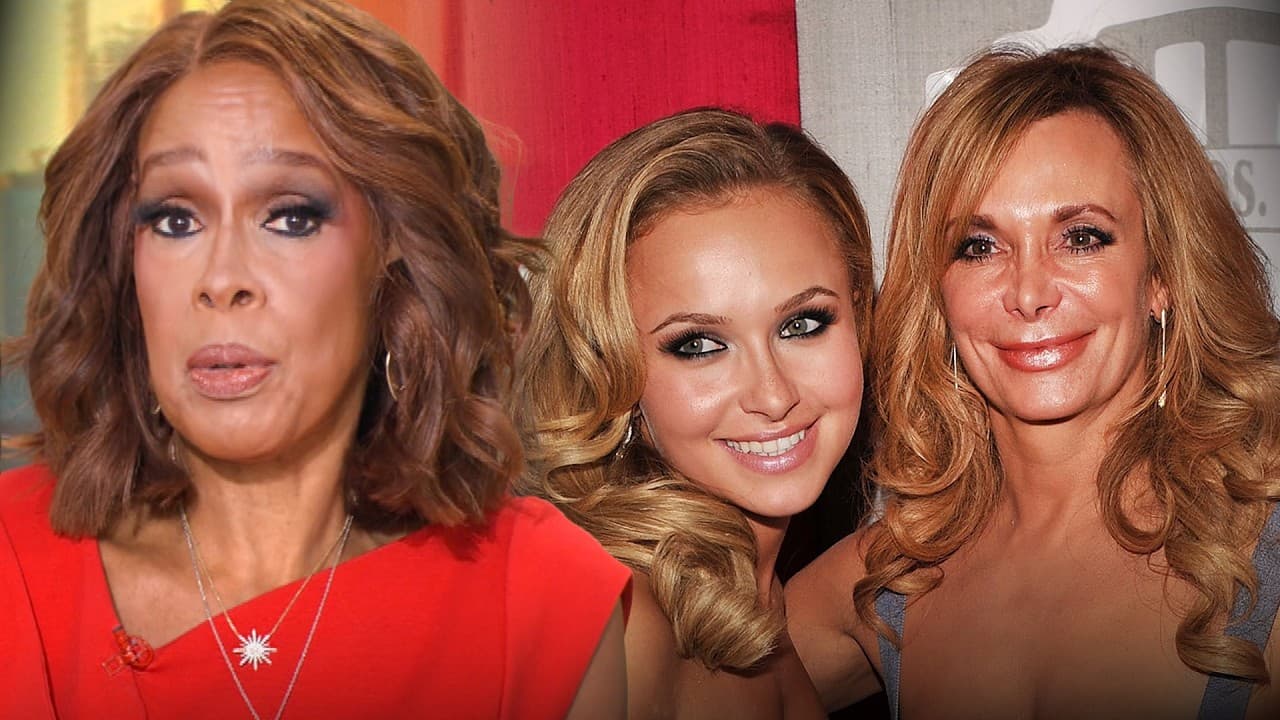
Gayle King does not rattle easily. The CBS Mornings anchor has navigated decades of live television, breaking news, and conversations with grieving families. So when she read a portion of Leslie Panettiere's statement aloud on air this week and said, simply, 'Thanks, Mom, for nothing,' the weight of that line was not accidental. It was a verdict.
Hayden Panettiere died on August 16th at 36. The cause of death remains under investigation, as our ongoing reporting on the toxicology findings has detailed. What followed was the predictable machinery of public grief: tributes from co-stars, retrospectives on Nashville and Heroes, the slow cataloguing of a life cut short. And then Leslie Panettiere issued her statement to NBC News, and the temperature in the room changed.
Her words. That Hayden had 'sadly lost her way,' that she wished her daughter had 'stayed true to herself'. Landed on a public that had spent years watching Hayden Panettiere do the opposite of hiding her struggles. The actress had been disarmingly honest about addiction, about the toll of early fame, about a mother she loved but could not rely on. King's response, delivered in a segment on Entertainment Tonight, was not a hot take. It was a reckoning.
What Gayle King actually said and why it cut through
Gayle King called Leslie Panettiere's post-death statement 'unseemly,' arguing that using the days after her daughter's death to remind the world of Hayden's failures. When Hayden could no longer respond. Was a fundamental breach of the moment.
King did not come out swinging cold. She read the statement. She let it sit. Then she named the thing that everyone watching had already felt but perhaps couldn't articulate: that a parent's public statement after a child's death carries an implicit obligation, and Leslie Panettiere had spent hers on judgment rather than grief.
The phrase 'lost her way' is doing a particular kind of work in a sentence like that. It implies a waywardness that originates with the person who strayed, not the circumstances around them. It centers the speaker's disappointment. And it arrives in a moment when the subject of the sentence is dead and cannot offer context, correction, or the full arc of her own story.
King's co-anchors on CBS Mornings noted the same thing she did: Hayden Panettiere had spent years in public forums acknowledging her own failures with remarkable candor — see What Zach Hickerson's Account Tells Us About Hayden Panettiere's Final Hours. She told interviewers about addiction, about the five-year death warning from her doctor, about cycles she could not break. She did not ask for absolution. She asked, quietly and consistently, to be understood. For her mother to walk into that space after her death and deliver a report card felt, as King put it, unseemly. That word choice was precise. Not cruel. Not wrong. Unseemly.
Who Leslie Panettiere is and what the estrangement actually looked like
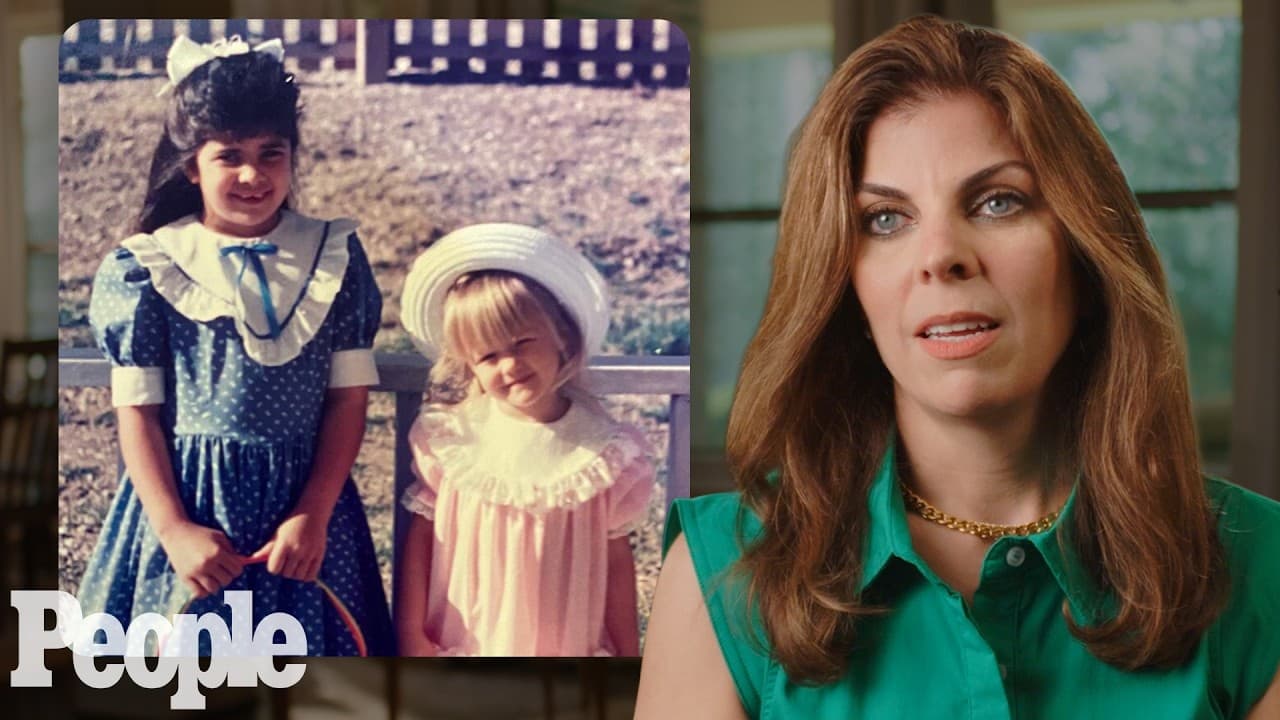
Leslie Panettiere managed Hayden's career through her child-star years until the pair split professionally when Hayden was 19. As recently as 13 weeks before her death, Hayden told Entertainment Tonight the relationship remained strained, describing a door her mother had 'slammed shut.'
Entertainment Tonight has been in the room for a long time with this family. Footage from Hayden's child-star years shows Leslie on-camera, present and involved. The kind of stage-parent adjacency that defined the early 2000s era of young Hollywood, where a child's career was often a family business by necessity and sometimes by design.
They split professionally when Hayden was 19. That is the clinical version. The lived version, as Hayden described it in the weeks before her death, was messier and sadder. She told ET she always kept the door 'cracked open' because, as she put it, who doesn't want a relationship with their mother. But she was clear-eyed about who had been doing the work of keeping that door ajar, and who hadn't.
The detail that lands hardest in retrospect is the timing. Thirteen weeks before she died, Hayden was still publicly processing a maternal relationship that had never healed. She was not bitter about it in a performative way. She was matter-of-fact, the way people get when they have accepted a loss they cannot fix. That interview, now, reads like a document.
Leslie's statement to ET after the death acknowledged the entertainment industry's pressures and called Hayden 'incredibly talented.' That is not nothing. But the sequencing. Judgment first, tribute second, systemic critique third. Shaped the way the statement was received. The order in which you say things is a choice.
"To use a child's permanent silence as an opportunity to deliver a verdict is to take advantage of an asymmetry that death makes final."
Why Hayden's public honesty about addiction made her mother's statement land worse
Hayden Panettiere had repeatedly and publicly acknowledged her own addiction struggles, including telling interviewers her doctor warned her she would be dead within five years if she did not stop drinking.
There is a specific kind of courage in being a famous person who tells the truth about addiction without dressing it up. Hayden Panettiere did that. She described the cycle plainly. The warnings from doctors, the inability to stop, the knowledge of what she was doing to herself running alongside the inability to do otherwise. That is not a person who has lost their way. That is a person fighting a disease while the cameras run.
The public record of her honesty is the thing that makes the maternal statement so dissonant. Leslie Panettiere was not speaking into a vacuum. She was speaking into a context in which her daughter had already given the world a richer, more accountable account of her own life than the statement now offered.
King's point, and it is well-taken, is that Hayden could not respond. In any living disagreement between a parent and an adult child, both parties can speak. Death ends that negotiation permanently and one-sidedly. To use that silence as an opportunity to deliver a verdict. Even a gentle one framed as disappointment. Is to take advantage of a permanent asymmetry. That is what King found unseemly. So did a significant portion of the audience watching.
The stage-parent industrial complex and who pays the bill
Child stardom in Hollywood has long operated on a family-business model in which a parent's income, identity, and social status become entangled with a child's career. Creating structural conflicts of interest that rarely resolve cleanly once the child reaches adulthood.
This is not unique to the Panettiere family. It is, in fact, one of the oldest and most reliably destructive dynamics in the entertainment business. When a child generates income, and that income flows through or to the parent, the relationship between caregiver and manager becomes impossible to cleanly separate. Our broader analysis of what Hayden Panettiere's life reveals about the cost of child stardom traces that pattern in detail.
Hayden was, by her own account, financially and emotionally supporting her family from a very young age. ET surfaced that history this week. The weight of it building across years until, by 19, the professional split had happened. But professional splits between parents and child stars rarely stay purely professional. The money was never just money. The career was never just a career.
What tends to follow is a long cold war. Not always explosive. Often just the low hum of unresolved resentment on both sides, complicated by love that is genuine but also tangled up in grievance. Hayden described that dynamic with unusual precision in her last ET interview. She wasn't angry, exactly. She was tired. And she was still, somehow, leaving the door cracked.
The entertainment industry does not build systems to protect children from this. It never really has. What it builds are deals, contracts, and schedules. And the human wreckage tends to surface later, in interviews like Hayden's, or in moments like this one, when a parent's statement becomes a news cycle.
What the CBS Mornings segment tells us about how grief gets mediated on television
When a celebrity anchor like Gayle King voices a moral judgment on air, it functions as a kind of institutional permission for the audience to feel what it was already feeling. And it shapes the narrative frame that all subsequent coverage inherits.
Morning television has a specific social function that distinguishes it from late-night or prime-time. It arrives in people's homes during the ordinary rhythms of the day. Coffee, getting the kids ready, the first scan of the news. The anchors carry an ambient authority that is less about breaking news and more about translating events into emotional categories. When King says something is 'unseemly,' she is not editorializing in the op-ed sense. She is doing the social work that the format exists to do.
That is not a criticism of King. She was, by most accounts, right. But it is worth noting what happens when that verdict gets issued on that platform. It becomes the lens through which subsequent coverage is organized. By the time entertainment outlets, social media, and the latest wave of reporting picked up the segment, Leslie Panettiere's statement had been definitively framed. And that framing is now essentially permanent.
Leslie Panettiere has since added context through a statement to ET, acknowledging the industry's pressures and describing Hayden as 'incredibly talented.' Whether that addition changes the read depends on when you encountered the story and in what order. For most people, the order was: King's verdict first, the fuller statement second. Sequences matter in media. They almost always win.
The grief-and-blame pattern after a celebrity death and why it keeps repeating
After a young celebrity's death, public attention consistently turns toward the question of accountability. And family members who were estranged from the deceased often find themselves at the center of that scrutiny, regardless of the legal or factual record.
This is a pattern with a well-worn shape. A young star dies. The circumstances are complicated. The public, already grieving, reaches for someone or something to hold responsible. Family estrangements that were known before the death become, in the aftermath, evidence. The broader reckoning around Hayden's family in the days since her death reflects exactly that dynamic. Grief doing its work through the grammar of blame.
That is not always unfair. Sometimes the blame is warranted. But it is worth holding two things at once: that Leslie Panettiere's statement was tone-deaf and poorly timed, and that grief makes people do strange things, including reaching for the familiar language of disappointment when the language of loss is too large to hold.
The estrangement was real. The pain on both sides. And there is always pain on both sides. Was real. What is also real is that a public statement is a choice, made in the hours when choices matter most. King was right to name it. And Leslie Panettiere, whatever her private grief looks like, is the only one who gets to reckon with what she chose to say.
What happens to Hayden Panettiere's legacy from here
Hayden Panettiere's public legacy is likely to be shaped more by the honesty she demonstrated in her final years. About addiction, about child stardom, about an industry that failed to protect her. Than by the roles that made her famous.
There is a version of celebrity death in which the career becomes the eulogy. Heroes, Nashville, the roles stacked up and replayed. That version exists for Hayden, and it will find its audience. But the interviews she gave in the months before her death. The ones where she talked about addiction without euphemism, about her mother without cruelty, about the industry with a kind of weary clarity. Those may carry further.
She was, in those final interviews, something rarer than a successful actress. She was a candid one. The entertainment industry does not produce many of those. It tends to produce people who have learned to manage their image and protect their brand and deliver the version of themselves that keeps the work coming. Hayden Panettiere, by the end, seemed to have stopped doing that. For better and worse, she was just telling the truth.
The film and television industry will catalogue her work. That is standard. What is less standard is what she left in the form of those interviews. A record of what it actually costs to grow up inside the machine, paid for in the currency of her own story. King's segment this week, whatever its limitations as morning-television grief processing, kept that record visible. That, at least, is something.
What Gayle King's decision to speak plainly actually cost and who benefits
By calling out Leslie Panettiere's statement on air, Gayle King absorbed the reputational risk of publicly criticizing a grieving mother. And in doing so, provided cover for the broader conversation about child-star exploitation and parental accountability that Hayden Panettiere had been trying to have for years.
Let's be clear about the asymmetry here. Calling out a grieving parent in the days after her child's death is not a costless move, even when it is the right one. King put herself in the position of being the person who said the thing no one else wanted to say first. And in doing so, she gave the subsequent conversation a moral anchor it might otherwise have lacked.
Who benefits? Hayden Panettiere's reputation benefits. The honest account of her struggles, her self-awareness, and her attempt to understand her own story benefits. Because King's framing insists on reading that account charitably, rather than through the filter of a mother's disappointment. Every reporter and outlet that has since covered the statement has operated within the frame King set.
And there is a larger conversation that benefits, too. The one about what the entertainment industry owes to the children it makes famous, and what accountability looks like when they don't survive it. That conversation is uncomfortable and economically inconvenient for a lot of powerful people. Hayden was trying to have it from inside. King, from the outside and with a large platform, pushed it further into the open. That is, ultimately, what the segment was for.