The Investigation Behind Hayden Panettiere's Death Is Just Beginning
A completed autopsy, pending toxicology, a bag of prescription bottles handed to police, and two unannounced visits to her boyfriend's family home. Here is what each of those facts actually means. And what comes next.
The autopsy is done. The coroner has noted no trauma, no external signs of foul play. On paper, that sounds like a story wrapping up. It is not.
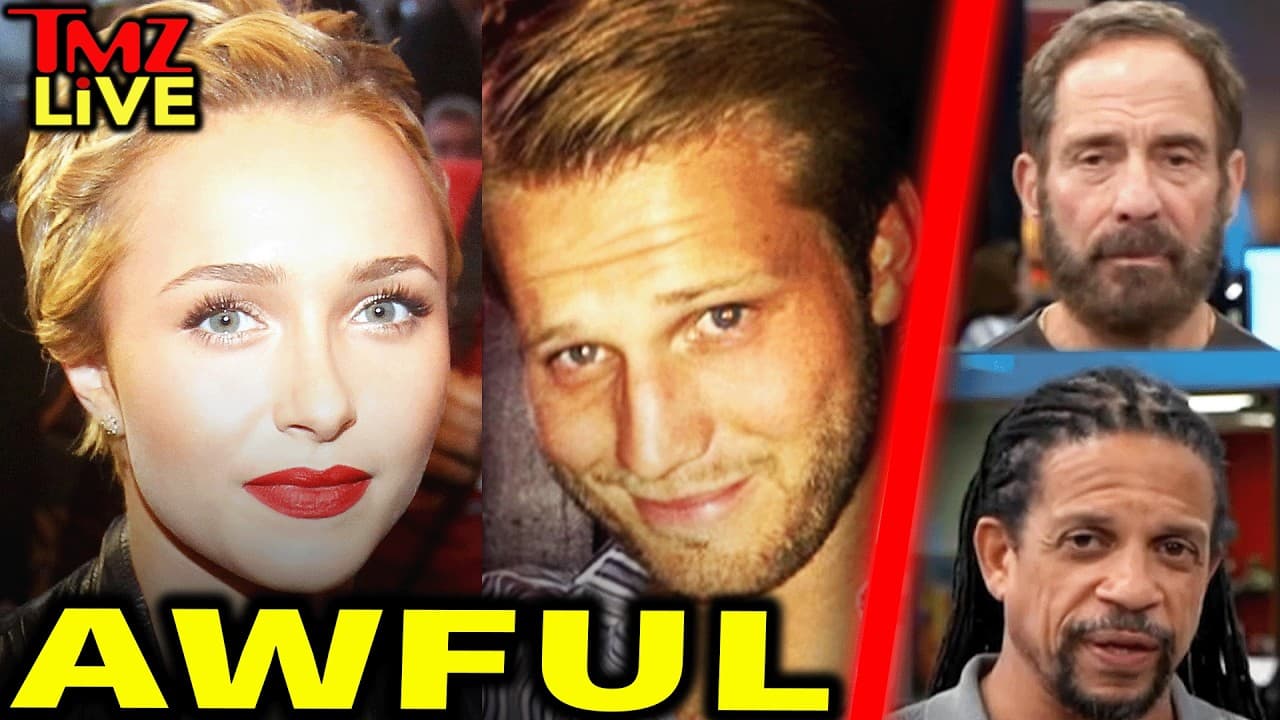
What is actually happening in the death of Hayden Panettiere. The actress who was 36 years old, who had spoken publicly about years of addiction, and who died of cardiac arrest. Is the opposite of a closed file. Law enforcement has opened a parallel criminal death investigation running alongside the coroner's standard inquiry. Toxicology results are pending. Police have shown up twice at the home of her boyfriend Brian Hickerson's family. And investigators are reviewing CCTV footage that traces Panettiere's movements in the hours before she collapsed.
That constellation of facts, reported by TMZ Live on August 19, does not amount to a criminal case. It does not name a suspect. But it represents a specific, intentional investigative posture. One that tells you a great deal about how authorities read the circumstances of a young woman's sudden death, and what they are still trying to understand.
Why police opened a criminal death investigation at all
Law enforcement opened a criminal death investigation into Hayden Panettiere's death primarily because a 36-year-old with no known pre-existing conditions dying of cardiac arrest. With reports of an overdose and the presence of Narcan at the scene. Automatically triggers scrutiny beyond a standard coroner's inquiry.
The threshold for a criminal death investigation is lower than most people assume. It does not require a suspect. It does not require evidence of wrongdoing. What it requires, in the assessment of law enforcement sources speaking to TMZ, is an unexplained death under circumstances that leave open the possibility. However preliminary. That a crime occurred. A 36-year-old with no known pre-existing health conditions dying of cardiac arrest clears that bar almost automatically.
Layer on top of that the specific details surfacing from the incident report: Narcan was present at the scene, reports of a possible overdose circulated early, and Hickerson handed police a bag containing prescription medications Panettiere had been taking around the time of her death. Each of those facts individually might not compel a criminal inquiry. Together, they add up to a picture that no responsible investigative agency could simply hand off to a coroner and walk away from.
The distinction worth grasping here is that 'no evidence of foul play' and 'no criminal investigation' are not the same sentence. The autopsy finding. No trauma contributing to death. Rules out a specific category of violence. It says nothing about what toxicology will or will not reveal — see Tom Hardy, Helen Mirren, and the Machinery Behind MobLand's 'Drama'. The criminal death investigation exists precisely to answer questions the autopsy alone cannot.
What the prescription bag means legally and investigatively
When Brian Hickerson handed police a bag of Panettiere's prescription medications at the scene, he effectively handed investigators their most critical pending piece of evidence. The contents will be cross-referenced against toxicology results to determine whether any prescribed or non-prescribed substance contributed to her…
The handover of that prescription bag is one of the most consequential details in this story, and it has received less scrutiny than it deserves. When a person dies unexpectedly and a bystander. Even a grieving partner. Volunteers a bag of medications to first responders, that bag becomes evidence. Its contents are inventoried. Each prescription is logged: who prescribed it, when, at what dosage, and how many pills remain versus how many should remain if the directions were followed.
That inventory will be set against the toxicology results when they come back. The central question is not whether Panettiere was prescribed medication. She was, apparently multiple prescriptions. The question is whether what was found in her system at autopsy matches what was prescribed, at what levels, and whether any combination of substances produced an interaction that contributed to cardiac arrest. This is a technical, pharmacological question. It is also, potentially, a legal one.
If toxicology reveals something that does not match the prescription record. An unprescribed substance, a dramatically elevated concentration, a combination that suggests someone supplied something outside a doctor's care. The nature of the investigation shifts. That is not a prediction. It is an explanation of the mechanics. The prescription bag is the investigative baseline against which everything else will be measured.
It is also worth noting what the bag's existence tells us about the scene itself — see What Zach Hickerson's Account Tells Us About Hayden Panettiere's Final Hours. Hickerson apparently knew where those medications were, collected them, and presented them. That speaks to a level of awareness of Panettiere's pharmaceutical situation that investigators will want to understand fully. Not as an accusation, but as context.
"The prescription bag is the investigative baseline against which everything else will be measured."
Why police visited the Hickerson family home twice
Police visited Brian Hickerson's family home twice in a single day, and while law enforcement told reporters the visits were prompted by neighbor complaints about intrusive media, the double return. Combined with the fact that Hickerson was Panettiere's boyfriend and was present the night she died. Makes him the most…
The official explanation for those two visits. That neighbors called to complain about media staking out the property. Does not fully hold up to operational logic. As TMZ's on-air analysis pointed out, when police respond to a nuisance media complaint, the standard move is to address the media directly: move them along, issue warnings, or detain anyone violating the law. You do not knock on the door of the house being staked out. Twice.
Hickerson is not a suspect in any publicly stated sense. But he is the most important witness in this investigation by an enormous margin. He was Panettiere's long-term boyfriend. He was with her in the period immediately preceding her death. He was apparently in the home. Asleep, per initial reports. When she died or was found. He was traveling with her. He handed over the prescription bag. And CCTV footage reviewed by investigators shows him, Panettiere, and his brother Zach moving through the apartment complex in the hours before her death.
In any death investigation of this kind, the person who last had sustained, intimate contact with the deceased is not a suspect. They are a primary witness. What did the hours before look like? What was her condition? What did they do, where did they go, was anyone else present, and what exactly happened between the time Hickerson went to sleep and the time Panettiere was found? These are questions that require a formal, on-record interview. The family home visits begin to look, in that light, less like a response to paparazzi and more like investigators locating their witness.
For more on the relational dynamics and public fallout following Panettiere's death, our earlier reporting at After Hayden Panettiere's Death, a Family's Grief Becomes a Public Reckoning lays out the grieving family's reaction and the very public tensions that have followed.
What CCTV footage can and cannot establish
CCTV footage showing Panettiere, Hickerson, and his brother Zach moving through the apartment complex in the hours before her death gives investigators a timeline of her physical condition and movements. But video alone cannot establish cause of death or criminal culpability without corroborating toxicological and witness…
Surveillance footage is a timeline tool first and foremost. It tells investigators when people arrived and departed, whether a subject appeared impaired, who was physically with them at what moments, and whether the account any witness provides matches the recorded reality. In a death investigation where the cause is still formally undetermined, a verified timeline is invaluable. And any gap in that timeline, any inconsistency between the video and a witness's account, immediately becomes a focal point.
What the footage apparently shows is that Panettiere, Hickerson, and Zach Hickerson were all present and in motion around the apartment complex in the period before her death. Investigators want to understand what state she appeared to be in, what the nature of those comings and goings was, and how those movements map to what any of the three people said happened that night.
The footage cannot, by itself, establish what Panettiere ingested or when. It cannot determine cause of death. But it can establish inconsistencies that prompt deeper questioning, and it signals something important about investigative intent: law enforcement is not treating this as a simple medical event. They are building a chronological case around her final hours, which is the standard procedure in any death where toxicology is pending and circumstances remain unexplained — see Dolly Parton Died at 80. The Hidden Cancer Battle Reframes Her Final Year..
Why Panettiere's public history with addiction shapes the investigation's frame
Panettiere had spoken openly in her own words about years of drug abuse, which means investigators are working with both a public record and a documented personal history that they are legally obligated to factor into their assessment of how a 36-year-old died of cardiac arrest.
There is a tension embedded in this investigation that the TMZ panel surfaced directly. One source pushed back on the idea that Panettiere's past should automatically color the investigation. 'you're getting over your skis,' that source said, when the implication arose that her history was the presumed explanation. Another voice on the panel said, bluntly, that they could not see how investigators ignore that history, particularly given that she had described her drug use in her own words, publicly.
Both positions have merit. The danger of a presumptive frame. 'she had a history of addiction, therefore this is an overdose, therefore nothing unusual happened'. Is that it forecloses the investigation before toxicology can answer the actual question. If something or someone outside Panettiere's own choices contributed to her death, that frame protects no one. The history is context, not conclusion.
At the same time, investigators would be professionally negligent to not factor in a documented history of substance use when evaluating a cardiac arrest death in a 36-year-old with no known pre-existing cardiac condition. That history informs what toxicologists are looking for, which substances to screen for at what thresholds, and what combination of substances might plausibly have produced the cardiac event that killed her.
Panettiere's story. The child star, the public struggle, the attempted recovery. Was one of the most closely watched arcs in celebrity culture over the past decade. Our longer analysis at Hayden Panettiere Is Gone at 36: What Her Life Reveals About the Cost of Child Stardom examines what her life and career actually cost her, beyond the headlines.
How long toxicology results typically take and what they will determine
Standard forensic toxicology results take four to twelve weeks from the time of autopsy, and when they arrive in this case they will be the single most determinative document in establishing both cause of death and whether any criminal referral is warranted.
Toxicology is not a fast process. Complete forensic screens. The kind performed in a high-profile death investigation involving possible substance involvement. Test for dozens of builds up across multiple panels. They measure concentrations, metabolite levels, and can determine, within reasonably tight parameters, when a substance was ingested and in what approximate amount. The results take weeks, sometimes longer if specialty screening is required.
In this case, the toxicology report will be the document that either closes the criminal inquiry or accelerates it. If the screen reveals only substances consistent with Panettiere's known prescriptions at therapeutic levels. Or reveals no substances of concern. The investigation's criminal dimension likely winds down, and cause of death is attributed to natural cardiac causes. If the screen finds something inconsistent with her prescription record, or finds a lethal combination that raises questions about how it got into her system, the investigation pivots sharply.
The parallel structure of the inquiry. Coroner's inquest running alongside the police criminal investigation. Is designed precisely for this moment. The coroner determines manner and cause of death. The police determine whether that death involved criminal conduct. Those are two different legal questions. The toxicology report informs both simultaneously, which is why both agencies are waiting on the same document.
Until those results arrive, every other piece of this story. The prescription bag, the CCTV footage, the visits to the Hickerson family home. Is scaffolding. The toxicology report is the building.
What the criminal investigation means for Brian Hickerson specifically
Brian Hickerson has not been named a suspect, but as the person who was present with Panettiere in her final hours, handed prescription medications to police, and has so far not given investigators a formal recorded interview, he occupies the most scrutinized position in this investigation short of being charged with anything.
Hickerson's name comes with its own prior public record. A domestic violence conviction involving Panettiere herself, a history that law enforcement is certainly aware of and that the public has not forgotten. That history does not make him a suspect in her death. It does mean that investigators are unlikely to extend him the benefit of the doubt on any ambiguity in his account of her final hours.
The mechanics of where he is in this investigation are important to understand. He is a material witness. He was present. He had access. He possessed and surrendered medications. He is the person who, logically, will be asked to sit down with detectives and give a formal, recorded account of everything that happened in the 24 to 48 hours before Panettiere's death. That conversation has not happened yet. Or at least has not been confirmed as having happened. The police visits to his family home suggest investigators are trying to make it happen.
None of this, stated plainly, constitutes evidence of wrongdoing. In a death investigation without a named suspect or established criminal cause, the witness closest to the deceased always occupies this uncomfortable middle ground: not charged, not cleared, simply the person who knows the most and whose account investigators need on record before they can draw any conclusions. Hickerson's position is procedurally logical. Whether it becomes legally consequential depends entirely on what toxicology shows.
You can follow all developing threads in this story through our latest reporting as results and official findings come in.
What the investigation's outcome will determine beyond the legal question
The investigation's findings will define how Panettiere's death is officially recorded in history. Whether as a tragic natural event, an accidental overdose, or something requiring criminal accountability. And that determination carries profound weight for how the industry reckons with the systems that shaped her life.
Death investigations in celebrity cases carry a weight that extends far beyond the legal record. They shape the public narrative that gets attached to a person's name permanently. The outcome here. Whatever it is. Will become the sentence that follows Hayden Panettiere's name in perpetuity — see Gayle King Said What the Room Was Thinking About Hayden Panettiere's Mother. That matters for her family, for the people who loved her, and for a much broader conversation about what the entertainment industry owes the young people it builds entire franchises around.
If toxicology reveals an accidental overdose with no third-party culpability, the story becomes one of a woman who never fully escaped an addiction that the industry handed her the conditions for. That is not a small finding. Child stardom's long, documented toll on mental health and substance use is one of entertainment's most persistent failures, and Panettiere. Who was working professionally before she was ten years old. Was inside that system for decades. Her story, in that scenario, joins a long and painful list.
If toxicology or the criminal investigation reveals something more complicated. A third party, a supply chain, a prescription pattern that doesn't add up. The legal and reputational consequences extend outward in ways that are not yet possible to map. The investigation, in that case, becomes a different kind of story entirely.
What the current moment asks of anyone covering this story is patience with ambiguity. The facts available right now. The autopsy findings, the prescription bag, the CCTV footage, the investigative posture. Are real and meaningful. But they are incomplete. The toxicology results will complete the picture. Until then, the only honest thing to say is that we do not yet know what killed Hayden Panettiere — see Leslie Vogel Steps Into the Spotlight. And Into the Crossfire. After Hayden Panettiere's Death. We only know that authorities are not prepared to say they know either.