Leslie Vogel Steps Into the Spotlight. And Into the Crossfire. After Hayden Panettiere's Death
Hayden Panettiere's mother is doing the interview circuit, blasting her daughter's boyfriend and demanding answers. The media strategy raises as many questions as it answers. About grief, about image control, and about who gets to write the final chapter of a celebrity's story.
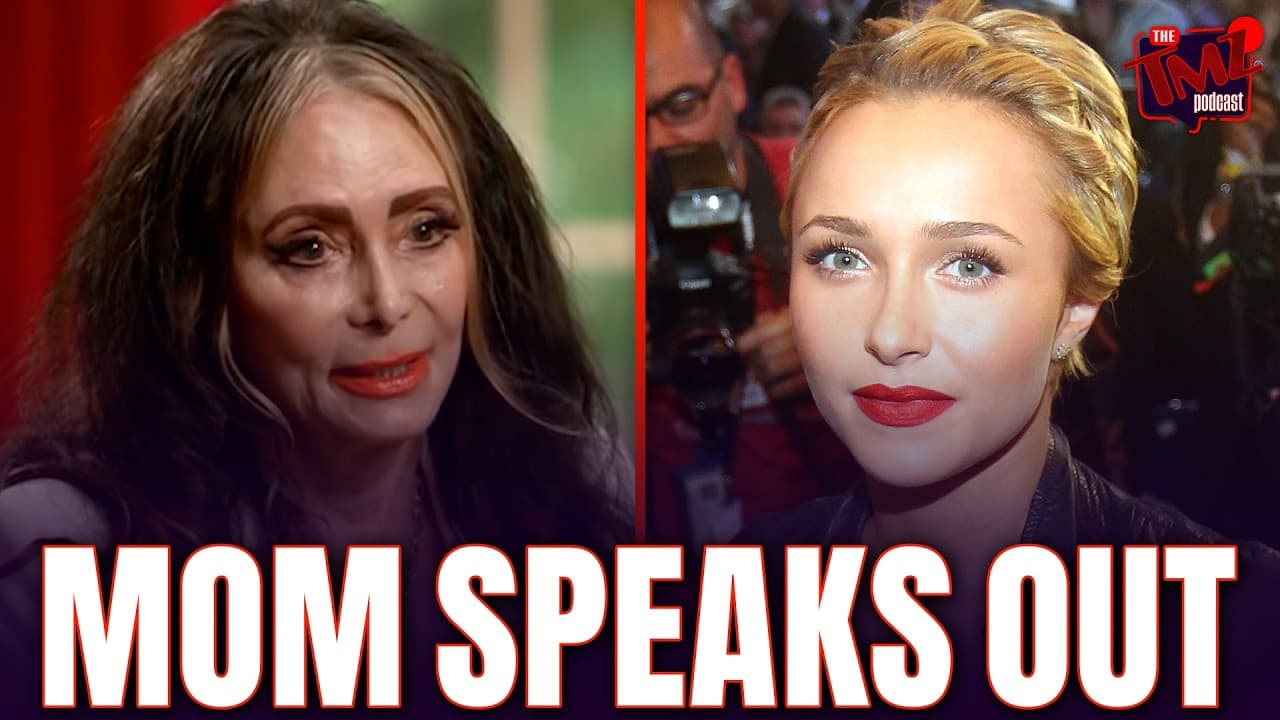
The last time Leslie Vogel and her daughter Hayden Panettiere spoke. Really spoke, not through intermediaries or social media. Is a question that now hangs over every interview Vogel gives. By most accounts, the two were not on speaking terms at the time of Hayden's death. Vogel had been estranged from her daughter and, critically, had been removed from the role she'd held for most of Hayden's life: her manager. That history does not disqualify her grief. But it does complicate her emergence as the loudest public voice in the immediate aftermath.
What Vogel is doing right now is something very specific. She has moved from a statement through NBC to a sit-down on Good Morning America to an interview with the New York Times. A full media circuit, executed in rapid succession, each stop adding a new accusation against Hayden's boyfriend, Brian Hickerson. The campaign has been sharp enough that Gail King and Megyn Kelly, as TMZ's podcast covered this week, publicly rebuked her for leading with Hickerson rather than with her daughter. That rebuke says something not just about optics but about the unwritten rules governing celebrity grief. Rules that Vogel, whether on purpose or not, has chosen to break.
This piece is not about whether Vogel's concerns are valid. The investigation into Panettiere's death is ongoing, Hickerson has a documented history of domestic violence charges against Hayden, and the questions being raised about timelines and evidence deserve serious attention. This piece is about the mechanics of what is happening: the media strategy, the power dynamics, the question of who controls the posthumous narrative of a woman who was, for a long time, one of the most recognizable faces on American television. And who, in the last years of her life, was getting through addiction, estrangement, and a public that remembered her as someone she was still trying to become again.
Leslie Vogel and Hayden Panettiere had a fractured relationship long before this moment
Leslie Vogel, Hayden Panettiere's mother, had not been on speaking terms with her daughter at the time of Hayden's death, despite having managed Hayden's career for most of her life. The estrangement had been widely reported before Hayden's passing.
Hayden Panettiere was a child actress before she was anything else, which means her mother was embedded in the machinery of her career from the very beginning. Vogel served as her manager. The person who fielded the calls, negotiated the deals, shaped the brand. That arrangement is not unusual in the child-star ecosystem; it is, in fact, the default. What it creates, though, is a relationship in which the parent's professional identity and the child's professional identity become fused in ways that can be extraordinarily difficult to separate as the child grows into adulthood and starts making her own choices.
By the time Hayden reached the back half of her thirties, the fusion had broken down. The details of the estrangement are not fully public, but the fact of it is: the two were reportedly not speaking at the time of her death. Vogel had also been removed from the management role she had held since Hayden's earliest years in the industry. The loss of that professional connection likely compounded whatever personal fractures had developed between them.
This context matters enormously when you assess Vogel's current media posture. She is not a grieving mother who was by her daughter's side in her final years and is now speaking from the center of that experience — see Dolly Parton Died at 80. The Hidden Cancer Battle Reframes Her Final Year.. She is a grieving mother who was largely outside the perimeter of her daughter's life. Kept there, in part, by Hayden herself. That doesn't mean she has nothing to say. But it does mean the authority from which she speaks is contested in ways that the standard bereaved-parent narrative tends to obscure.
Why leading with Brian Hickerson drew immediate backlash from other media figures
When Vogel's first public statements after Hayden Panettiere's death focused primarily on attacking Brian Hickerson rather than memorializing her daughter, television personalities Gail King and Megyn Kelly criticized the approach as inappropriate, arguing that it prioritized grievance over mourning.
There is an unspoken grammar to celebrity grief, and Vogel broke it early. The expected sequence runs something like this: you express shock and devastation, you speak to the person's gifts and legacy, you ask for privacy, and you allow some time to pass before you start pointing fingers. Accusations. Particularly accusations of the pointed, investigative variety that Vogel has been making about Hickerson. Are supposed to come later, if they come publicly at all.
Gail King and Megyn Kelly, two anchors who have a combined century of experience reading the rhythms of celebrity media moments, called it out directly. The criticism was not that Vogel shouldn't have concerns about Hickerson. It was that launching into them as the opening statement of your public grief reads as agenda-setting rather than mourning. It reads, in the language of media strategy, like someone who came ready.
Whether that reading is fair is a separate question. Grief does not follow a script, and Vogel's anger at Hickerson is not new. It predates Hayden's death by years, rooted in his 2020 domestic violence arrest. A mother who watched her daughter stay with a man who had been charged with hitting her, and who could not stop it, and who then found herself estranged from that daughter, might have a great deal of compressed fury that simply cannot wait its turn. The point is not that Vogel is wrong to feel what she feels. It is that the public expression of grief-plus-accusation in rapid succession is a media act, whether or not it is intended as one. And it will be read and judged as one.
"The first voice tends to set the frame. And Vogel, whatever her motives, has claimed that ground decisively."
What the allegations about Brian Hickerson and Hayden's property actually suggest
Leslie Vogel has alleged in interviews, including one with the New York Times, that Brian Hickerson was attempting to sell items belonging to Hayden Panettiere. Including a vintage guitar. From a storage unit, a claim that adds to the broader scrutiny surrounding Hickerson's conduct in the aftermath of her death.
The most concrete new allegation Vogel has made. Beyond questioning the official account of events. Is the claim about property. In her New York Times interview, she alleged that Hickerson was attempting to pawn or sell items from a storage unit belonging to Hayden, including a vintage guitar. This is the kind of allegation that, if substantiated, would carry genuine legal and moral weight. It would also fit a pattern that Vogel is clearly trying to establish in the public record ahead of whatever conclusions the ongoing police investigation produces.
Investigators, for their part, have noted they have security footage of everyone entering and leaving the Airbnb where Hayden died, along with timestamps. There is a known timeline gap that observers are scrutinizing: Hickerson's brother Zach has said he went to church that morning, could not reach the couple, and came to check on them when they were supposed to leave for lunch. If the footage narrows or widens that window materially, it will matter. The presence of Narcan. A naloxone reversal agent for opioid overdose. At the scene has also been noted publicly, though it is worth stating plainly that having Narcan on a vacation is the behavior of someone who is aware of the risks involved in substance use and is taking precautions, not necessarily evidence of anything more sinister.
Hickerson has not responded directly to Vogel's accusations, and there is a plausible strategic reason for that silence: responding publicly while a police investigation is active is a legal exposure that no sensible lawyer would sanction. His brother did release a statement specifically to counter the theory. Circulating on social media. That Zach had used the Narcan on Hickerson rather than on Hayden. The family says Hickerson administered the drug to Panettiere himself. None of that resolves the underlying questions about timeline, cause of death, or the nature of the relationship in its final days. For that, we wait.
The police investigation: what is known and what remains open
Police have confirmed they recovered security footage documenting everyone entering and leaving the Airbnb where Hayden Panettiere died, along with corresponding timestamps. The investigation is ongoing, and no charges have been filed as of the time of publication.
The redacted police report that has circulated publicly confirmed the existence of security footage but did not specify what it shows. Only that investigators have access to a documented record of movement in and out of the property. That is a significant investigative resource. It means there is a potential factual baseline against which any account of who was where and when can be checked.
The circumstances of Panettiere's death have not been officially categorized. The presence of Narcan indicates that either someone administered it before or after she lost consciousness, or it was simply kept on hand. Both possibilities consistent with what is known about her history with substance dependency, which she had spoken about publicly with unusual candor in interviews over the years. Hayden Panettiere was not a celebrity who hid her struggles. She spoke about her postpartum depression, about her relationship with alcohol, about the difficulty of staying sober, in terms that were considered remarkably honest for someone of her profile.
That openness is part of why her death has landed with the weight it has. She was not a cautionary tale the public had distanced itself from. She was someone people felt they knew in some genuine way, because she had let them in. The investigation will determine what happened in a legal sense. But the public narrative is already being shaped, and the shaping has begun.
Hayden Panettiere's career arc: from Heroes to Nashville and what the industry did with…
Hayden Panettiere rose to international fame playing cheerleader Claire Bennet on Heroes starting in 2006, then rebuilt her career as country singer Juliette Barnes on Nashville. A role that earned her a Golden Globe nomination and showcased vocal talent that many casual fans were unaware she possessed.
It is worth pausing on what Panettiere actually built, because the final years of her life. Marked by addiction struggles, custody battles, and tabloid coverage. Can obscure just how much she accomplished across three distinct phases of a career that began when she was an infant in commercials. She was a working actor before most children have learned to read. By her early twenties she was carrying a major network drama as its emotional center.
Heroes, which debuted in 2006, made her a genuine pop-culture phenomenon at a moment when that still meant something specific: network television, mass audiences, a face on every magazine cover. Her character. The cheerleader who could not die. Became one of the show's defining images. Then, as Heroes declined and she moved into her late twenties, she did something that most actors in her position do not manage: she pivoted entirely and made it stick. Nashville, the ABC drama that ran from 2012 to 2018, cast her as Juliette Barnes, a volatile, commercially savvy country star, and the role revealed a singer-songwriter dimension to her talent that the industry had not fully explored. She earned a Golden Globe nomination. She recorded music. She performed it live. It was, in every meaningful sense, a second act.
That second act, and the third act she was clearly working toward, is what makes the circumstances of her death feel particularly unfinished. She was 35. She had spoken in interviews as recently as 2023 about wanting to work more, about being ready. For those tracking film and television careers at this level, the question of what she might have done next is not a minor footnote. It is the central tragedy. You can read our full account of what is known about her final hours in a separate piece.
How the posthumous narrative of a celebrity gets written. And who fights to control it
When a celebrity dies, control of their posthumous narrative typically defaults to whoever speaks first, speaks most often, and has the closest proximity to the person's professional legacy.
The mechanics of posthumous celebrity narrative are rarely discussed openly, but they operate with their own logic. The first voice tends to set the frame. Vogel moved fast. Initial quotes through NBC, then Megyn Kelly, then Good Morning America, then the New York Times. That is a sophisticated sequencing, building from a written statement to broadcast to prestige print, each outlet lending the next additional legitimacy. Whether Vogel understood she was executing a media strategy or whether she simply responded to every request that came in, the effect is the same: she is, right now, the dominant voice in how Hayden's death is being contextualized.
Hickerson has no equivalent platform, and more importantly, has legal reasons to stay quiet. His silence. However prudent. Cedes the public field entirely. In the court of media opinion, silence reads as concession or guilt regardless of what it actually reflects. He is losing a narrative war he may not be permitted to fight.
The deeper issue is structural. Hayden Panettiere, at the time of her death, did not appear to have active management or a publicist shaping her public profile in the way that major stars with functioning careers do — see The Hayden Panettiere Investigation Has a Target, and a Warning Hidden Inside It. That institutional machinery. When it exists. Serves partly as a buffer in exactly these situations: it can coordinate a response, hold off premature statements, push back on unfair narratives. Without it, the story gets built by whoever shows up and talks. Vogel showed up. She is talking. And absent a competing voice with comparable access and reach, her account will form the skeleton of the public record, at least until the investigation concludes.
What Leslie Vogel's media blitz reveals about the economics of grief in the celebrity…
The rapid, multi-outlet media circuit that Leslie Vogel is conducting after Hayden Panettiere's death reflects a well-established pattern in which grieving family members of deceased celebrities become, whether intentionally or not, the primary drivers of ongoing media coverage. And the economic beneficiaries of that coverage…
It would be reductive to frame what Vogel is doing as purely transactional. Grief is real. Anger at a man she believes was bad for her daughter is, by every available account, longstanding and genuine. But the celebrity press ecosystem does not draw a clean line between authentic emotion and media opportunity. It monetizes both simultaneously, and everyone inside it understands this, even if they do not say so.
Good Morning America books a grieving mother because grief drives ratings. The New York Times runs the interview because it generates traffic and establishes the paper's place in an ongoing news story. TMZ covers the circuit because its audience wants the latest development in a case with active investigative stakes. Each outlet extracts value from Vogel's willingness to speak, and Vogel extracts value in return. The platform to shape a narrative about her daughter and about Hickerson that she could not otherwise command. This is how the attention economy processes death at the celebrity level. Nobody is necessarily cynical. The system is just built this way.
The interesting question going forward is what Vogel does after the immediate circuit exhausts itself. Or after the investigation produces a conclusion that either validates or complicates her account. If the investigation surfaces evidence that supports her characterization of events, she will be vindicated and her rapid public move will look prescient. If it does not, she will have spent her daughter's immediate aftermath on accusations that the record did not ultimately support, and that story will be told too. The stakes of the media strategy are, in that sense, very real. For Vogel's own legacy in this story, not just for Hickerson's.
How Hayden Panettiere deserves to be remembered
Hayden Panettiere was a working actor for over three decades, best known for her roles in Heroes and Nashville, who also demonstrated genuine musical talent and spoke with unusual public candor about addiction and mental health. A legacy that deserves to be the center of the conversation surrounding her death.
Vogel said it plainly on Good Morning America: she wants Hayden remembered for who she was. Talented, outgoing, intelligent. That desire is right, even if the surrounding media moment is complicated. Panettiere built something real across a long career in an industry that discards people constantly and without ceremony. She survived the child-star transition, which most do not manage cleanly. She found a second major role that challenged her in new directions. She sang, and she was good at it. A fact that surprised even some of her established fans.
She also modeled a kind of public honesty about addiction and mental health that, in a culture still learning how to talk about these things without stigma, had genuine value. She did not hide. She did not issue careful statements drafted by publicists that acknowledged nothing specific. She spoke in real terms about real experiences, and people responded to that. Her fans were not merely nostalgic. They were invested in her as a person getting through something difficult, and they were rooting for her.
The latest reporting on the investigation into her death will continue to surface in the weeks ahead. So will Vogel's interviews, and likely Hickerson's eventual response. All of it will be framed, at some level, as news. But underneath the news machinery is a woman who was 35 years old and who, by her own account, was not done. With work, with recovery, with figuring out what came next. That is the loss. The rest is the story the industry tells around it. For those tracking the full sweep of her career across music and film, what Panettiere leaves behind is not a cautionary archive. It is an incomplete one. And that incompleteness is the sharpest thing about all of this.