Dolly Parton Is Dead at 80. Her Family's Farewell Was as Intentional as Everything Else She Did.
The announcement came via a security guard turned nephew-in-arms, and it was exactly the kind of controlled, personal, unmistakably Dolly exit that a woman who spent 60 years managing her own image would have designed herself.
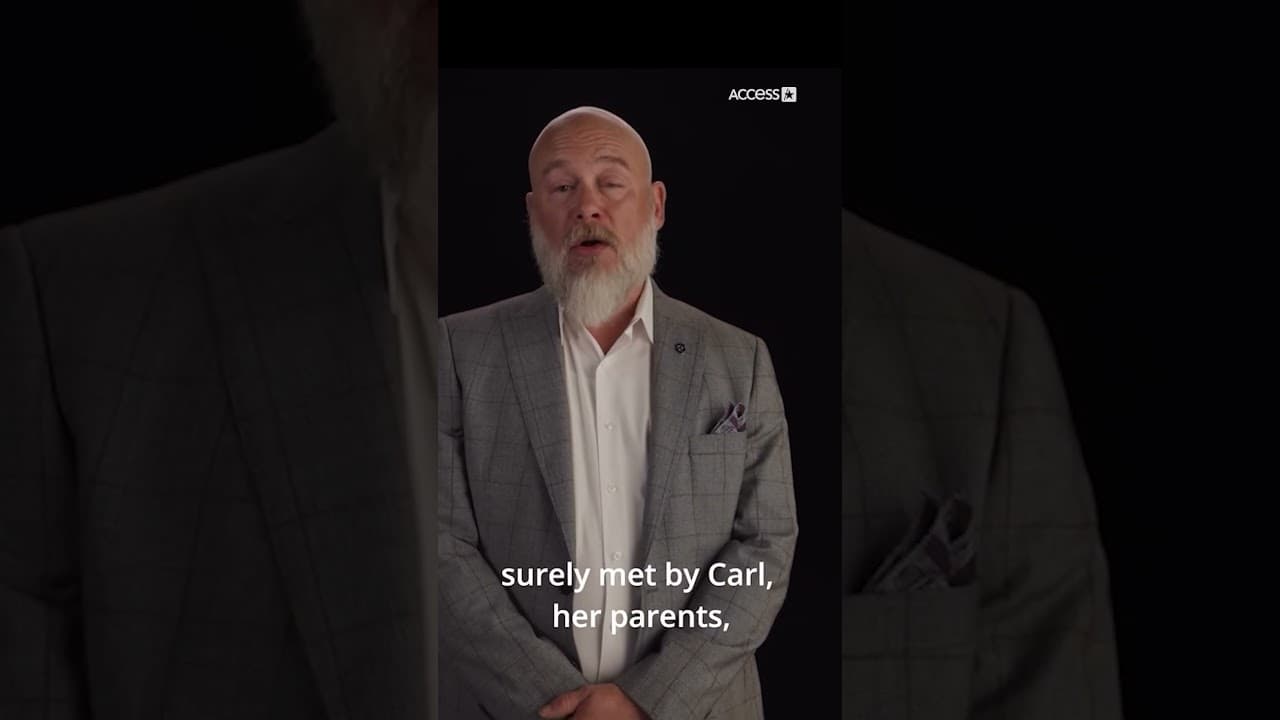
The message went out on a Tuesday. Not through a label publicist or a crisis communications firm. Not through a cold wire-service release. It came from Bryan Seaver, son of Cassie Parton, head of security for Dolly Parton, the job his father Larry held before him, speaking directly to camera, voice measured, grief real but composure intact. He called her Sister. Sis. Aunt. Granny. GG. He said she wanted to be buried not in rhinestones but in plush cotton, because she'd earned the rest.
Dolly Rebecca Parton Dean died on August 25, 2026, at the age of 80. The world learned about it the way she had apparently planned, from family, in plain language, with a line that sounded exactly like her: a farmer, just like her daddy. He farmed the soil. She farmed songs and happiness.
That framing was not accidental. Nothing about Dolly Parton's public presentation ever was. In a career that spanned seven decades, 3,000 songs, 25 number-one country hits, multiple films, a theme park, and a philanthropic apparatus that put over 300 million free books into the hands of children worldwide, she built one of the most durable personal brands in American entertainment history, and she understood, with unusual clarity, that the exit would be part of the story too.
How Dolly Parton died and what her family has confirmed
Dolly Parton died on August 25, 2026, at the age of 80. Her family confirmed the news through Bryan Seaver, her nephew and head of security, in a video statement made on behalf of the Parton and Owens family.
The official announcement, delivered by Bryan Seaver to camera on behalf of the Parton and Owens family, contained almost no medical detail. Seaver, who described himself as the son of Cassie Parton and Dolly's head of security for more than two decades, a role his father Larry held before him, did not name a cause of death. He spoke of Jesus, of Carl (Dolly's husband, who predeceased her), of parents and friends waiting in heaven. He read from what was clearly a prepared text, the kind of statement a person drafts years in advance and hands to someone they trust absolutely.
That trust is its own data point. The Parton family's inner circle is a working institution, not a celebrity entourage. Seaver's father had the same job. The security apparatus that travels with a major artist over two or three decades becomes something closer to an extended household, and the fact that the family turned to that person, not a manager, not a label rep, to carry the news tells you something about how Dolly Parton organized her loyalties — see Dolly Parton Is Laid to Rest. Her Nieces Carry the Weight of Her Name Forward..
TMZ confirmed the death was reported on August 25, noting in their broadcast that Parton was 80 years old and that health struggles had been visible in the months prior: kidney stones, digestive issues, immune complications. Her husband Carl Dean had died before her. The observation made on air, that broken-heart syndrome is real, that she didn't want to be without her man, may be folk medicine, but it captured something about the final chapter that the medical record alone wouldn't.
Dolly Parton's health decline: what she said and what she hid
Dolly Parton began showing public signs of health trouble in late 2025, when she postponed her Las Vegas residency citing health challenges. She publicly downplayed her condition, and her manager attributed her difficulties to kidney stones, though immune and digestive issues were also reported.
She was characteristically sly about it. 'I know lately everybody thinks that I am sicker than I am,' she said at one point, with a smile that dared you to disagree. 'Do I look sick to you?' The line landed as comedy. In retrospect it reads as the kind of misdirection she had perfected, giving you the truth wrapped in performance so you couldn't quite clock which was which.
Access Hollywood's retrospective traced the timeline carefully: a Las Vegas residency postponed last September due to what was described only as health challenges, then an October video posted after her sister Frieda indicated Dolly hadn't been feeling her best, then a canceled appearance at Dollywood in Tennessee that sparked the first wave of national concern. Each disclosure was reactive and minimal. Her manager moved to contain the speculation, citing kidney stones. The public accepted it, largely because Dolly Parton had always seemed indestructible.
A friend who called into CBS News after the death was announced captured something essential: 'No matter what was happening, she was either going to go with it or it was going to get better. And it was a spirit that was always thinking the best was happening, the best was going to happen — see The Lindsay Clancy Jury Is Deadlocked. That Outcome Was Always Likely..' That's a description of temperament, but it's also a description of a communications strategy. You don't share what doesn't serve the story you're telling. Dolly Parton was always telling a story.
What makes the final months particularly striking is that as recently as one month before her death, she was releasing promotional material for a new Broadway stage show, *Dolly: A True Original Musical*, built around her own life story, from the Smoky Mountains of Tennessee to Hollywood. She was, to the last, thinking about the work. That discipline is rarer than it sounds in an industry that often collapses in on itself when a body starts to fail.
"She chose the messenger, shaped the message, and got there first. Even in death, she controlled the frame."
The scale of Dolly Parton's career in numbers
Dolly Parton wrote more than 3,000 songs over a career spanning seven decades, with 25 of them reaching number one on the country charts. She was a Grammy winner eleven times over, and her philanthropic Imagination Library distributed more than 300 million free books to children worldwide.
The numbers are almost absurd in their accumulation. Eleven Grammy wins. More than 3,000 songs written. Twenty-five number ones. A first hit, 'Dumb Blonde', in 1967, which means she was charting more than a decade before most of the artists who would cite her as an influence were born. Her career didn't arc so much as it stratified: the early country years, the crossover pop moment, the film work (*9 to 5*, *Steel Magnolias*), the theme park, the philanthropy, the late-career cultural canonization that made her a kind of secular saint.
Dollywood alone is a significant economic engine in eastern Tennessee, a genuine regional employer and tourist draw that outlived the novelty of celebrity-branded attractions because it was built with enough substance to sustain repeat visits. The Imagination Library, her book-gifting program for children under five, has put more than 300 million books into circulation globally. That is not a vanity project. That is infrastructure. For a deeper accounting of what that empire was worth, the Neon Hollywood Atlas has tracked her business holdings across the years.
The breadth matters because it insulates legacy. When you are merely a recording artist, your cultural relevance is subject to the tides of streaming algorithms and the tastes of whatever generation is currently setting them. When you are also a real-estate operator, a theme-park proprietor, a publishing catalog, a philanthropic institution, and a Broadway brand, your relevance becomes structural. It doesn't depend on whether teenagers know who you are. It just persists.
Her music catalog alone, the publishing rights to songs she wrote, including 'I Will Always Love You,' which Whitney Houston turned into arguably the most commercially successful ballad of the twentieth century, represents an asset that will continue to generate income long after the grief cycle runs its course. For a full account of what that catalog means for her estate, see our companion piece on the business empire she built.
Why the family-controlled announcement was a final act of brand management
By assigning the death announcement to a trusted family member rather than a publicist or label, Dolly Parton's estate sidestepped the cold, transactional register of corporate celebrity communications and ensured the first public impression of her death matched the warmth of her public persona.
The mechanics of how a celebrity death gets announced are rarely examined but they carry enormous weight. A statement from a law firm signals estate litigation risk. A label release signals that the business relationship is primary. A publicist statement signals managed distance. A family member, on camera, speaking in plain language about cotton and rhinestones and farming and Jesus, that signals something entirely different. It signals that the person who died was, in fact, a person.
Bryan Seaver's delivery was not polished in the television-trained sense. He paused. He felt the weight of what he was saying. But the text itself was precise, it hit every note that Dolly Parton's public identity required: faith, family, humor, humility, love for her audience. 'She will always love you,' he closed. Four words that echoed the title of her most famous ballad without being maudlin about it. That is not a coincidence. That is craft.
This is the kind of exit that gets studied. In the same way that a company's earnings call reveals as much about its internal culture as its balance sheet, the way a public figure's death is announced tells you how that person thought about their relationship with their audience. Dolly Parton thought about it seriously, for a long time, and she delegated the task to someone who had been by her side for decades rather than someone who was paid to manage the optics of exactly this kind of moment.
Compare it to how celebrity deaths have been announced in the social-media era, the chaotic racing of outlets to confirm, the family statement that arrives hours later and feels almost beside the point, and the Parton approach looks like a intentional rejection of that chaos. She chose the messenger, shaped the message, and got there first. Even in death, she controlled the frame.
The legacy of 'I Will Always Love You' and what the catalog is worth
Dolly Parton wrote 'I Will Always Love You' in 1973, and the song became one of the best-selling singles in history when Whitney Houston recorded it for The Bodyguard in 1992. Because Parton retained the publishing rights, she earned the songwriter's share of every sale and stream of Houston's version.
The story of 'I Will Always Love You' is the cleanest possible illustration of what publishing rights mean in the music business — see D4VD Had $11 Million and Now Has a Public Defender. The Music Business Explains Both Facts.. Parton wrote the song. Elvis Presley's manager, Colonel Tom Parker, wanted Elvis to record it but insisted on a co-publishing deal as a condition, a standard power move of the era. Parton walked away. Elvis never cut it. Parton's own version went to number one twice on the country charts. And then Whitney Houston recorded it for *The Bodyguard* in 1992 and turned it into something that transcended genre, decade, and geography.
Because Parton held her publishing, she earned the writer's royalties on every unit Houston's version sold, every time it was licensed, every time it streamed. The figure is not precisely public, but the scale is not in dispute: *The Bodyguard* soundtrack is one of the best-selling albums in history. For a songwriter's share of that, over three decades of exploitation, the number runs into the tens of millions at minimum. It is the single most vivid example in country music of what happens when an artist refuses to surrender their intellectual property.
The broader catalog, 3,000-plus songs, many of them still actively licensed for film, television, and advertising, is the kind of asset an estate can monetize across generations. The mechanics of how that catalog will be managed, who controls it, and what it earns going forward are questions that will define the financial story of her legacy for the next several decades. Our music wealth coverage has tracked the royalty economics underlying her career in detail.
Dollywood, the Imagination Library, and the infrastructure of her philanthropy
Dollywood is a theme park in Pigeon Forge, Tennessee that Dolly Parton co-developed and branded in 1986, making it one of the most-visited regional theme parks in the United States. Her Imagination Library program has gifted more than 300 million books to children under five in multiple countries.
The Imagination Library is the part of the Parton legacy that tends to get mentioned as a footnote after the music and the movies, which is exactly backwards. Distributing more than 300 million books to children under five, across multiple countries, is a feat of logistics and sustained funding that most governments would struggle to replicate. It is also, in the most unsentimental terms, a brand-building exercise of extraordinary long-term effect: every child who grows up with a book that arrived in the mail because of Dolly Parton carries that association for life.
Dollywood, meanwhile, is not a vanity attraction. It has expanded steadily since its 1986 rebranding, adding a water park and resort hotels, and it drives significant tourism to a part of Tennessee that had limited economic infrastructure before it arrived. The park employs thousands of people in the Pigeon Forge and Sevierville area. It has outlasted the window when celebrity-themed parks typically fade because it was built with genuine rides, genuine craft programming, and genuine regional identity rather than simply a famous name on the gate.
Both institutions, the Imagination Library and Dollywood, will continue to operate. The question of what happens to each without the founding personality at the center is one that every brand-as-person eventually faces. The Disney comparison is instructive if imperfect: Walt died in 1966 and the company continued, but the first two decades after his death were arguably the weakest creative period in the studio's history. The Parton estate will need stewards who understand that the institutional mission and the personality were inseparable, and that trying to extract one from the other risks hollowing out both.
How the world responded: tributes from London to Nashville
Tributes to Dolly Parton's death included the Empire State Building's lights turning pink, fans laying flowers at her star on the Hollywood Walk of Fame and outside the Country Music Hall of Fame Museum in Nashville, and stunned gasps from theatergoers at the London West End opening night of a stage adaptation of her film 9 to…
The geography of grief tells you something about reach. Nashville was expected, flowers on the star outside the Country Music Hall of Fame, the hometown mourning its most famous daughter. Hollywood was expected, wreaths at her Walk of Fame star, the industry observing its own. The Empire State Building going pink was a civic gesture of the kind reserved for figures who have passed from celebrity into something closer to shared cultural property — see The 78th Emmys Belonged to Widow's Bay, and the Woman Who Dared to Host.
London was the surprise, or at least the most vivid image: theatergoers at the West End opening night of a *9 to 5* stage adaptation hearing the news mid-performance and gasping, audibly, in a darkened theater in a country where Dolly Parton was never a country music radio staple — see Jada Star Steps Into the Light After Dolly Parton's Death. She crossed over in ways that had nothing to do with format. She crossed over because her personality was legible across any cultural context, the wit, the self-deprecation, the refusal to take herself seriously while taking her work with complete seriousness.
That the West End production was running at all is its own testament to the durability of her film catalog. *9 to 5* is a 1980 workplace comedy that has been repurposed as a feminist text, a labor-movement touchstone, and now a stage musical, each transformation adding a new generation of audience and a new revenue stream. For more on how her film legacy operates as an economic asset, the question of who profits from those adaptations going forward is already in motion.
What happens to the Dolly Parton estate and legacy business now
Dolly Parton's estate includes a substantial music publishing catalog, the Dollywood theme park enterprise, the Imagination Library charitable program, and active theatrical properties. The management of those assets will determine whether her commercial legacy builds up or slowly depreciates in the decades ahead.
The first question any estate faces is continuity of control. Parton was reportedly careful about this, the fact that she pre-planned her death announcement, that she had a trusted security head from a family who had served her for two generations, suggests a woman who had thought about succession seriously. But thinking about it and solving it are different problems, and the legal architecture of her estate is not yet public.
The music publishing catalog is the crown asset. Publishing catalogs have traded at extraordinary multiples in recent years, primary song catalogs from artists of Parton's generation and commercial footprint have sold at twenty times annual royalty income or higher, in some cases. Whether the Parton estate chooses to sell, license, or hold and operate those rights will shape the financial story of her legacy for decades. The hidden dimensions of her final-year health battle and what it meant for estate planning are explored in our separate deep dive.
The Imagination Library poses a different kind of challenge. It is a philanthropic institution, not a commercial one, but it runs on the energy and credibility that Parton herself provided. Major donors gave because Dolly asked. Corporate sponsors signed on because of her name and her reach. The board will now need to make the case that the mission sustains the brand rather than the reverse, a transition that is genuinely hard and that many celebrity-founded nonprofits fail to get through cleanly.
The Broadway show, *Dolly: A True Original Musical*, for which she was releasing promotional material just weeks before her death, may prove to be a complicated asset. A biographical stage show about a living legend operates on different emotional terms than one about someone who has died. The producers will need to decide quickly whether to frame the production as a celebration, a memorial, or something in between. Whatever they choose, the show's timing, coming to audiences now, in the immediate aftermath of her death, gives it a cultural weight it might not otherwise have carried. That is, in its own strange way, a final gift from a woman who always understood the relationship between timing and impact. For the full story of what she chose for her own send-off, see our piece on the funeral song she selected, and why the choice reframes everything.