Dolly Parton Is Laid to Rest. Her Nieces Carry the Weight of Her Name Forward.
Lainie Parton and Jada Star stepped into public view this week to bury their aunt and sing her songs. What happens next to the Parton brand, and the family tasked with stewarding it, is a question Nashville is only beginning to answer.
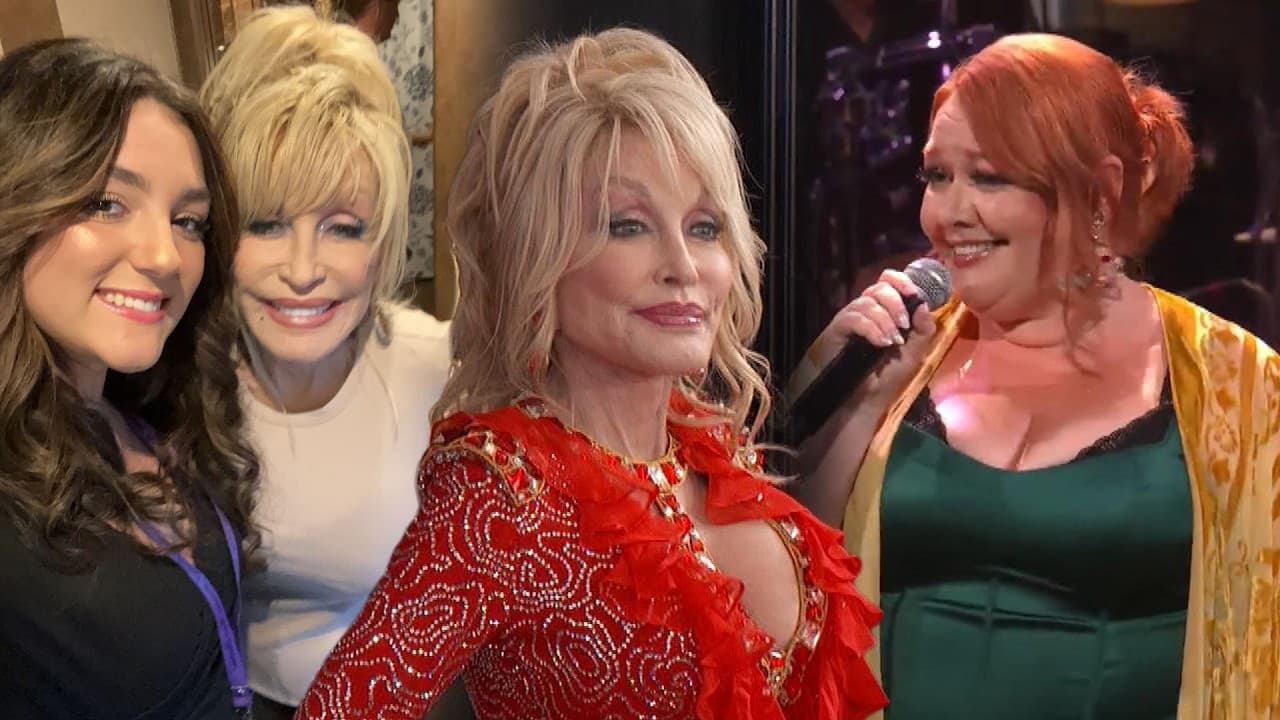
The Instagram post came from Lainie Parton, one of Dolly's nieces, and it said the thing that official statements rarely say plainly: "It still doesn't feel real that she's gone." No publicist's careful syntax. No brand-approved language. Just grief, typed out and posted, confirming for the world what her family already knew, that Dolly Parton had been laid to rest in Nashville.
That post matters beyond its emotional register. In the absence of children of her own, Dolly spent decades constructing a family architecture that was both deeply personal and quietly strategic. Her brothers and sisters. Their children. Their children's children. She described it herself, in interviews across the years, as having all the kids she could handle, without the part where she couldn't hand them back. What she is handing back now, involuntarily and permanently, is something far larger: a catalog, a brand, a mythology, and a set of institutions that together constitute one of the most durable cultural estates in American entertainment history.
The nieces at the center of this week's tribute, Lainie and Jada Star, are not fringe figures summoned for a grieving photo op. They recorded with Dolly. They performed duets with her. They stood on the Grand Ole Opry stage this week and sang her songs back to an audience that needed to hear them. That is not a ceremonial role. That is, if Nashville reads it correctly, the beginning of something.
Why Dolly Parton's family structure was always the real succession plan
Dolly Parton had no biological children, but she and her husband spent decades functioning as parental figures to several of her younger siblings and, later, as grandparents to their children. That family network, numbering twelve siblings and their extended families, was the succession infrastructure she built in plain sight.
Dolly talked about this arrangement openly and without sentimentality. There were twelve brothers and sisters. She and her husband practically raised four or five of the younger ones when they were children. Their kids, in turn, became something like grandchildren. It was not a metaphor she reached for reluctantly; it was the framework she used to explain her life whenever the question of childlessness came up, and it came up often, because the press never quite believed her when she said she had no regrets.
What the press missed is that this family structure had a functional logic beyond the emotional one. A pop estate with no direct heirs is a complicated instrument. Intellectual property, image rights, charitable endowments, recording catalogs, these are not things that sort themselves. The Parton extended family, by virtue of closeness and involvement, represents a cohort of people who actually knew how she operated, what she valued, and what she would and would not have approved. That knowledge is worth something. It cannot be hired.
The Smoky Mountain DNA album, a record Dolly made with her family, featuring duets with nieces including Lainie and Jada Star, was not a sentimental side project — see Jada Star Steps Into the Light After Dolly Parton's Death. It was, in retrospect, a document. A demonstration that the next generation could carry the sound, stand beside her in a vocal booth, and hold up under the weight of comparison. She was auditioning her own legacy keepers, in the most Dolly way possible: she made it look like a gift.
What Lainie Parton's Instagram tribute revealed about the family's public role
Lainie Parton confirmed Dolly Parton's burial in a personal Instagram post, writing that it "still doesn't feel real" and expressing grief over losing her aunt's voice, laugh, and physical presence.
The Parton estate, whatever form it ultimately takes, will require a human interface. Catalogs can be administered by lawyers. Charitable foundations can be run by professional executives. But the cultural warmth that made Dolly Parton the most universally liked figure in American entertainment, that is not an asset you can transfer to a holding company. It requires faces. Voices. People who can stand at a microphone and mean it.
Lainie's post did something calculated grief management rarely does: it admitted confusion. "It still doesn't feel real." That line lands differently than polished condolences because it acknowledges the scale of what Dolly meant to people who were not her family. "She was y'alls too," Lainie told Entertainment Tonight, extending the grief outward, inviting the public into the family circle rather than drawing a boundary around it. That instinct is more sophisticated than it sounds. Grief that excludes fans reads as private. Grief that includes them reads as grace. Dolly would have recognized the difference.
The transparency is also a useful clue to the industry. Nashville is watching how the Parton family handles the next several months with close attention. Who speaks. Who performs. Who makes decisions. Lainie's willingness to step into public view, not through a manager's prepared statement, but through a personal social platform, in her own voice, suggests someone who understands that the family's role going forward will require exactly that kind of presence.
"She was auditioning her own legacy keepers, and she made it look like a gift."
How Jada Star's Grand Ole Opry performance reframes her as an heir apparent
Dolly Parton's niece Jada Star performed at the Grand Ole Opry's tribute concert for her aunt, singing material from the Smoky Mountain DNA family album.
The Grand Ole Opry does not book grieving nieces for tribute nights as a courtesy. The institution is too jealous of its own authority for that. When Jada Star took that stage, she was doing so because she had something demonstrable to offer, a voice, a connection to the catalog, and a name that the Opry's audience would follow. Those three things together constitute a small but real career asset, and this week's performance will have introduced her to tens of thousands of Parton devotees who may not have known she existed.
Her album, Smoky Mountain DNA, recorded as a family project with Dolly, is now, without any additional effort, one of the most commercially interesting artifacts in country music. Grief tourism is a real and not entirely cynical force in the streaming economy. An album that features Dolly Parton singing with her own niece, released within the cultural memory of her death, will find an audience that it might not have reached otherwise. Jada Star's performance at the Opry this week is the most effective promotion that album could have received, and it cost nothing except the emotional labor of showing up.
The harder question is what comes after the tribute circuit. Grand Ole Opry appearances generate attention, not careers. Jada will need material, management, and a clear sense of who she is as an artist separate from the family connection. The Parton name is simultaneously the greatest possible launching pad and the most demanding set of expectations in country music. Dolly herself knew something about that, she spent her early career negotiating her identity against the expectations of Porter Wagoner and the Nashville machine. Her nieces are negotiating against her.
What Dolly's recording sessions with her nieces tell us about how she managed her legacy…
Dolly Parton recorded duets with both Lainie Parton and Jada Star for the Smoky Mountain DNA family album, a intentional creative investment in the next generation.
Lainie admitted she was nervous going into those sessions. That admission is worth sitting with, because it tells you something about the power differential in the room. Dolly Parton at the height of her legend, in a recording booth, with a niece who loves her and is also terrified of falling short beside her. Dolly's response, by Lainie's own account, was to create safety, to use her seniority not to dominate but to lower the stakes enough that real performance was possible. That is a specific skill, and it is not common among people who have achieved the level of cultural authority Dolly had.
The creative investment runs deeper than sentiment. By recording duets with her nieces, Dolly gave them a body of work they can now perform without her and that will always carry her voice within it. Every time Jada or Lainie sings one of those tracks, live, on a streaming platform, at a tribute event, Dolly's vocal is part of the architecture. It is, in a very literal sense, a gift that keeps performing. Legacy management through music is not a new idea, but Dolly executed it with unusual clarity and unusually early.
The Smoky Mountain DNA project also did something less obvious: it trained the nieces under conditions of real creative pressure. Recording with Dolly Parton is not a casual afternoon. The technical standards, the emotional demands, the awareness of being in a booth with someone whose voice is one of the most recognizable instruments in human history, that training has value. Lainie and Jada have now done something that very few artists in any genre will ever do. That credential does not expire.
The economics of the Parton estate and what the next generation inherits
Dolly Parton built a diversified estate spanning songwriting royalties, live entertainment holdings, a theme park business, and philanthropic infrastructure, most notably Imagination Library.
Dolly's wealth was never simple to categorize, and the full picture of what she accumulated over six decades in the music business is not yet publicly established. What is clear is that it was not a single-source fortune. The songwriting catalog alone, which includes "I Will Always Love You," one of the most-performed and most-covered songs in popular music, generates royalty income across every medium that uses it. Publishing rights of that depth are durable in a way that most entertainment assets are not. They do not depend on a living artist to continue producing value. For more on how those mechanics work across the music world's biggest names, our music wealth profiles track the architecture in detail.
Then there is Dollywood. The theme park in Pigeon Forge, Tennessee, is not a vanity project; it is a significant regional employer and a multi-decade tourism engine that draws millions of visitors annually and operates as a genuine hospitality business. Whoever stewards that entity going forward will be managing something with its own operational complexity, its own staff, its own brand dependencies. The Parton name is the park's core asset, and maintaining the emotional authenticity of that connection, the sense that Dollywood is genuinely Dolly's, will require active human participation from people the public trusts to carry it.
Imagination Library, the literacy nonprofit Dolly founded and expanded globally, adds a third dimension. It is a philanthropic institution with real programmatic scale, a dedicated funding model, and a mission that is inseparable from Dolly's personal narrative. That foundation will need leadership that can speak about it credibly, fundraise for it compellingly, and maintain the media relationships that keep it visible. Here again, the nieces represent a credible candidate pool, people who grew up inside the story the foundation tells about family, community, and the power of a book in a child's hands. Our full Atlas tracks Dolly's known holdings in greater detail as the estate picture develops.
Why Dolly chose Nashville for her burial, and what that choice signals
Nashville was the city that made Dolly Parton's career possible and the scene of her greatest professional battles, including her years-long negotiation of creative autonomy within the country music industry.
Dolly's relationship with Nashville was never simple. She arrived from Locust Ridge in the Tennessee mountains as a teenager and spent years working within an industry that was not always sure what to do with her ambition. The Porter Wagoner years were productive and constraining in equal measure. Her eventual departure from that partnership, announced, famously, via a song she wrote him, was the moment she publicly claimed her own creative authority. That song is now worth more than the career it ended.
Returning to Nashville for burial is therefore a layered statement. It is not the mountains she came from, though the Smoky Mountain identity is central to her personal mythology, as detailed in our earlier reporting on her funeral arrangements. It is the city where she became who she became. The industry city. The place that tried to shape her and ultimately was shaped by her instead. There is something intentional in that choice, even if its full meaning belongs to her family alone.
For the institution of Nashville, the burial anchors Dolly permanently to its geography in a way that will shape tourism, pilgrimage, and cultural programming for decades. Cities build industries around the graves of their artists. Nashville already has a well-developed ecosystem of music history; Dolly's presence in it, even posthumously, adds a center of gravity that no marketing budget could manufacture.
What Dolly said about not having children, and how that philosophy shaped her approach…
Dolly Parton said she did not regret being childless because she believed God had a plan, and that not having her own children allowed her to treat everyone else's children as her own.
The no-regrets position was one Dolly held consistently across decades of interviews, and the consistency is itself meaningful. Public figures revise their stated feelings about major life choices as cultural norms shift. Dolly did not. She returned to the same formulation, God knows what he's doing; everybody's kids are mine, with such regularity that it stopped sounding like a rehearsed answer and started sounding like genuine belief. Perhaps both things were true.
The practical consequence of that philosophy was a family life that was unusually broad. Twelve siblings. Their children. Their children's children. A husband who, by Dolly's account, was as invested in the extended family structure as she was. That is not a Hollywood celebrity's idea of family, the curated inner circle, the publicist-managed appearances. It is closer to the Appalachian model she grew up inside, where family meant obligation and proximity and showed up in the form of babysitting and holiday tables and being the aunt who made people feel safe in a recording booth.
What that philosophy produced, at the level of legacy management, is a cohort of people who genuinely knew her. Not the public Dolly, the rhinestone-and-wit performance that she maintained with extraordinary skill for sixty years, but the private one. The woman who babysat. Who called the parents when she'd had enough. Who held a nervous niece's hand in a recording studio and told her she was good enough. The nieces who are stepping forward now are not speaking on behalf of a brand. They are speaking on behalf of a person they knew. That difference is audible.
How the tribute economy around Dolly Parton will reshape careers and institutions
The death of a figure of Dolly Parton's cultural magnitude triggers a sustained commercial and institutional response, tribute concerts, catalog streaming surges, reissues, and documentary commissions, that will generate significant revenue and attention for anyone credibly connected to her story, including family members…
Tribute economies are not morbid; they are structural. When an artist of this scale dies, streaming numbers spike, catalog labels reassess licensing deals, documentary producers commission projects, and venues build programming around the loss. The Grand Ole Opry's tribute show this week, at which Jada Star performed, is the opening chapter of a long institutional response that will continue in smaller ways for years. Every anniversary. Every milestone. Every moment a new generation discovers "Jolene" and goes looking for more.
For the nieces specifically, the next twelve months represent a window that will not reopen. The media's appetite for Parton-adjacent stories is at its highest point, and the public's emotional openness to voices from inside the family is genuine and intense — see Diddy's Moving Release Date and Hollywood's Appetite for Redemption. Lainie and Jada are not famous in the conventional sense. They are not trying to compete with the mainstream music industry on its own terms. But they do not have to. They have something more specific and more durable: a direct personal and musical connection to the most beloved woman in American entertainment. That connection, managed thoughtfully, is a career.
The institutional beneficiaries are easier to name. Dollywood will see a surge in visitors drawn by grief and curiosity. Imagination Library will receive donations from people who want to do something in Dolly's name. The Country Music Hall of Fame will deepen its Parton holdings. Nashville's broader tourism infrastructure will absorb the flow. All of it traces back to a family that, this week, stood in public and sang her songs and told the world that she was theirs to share. That offer, she was y'alls, too, is worth more than any estate lawyer can quantify.
The latest reporting from our newsroom continues to track how the cultural and commercial ecosystem around Dolly's legacy develops in the coming weeks and months. And for those tracing what this moment means inside the longer arc of her story, our analysis of the family's initial farewell statement remains the essential starting point.
What the Parton nieces must get through to build careers beyond the tribute moment
Lainie Parton and Jada Star face the central challenge of any artist who emerges from a famous family: establishing an identity that is adjacent to the legacy without being consumed by it.
The Parton comparison is not manageable in the way that, say, a famous parent's comparison might be. Dolly Parton is not a genre or a style. She is an entire register of American cultural life. Any niece who tries to be Dolly will fail on those terms immediately. The more viable path, and the one both Lainie and Jada appear instinctively to understand, is to be themselves while remaining proud of where they came from. That balance is harder than it sounds, and country music has a long and not always kind history of chewing up legacy-adjacent artists who could not find it.
The tools available to them are real. A streaming catalog that includes Dolly's voice. A performance record at credible venues. A family name that opens rooms. A public profile built on genuine emotional transparency rather than manufactured controversy. Those assets are not nothing. But country music ultimately rewards songwriters and performers who have something to say that is their own, and the tribute circuit, however necessary and however sincere, is not the place to discover what that something is.
The comparison to other musicians who've navigated legacy-adjacent careers is instructive. As Harry Styles demonstrated in his tribute to Dolly at Madison Square Garden, the most powerful thing any artist can do in proximity to Dolly's legacy is to honor it without trying to inhabit it. Jada and Lainie have the advantage of authenticity that no outside artist can claim. The challenge is to use that advantage as a foundation rather than a ceiling, to build upward from the family story rather than sheltering inside it indefinitely. Dolly, after all, left Locust Ridge. She did not spend her life there. That may be the most important thing her nieces can take from her example.