The 78th Emmys Belonged to Widow's Bay, and the Woman Who Dared to Host
Mariska Hargitay ended a 15-year hosting drought, Widow's Bay broke a record with 14 wins, and Jean Smart turned a fifth consecutive Emmy into something closer to a property deed. Here's what the night means for the careers behind it.
The last time a woman hosted the Primetime Emmy Awards solo, the reigning prestige drama was about a meth cook and the dominant streaming conversation was still mostly theoretical. Fifteen years is a long drought. Mariska Hargitay ended it on Sunday night at the 78th annual ceremony, and she did not merely show up, she came equipped with wig changes, scripted sketches, a Taylor Swift cameo, and the kind of full-commitment theatrical energy that made the Academy wonder, not for the first time, why it waited so long.
Meanwhile, a show most of America had not heard of twelve months ago walked out with 14 statuettes and shattered the record its predecessor had set just last year. Widow's Bay arrived at the Emmys as a curiosity and left as the defining comedy of the television moment, its cast transformed overnight from working actors into household names, its network into the most important comedy address on television. That is not a slow build. That is a detonation.
Then there were the veterans. Jean Smart won for the fifth consecutive year Hacks has been on the air. Allison Janney picked up her eighth career Emmy. Sally Field became the oldest winner in her category. Taken together, Sunday's show was less a standard awards night than a stress test of how the television industry creates, sustains, and ultimately canonizes celebrity. It passed, mostly.
Mariska Hargitay's hosting debut was 15 years in the making, and she earned every minute
Mariska Hargitay became the first woman to host the Emmys solo in 15 years at the 78th ceremony, delivering a performance built on costume changes, original sketches, and a Taylor Swift cameo that drew broad critical praise. The last solo female host before her was Jane Lynch.
The framing she chose for her opening was disarming in its precision. Standing onstage, she announced she was proud to be the first woman to host in 15 years, then deadpanned that for those 15 straight years, Amy Poehler and Tina Fey had declined. The joke landed because it was structurally honest: the Emmys had not lacked for willing women, it had lacked for the institutional imagination to find one who wasn't already paired off in a buddy format. Hargitay walked in alone and made that feel like a power move rather than a gap.
What separated her from a competent celebrity cameo stretched to three hours was, by all accounts, the labor behind it. She told E! News, or rather, the show revealed, that she had been working on material with writers during her lunch breaks while simultaneously shooting Law & Order: SVU. That is a specific kind of discipline. Hosting a major awards ceremony is genuinely its own craft, distinct from acting, distinct from stand-up, distinct from talk-show performance. The number of people who have discovered that gap the hard way is long. Hargitay, who has spoken publicly about wanting to expand into comedy, treated this as a technical challenge rather than an honorary moment, and the result showed.
The production leaned into her theatrical background. The costume and wig changes, from a cropped bob to a Caesar cut and beyond, functioned as a running visual gag and a structural device, giving each segment a reset energy. It was the kind of staging choice that works when the host is genuinely comfortable in front of a live audience and catastrophically backfires when they aren't. Hargitay was comfortable. The SVU sketch, in which cast members played heightened versions of their characters alongside a pre-taped Taylor Swift cameo, exemplified what a hosting slot can accomplish when the writer's room and the star are genuinely collaborating rather than performing an uneasy détente.
For Hargitay specifically, the career arithmetic is interesting. She has spent 26 years as Olivia Benson, a character so embedded in the cultural furniture that the name alone functions as a cultural shorthand for moral authority. That identification is both her greatest asset and her ceiling. A successful hosting debut at the Emmys is not a pivot, exactly, but it is a proof of concept. It tells casting directors, streaming executives, and comedy producers something they could not have known from SVU alone: that she can command a room on her own terms, with material she helped shape, and make it look effortless. That is genuinely valuable information.
The Taylor Swift cameo was a business transaction as much as a comedy bit
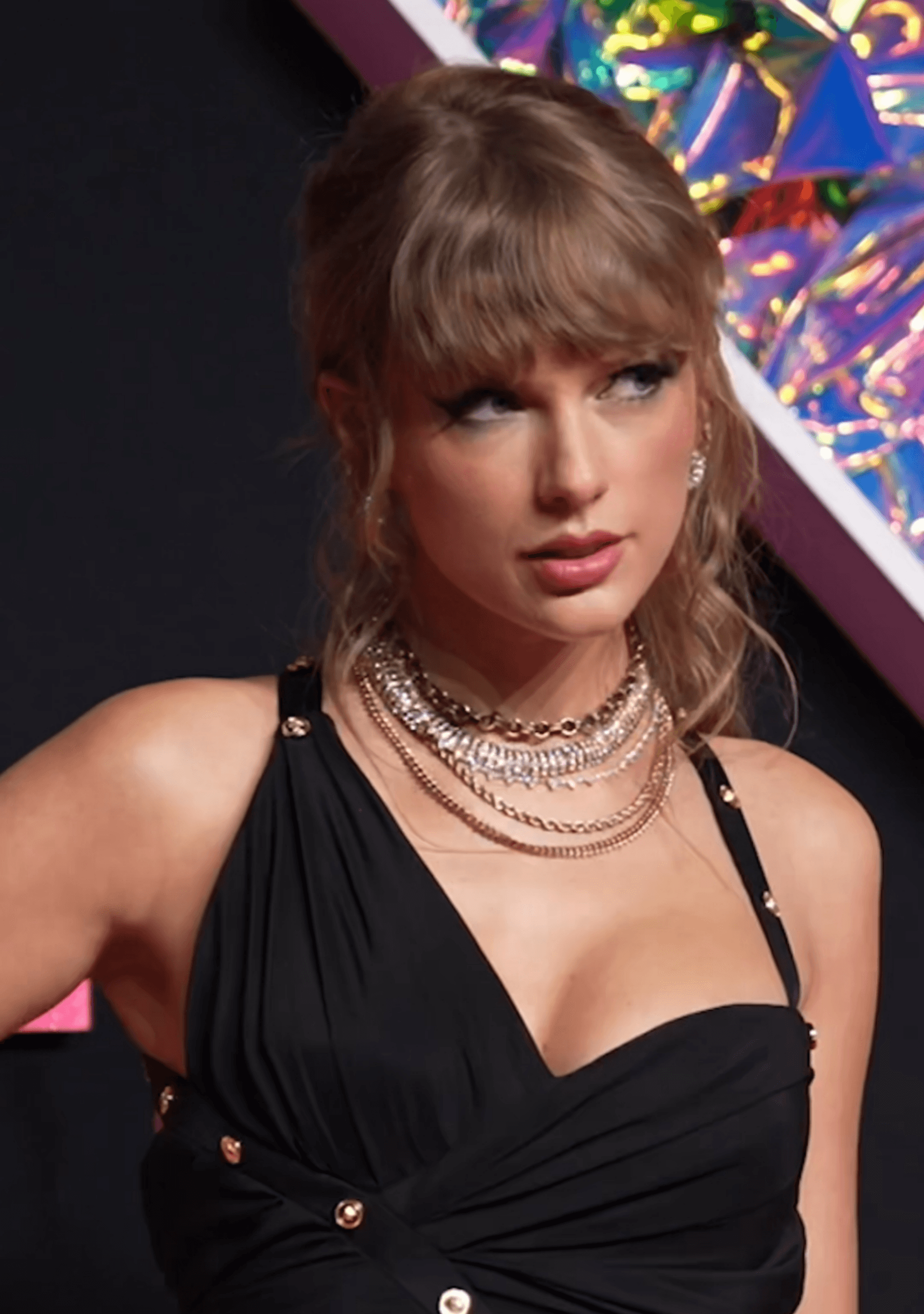
Taylor Swift appeared via pre-taped sketch at the 78th Emmys alongside the SVU cast, poking fun at fan speculation culture. She did not attend in person, reportedly due to her husband Travis Kelce's NFL schedule.
The sketch's setup was elegant in its self-awareness: a fictional audience member announces she isn't watching if Swift isn't attending, triggering a cascade of speculation about whether Swift might appear in a pre-taped bit, followed immediately by the pre-taped bit itself. The joke was about the architecture of Swiftie anticipation, the clue-hunting, the parasocial certainty, and Swift was in on it. That matters, because celebrities who can satirize their own fan ecosystems without alienating those fans are operating at a rare level of brand sophistication.
Her physical absence was explained, at least informally, by Travis Kelce's NFL season opener, a scheduling conflict that the E! hosts noted with mild theatrical disapproval. The underlying dynamic, though, is worth examining. Swift's appearance at an awards show generates its own media cycle entirely separate from whatever the show is about. Her non-appearance, managed through a controlled cameo, generates a nearly identical cycle while costing her a four-hour commitment in a formal dress. From a pure attention-economy standpoint, the cameo is the more efficient instrument. She gets the credit, the coverage, and the goodwill without the exposure of a live stage where anything can happen.
Her cat Olivia appeared alongside her in the sketch, a detail the E! hosts flagged with genuine glee, noting that the cat has a longer IMDb page than most working actors. It is a throwaway line, but it gestures at something real about the Swift brand operation: every element, including the pets, is legible within the mythology. Her dog Benjamin had just appeared in a Tommy Hilfiger campaign with Kelce. The ecosystem is total. For more on how that kind of multi-platform brand architecture builds up into generational wealth, our Atlas has her numbers broken down in full.
"Widow's Bay arrived at the Emmys as a curiosity and left as a franchise, 14 wins don't just validate a show, they reorganize an entire network's use."
Widow's Bay swept the comedy categories with 14 wins, breaking last year's record
Widow's Bay won 14 Emmys at the 78th ceremony, surpassing the previous record of 13 set just the year before. The show claimed best comedy series, writing, directing, and acting awards across multiple categories on a single night.
Fourteen wins. In a single night. From a show in its first season. The mathematics of that achievement are almost absurd, it means Widow's Bay won, on average, a statuette every few minutes of airtime at the ceremony. More substantively, it means the show dominated every category it was eligible for in the comedy space, which is a different kind of accomplishment than simply winning the top prize. Any well-regarded comedy can win best series in an off year. Winning writing, directing, and across the full acting slate simultaneously signals something closer to unanimous critical conviction.
Kate O'Flynn's best comedy actress win is the night's most commercially significant individual result. She beat a field that included fellow Widow's Bay castmate Dale Dickie, plus Hannah Einbinder, Janelle James, Michelle Pfeiffer, Meg Stalter, and Jessica Williams, a category so dense with talent that simply being nominated was a meaningful credential. O'Flynn won it from a position of near-anonymity: by most accounts, her name was not widely known outside industry circles before the show premiered. That is precisely how Emmy wins function as a career mechanism at their most potent. Not as validation for the already-famous, but as the single night that converts a working actor into a bankable name.
Steven Root's supporting actor win told a similar story. He bested Coleman Domingo, Paul Dano, Nick Offerman, Michael Urie, and Tyler James Williams, an exceptionally competitive field, playing a character described as a crackpot who turns out to know exactly what's happening. Root has been a character actor's character actor for decades. An Emmy win of this caliber doesn't change what he does; it changes what he gets offered and what he gets paid to do it. That is the real currency here.
For the network behind Widow's Bay, the record-breaking sweep is an infrastructure event. Fourteen Emmy wins from a freshman comedy is the kind of result that reorganizes development priorities, renegotiation use, and marketing budgets for the next two years. Talent agents will be calling. Streaming platforms will be circling. The show arrived as a bet and leaves as a franchise. Watch the latest reporting as the industry response to that positioning becomes clear over the coming weeks.
Matthew Rhys made Emmy history with wins in two categories the same night
Matthew Rhys won outstanding lead actor in a comedy series for Widow's Bay and also won in the limited series category for The Beast in Me, making him the first actor in Emmy history to win two lead actor awards in a single night.
The historical footnote almost undersells it. Winning two lead actor categories in the same evening requires not just exceptional performances but performances at diametrically opposite registers, the kind of range that used to get actors described as chameleonic before that word became a cliché. In Widow's Bay, Rhys plays a mayor who can't quite bring himself to believe his town is actually cursed. In The Beast in Me, the limited series, he apparently delivers something considerably darker. Those are not adjacent emotional territories. Bridging them convincingly enough to win competitive awards in both, on the same night, is a specific kind of achievement.
Rhys beat Steve Carell, among others, for the Widow's Bay win, which prompted a pointed aside from the E! hosts that Carell has never won an Emmy. That is a genuinely startling fact for an actor of his profile, and it speaks to how the comedy category has historically rewarded prestige-adjacent performance over pure commercial dominance. Carell's best years at NBC were, in Emmy terms, frequently overlooked in favor of tonal prestige favorites. Rhys, who built his American reputation playing a Soviet spy with architectural emotional restraint on The Americans, now has two Emmy wins from a single ceremony. The contrast is not a story about Carell's inadequacy. It is a story about timing, category fit, and the specific shows that the Academy decides to anoint.
His appearance on the red carpet with Keri Russell, both reportedly wearing their hair slicked back, was the kind of couples image moment that publicists spend years trying to engineer and usually cannot. When the aesthetic choices align with the professional triumph, the resulting press is effectively free brand-building. For two actors who have spent most of their careers playing characters more famous than their own names, that visibility matters.
Jean Smart winning a fifth consecutive Emmy for Hacks is more than a streak, it's a…
Jean Smart won her fifth Emmy for Hacks at the 78th ceremony, claiming the award for every single season the show has aired. No actress in Emmy history has previously won for every season of a show that ran five seasons.
The category does not belong to Jean Smart anymore. It has become, by virtue of five consecutive wins, something closer to a named endowment. Only Blythe Danner had previously won an Emmy for every season of her show, and that show ran two seasons. Julia Louis-Dreyfus won five Emmys for Veep but missed the sixth when Rachel Brosnahan broke the streak. Smart, through five complete seasons of Hacks, has gone undefeated. That is not a winning streak in the conventional sense. It is an annexation.
What makes this analytically interesting is that the Emmys have a well-documented appetite for novelty. Voters who feel a winner has 'had their turn' will often shift allegiance to a compelling new entrant, even when the incumbent's performance is objectively equal. Smart has survived five consecutive rounds of that instinct. The explanation most likely lies in the specific gravity of the Deborah Vance character, a Las Vegas comedian reckoning with obsolescence, mentorship, and reinvention, which has apparently continued to generate genuinely fresh Emmy-caliber work year over year rather than coasting on established goodwill.
Her acceptance speech, in which she dedicated the win to the show's creators and asked the men in the audience to remain standing, was the kind of confident, slightly theatrical moment that a five-time winner can pull off without seeming ungrateful. It was the posture of someone who knows exactly where she stands. At 73, Smart is also making a different kind of argument, that the industry's tendency to route its most interesting material to actors in their 30s and 40s is a failure of imagination rather than a creative necessity. Five Emmys from a show about a woman getting through the back half of her career is a reasonably compelling counterpoint.
Allison Janney's eighth Emmy win for The Diplomat was the night's biggest upset
Allison Janney won her eighth career Emmy for The Diplomat, defeating a field that included several nominees from The Pit and Keri Russell, in what was widely considered an unexpected result. Her wins now span The West Wing, Masters of Sex, Mom, and The Diplomat.
Nobody had Allison Janney winning this one. The E! hosts admitted as much directly, noting that the category was stacked with nominees from The Pit, which won six Emmys overall, plus Keri Russell, Katherine LaNasa, and Karolina Wydra from Plurabus. When a field is that deep, the votes fracture. Janney, as the sole representative of The Diplomat in the category, likely benefited from a clean consolidation of her show's supporters while the competitors split the remaining pool. That is not a cynical read; it is how preferential voting ecosystems behave when one contender has no internal competition for a constituency.
The breadth of her win total is, on reflection, extraordinary. The West Wing, Masters of Sex, Mom, and now The Diplomat represent not just four different shows but four completely different tonal registers, audience demographics, and critical environments. Janney has won in different decades, under different Academy membership compositions, for material ranging from political drama to network sitcom. That is a career-spanning argument for a kind of professional durability that is genuinely rare. Eight wins is not a streak. It is a body of work.
Her reaction, visible surprise, genuine shock, the specific energy of someone who had not fully prepared a speech, was, as the E! hosts noted, its own kind of gift to the broadcast. Awards shows run on manufactured emotion and scripted gratitude. An acceptance speech that feels unguarded is the rarest commodity in the room. Whether Janney was genuinely surprised or simply an excellent actor experiencing a professional highlight, the effect was the same: it was the moment that will be clipped and shared the most from her win. That is not nothing. For a look at how awards-season currency builds up into long-term career value, our film profiles track the actors whose Emmy trajectories translated into lasting market position.
Sally Field and the oldest-winner record: what late-career Emmy wins actually mean
Sally Field won the outstanding lead actress award in the limited series or TV movie category at the 78th Emmys, becoming the oldest winner in that category's history. The win came in a field that included Carey Mulligan.
Sally Field winning the oldest-winner record in her category is a headline that the coverage will move past quickly. It should not. The limited series category has historically functioned as a space where film actors, accustomed to long development cycles and prestige features, arrive for television with built-in critical benefit of the doubt. Carey Mulligan, her chief competition according to the E! hosts' pre-show picks, is exactly that profile: an acclaimed film actress whose television work generates automatic awards attention.
Field winning over that field at this point in her career is the kind of result that prompts the industry to reassess what 'prestige television' is actually selecting for. The assumption, increasingly embedded in casting logic, is that peak performance belongs to actors in the middle stretch of their careers. Field's win is a data point against that assumption, not proof that it is wrong, but evidence that the exception exists and can compete at the highest level.
The specific context of the tribute to Dolly Parton, introduced at the ceremony by Field, her Steel Magnolias co-star, gave the night an additional layer of emotional weight around Field's presence. Two icons of American performance sharing the same broadcast hour, one receiving a competitive award and the other an in-memoriam tribute, was the kind of accidental symmetry that awards shows occasionally stumble into and cannot plan.
Meg Stalter's Emmy-shaped dress is the shrewdest personal branding at the show
Meg Stalter arrived at the 78th Emmys dressed as an Emmy Award itself, a sculptural gold look she wore despite not winning in her acting category. The stunt was widely read as a hosting campaign and a masterclass in awards-season visibility management.
Meg Stalter did not win an Emmy on Sunday. She came dressed as one. The distinction is important because the dress, a sculptural gold creation that required its own logistics, accomplished something that a win might not have: it made her the most-photographed, most-discussed fashion moment of the night in a field that included Nicole Kidman, Zendaya, and Quinta Brunson. Visibility is the currency of awards season, and Stalter spent zero dollars on advertising to acquire an enormous amount of it.
The E! hosts read it as a hosting campaign, which seems exactly right. She is building, through consistent character commitment across Instagram, music releases, and now a red carpet stunt, an argument that she is the kind of talent who understands spectacle at a structural level. That is the core competency of an awards show host. Hargitay proved on Sunday that preparation and theatrical instinct can make a hosting slot transformative. Stalter, by wearing her aspiration on a literal gold statuette dress, is submitting an application through the most visible channel available to her.
She was nominated against Kate O'Flynn, who won. Losing to the breakout star of the most dominant show of the night is not an embarrassing result, it is, in its way, the right loss. It keeps Stalter in the prestige comedy conversation without saddling her with the specific expectations that come with an Emmy win before the hosting campaign can fully materialize. Her Hacks arc, her pop-girl summer era, the dress: these are not random moves. They are, read together, a coordinated argument about what she is and what she's for. For context on how that kind of cross-platform persona-building intersects with real earning power, see our other wealth profiles for comparable cases.
The show also saw Quinta Brunson on the red carpet, our earlier piece on Quinta Brunson's red-carpet strategy examined how Abbott Elementary has kept its cultural presence alive between seasons through exactly this kind of awards-circuit visibility work.
The Dolly Parton and Catherine O'Hara tributes revealed what the Emmys do better than…
The 78th Emmys included a tribute to Dolly Parton, introduced by Sally Field, and a tribute to Catherine O'Hara that featured Macaulay Culkin speaking about her as a surrogate mother figure. Michael J. Fox received the Bob Hope Humanitarian Award for his Parkinson's advocacy work.
Awards shows are frequently at their worst when they are being awards shows, the envelopes, the awkward banter, the acceptance speech that runs thirty seconds too long. They are, occasionally, at their best when they stop and ask an audience to simply sit with grief for a few minutes. The 78th Emmys managed that twice, cleanly.
The Dolly Parton tribute, introduced by Field and featuring Reba McEntire singing, worked because it did not try to summarize a career. It did not enumerate chart positions or Grammy counts or the Dollywood economic ecosystem. It simply placed two women who had known Parton in a room and let proximity to grief do the work. For anyone tracking the music industry's relationship to legacy and catalog value, the cultural aftershock of Parton's loss is still rippling through country and beyond, but the Emmys correctly understood that Sunday night was not the place for any of that accounting.
Macaulay Culkin's tribute to Catherine O'Hara was the more surprising moment, and therefore the more affecting one. His characterization of her as 'mama', grounded in his own complicated biographical relationship with parental figures, carried a weight that a straightforward in-memoriam clip package could not have generated. It was also a reminder of what O'Hara actually was to a generation of television and film audiences: a performer so inhabited in her roles that the emotional relationship felt genuinely parental. Schitt's Creek, in particular, produced in Moira Rose a character that people have described in exactly those terms, larger than a role, closer to a presence.
Michael J. Fox receiving the Bob Hope Humanitarian Award for his Parkinson's research advocacy closed the night's emotional arc. He has spent nearly three decades converting his diagnosis into institutional change, funding, awareness, and the kind of research infrastructure that takes a generation to build. The E! hosts noted the specific texture of watching him on Shrinking this season, playing a character with Parkinson's: it is the kind of artistic decision that collapses the distance between performance and person in ways that are genuinely difficult to watch and genuinely impossible to look away from. That is, in its way, the highest function of what television can do, and the Emmys, at least on Sunday, seemed to understand that.