The Plea That Wasn't a Defeat: Luigi Mangione's Calculated Gamble on Sentencing
A guilty plea in Manhattan federal court looks like the end of Luigi Mangione's legal fight. It isn't. It's the opening move in a far more sophisticated campaign. And the architecture of that campaign tells you everything about how high-stakes criminal defense actually works.
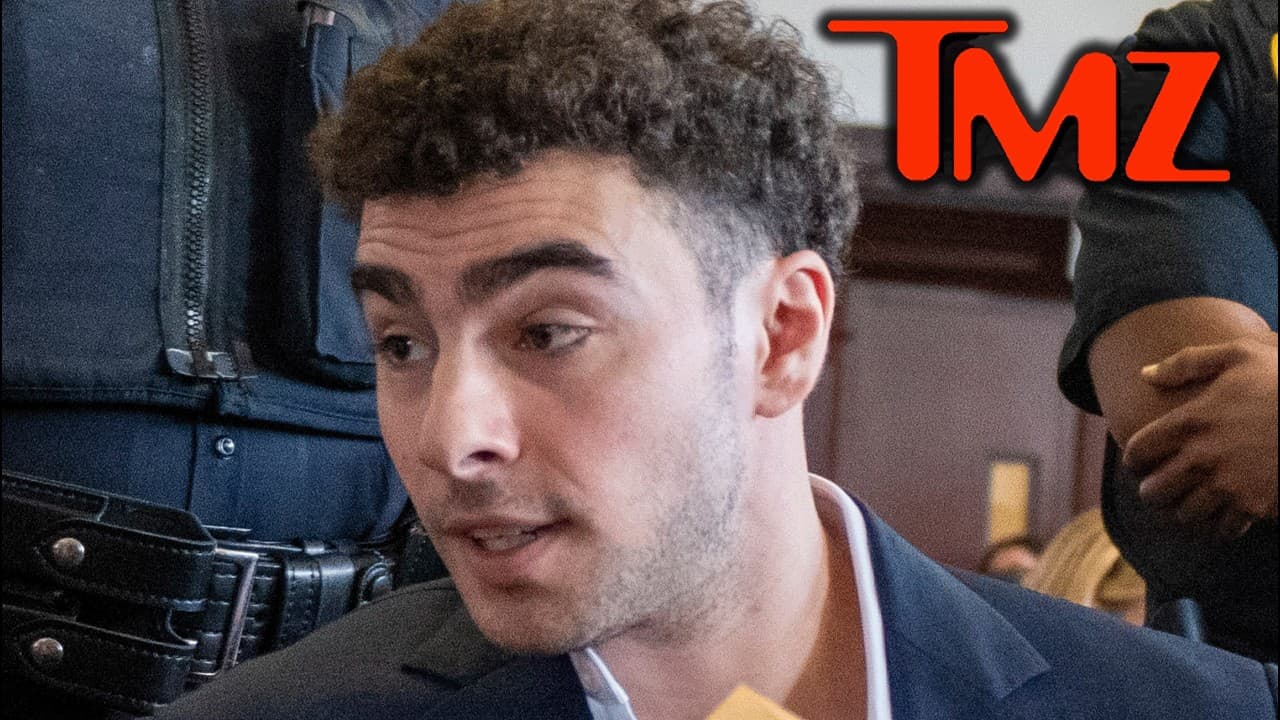
The word guilty landed in a Manhattan federal courtroom on August 14 and ricocheted through every corner of the internet within minutes. Luigi Mangione, 26. The Ivy League-educated engineer who shot and killed UnitedHealthcare CEO Brian Thompson outside a Midtown hotel in December 2024. Admitted in open court that he did it. Two counts of stalking with intent to kill. He said the words. He looked at the judge. It was over.
Except it wasn't. Not remotely. What unfolded in that courtroom was not a surrender. It was a carefully choreographed first act in a sentencing campaign that Mangione's lead attorney, Karen Agnifilo, has been architecting for months. Before the echo of the plea had faded, Agnifilo was at a microphone outside the courthouse reframing the entire moral universe of the case: broken back, debilitating pain, a healthcare system that failed her client and, in her telling, destroyed his life. The plea was the price of admission to the argument she actually wants to make.
That argument. Pitched not to a jury but to a single federal judge who will sentence Mangione in December. Is the story worth understanding. Because the gap between the two outcomes on the table, life in prison versus something closer to twenty years, represents a chasm that will define what this case means, what it costs, and who, if anyone, can be said to have won.
Why Mangione pleaded guilty instead of fighting at trial
Mangione's legal team faced two overlapping cases. Federal and state. Both carrying potential life sentences, with evidence that made acquittal essentially impossible. A guilty plea in federal court collapses that exposure into a single sentencing proceeding where mitigating arguments have the most traction.
The calculus here is blunt. TMZ's legal sources, speaking to the outlet's cameras in the hours after the plea, were unusually candid about it: the defense was boxed in. No jury was ever going to acquit Luigi Mangione of shooting Brian Thompson in front of a hotel surveillance camera in broad daylight. The physical evidence was overwhelming. The ideological paper trail. The manifesto, the purchases, the obsessive reading on corporate greed. Would have made a sympathetic narrative nearly impossible to sustain across a full trial.
So Agnifilo made the only move available to a skilled defense attorney in that position. She took the trial variable off the table entirely. By pleading guilty in federal court, Mangione eliminates the risk of a jury verdict that might push the judge toward the harshest possible sentence. He demonstrates remorse. He said in open court that he knew what he did was wrong, that he knew it was illegal. Which is exactly the kind of allocution that sentencing judges weight when deciding whether guidelines are a ceiling or a floor.
There is also the matter of the state charges. New York separately indicted Mangione on murder charges, which carry their own life exposure. By pleading to the federal case first, his attorneys have now filed a motion to dismiss all state charges on double jeopardy grounds. The legal argument, as TMZ's sources explained it, hinges on whether the federal stalking charges and the state murder charge share the same factual predicate. And under New York law, the analysis turns on facts, not labels. If that motion succeeds, Mangione never faces a second trial. The federal sentencing in December becomes the only reckoning.
What the sentencing guidelines actually mean for Mangione's timeline
Federal sentencing guidelines in Mangione's case run roughly 24 to 30 years, but with a standard 15 percent good-behavior reduction, a 24-year sentence shrinks to approximately 20 years. Mangione is 26 years old, meaning the low end of the guidelines could see him released before age 50.
Numbers matter here, so it is worth slowing down on them. The judge. A former U.S. Attorney in Manhattan, by all accounts a rigorous jurist. Is not bound by the guidelines. She can go above them, all the way to life. She can go below them if she finds mitigating factors sufficiently compelling. But the guidelines exist precisely because they reflect what the federal system has determined is appropriate for this category of offense, and judges who deviate sharply from them tend to face appellate scrutiny.
At 24 years with the standard good-behavior credit, Mangione serves approximately 20. He entered custody at 26. He walks out, if the math holds, at 46. That is a man with, statistically speaking, four or five full adult lives ahead of him. TMZ's panel noted this openly during their live broadcast the same afternoon, and the reaction was telling: some commentators argued the prospect of Mangione as a free man in his mid-forties would itself weigh on the judge, who might feel she alone is setting the price for a premeditated killing of a prominent executive.
That pressure is real. If the state charges are dismissed. And TMZ's sources indicated there is genuine legal precedent supporting that outcome. The federal judge becomes the sole arbiter of punishment. Sole accountability tends to concentrate judicial minds. The risk for the defense is that the judge, conscious of that singularity, reaches above the guidelines rather than below them.
"The plea was the price of admission to the argument Agnifilo actually wants to make. And that argument is aimed squarely at one person: the judge."
The healthcare defense: what Agnifilo is actually arguing
Mangione's defense team is not claiming his actions were justified. They are arguing his mental state was so severely compromised by years of debilitating back pain and healthcare system failures that the court should treat those circumstances as substantial mitigating factors at sentencing.
Karen Agnifilo is not new to high-stakes federal cases. She has spent a career in courtrooms where the difference between a guideline sentence and a below-guidelines sentence is built in the weeks before the hearing, not inside it. What she did at the post-plea press conference was not spontaneous. Every word. 'broken back,' 'debilitating pain,' 'the system had failed him'. Was placed with surgical precision for an audience of one: the judge who will be reading the sentencing memorandum in December.
The argument is structured around a concept that has genuine legal standing in federal sentencing: diminished capacity. Not insanity, which would require proving Mangione couldn't understand the nature of his act. He clearly could, and said as much in his allocution. Instead, the defense will argue that his mental state at the time of the shooting was so degraded by chronic physical pain, medical frustration, and psychological deterioration that the court should treat it as a mitigating circumstance. Expect psychiatrists. Expect former roommates. TMZ reported that people who lived with Mangione in Hawaii have already described, on camera, the visible toll his back injury took on his daily functioning.
There is also the broader social argument lurking beneath the legal one. Mangione didn't just send a letter to a newspaper. He bought two hundred copies of a book on corporate greed to get the author onto a bestseller list. He traveled to meet the author and offered editorial advice. He was, by any reasonable reading, a man who had built an entire ideological framework around his grievance before he acted on it. The defense will use that obsessive intellectual engagement to argue he was consumed, unraveling. Not a cold calculating killer but a person whose mind had been colonized by pain and rage over years. Whether a federal judge finds that sympathetic or aggravating is the central uncertainty of December.
Who Karen Agnifilo is and why her involvement matters
Karen Agnifilo is one of New York's most prominent criminal defense attorneys, with decades of high-profile case experience. Her presence in this case signals that Mangione's legal strategy is not reactive. It has been engineered from the outset for a specific outcome.
The TMZ panel made a point of emphasizing Agnifilo's track record, and it is worth taking seriously. She has already won at least one significant procedural battle: the terrorism charges that were originally attached to this case have been dropped. The death penalty is off the table. Those are not trivial outcomes. Stripping terrorism enhancements from a case built around an ideologically motivated killing, in the current political climate, requires both legal dexterity and an ability to manage narrative outside the courtroom.
It is also worth noting the family dimension that TMZ flagged almost as an aside: Agnifilo's husband, Mark Agnifilo, represented Sean Combs in his recent federal case, a proceeding that ended without the most serious convictions the prosecution sought. The Agnifilos are, as a pair, among the more consequential criminal defense attorneys operating in New York right now. That is not a legal argument. But it is a signal about the seriousness of the resources being deployed on Mangione's behalf, and about the kind of institutional knowledge his team brings to a federal courtroom.
For the business of high-profile legal defense. Which is, after all, an industry. Cases like this one are career-defining. A below-guidelines sentence for Luigi Mangione, in a case this visible, would be the kind of result that generates decades of future clients. The incentive structure around Agnifilo's effort here is not merely professional loyalty to her client. It is the architecture of a reputation.
The double jeopardy motion and whether the state case disappears
Mangione's attorneys filed a motion arguing that New York's state murder charges are barred by double jeopardy following the federal guilty plea, because both sets of charges arise from the same factual conduct.
The Manhattan District Attorney's office will fight this, and their argument is not unreasonable: the federal charges were stalking with intent to kill, while the state charges are murder. Different legal elements, different statutory frameworks, different sovereigns. Under the dual sovereignty doctrine that applies to federal versus state prosecutions, double jeopardy technically does not bar the state from proceeding. That is the DA's strongest ground.
But New York state law applies its own gloss on double jeopardy analysis. The question under New York precedent is whether the charges are based on the same criminal transaction. And here, they unambiguously are. Thompson was killed once, in one place, by one shooter. The factual predicate is identical. TMZ's legal sources indicated there is enough precedent on the Mangione team's side of this argument that the motion is not a long shot.
If it succeeds, the consequences are enormous. Mangione walks into December facing only the federal sentencing. The state never gets its case in front of a jury. No second proceeding means no second bite at life in prison. The defense's entire bet is that the federal judge, armed with psychiatric testimony and a mitigating narrative, chooses a sentence somewhere in the guidelines range rather than above it. And that the double jeopardy motion removes the safety net the prosecution would otherwise have.
The state trial fallback: stealth jurors and the hung jury strategy
If the double jeopardy motion fails, Mangione's state trial is scheduled for September, and TMZ's sources say the defense plans to pursue a strategy built around extreme emotional disturbance claims and, where possible, identifying jurors. Particularly those under 25. Sympathetic to Mangione's grievances against the…
This is the part of the strategy that makes legal traditionalists uncomfortable, and it should. The honest version of what TMZ's sources described is jury nullification by design. Not arguing that Mangione didn't do it. He has admitted he did. But constructing a defense around the idea that some members of a jury might believe, however quietly, that the system Thompson represented warranted the response Mangione delivered. Get enough of those jurors in a box, get a hung jury, try the case again, get another hung jury, and eventually the state loses the appetite to keep spending resources on a retrial.
The fact that this is a viable strategy at all tells you something important about the cultural moment. A significant slice of the population. TMZ's panel cited polling suggesting roughly 40 percent of Americans under 30 believe political violence can sometimes be justified. Has processed Mangione not as a murderer but as a symbol. Fan accounts, merchandise, internet canonization: none of it is legally relevant, but all of it creates a jury pool from which the defense can theoretically mine the one or two holdouts it needs.
For the broader landscape of business accountability in America, that dynamic is genuinely alarming in ways that go well beyond this case. When a CEO's killing generates an active and vocal support community. People who are not merely sympathetic to a grievance but are, as TMZ noted pointedly, advocating for violence against other executives. The case stops being just a criminal matter. It becomes a data point about what the public is willing to tolerate, or even celebrate, when corporate power is perceived to have caused widespread harm — see Harry Styles Stopped a Sold-Out Madison Square Garden for Dolly Parton. That Tells You Everything.. Prosecutors and judges are not supposed to be swayed by that atmosphere. They are also human beings who read the news.
What the Mangione celebrity phenomenon reveals about fame and grievance
Mangione became a celebrity. Genuinely famous, with a fan base, merchandise, and online advocacy. Before his trial even began. That phenomenon reflects a specific cultural convergence: physical attractiveness, elite credentials, and an act of violence framed as protest against a despised institution.
The TMZ panel went there, and it deserves to be examined seriously rather than dismissed. Mangione is, objectively, conventionally good-looking. His supporters are disproportionately young. The intersection of those two facts with the target he chose. A health insurance executive, an industry that polling consistently shows Americans despise. Produced a celebrity that has no real precedent in the modern era. There have been romanticized criminals before. There have been politically motivated defendants who attracted support movements. The combination of all of those elements, amplified by social media ecosystems designed to reward outrage and identification, produced something qualitatively different.
Whether his appearance will materially affect his sentence is a question the TMZ panelists batted around with obvious discomfort, because the honest answer is: probably not directly, but not entirely not at all, either. Judges sentence human beings. The human being in front of this judge is young, educated, has no prior criminal history, and will be surrounded in the courtroom by psychiatric experts describing his deteriorating mental state. The fan base outside the courthouse does not enter the courtroom. The cultural context. The degree to which a significant portion of the country has decided this man is a hero. Is not supposed to enter the courtroom. But the judge, as the panel acknowledged, does not live in a sealed chamber.
For those of us who track the mechanics of fame and its intersection with legal and commercial systems. The same analytical frame we apply to musicians recapturing masters or athletes negotiating image rights. The Mangione case is a strange and sobering data point. Fame built on an act of violence, sustained by genuine public anger about a real systemic failure, is still fame. It has the same properties: it shapes public discourse, it generates advocacy, it puts pressure on institutions. The question of whether it should is different from the question of whether it does.
Who wins and loses when the dust settles in December
If Mangione receives a sentence at the low end of federal guidelines. Approximately 20 years after good-behavior credit. His legal team will have achieved a significant result given the gravity of the crime.
The win conditions here are unusually asymmetric. The prosecution has already lost several battles it did not expect to lose: terrorism charges gone, death penalty off the table, a guilty plea that removes the most inflammatory trial testimony from public view — see The December Reckoning: How Luigi Mangione Turned a Guilty Plea Into a Platform. A life sentence would restore the deterrent logic the government needs this case to carry, but it requires the judge to reject Agnifilo's mitigation argument in its entirety. And the mitigation argument, whatever you think of its moral weight, is legally coherent.
For the defense, a below-guidelines sentence is the dream; a guidelines sentence is the floor of what they would call a win. A 24-year sentence with good time means Mangione is out before 50. A below-guidelines sentence. Possible if the psychiatric testimony lands hard. Means he is out earlier still. In a case that began with two overlapping life sentences on the table, either of those outcomes represents a spectacular piece of lawyering. Agnifilo has already earned her reputation in this case. December is where she either cements it or concedes that even the best defense has limits.
The person whose interests are least visible in this entire architecture is Brian Thompson's family. They have watched the case become a cultural spectacle, a policy debate, and now a sentencing strategy seminar. Whatever sentence the judge imposes in December will be framed by every stakeholder. Defense, prosecution, media, advocates. In terms of what it means for their respective arguments. It will mean something different and quieter to the people who simply lost someone. That part of the story tends not to generate fan accounts. It also tends to be the part that matters most.
The December hearing: what to watch for
The key indicators at Mangione's December sentencing will be whether the judge accepts the psychiatric diminished-capacity framing as a genuine mitigating factor and whether she treats the absence of a state case. If the double jeopardy motion succeeds. As a reason to impose a stiffer federal sentence.
Federal sentencing hearings are not trials. They are arguments about context. Who this person was, what led them here, what purpose a given sentence would serve. The defense will bring psychiatrists, former acquaintances, probably letters. The prosecution will bring the aggravating circumstances: lying in wait, the premeditated selection of a specific target, the ideological framework that made this an execution rather than a crime of passion. Both sides will be making their case to a judge who has likely already read more material about Luigi Mangione than she ever expected to.
Watch specifically for how the judge handles the cultural noise. If she addresses it directly. Acknowledging the public attention while insisting it has no bearing on her decision. That is a judge signaling she intends to go by the book. If she says nothing about it and simply works through the guidelines analysis, that too is informative — see Tom Hardy, Helen Mirren, and the Machinery Behind MobLand's 'Drama'. What would be genuinely surprising, and would tell you something significant about the moment we are in, is a below-guidelines sentence accompanied by language that engages even obliquely with the systemic grievances Agnifilo has placed on the record.
That last scenario is unlikely. But the range of likely outcomes. Somewhere between 20 years and life. Is wide enough that December's hearing carries real stakes for how America processes this case. Our latest reporting will track developments as the double jeopardy motion works through the courts this fall. For now, the machinery of defense has been set in motion, and it is considerably more sophisticated than a guilty plea tends to look from the outside.