Harry Styles Stopped a Sold-Out Madison Square Garden for Dolly Parton. That Tells You Everything.
When a Gen Z pop titan halts his own show to let a dead country legend sing to twenty thousand people, it isn't a gesture. It's a data point about cultural durability that no publicist could engineer.
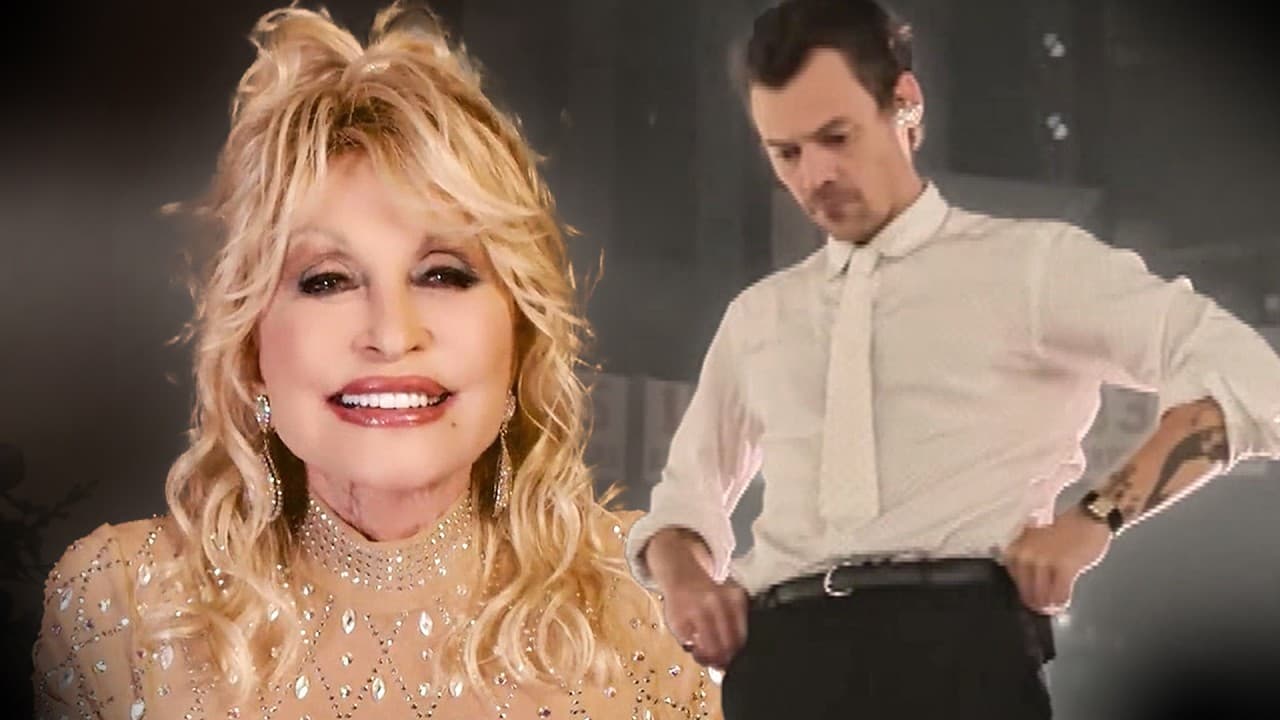
The crowd at Madison Square Garden this week had paid for Harry Styles. They got Dolly Parton. Nobody complained.
Styles stopped his sold-out show mid-run and let the room fill with Parton's voice, 'I Will Always Love You,' the original, the one she wrote, the one that made Whitney Houston famous and still put money in Dolly's pocket every single quarter. Twenty thousand people stood in that room and listened to a woman who had died days earlier. Not a screen tribute, not a slideshow. Just the voice, in the dark, doing what it had always done.
That moment, reported this week by Entertainment Tonight as part of a wider remembrance following Parton's death, is worth sitting with beyond the sentiment. Styles is one of the shrewdest image operators of his generation. He does not stop shows accidentally. He reads rooms for a living. The fact that he chose this song, in this arena, in this week, and that it landed without a single beat of irony or awkward silence, says something precise about what Dolly Parton built, and about who is going to inherit the cultural real estate she leaves behind.
Why Harry Styles Pausing His Show Is an Analytical Event, Not a Publicity Stunt
Harry Styles halting a sold-out Madison Square Garden show to play Dolly Parton's voice is significant because Styles is a calculated performer whose stage decisions reflect audience intelligence, not impulse, and the crowd's silence confirmed Parton's cross-generational hold.
There is a version of this story that writes itself as a feel-good capsule: grieving fans, a generous pop star, a tender moment. That version is true and also incomplete. What happened at MSG is more interesting read as a market signal.
Styles built his post-One Direction career on a specific kind of cultural fluency, the ability to sit inside multiple traditions at once without belonging entirely to any of them. He borrows from Bowie, from classic rock, from Joni Mitchell, from the whole rolling archive of the 20th century, and his audience follows him there. He has, in other words, trained twenty thousand people per night to trust his taste. When he stops his own show, forfeiting momentum, risking the room going cold, and plays the voice of a woman his youngest fans know mostly through Dolly Parton's Imagination Library, he is betting that the connection lands — see Dolly Parton Is Laid to Rest. Her Nieces Carry the Weight of Her Name Forward.. It did. The silence confirmed it.
That silence is worth money to everyone managing Parton's estate right now. Every arena tribute, every social post, every tearful crowd video that circulates after is organic reach that no marketing budget buys. Styles' gesture will surface in tribute compilations, in streaming playlists curated around Parton's death, in the ongoing cultural conversation that follows any major artist's passing. He gave the estate a gift. The estate, by producing an artist durable enough that a 32-year-old pop star considers her a worthy reference point, had already given it back.
What Dolly Parton's $650 Million Fortune Was Actually Built From
Dolly Parton's fortune, estimated at around $650 million, was constructed primarily from songwriting royalties, live performance, and the Dollywood entertainment complex, not passive licensing or celebrity brand deals.
The $650 million figure Entertainment Tonight cited this week is the kind of number that flattens more than it reveals. The architecture underneath it is what matters, and Parton's architecture was unusual enough to deserve a close read, particularly for anyone trying to understand what kind of estate gets handed to heirs and managers in the weeks ahead.
Parton was, first and most durably, a songwriter. 'I Will Always Love You' is the cleanest illustration: she wrote it in 1973, Elvis Presley wanted to record it, his manager Colonel Tom Parker demanded half the publishing as a condition, and Parton said no. That decision, made by a young woman from rural Tennessee, holding the line against the most powerful manager in the music business, is still generating income every time the song appears on a streaming platform, in a film, or in a sold-out arena in Manhattan — see D4VD Had $11 Million and Now Has a Public Defender. The Music Business Explains Both Facts.. The publishing rights stayed with her. The stacking never stopped.
Dollywood sits alongside that royalty base as the other structural pillar. ET was there in 1985 when Parton broke ground on the park, and the footage holds up as a document of genuine entrepreneurial vision. Her answer when asked whether she might end up like Walt Disney, measured, conditional, but not dismissive, showed someone who understood scale without being seduced by it. Dollywood has since become an economic engine for Sevier County, Tennessee, injecting an estimated $1.8 billion annually into the local economy. That figure dwarfs what most musical catalogues generate at their peak. Parton didn't just build a brand. She built infrastructure. You can find the fuller breakdown of her wealth architecture in our music wealth profiles.
The Imagination Library, her literacy initiative that has mailed free books to millions of children since 1995, sits in a different column entirely, it was never meant to generate revenue. But it generated something more durable: moral authority. That authority, as we'll see, is now the most valuable thing her estate holds.
"Styles does not stop shows accidentally. He reads rooms for a living. The choice was a data point about cultural durability no publicist could engineer."
Dollywood's $1.8 Billion Annual Economic Footprint Puts It in a Different League Than a…
Dollywood generates an estimated $1.8 billion annually in economic impact for its surrounding region, making it a piece of civic infrastructure rather than simply an entertainment asset, a distinction that shapes how the estate will be managed and monetized going forward.
Most artists leave behind a catalogue. Parton left behind a county's economy. The $1.8 billion annual figure Entertainment Tonight cited for Dollywood's local economic impact is not box-office gross, it is the full multiplier effect: jobs, hotels, restaurants, supply chains, the entire ecosystem that a destination theme park anchors. That kind of footprint creates obligations and use that a catalogue does not.
When an estate holds a theme park rather than simply a record label deal, it enters a different set of negotiations. Local governments become stakeholders. Employees become constituents. Expansion decisions carry political weight. The Parton estate will not be able to simply license the park to the highest bidder without consequence, nor would it want to, because the Dollywood brand is inseparable from the Dolly Parton story of a girl from the Smoky Mountains who came back and built something for her people. Sell that to the wrong operator and the brand corrodes.
This is the structural difference between Parton's fortune and the fortune of artists who accumulated wealth through touring and licensing alone. The park is not liquid. It cannot be sold at a multiple and deposited into an account. It requires stewardship, not just ownership. That complexity is also the moat. No competitor can replicate Dollywood without replicating the sixty years of authentic relationship between Parton and Appalachian Tennessee. That relationship is now held in trust by an estate that will have to decide, in the coming months, exactly what kind of institution it wants to be.
Why 'I Will Always Love You' Is the Song That Explains the Entire Business Model
Dolly Parton wrote 'I Will Always Love You,' retained its publishing rights after refusing to split them with Elvis Presley's manager, and collected royalties from Whitney Houston's blockbuster 1992 cover, making it the clearest single example of how she turned artistic decisions into stacking financial ones.
'I Will Always Love You' is a three-minute country ballad that became a business school case study. Parton wrote it, released it, and then watched Elvis Presley's camp come calling with a condition she would not meet. Colonel Tom Parker's standard demand, fifty percent of publishing in exchange for the Elvis treatment, would have handed half of every future royalty to someone who had nothing to do with the song's creation. She said no. Elvis did not record it.
Nineteen years later, Whitney Houston recorded it for The Bodyguard soundtrack, and the song became one of the best-selling singles in history. Every dollar from that version flowed back through the publishing rights Parton had refused to surrender. She has described the moment she heard Houston's version on the radio, the full orchestral build, the vocal gymnastics, and realized she was about to make more money than she could have imagined. The intellectual property decision she made as a young woman in Nashville was paying out at a scale that dwarfed anything the Elvis recording would have generated, even with Parker taking his cut.
That story, repeated enough times, has shaped a generation's understanding of music publishing. It is part of why the Harry Styles tribute at MSG lands with such force: the song he chose is not just an emotional touchstone. It is the artefact that most completely encodes the Parton philosophy, artistic integrity, financial discipline, and the patience to let the stacking work. For anyone tracking this estate through our latest reporting, the publishing catalogue is the asset to watch.
The Broadway Show, Museum, and Hotel: How the Estate Plans to Grow the Universe…
At the time of her death, Dolly Parton had a Broadway show, a museum, and a hotel in active development, three projects that would extend her brand into new commercial categories and create permanent institutional anchors for her legacy beyond Dollywood.
The behind-the-scenes footage Parton's team released after her death is a document of striking discipline. Here was a woman managing a cancer diagnosis while simultaneously shepherding three separate development projects across three different industries. The hotel is the most straightforward of the three: a luxury or lifestyle property tied to the Parton brand gives the estate a recurring revenue model and a physical experience that fans can book. Done well, it extends Dollywood's gravitational pull without duplicating it.
The museum is more complex because it is necessarily retrospective. Parton's life, the cabin in Locust Ridge, the costumes, the handwritten lyrics, the television appearances, the decades of photographs, is rich enough to sustain a world-class institution. The question is whether the estate builds something in Sevier County, where it would anchor the existing tourism ecosystem, or pursues a location in Nashville, where it would compete for attention in a more crowded cultural market. That decision carries real financial stakes.
The Broadway show is the highest-risk and highest-reward of the three. Jukebox musicals built around country catalogues have a complicated track record, but Parton's songbook is unusually narrative, she wrote songs that already told stories, characters with names and addresses and specific heartbreaks. The material does not need to be bent into a story; it is, in many cases, already one. If the production is handled with the same care Parton applied to every other extension of her brand, it could run for years and generate a touring production that carries her voice into cities that will never build a Dollywood.
What Dolly Parton's Death Means for the Country Music Business at Large
Dolly Parton's death removes the most prominent crossover figure in country music history, a performer whose success demonstrated that the genre could sustain serious wealth and global cultural reach, and her estate will now become a test case for how a country music legacy is managed in the streaming era.
Country music has long had a complicated relationship with its own commercial ambitions. It cultivated an authenticity myth, the music of working people, suspicious of Hollywood money, while quietly producing some of the most durable intellectual property in American popular culture. Parton threaded that needle better than anyone. She was from the mountains, and she never let you forget it, and she also built a $650 million empire and turned down Elvis. The combination was not a contradiction. It was the brand.
Her death leaves a gap in the genre that is partly symbolic and partly structural. She was the figure other country artists, and crossover artists like Styles, could reference without controversy. She had universal approval in a polarized culture, which is vanishingly rare. The estate's choices in the next two years will either preserve that universality or begin to narrow it. Every partnership, every licensing deal, every tribute event is a vote cast about what the Parton brand stands for now that Parton is not here to define it in real time.
For the broader country music industry, the more immediate question is whether the institutional infrastructure she helped build, the park, the literacy program, the philanthropic reputation, inspires the next generation of artists to think about their careers in structural rather than transactional terms. Parton was not just a country star who got rich. She was an argument for a different relationship between creative work and capital. That argument is now in the hands of the people she left it to. You can track how that value is measured across our business wealth profiles as the estate's shape becomes clearer in the months ahead.
How the Tribute Moment Fits Into the Long History of Arena Grief
In-concert tributes to recently deceased artists have a documented history of amplifying both the grieving artist's cultural stature and the performing artist's credibility, but the Styles moment is unusual because Parton's audience spans demographics that rarely overlap in a single arena.
There is a grammar to the in-concert tribute that audiences have learned to read. The lights dim. The music plays. The crowd is invited to grieve collectively in a space that usually asks them only to celebrate. Done carelessly, it is maudlin. Done well, as Styles did it, it is the rare arena moment that people remember decades later as something that happened to them, not just something they witnessed.
What makes the MSG moment analytically distinct is the demographic spread it required to work. Parton's audience runs from eighty-year-olds who remember her first television appearances to preschoolers who know her only as the woman who sends books. Styles' audience is predominantly young, predominantly devoted to a very specific strain of contemporary pop. The overlap between those two groups is not obvious. The fact that the tribute landed without friction, without the awkward pause that greets a reference that doesn't register, says that Parton's cultural penetration had reached deeper into Styles' generation than the streaming numbers alone would suggest.
For the estate, that cross-demographic moment is the most useful thing Styles gave them. It confirmed that Parton's cultural authority is not age-gated. The artists who will choose to honour her in the coming months, in concerts, in interviews, in the songs they write, will be the clearest evidence of where her legacy actually sits in the culture. The Madison Square Garden crowd's silence was the first vote. There will be many more. For the family's own account of how they said goodbye, our coverage of the farewell statement maps that moment in full.