Dolly Parton Chose Her Funeral Song. It Wasn't the One You'd Expect.
She wrote the most covered farewell ballad in American music history. She chose a 1945 gospel hymn her father sang. That gap tells you everything about who Dolly Parton actually was, and what she wanted the world to remember.
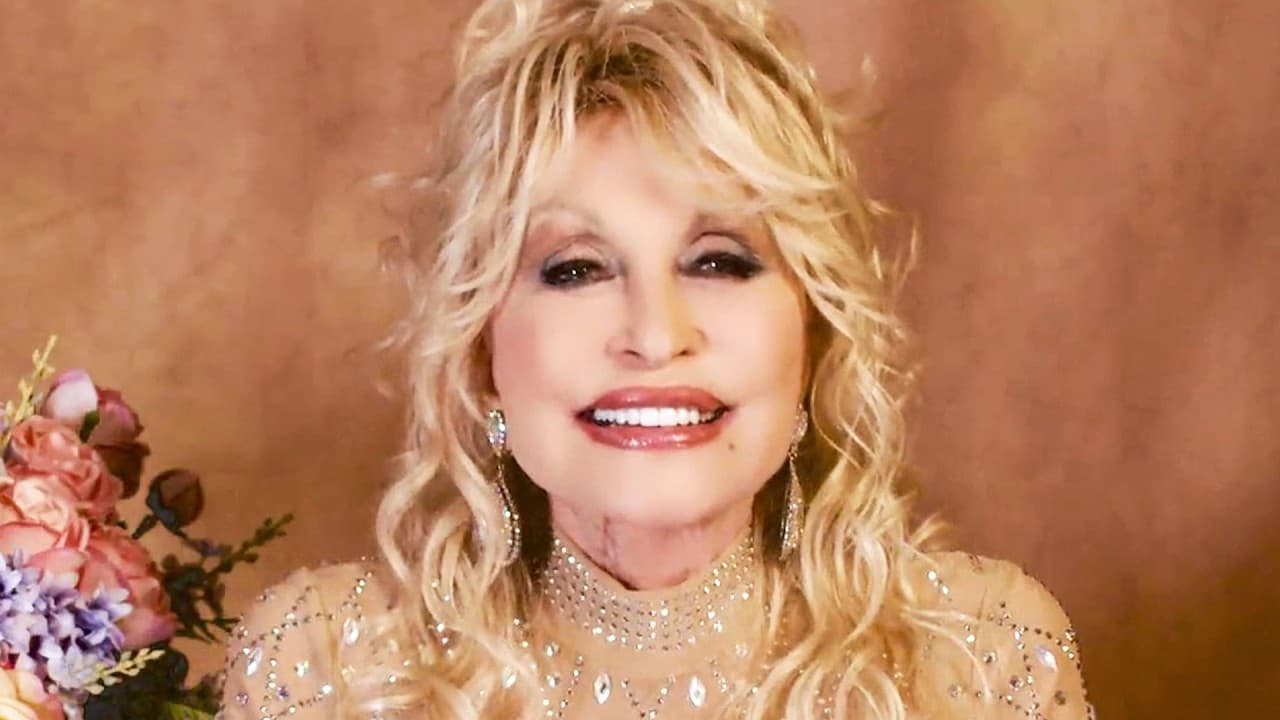
The song that made Dolly Parton a billionaire, or rather, the royalty stream that flows from it, is not the song she wanted played at her funeral. That is the first thing to understand about the choice she made, and made on purpose, long before the cancer took hold. "I Will Always Love You" is the most commercially dominant composition in her catalog, the track Whitney Houston turned into a global phenomenon, the piece of intellectual property that has generated tens of millions of dollars in publishing income across more than five decades. Dolly Parton did not want it at her graveside.
She wanted a hymn. Specifically, "If We Never Meet Again," written in 1945 by Albert Brumley, recorded at various points by Elvis Presley and Johnny Cash, and sung, most crucially, by her father. She had already used it once: at Robert Lee Parton Sr.'s own funeral. She told the world, in the quiet way she always told the world things, that she wanted the same treatment when her time came. It came Tuesday. She was 80.
The distance between those two songs, between the breakup ballad that conquered pop radio and the Appalachian gospel hymn that never charted, is the distance between Dolly Parton the brand and Dolly Parton the person. Understanding why she picked what she picked, and what it signals about the machinery she leaves behind, is the real work of the days ahead.
What song did Dolly Parton pick for her own funeral?
Dolly Parton selected "If We Never Meet Again," a 1945 gospel hymn written by Albert Brumley, for her own funeral, not "I Will Always Love You." She chose it because it was her father's favorite song, and she had already sung it at his funeral.
The revelation arrived without fanfare, the way Dolly Parton preferred to deliver the things that mattered most. In conversation, told Entertainment Tonight in footage that has circulated widely since her death, she sang the opening verse herself, quietly and without accompaniment, the way you sing something you have known since childhood rather than something you perform. "My daddy used to sing this song," she said, and then she sang it.
"If We Never Meet Again" is not a complicated piece of theology. Brumley wrote it as a straightforward promise: that people who love each other will find one another again on the other side of death. It belongs to the Southern gospel tradition Parton was born into, in the Smoky Mountains of Sevier County, Tennessee, where church music and family music were the same thing. Elvis recorded it. Cash recorded it. Neither recording made it famous in any commercial sense. It endures because it is useful, the kind of song that actually does what a funeral song is supposed to do, which is hold a room together at the moment it most wants to fall apart.
That Parton had already deployed it at her father's service gives the choice an additional weight. She was not picking abstractly. She was picking a song she had already lived through in grief, already felt work on a congregation of people who loved someone gone. She knew what it did. She wanted it done for her.
Why Dolly didn't choose "I Will Always Love You" for her funeral
Dolly Parton deliberately passed over "I Will Always Love You" for her funeral despite the song's commercial dominance. The hymn she chose instead reflected her private identity, rooted in Appalachian gospel and family, rather than her public brand as a songwriter.
The instinct, for anyone who has spent time thinking about Dolly Parton as a cultural construction, is to reach for the obvious explanation: she was being strategic — see Harry Styles Stopped a Sold-Out Madison Square Garden for Dolly Parton. That Tells You Everything.. Keep the song untethered to death. Protect the IP. Let it remain the song of weddings and pop radio and karaoke ballads, not the song of lowered coffins. There is probably some truth in that, she was too smart a businesswoman for the optics to have escaped her.
But the more honest explanation is simpler. "I Will Always Love You" was, at its origin, a business document. She wrote it in 1973 to end her professional relationship with mentor Porter Wagoner, a way of saying goodbye that was graceful enough not to burn a bridge. It is a song about two adults separating. It is not, at its emotional core, a song about death. The gospel tradition Parton grew up in had entire bodies of music built specifically for the moment of burial, and she knew every one of them by heart.
She had also watched the Houston connection play out with her own eyes. When she told Entertainment Weekly in 2014 about being in the room when Houston's coffin was lifted and the song began, she described the moment it made Houston's death real to her. "That's when it hit me that she was really gone," she said. She understood, from that moment, the way a song can collapse time, can make a loss suddenly present. She did not want her own masterwork to do that to the people she left behind. She wanted something that pointed forward, toward reunion rather than farewell.
"She spent sixty years giving the public what it wanted. In the end, she gave herself what she needed."
The Whitney Houston connection and what it cost Dolly emotionally
Dolly Parton witnessed the power of "I Will Always Love You" at Whitney Houston's funeral, and said it was the moment Houston's death became real to her, a weight she carried into her own thinking about mortality and memorial.
The Houston version of the song is, commercially, the most consequential event in the history of Dolly Parton's publishing catalog — see Dolly Parton Is Laid to Rest. Her Nieces Carry the Weight of Her Name Forward.. Houston's recording for the 1992 film "The Bodyguard" transformed a country breakup song into an arena-scale power ballad, exposing the composition to an entirely new generation and market. The royalties that flowed to Parton from that recording alone, she retained the publishing as a condition of allowing the cover, reshaped the financial ceiling of her career.
But Parton has spoken consistently, and with evident sincerity, about the emotional weight of Houston's death in 2012. The funeral moment she described was not the observation of a rights-holder watching her asset being deployed. It was a woman grieving another woman, undone by the particular cruelty of hearing a song she wrote as an act of love become the soundtrack to a casket being carried. The compression of those two facts, the enormous commercial benefit and the genuine personal grief, is characteristic of the tension Parton navigated her entire professional life.
Her decision to reach past that song, past the most famous thing she ever created, and choose instead a hymn her dead father loved, reads as a final act of that same navigation. She spent sixty years giving the public what it wanted. In the end, she gave herself what she needed.
How the song choice reflects the Dolly Parton brand architecture
Dolly Parton built a career on the intentional management of two parallel identities: the rhinestone-and-wigs entertainer the public consumed, and the mountain-raised gospel-rooted woman underneath. Her funeral song selection is the clearest expression of which one she considered primary.
The Dolly Parton business empire, explored in depth in our reporting on the machine she built, runs on a brand that is simultaneously ironic and sincere. The wigs, the jokes about her appearance, the self-aware campness: all of it is armor that also functions as invitation. It signals safety. It tells an audience they are allowed to love her without feeling they are imposing on someone real. The rhinestones create distance that paradoxically allows intimacy.
Underneath that construction, Parton was always explicit about her roots: the poverty of the Tennessee mountains, the twelve siblings, the father who couldn't read, the Pentecostal church music that was the first music she heard — see The Lindsay Clancy Jury Is Deadlocked. That Outcome Was Always Likely.. These were not brand elements she deployed for authenticity points. They were the actual substrate. The Dollywood theme park in Pigeon Forge is not incidentally located in her home county, it is a monument to the place that made her, designed to employ the people she grew up among.
The funeral song choice is, in that light, the brand architecture made visible in its most reduced form. Strip away the catalog, the film deals, the fragrance, the literacy charity, the Netflix specials. What is left is a woman from Sevier County who remembered the songs her father sang. That woman picked the funeral music. The entertainer, the one on the music wealth profiles side of the ledger, stepped aside.
What "If We Never Meet Again" reveals about Appalachian gospel's staying power
"If We Never Meet Again," written by Albert Brumley in 1945, has outlasted nearly every secular song of its era because it serves a function, congregational comfort at the moment of death, that popular music rarely fills as effectively.
Albert Brumley is not a household name outside Southern gospel circles, but he wrote several of the most durable American songs of the twentieth century. "I'll Fly Away," his most famous composition, has been recorded more than any other gospel song in history. "If We Never Meet Again" belongs to the same tradition: simple harmonic structure, direct theological promise, a melody that congregations can learn in one hearing and remember for a lifetime. These were not incidental qualities. Brumley wrote for churches, which meant writing for people who were not professional singers, in rooms with uncertain acoustics, often in states of emotional distress.
The song's recordings by Presley and Cash gave it secular credibility without removing its function. Both artists operated in a zone where country music and gospel were porous categories, where you could put a sacred lyric on the same record as a honky-tonk love song and nobody considered it a contradiction. Parton came from exactly that tradition. Her early recording career on Monument and then RCA was full of songs that moved between the sacred and the secular with the ease of someone who had never experienced them as separate.
What happens now, following Parton's death at 80 after a brief battle with cancer, the full context of which we traced in our earlier reporting, is that "If We Never Meet Again" enters a new phase of its cultural life. Streaming platforms will see the search. Tribute performances will follow. A song that has lived for eighty years in the specific emotional geography of Southern American Christianity is about to be heard by people who have never set foot in a church. Brumley's estate, and the publishers who hold the rights, will notice the difference.
The business of death: who profits from a Dolly Parton farewell
When an artist of Dolly Parton's stature dies, the immediate commercial beneficiaries include streaming platforms (catalog surge), publishing rights-holders (performance and sync licensing), and the estate itself, which controls the future deployment of her name and image.
Death is, in the music industry, a release event. The streaming numbers on Parton's catalog will have spiked the moment news of her passing broke, that is now the reliable first chapter of every major artist obituary story, the digital equivalent of fans buying every album at once. For a catalog as deep and varied as Parton's, the effect builds up: casual listeners who know "Jolene" and "9 to 5" discover "Coat of Many Colors," which leads them to the gospel recordings, which leads them to the Christmas albums, which is how a single death converts a one-song streaming relationship into a catalog subscriber.
The publishing side is more complex and more lucrative over time. Parton famously retained her publishing rights, a decision that put her in a small and rarefied category of legacy artists who understood, early, that the composition is the asset and the recording is merely its first deployment. Every cover version of "I Will Always Love You" going forward, every wedding band, every reality-competition contestant, every film placement, flows through an estate that will need to be extremely careful about how it manages that asset in the coming years.
The Dollywood empire, the literacy program, the brand partnerships: all of these become, in the aftermath, both more valuable and more fragile. More valuable because her death concentrates attention. More fragile because the warmth that made the brand work was her actual living presence in it, the authenticity that cannot be manufactured after the fact. The estates and management teams that have navigated this transition most successfully, think of the architects of the Elvis Presley Enterprises model, are the ones who understand that the brand was always the person, and that protecting the person means protecting the choices she made, including the choice of a hymn over a hit.
What the funeral song choice means for how Dolly Parton will be remembered
By choosing a private, family-rooted gospel hymn over her most famous composition, Dolly Parton set the terms of her own memorialization, foregrounding her Appalachian origins and her father's influence rather than the commercial achievements that defined her public legacy.
Artists rarely get to control their own narratives after death. The catalog gets repackaged. The biopic gets made. The definitive documentary surfaces footage the subject would have edited. The memoir gets finished by an estate-approved co-writer. The machinery of posthumous celebrity is relentless and only partially responsive to what the subject actually wanted. Parton, who spent a career being more strategically intelligent about her own image than almost anyone in the entertainment business, understood this — see Dolly Parton Is Dead at 80. Her Family's Farewell Was as Intentional as Everything Else She Did..
The funeral song is one of the few instruments of posthumous self-definition that is genuinely difficult to override. She announced it publicly enough that departing from it would be noticed. She framed it in personal terms, her father, his favorite song, his funeral, that make any alteration feel like a desecration rather than a creative reinterpretation. She locked it in. The tribute performances that follow, the memorial concerts, the retrospectives: they will all exist in relation to a funeral that began with a 1945 gospel hymn about reunion, not a 1973 country ballad about goodbye.
That is not an accident. Parton was telling anyone who paid attention where she wanted the emphasis placed. Not on the breakup song. Not on the Hollywood version of herself. On the mountains, the church, the man who couldn't read but could sing. On the beginning, not the accumulation. It is, in its own way, the most sophisticated piece of image management of her entire career, and she pulled it off by doing nothing more complicated than telling the truth.
The legacy questions her estate must now answer
Dolly Parton's estate faces decisions about catalog stewardship, brand licensing, the Dollywood enterprise, and the future of her literacy initiatives, choices that will determine whether her legacy hardens into nostalgia or continues to function as a living cultural force.
The estates that get this right, and there are not many, tend to share one quality: they treat the subject's stated values as operational constraints, not just marketing copy. Parton's Imagination Library program, which has sent free books to children since 1995, is not a peripheral charity. It is the clearest expression of who she was and what she cared about. An estate that defunds or diminishes it in the name of financial efficiency will have announced, loudly, that it did not understand what it inherited.
The catalog decisions are more treacherous. The temptation, in the years following a major artist's death, is to license aggressively, to say yes to the sync request, the tribute album, the brand collaboration, because the short-term revenues are real and the long-term dilution is harder to measure. The artists whose legacies have survived most intact are those whose estates said no more than yes, who understood that scarcity is protective and that not every check is worth cashing.
Parton herself modeled this discipline throughout her life. She turned down the Presidential Medal of Freedom twice before accepting it, not wanting to be seen as making a political statement either way. She declined the first nomination for the Rock and Roll Hall of Fame, saying she hadn't earned it on those terms, and then accepted graciously when the Hall insisted. She had a finely calibrated sense of what fit and what didn't. The estate's central challenge is finding people who can approximate that calibration from the outside, without the gut instinct that only comes from being Dolly Parton.
The full scope of her financial architecture, the publishing, the real estate, the entertainment partnerships, will take time to fully account for. What is already clear is that she built something designed to outlast her. The question is whether the people around it understand that the song she picked for her funeral was not a sentimental gesture. It was a final instruction.