The Customer Who Can't Be Pleased: What VeloCine's Body-Shop Scene Reveals About Power, Service, and the Mob Economy
A short clip from VeloCine's latest series entry uses one impossible-to-satisfy car owner to dissect something far larger. The economics of obligation, the precariousness of women in male-coded business, and the way status games turn routine repairs into dominance rituals.
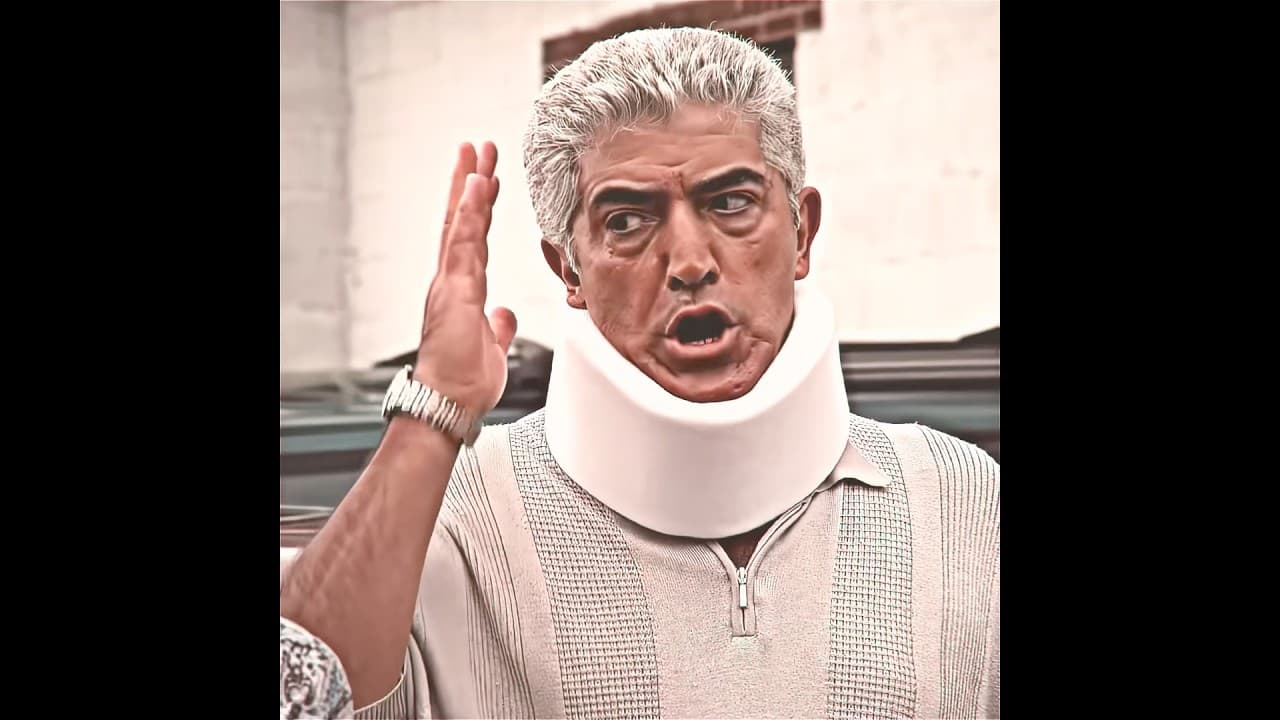
The paint isn't duller. The seat isn't off its axis. The car came through a front-end collision and was rebuilt to factory spec, and everyone in that body shop knows it. What Phil actually wants has nothing to do with the vehicle.
That tension. Between a job genuinely done and a customer constitutionally incapable of accepting it. Is the engine running beneath the VeloCine clip that surfaced this week and promptly went viral under the heading 'The Repair Was Done... But This Customer Was Never Satisfied.' In the space of roughly two and a half minutes of dialogue, the scene stages a remarkably complete anatomy of service-economy power: who sets the standard, who absorbs the cost, who mediates, and. Crucially. Who is expendable when the spiral refuses to stop.
Strip the specific texture of the setting. The body shop, the Philadelphia-adjacent vowels, a CD player offered as a peace offering in an era when that still meant something. And what remains is a business case study. A woman trying to run a repair operation on a razor-thin margin gets caught between a manipulative client and a silent male patron who refuses to authorize expenditure but also refuses to take responsibility for the outcome. It is a scene about labor, use, and the cost of being the only adult in the room.
Phil's complaint is a power move, not a quality claim
Phil's escalating objections. Dull paint, an off-kilter seat, a rear dent discovered only after the primary work is done. Follow the classic pattern of a customer who uses dissatisfaction as a dominance instrument rather than a genuine quality grievance.
Watch the sequencing of Phil's objections and you see a method, not a mood. He arrives already armed: the paint is duller, something is off with the seat. Both claims are pre-loaded before he has spent sixty seconds inside the car. When Joey and the shop's representative try to demonstrate that the seat reclines perfectly, Phil shifts the frame. Now it's the axis, the 12-o'clock position. When that is addressed, a rear dent materializes, a problem that, in Angie's own words to Tony, nobody raised before the visit.
This is a recognizable behavioral pattern in high-stakes service industries. The customer who cannot be satisfied is rarely making an aesthetic judgment. They are performing status. Each concession the service provider makes. The CD player, the seat tracks, the promise of a couple more days. Is read not as goodwill but as confirmation that pressure works. The rational response, from a pure business standpoint, is to establish a clear scope of work in writing before any labor begins, and to hold that line. The drama here is that Angie cannot hold that line, because the social architecture of the situation has stripped her of the standing to do so.
Phil's complaint was never about the paint. The dullness he perceived was a negotiating position, and the seat was its reinforcement. That reading is confirmed by the ease with which Joey. A fellow man in Phil's orbit. Can briefly stabilize the situation simply by being present and male, and by the fact that the tension only resolves, temporarily, when Tony-the-cousin steps in to physically demonstrate the seat function. The repair itself is immaterial. The social transaction is everything.
Angie's position exposes the structural trap of women in male-coded service businesses
Angie operates a body shop with legitimate competence but without full authority. She must check with a male patron before authorizing extra costs, even on work her shop has already diagnosed and can execute. That dependency is the actual source of the scene's tension, not Phil's complaints.
The scene's most revealing exchange is not between Phil and the shop. It is between Angie and Tony, the off-site patron she calls before she will authorize additional expenditure. 'I didn't want to get into these extras without checking with you,' she says. Tony's response is a masterclass in deniable authority: he tells her to run the shop like she owns it, to 'do what the situation calls for,' while simultaneously making clear that his blessing is required for anything that costs real money. He hands her both the responsibility and the exposure, while retaining the power.
That dynamic is not unique to crime-adjacent service economies. It is the operating condition of a substantial portion of women who run businesses that are capitalized or connected through male networks. The autonomy is real enough to make them accountable for failures. It is not complete enough to let them make the calls that would prevent those failures. Angie's position. Running the front of a business she does not fully own, with a difficult client she did not choose, under a patron who has made himself unreachable. Is a structure built to produce exactly the kind of spiral she is trying to avoid.
Her line, 'I just want to put my kids through college,' is not a plea for sympathy. It is a precise statement of her risk tolerance and her stakes. She is not in this business for equity. She is in it for a reliable income stream in a world that has left her without a second earner. That context changes what it means when Tony tells her, 'Some woman left alone like that would've given up.' It is framed as praise. It is also a reminder of how contingent her position is, and how much goodwill she is expected to generate simply by continuing to show up.
The business profiles we track across our coverage of women in enterprise consistently show this pattern: female operators in male-network industries frequently find themselves holding the operational risk while the structural risk. Client relationships, capital allocation, the cost of defection. Remains with the men above them. Angie's call to Tony is not a sign of weakness. It is evidence of a correctly calibrated understanding of where the real authority sits.
"Phil's complaint was never about the paint. The dullness he perceived was a negotiating position, and the seat was its reinforcement."
Why the body shop is the perfect setting for a story about invisible obligation
A body shop run through informal networks of obligation is a business where labor costs, markup, and client management are all subordinated to social relationships. Making it an ideal setting to dramatize how off-the-books power structures corrupt normal market logic.
In a conventional service business, the customer's ability to demand extras is constrained by the contract and the invoice. In a body shop operating within a network of personal obligations. Where clients arrive because someone vouched for them, where work gets done as a favor to a patron rather than as a result of a market transaction. Those constraints dissolve. Phil can demand the seat be right because his connection to the shop runs through Joey's connection to Tony, and the cost of losing Phil is not measured in a lost account but in a damaged relationship that radiates outward through the whole network.
That is why 'make sure he's happy, but don't let this spiral out of control' is an impossible instruction. In a normal market, those two goals are usually compatible. You satisfy the client within the bounds of the agreed work, and the spiral never starts. In an obligation economy, satisfying the client is open-ended by definition, because the client's demands are expressions of social rank, not product specifications. The only way to prevent the spiral is to have someone of equivalent social weight tell Phil, firmly, that the car is done. That is exactly what Tony-the-cousin is deployed to accomplish.
It works. Up to a point. Tony demonstrates the seat, cracks a joke about Stevie Wonder with the aggressive ease of someone who knows Phil cannot escalate against him, and briefly stabilizes the room. But Phil's final move. Suggesting the seat needs to be 'dealt with' and that it will need a $2,000 factory replacement. Signals that the spiral has not ended; it has merely been paused. The scene closes with Joe being told to 'keep him cooled down,' which is the language of ongoing management, not resolution.
What the CD-player offer reveals about margin pressure in informal service businesses
Offering a CD player as a goodwill concession on a disputed repair reveals that the shop is already operating at the edge of its margin. Small-ticket add-ons are the only tools available when labor costs are fixed and the client refuses to accept the work as complete.
The CD player is the tell. When a service business starts throwing in consumer electronics to smooth over a client complaint, it has already exhausted its pricing flexibility. The labor is done. The parts are installed. The only remaining currency is the accessory budget. Low-cost items that feel like gifts to the client but come straight out of a margin that, in body repair work, is already thin.
The exchange around the $2,000 factory seat lands with particular weight for anyone who understands service-business economics. A replacement factory seat on a vehicle that has been through a major collision is not a minor line item. It is a cost that likely equals or exceeds the original repair margin on the whole job. When Phil angles toward it, he is not requesting a fix; he is attempting to extract a subsidy. The shop's outrage ('Give me a break, Phil') is not emotional. It is financial.
This is the corner into which obligation-based service businesses get painted. The work was specified. The work was done. But because the client relationship runs through a social network rather than a contract, the scope of 'done' is whatever the most powerful person in the room decides it is. Joey and Angie already replaced the seat tracks. A concession made, presumably, without an additional invoice. The CD player followed. The $2,000 factory seat is the logical terminus of a negotiation that was always going to end with the shop absorbing costs it never priced in.
The Stevie Wonder line and the politics of in-group mockery
Tony's Stevie Wonder joke. Directed at Phil's supposedly impaired perception of the seat's alignment. Works as a dominance reset because it introduces humor at Phil's expense from a position of social equality, something Angie and the shop staff cannot do without risking the entire relationship.
Humor used as a power tool is among the most under-analyzed mechanisms in social dynamics, and the Stevie Wonder crack is a precise deployment of it. Angie cannot tell Phil his eyes are fine and his complaints are invented. The shop staff cannot. Joey, as Phil's subordinate, cannot. But Tony-the-cousin. Who arrives as a peer, without history in the transaction, without financial exposure. Can say it, and the room accepts it, because it comes from someone Phil cannot easily rank above himself.
The joke does two things simultaneously. It reframes Phil's perception as the problem rather than the car's condition, which is the accurate diagnosis. And it signals that Tony has enough social standing to absorb Phil's displeasure without consequence, which is why Phil's response. 'I didn't say nothing'. Is a de-escalation rather than an escalation. He has been outranked, gently, by someone who is also clearly connected to the same network. The confrontation would cost him.
This is the function celebrity and proximity to power serve in informal economies: not contractual authority, but social permission. The person who can make the joke that resets the room is the person who actually controls the outcome, regardless of who owns the business or who is paying the invoice — see Ed Sheeran Lost His Opening Acts. The Venues Won.. Angie runs the shop. Tony-the-cousin runs the scene.
The $2,000 seat as the scene's real dramatic stake
The $2,000 factory seat Phil gestures toward at the scene's end represents the moment when a client's bad-faith complaint becomes a concrete financial threat. Turning a social power game into a genuine business crisis that the shop's margin structure cannot absorb.
Everything before the seat price is a negotiation. The $2,000 figure is a demand. When Joey surfaces it. As something Phil is pushing toward. The shop's financial exposure becomes specific and real. The concessions to that point (the tracks, the CD player) were items the shop could absorb while remaining technically whole. A factory seat replacement on a vehicle that was already a collision repair job is a different category of cost.
The math underneath this is straightforward. A front-end collision repair, depending on severity, carries a margin that is eaten quickly by parts costs and labor. Every unreimbursed concession after the original invoice is a direct reduction of that margin. By the time the shop has replaced the tracks, installed a CD player, and spent staff time and social capital managing Phil across multiple visits, the job's profitability is already in question. The factory seat would almost certainly push it into loss.
This is the endgame of the obligation economy that Tony-the-senior has constructed: Angie runs a business that generates losses on difficult clients because the price of refusing those clients is social, not financial. The $2,000 seat is where the social price and the financial price converge. It is also where the scene ends. On purpose unresolved, with Joe tasked with 'keeping Phil cooled down.' Which is another way of saying: this will happen again.
Anyone tracking how these informal-economy pressure dynamics play out across industries. From service businesses to the entertainment sector itself. Will find useful comparative material in our full business coverage, where the gap between visible operators and invisible patrons shows up in sector after sector. The body shop is a case study. The pattern is everywhere.
What the scene ultimately argues about the definition of 'done'
The VeloCine clip's central argument is that in any service relationship governed by social obligation rather than contract, 'done' is not a technical standard. It is a social verdict that the most powerful person in the room reserves the right to withhold indefinitely.
Phil's car is fixed. That is the technical fact the scene establishes in its first thirty seconds and never actually contradicts. The paint is factory-matched. The tracks were replaced. A CD player was added. The recline works. Every measurable quality standard has been met. And yet 'done' is not available to Angie, because the person with the authority to issue that verdict. Phil. Is also the person whose interests are served by withholding it.
That is the scene's cleanest analytical statement, and it is one that extends well beyond body shops. In any industry where client relationships are personal, where referrals run through social networks, and where the cost of losing a client is measured in social currency rather than contract penalties, the definition of acceptable work is always negotiable. The worker or business owner who believes that quality output is sufficient protection against a bad client is operating with an incomplete model of how service economies actually function.
The VeloCine creative team. Whether they intended a direct allegory or simply dramatized a situation they recognized from life. Has produced a scene that is effective precisely because it does not editorialize. Phil is not a cartoon villain. Angie is not a saint. Tony-the-senior is not purely malicious. Everyone in the room is operating according to their rational incentives within a social architecture that produces bad outcomes. That is a harder, more honest thing to dramatize than a simple dispute about a car seat. And it is why the clip has traveled as far as it has.
For readers following the broader landscape of how power, performance, and informal economics intersect in both drama and real celebrity business structures, the Shakira World Cup analysis offers a useful parallel: a story about who controls the terms of a performance, and what it costs when those terms are contested by someone with more social use than contractual exposure. The body shop and the stadium stage are further apart than they look.