Rosie O'Donnell's Calculated Reinvention: The Body, the Face, and the Stage She Built in Exile
Three years on Mounjaro, a deep-plane facelift, a one-woman show road-tested in Dublin clubs. O'Donnell's return is not a comeback story. It is a masterclass in controlling the terms of your own re-entry.
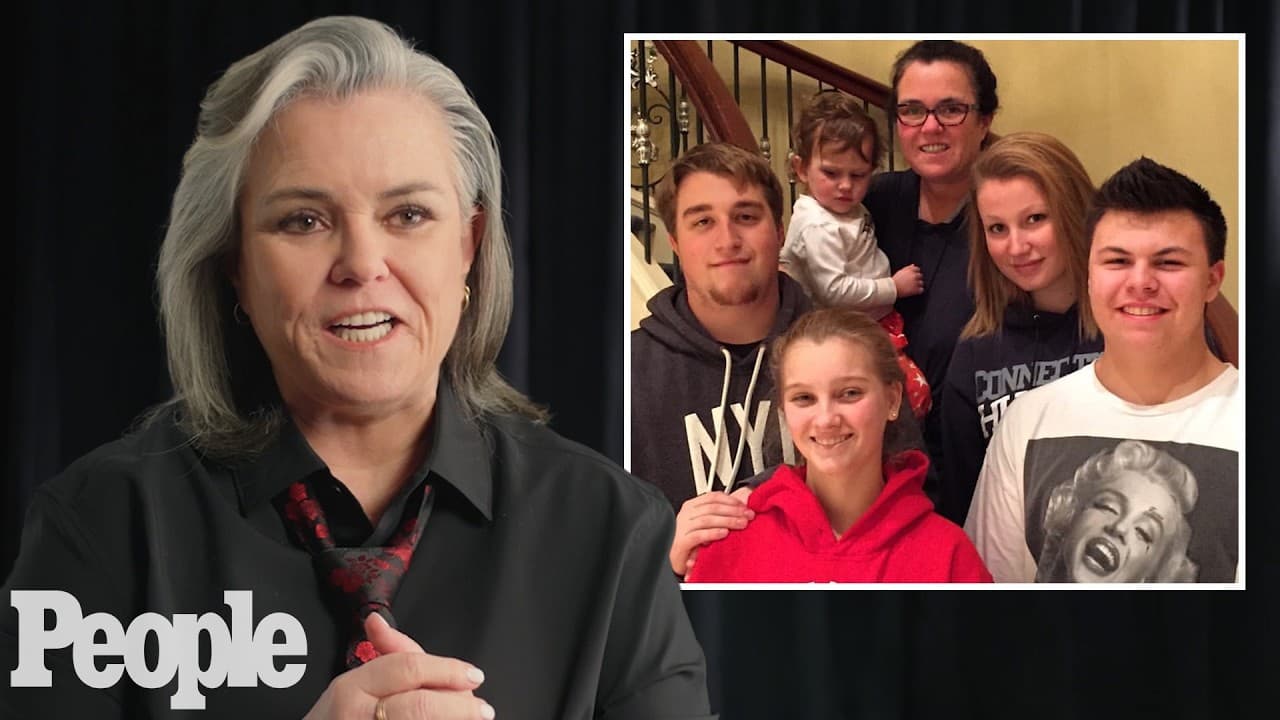
The first thing Rosie O'Donnell wants you to know is that she did not crash-diet her way to sixty pounds lighter. She did not wake up one morning evangelical about a new wellness protocol. She started taking a diabetes medication three years ago, stayed on the lowest dose for an entire year, crept up to the second for another twelve months, and is only now, in year three, at the 7.5 milligram mark. The deliberateness of that timeline is the story. Not the number on the scale.
She told People this week, in a sit-down that covered everything from Irish village life to her daughter Chelsea's incarceration, that she has lost roughly a pound or two a month with no side effects. That is not a celebrity transformation. That is a pharmaceutical study of one, self-administered over thirty-six months by a woman who has spent four decades having her body discussed by strangers as though it were public property. The pace was the point.
And then there is the face. O'Donnell had what surgeons call a lower deep-plane facelift. A procedure that addresses the jaw and neck, not the upper third. And she publicly credits it, with feminist caveats intact, as an act of self-determination rather than capitulation. She has a new solo theatrical show, developed in Dublin comedy clubs and now bound for American stages. At sixty-three, living in Ireland, newly a grandmother, O'Donnell is not trying to recapture something lost. She is doing something more interesting: she is engineering a re-entry on terms she controls entirely, in a media landscape that once chewed her up and has since moved on to newer targets.
Why Rosie O'Donnell moved to Ireland. And what she found there
Rosie O'Donnell relocated to Ireland on January 15th, choosing the country because she is 100% Irish, visited as a child after her mother's death, and still has cousins there. She describes Irish culture as non-celebrity-obsessed, which gave her an unusual freedom to decompress and begin writing.
The mechanics of O'Donnell's Irish relocation are worth examining beyond the soft-focus narrative of an American finding herself abroad. She moved on January 15th. The dead of Irish winter, grey and cold, which she acknowledges freely. Not in a moment of romance but of calculation. The country offered her something the American media environment built that way cannot: anonymity that does not require disguise.
When people recognised her on the street in Ireland, she says, they said 'Welcome, Rosie'. Not 'Can I have a picture.' That distinction is not small for someone who spent the better part of three decades as one of the most photographed, debated, and publicly dissected entertainers in American television. The Irish response, she found, was the welcome you give a neighbour, not a transaction with a celebrity commodity.
The creative dividend of that calm was immediate. She started writing. The material that would become her one-woman show emerged not from a commissioned project or a development deal but from what happens when a performer with decades of suppressed personal material suddenly has free time, a quiet island, and a city. Dublin. With a rich stand-up infrastructure willing to give a visiting comic an hour on stage to work through rough drafts.
She performed her evolving show roughly forty times across Ireland and Scotland before bringing it to the United States. That is a Broadway-style out-of-town tryout, except the town was the International Comedy Club in Dublin rather than New Haven. The show opens on the day her mother died and closes on the last time she saw her. A structural frame that signals she is not interested in the crowd-pleasing arc of the celebrity memoir. She is doing grief work in public, and she road-tested it until the grief stopped overwhelming the performance.
The Mounjaro decision: three years, maximum deliberateness, no shame
Rosie O'Donnell began taking Mounjaro (tirzepatide) three years ago after a Type 2 diabetes diagnosis, intentionally staying on the lowest dose of 2.5 mg for the entire first year and 5 mg for the second, reaching 7.5 mg only in year three. A pace that produced roughly 60 pounds of weight loss with no reported side effects.
The pharmaceutical landscape around GLP-1 and GIP receptor agonists has become one of the stranger collision points between medicine, celebrity culture, and moral panic about thinness. O'Donnell's account of her Mounjaro use is notable precisely because it predates the cultural saturation: she started when the drug was barely known under that name, prescribed for diabetes management, before Ozempic became a shorthand for Hollywood's worst instincts about weight.
Her doctor framed it as a diabetes treatment. She asked if it was insulin. He said no. That was the extent of the lifestyle-intervention conversation. What followed. The intentional, almost stubborn slowness of her titration schedule. Was her own design. She wanted to go very, very slow, she said, because she had lost and regained weight often enough to distrust rapid results. One year at 2.5. One year at 5. Now, in year three, 7.5. The restraint reads as both medically sound and psychologically shrewd.
The cultural resonance of her framing matters as much as the pharmacology. O'Donnell describes the drug's primary effect not as appetite suppression but as silencing what she calls 'food noise'. The constant, exhausting mental preoccupation with eating that she connects explicitly to addiction. She draws a straight line from waking at 3 a.m. To find her children's Halloween candy to the compulsive patterns she hears described by people in serious substance addiction. That is not a casual comparison. It positions her experience of obesity as a neurological and psychological condition rather than a moral failing, which is the exact reframe that public health advocates have been trying to land for decades.
She says she wishes she could do commercials for the drug and have the manufacturer drop the price instead of paying her. That is a sharp line, and it reveals something about how O'Donnell has evolved as a public figure. The woman who once wielded daytime television like a populist cudgel. Fighting for gun control, outing celebrities she believed were damaging the culture with their silence. Has not abandoned the instinct to use her platform instrumentally. She has just found a new target: pharmaceutical access.
"The facelift was not vanity. It was brand maintenance, executed with a scalpel."
The facelift debate: feminist reckoning or feminist resolution
O'Donnell had a lower deep-plane facelift performed by New York surgeon Dr. Mark Zimler, opting for a procedure limited to the jaw and neck to address excess skin and pronounced marionette lines from weight loss, while on purpose leaving the upper face untouched to preserve her expressiveness as an actress.
The internal argument O'Donnell describes about whether to have the facelift is more honest than most celebrity cosmetic-procedure disclosures, which tend to arrive either as breathless confessions or careful denials. She names the feminist objection directly. Patriarchy, the male gaze, the legacy implications for young women who look up to her. And she names the person who pressed hardest on those objections: her child Clay, who asked what her legacy would say if she made this choice.
She sat with that question for six months. Then she decided. The reasoning she landed on. That women's right to determine what happens to their own bodies is itself the feminist principle. Is not a novel argument, but the way she arrived at it publicly, with the six-month doubt documented, is unusual in the image-managed world of celebrity reinvention. Most stars present a seamless before-and-after. O'Donnell shows the argument she had with herself.
The surgical choice was specific and intentional. A lower deep-plane facelift addresses the lower face and neck. Marionette lines, jowls, the jaw's definition. Without touching the forehead, the eyes, or the upper cheeks. She wanted to look like herself, the self audiences remember from her talk-show era, not a frozen approximation of youth. Her surgeon, Dr. Mark Zimler, was chosen explicitly for a reputation for minimal, natural results. Ricky Lake, she says, coached her through the recovery in real time, requesting bruise photos and positioning updates. The celebrity facelift support network is apparently both solid and extremely detail-oriented.
The outcome, by O'Donnell's own account, has affected her public recognition in America. She looks more like she did thirty years ago. Without glasses now, wearing contacts. And the response has been significant. That is an interesting data point for the image economy: a celebrity's recognisability, and therefore her commercial and cultural legibility, is partly a function of how closely her current face maps onto the archived version the public holds. The facelift was not vanity. It was brand maintenance, executed with a scalpel.
The one-woman show: what 'Motherless' is actually about
O'Donnell's solo theatrical show, developed in Irish comedy clubs and performed roughly 40 times before arriving in the United States, opens on the day her mother died and closes with the last time she saw her. A personal narrative about maternal grief, adopted parenthood, and identity that on purpose avoids the political…
The safest thing O'Donnell could have brought back to American stages would have been a political hour. Sharp anti-Trump material, talk-show energy, the hits. She is specifically, almost pointedly, not doing that. The show she built in Dublin is closer to a play than a stand-up set, she says, running an emotional gamut that lands on comedy but begins in grief. Audiences, she notes, arrive expecting polemic and are not expecting to cry. They cry.
The thematic territory is her mother's death, her experience of being a mother while being motherless, and the specific terrain of raising a thirteen-year-old non-binary child. These are not easy subjects to hold together in a live performance, and the forty-show development process in Ireland was precisely about learning to hold them without breaking. Without, as she put it, making the audience carry the performer's unprocessed emotion rather than their own.
The Fringe Festival was the inflection point. Friends told her the material was poignant enough for Edinburgh Fringe, she went, and the show's subsequent life across Ireland and Scotland gave it a legitimacy that a straight-to-Broadway rollout could never have manufactured. By the time the show arrives in American theatres. She brought it back partly because her son had a baby and she wanted to be near him. It has an international performance history and a critical framework built outside the American hype machine.
There is a commercial intelligence to this arc that belongs in the same conversation as any film industry wealth analysis. Theatrical intellectual property developed cheaply in a non-celebrity-obsessed market, road-tested to durability, then landed in the higher-margin American market with a built-in critical story. O'Donnell did not need a producer or a development deal. She needed a Dublin club willing to give her an hour.
Chelsea O'Donnell's incarceration: the public disclosure and its cost
Rosie O'Donnell confirmed that her daughter Chelsea, who is nearly 29, is currently incarcerated and has been sober for a year and a half.
The disclosure about Chelsea is the most vulnerable moment in O'Donnell's People interview, and it is handled with a specificity that resists both exploitation and sanitisation. She describes the choreography of prison phone calls. The recorded interruptions, the twenty-minute windows, the mid-sentence pauses both parties have now mastered. With the flat, competent detail of someone who has learned a new administrative system through repetition. Expertise in getting through the prison communication system is not the kind of knowledge a parent expects to acquire.
Chelsea ran away from home at seventeen to her birth mother in Wisconsin, O'Donnell says, entering a community of adults with serious drug problems. She is now nearly twenty-nine and has been sober for eighteen months. The hope O'Donnell expresses is hedged. She says it has been 'devastating' often enough that she distrusts easy optimism. But she also says she saw, on her prison visit, the child she remembered before everything went wrong.
This is the territory where celebrity public disclosure becomes something else entirely: not image management, not brand work, but a parent simply accounting for her life as it is — see Hayden Panettiere Is Gone at 36: What Her Life Reveals About the Cost of Child Stardom. O'Donnell has never been a performer who cultivated mystique through silence. Her instinct, as she says directly, is against secrets. But the Chelsea material is not deployed for sympathy. It sits in the interview alongside the weight loss and the facelift and the Irish idyll as one more component of a life that is genuinely complicated, offered without a bow tied around it.
The Trump parallel: two decades of mutual fixation and what it cost her
O'Donnell describes her long-running public conflict with Donald Trump. Which began when she mocked him on television as a reality-show host and continued through his presidency. As something she has made peace with at sixty-three, characterising it as a plot so implausible it could not be written as fiction.
The feud with Trump is, by now, a documented chapter of American media history. O'Donnell made fun of him. He retaliated with a sustained, years-long public campaign of personal attacks. He became president. The attacks continued. She is at pains, in this interview, to locate the whole episode in the past tense. Something she watches with bemusement rather than the visceral alarm it once produced.
What she is describing, in her phrase about it once hitting her like a 'whoa' and no longer carrying that weight, is the specific psychological recalibration that comes with age and changed circumstances. She is sixty-three, living in Ireland, a grandmother, absorbed in a one-woman show about her dead mother. The man who once dominated her public mental real estate has, she implies, lost his claim on her nervous system — see Survivor Greece Contestant Lost His Leg. Now He's Suing for $100 Million..
The career cost of that feud was real and measurable in ways that are harder to quantify than box office or streaming numbers. O'Donnell's post-View years were shaped partly by the sheer volume of negative attention the conflict generated. Every directional choice she made. Who she spoke to, what she said publicly, how she managed her image. Existed in the shadow of an opponent with a vastly larger media megaphone. The Irish relocation was, among other things, a tactical withdrawal to ground where that megaphone does not reach.
The grandmother effect: how family is reshaping her public identity
O'Donnell became a grandmother when her son had a baby, an event she describes as the most indescribable joy of her life.
The business of celebrity identity is, at its core, the business of narrative control. For most of her career, O'Donnell's public narrative was shaped by external forces. The feuds, the weight commentary, the political battles, the personal disclosures that arrived on other people's terms. What is different now is that the narrative she is building is entirely inward-facing: grandparenthood, motherless motherhood, the adult neediness of children she raised, the first phone call of the day with a daughter in prison.
None of this is the stuff of traditional celebrity re-entry. It does not map onto a film release or a record deal or a network contract. It maps onto a one-woman show and a People interview and a willingness to stand in front of an audience and account for a life in full. That is a different kind of career infrastructure than the one that made her famous, and it is worth tracking across our latest reporting on what celebrity longevity actually looks like when the original platform is gone.
She says she wants to be present for all of it. The grandchild, the adult children's crises, the continuing daily calls with Chelsea. That is a statement of priority, but it is also a statement of identity. The woman who spent her twenties and thirties accumulating professional credentials — see Dolly Parton Is Dead at 80. Her Family's Farewell Was as Intentional as Everything Else She Did.. The stand-up, the films, the talk show, the Broadway turns, the View. Is now building something that cannot be put on a résumé and does not need to be. The awards, she says, are not displayed anywhere in her home. Her kids do not need the spotlight stolen from them.
What the re-entry strategy reveals about fame's second acts
O'Donnell's return to American public life combines pharmaceutical transparency, surgical honesty, internationally road-tested theatrical work, and a on purpose non-political personal narrative. A re-entry model that bypasses traditional Hollywood infrastructure entirely and arrives with its own built critical legitimacy.
There is a template for the celebrity second act, and O'Donnell is not following it. The template involves a streaming project, a carefully timed magazine cover, a publicist-managed rollout, and a narrative of struggle followed by triumph that arrives pre-packaged. What O'Donnell has done instead is spend three years outside the American media ecosystem building something real. A show, a health journey, a family reconfiguration. And then allowed the People interview to be an accounting, not a launch.
The Mounjaro disclosure is particularly savvy in the current landscape. The GLP-1 conversation is everywhere, and the dominant celebrity mode is denial or evasion. O'Donnell's transparency. Including the specific doses, the specific timeline, the diabetes diagnosis that initiated it. Lands differently than a vague wellness attribution. It is information that is useful to other people. That utility is part of her brand, always has been, going back to the gun-control advocacy and the talk-show era populism that made her appointment television for a decade.
Her profile in the broader celebrity business landscape is now that of a performer who has entirely decoupled her artistic output from Hollywood's production machinery. The show she is bringing to American stages cost whatever it costs to perform in Dublin comedy clubs. It has no studio behind it, no network, no streaming platform. Its IP is entirely hers. That is either a limitation or a competitive advantage depending on how the next twelve months go. And the American response to her face alone suggests the appetite for Rosie O'Donnell is larger than the industry has lately assumed.
She is also, notably, looking for love. Specific about the requirements (artistically challenging, politically engaged, a mother, someone who understands the primacy of children) and disarmingly candid about her inability to read romantic signals. The personal honesty is not incidental to the professional story. It is the professional story. The woman who built her first career on the energy of relatable authenticity has not abandoned the strategy. She has just lived enough life to make it actually true.