Selena Gomez, Her Mother, and the $1.2 Million Question About Wondermind
A fraud lawsuit against Gomez and Mandy Teefey exposes the gap between celebrity mental-health branding and the messy reality of running an actual company.
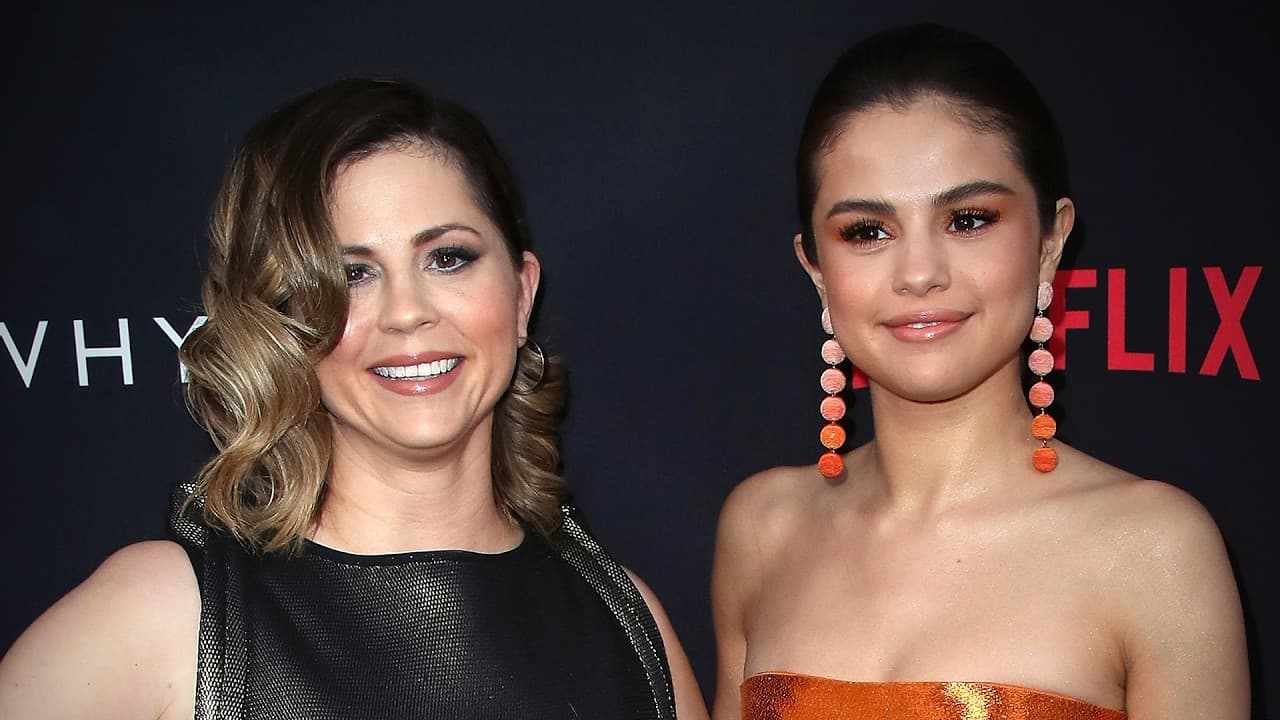
The lawsuit landed on a Thursday. Investors in Wondermind Global. The mental-health startup co-founded by Selena Gomez and her mother, Mandy Teefey. Are claiming more than $1.2 million back, alleging they were deceived about how the company was run and what, exactly, its famous co-founder was contributing to it. The complaint, obtained by Entertainment Tonight, does not read like a routine business dispute. It reads like a paper trail of a company coming apart at the seams, with a family rupture running straight through the middle.
The timing is brutal. Gomez has spent the better part of three years building a public identity around mental health. Not as a pastime or a brand adjacency, but as the organizing principle of her post-Disney, post-lupus public life. Wondermind was supposed to be the for-profit engine underneath that identity. Her nonprofit, the Rare Impact Fund, was the conscience. Together they formed something that looked, from the outside, like a coherent business philosophy. The lawsuit puts a hard question mark over the whole architecture.
What the complaint actually reveals is less about Selena Gomez the celebrity and more about a structural problem that trips up celebrity-backed startups again and again: the gap between the founder who brings the name and the operator who runs the room. When those two functions split. And when the operator's conduct becomes legally actionable. The name-bearer absorbs the reputational damage regardless of how much distance they kept.
What the Wondermind lawsuit actually alleges
Investors in Wondermind Global are suing Selena Gomez and Mandy Teefey for fraud, claiming they poured more than $1.2 million into the startup while the founders allegedly knew the company was failing. The complaint accuses Gomez and Teefey of using false claims about the business to keep investor money flowing.
The core allegation is straightforward. Investors say they were given a picture of Wondermind that did not match reality. A company with a genuinely engaged celebrity co-founder, a stable leadership structure, and a viable path to growth. What they got, the complaint argues, was something else entirely. They want their money back, plus damages.
The suit leans heavily on a 2025 exposé published by The Cut. That piece blamed Wondermind's deterioration on what it described as Mandy Teefey's mismanagement and alleged substance abuse. The investors' lawyers are essentially arguing that the founders knew the picture painted in that story. Or something like it. Was the real one, even while publicly presenting the rosier version.
Teefey pushed back hard at the time. She told The Cut that the story was driven by 'disgruntled employees with an axe to grind' and called it a distortion of the truth. That denial is now part of the legal record. Gomez and Teefey had not responded to ET's request for comment as of publication.
Selena Gomez's alleged role. Or lack of one
The lawsuit claims Gomez had little to no actual involvement in running Wondermind, despite public statements suggesting she was an active co-founder. Investors say those public statements. Including a 2022 ABC News interview announcing the company's launch. Contributed to their decision to invest.
This is the part of the complaint that bites hardest from a PR standpoint. The investors are not just saying the company failed. They are saying Gomez's public persona as an engaged mental-health entrepreneur was, at least in part, a fiction that influenced their financial decisions.
In that 2022 ABC News sit-down, Gomez spoke about her own therapy, her journaling habits, and her belief in turning pain into something useful. It was a compelling launch interview. The suit argues that by the time Wondermind was crumbling, her involvement had dwindled to near zero. And that the gap between her public statements and her actual participation crossed a legal line.
To be fair to Gomez, 'little to no involvement' is an allegation, not a finding. Courts weigh evidence; complaints state a grievance. But the allegation itself is damaging in a specific way. Her entire mental-health brand is built on the idea of authentic, personal engagement. You cannot credibly claim your mental wellness company is close to your heart if the people who funded it say you were barely present.
The structural issue here is one the celebrity startup world knows well. A famous person attaches their name to a venture and handles public-facing duties. The interviews, the Instagram posts, the launch events. Someone else runs the business. That split is often fine. But when the operator struggles and the celebrity steps back further, a vacuum opens. Investors who bought into the celebrity's vision feel misled. They may well have been.
"When the vulnerability is the product, the standard for authenticity is higher. And the legal exposure when that standard isn't met is uniquely personal."
Mandy Teefey's alleged conduct and the family fallout
The Cut's 2025 exposé, cited repeatedly in the lawsuit, alleged that Mandy Teefey's substance abuse and management failures drove Wondermind's decline. The complaint claims those problems also caused Selena Gomez to distance herself from her mother, which in turn led to Gomez pulling back from the company.
Teefey has been central to Gomez's professional life for years. As her manager for a long stretch, as the creative partner behind their joint production company, and as co-founder of Wondermind. That closeness has always been part of the story Gomez tells about herself. It is the reason the reported family rift lands with such weight.
The court documents describe a situation in which Gomez's withdrawal from Wondermind was not really a business decision. It was a personal one, shaped by what was happening with her mother. That framing actually complicates the fraud allegation in an interesting way. If Gomez stepped back because of a family crisis rather than indifference to the business, the intent element. The part that makes fraud fraud. Becomes harder to establish.
Still, intent is only one thread in the complaint. The other thread is disclosure. Did investors know any of this? The suit suggests they did not. And that gap between what was happening inside the company and what investors were being told is where the legal exposure lives, regardless of what was driving Gomez's absence.
Why celebrity mental-health ventures carry unique legal risk
Mental-health startups backed by celebrities carry a specific legal risk: the founder's personal story functions as a key selling point to investors. When that story turns out to be embellished or the founder's involvement turns out to be limited, investors have grounds to argue the pitch itself was misleading.
Most celebrity-backed consumer brands sell a lifestyle. The celebrity likes the product, uses it (or claims to), and lends their image. Investors understand that the person's day-to-day involvement is limited. Mental-health ventures are different. They are pitched on personal conviction. On the idea that the founder's own experience of suffering makes the company's mission real.
Wondermind's entire brand architecture rested on Gomez's history: the lupus diagnosis, the kidney transplant, the years of managing anxiety and depression in public — see Tommy Hilfiger's Spring 2027 Show Is a Lesson in Brand Architecture. That backstory was not just marketing. It was the reason sophisticated people handed over significant money. When investors write a check because they believe in someone's lived experience and personal commitment, they have a reasonable expectation that those things are actually present in the company.
This is a pattern worth watching across the celebrity wellness space. As we've noted in our coverage of fame's intersection with mental health, the business of publicly managed vulnerability is genuinely lucrative. But it creates accountability structures that purely commercial ventures do not face. When the vulnerability is the product, the standard for authenticity is higher.
The broader business wealth landscape is littered with celebrity-fronted companies that overpromised on founder involvement. What makes Wondermind different is that the company's core promise was therapeutic. And that specificity raises the stakes.
What this does to Gomez's mental-health brand
The lawsuit threatens Selena Gomez's most carefully constructed public identity: the mental-health advocate whose business ventures back up her personal convictions. It creates a direct conflict between the 'authentic vulnerability' narrative and the claim that she was largely absent from the company built around it.
Gomez is not primarily a pop star anymore, at least not in terms of where her cultural influence is concentrated. She is, at this stage of her career, the rare beauty company founder (Rare Beauty), the mental-health philanthropist (the Rare Impact Fund), and the actress doing serious work. The music still happens. But the brand framework is built on depth, not chart performance.
Rare Beauty is a genuine commercial success. The Rare Impact Fund has. By Gomez's own account in recent public appearances. Reached two million young people daily through mental-health and suicide-prevention resources. Those are real numbers. The fund's work does not become less real because Wondermind is in legal trouble.
But branding does not work in clean compartments. A fraud lawsuit alleging that Gomez misrepresented her commitment to a mental-health company will be cited whenever her broader mental-health advocacy is discussed. That is how reputational damage functions. It does not destroy; it complicates. And complication is exactly what a brand built on simplicity and sincerity cannot afford.
The saving move, if there is one, is to let the legal process run while leaning hard into the Rare Impact Fund's documented track record. Separation of the nonprofit from the embattled startup is the strategic play. Whether that separation lands with the public is a different question.
The Rare Impact Fund versus Wondermind: two very different vehicles
The Rare Impact Fund is a nonprofit focused on expanding mental-health access for young people, fully separate from Wondermind Global, which was a for-profit startup. The legal trouble involves only Wondermind; the fund's work continues independently.
This distinction matters and will likely be central to Gomez's PR response. The Rare Impact Fund was never the same animal as Wondermind. One takes donations and deploys them toward access programs. The other sought outside investment and tried to build a scalable product business. Different structures, different obligations, different accountability.
Gomez has spoken about the fund with evident genuine feeling. The two-million-young-people figure she cites is a meaningful metric. The kind of reach that represents actual program funding, not just social media impressions. The fund has been ticking along quietly while Wondermind drew the attention, which now looks like strategic good fortune.
The risk is conflation. To a casual observer, 'Selena Gomez's mental health company is being sued for fraud' and 'Selena Gomez's mental health nonprofit is under fire' are hard to distinguish — see Selena Gomez Built a Billion-Dollar Brand. Music Is Now the Side Project.. Gomez's team will need to make that distinction clearly and consistently. Not just once, but across every interview and public statement for the foreseeable future.
What happens to Wondermind Global from here
The future of Wondermind Global is uncertain. A $1.2 million fraud lawsuit, combined with the internal problems described in The Cut's 2025 exposé, makes the company's survival in its current form unlikely unless leadership changes and new investment materializes.
Startups survive lawsuits. Companies with strong fundamentals, a clear product, and committed leadership can settle claims and rebuild. Wondermind, based on the public record so far, does not obviously have those things in place right now. The exposé described a company already in trouble. The lawsuit describes investors who want out. Neither is a sign of an organization on stable ground.
A sale is possible. A pivot is possible. A quiet wind-down is also possible. What seems unlikely is a return to the original form. The celebrity co-founder actively engaged, the company growing, the brand narrative intact. That version of Wondermind appears to have ended before the lawsuit was filed.
The irony is that the mental-health startup space itself is not struggling. Digital therapy platforms, wellness apps, and mental-health content businesses have attracted serious capital and genuine user growth over the past several years. Wondermind's problems appear to be specific to Wondermind. A management and leadership failure, not a market failure.
What celebrity co-founders should take from this moment
The Wondermind case shows that celebrity co-founders face legal exposure when their public statements about involvement diverge from reality. Any gap between what a famous founder says in interviews and what they actually do inside a company can become the basis of a fraud claim if investors rely on those statements.
This is not a novel problem. Celebrity-backed ventures have imploded before, often for exactly this reason. The famous person generates the buzz and the initial capital interest. The operational team is smaller, less glamorous, and ultimately less supported. When things go wrong, the name on the masthead absorbs the legal and reputational blowback.
The lesson is not that celebrities should avoid co-founding companies. The Rare Beauty model. Where Gomez has clearly been a hands-on creative force. Demonstrates that the model can work. The lesson is about disclosure. If a celebrity's role is primarily promotional, that should be stated plainly to investors. 'I will be the face of this company and attend key events' is a very different representation than 'I am building this with you.'
Investors, for their part, are increasingly sophisticated about this dynamic. As you can see across our full tracking of celebrity-linked business ventures, the most durable celebrity brands tend to have founders who maintain genuine creative or operational control. Not just the Instagram presence. The ones that fail often show, in retrospect, that the founder's engagement was thin from the start.
For Gomez specifically, this moment is a stress test of a career that has been, by most measures, remarkably well managed. Rare Beauty's commercial success, the film work, the philanthropy. The architecture is strong. One failing startup does not dismantle that. But the question being asked now. 'Was her commitment real, or was it a performance?'. Is the one question her brand cannot easily withstand.
The career arc: where Selena Gomez stands when the dust settles
Selena Gomez enters this legal fight with significant career capital: a billion-dollar beauty brand, a successful acting phase, and a nonprofit with documented impact. The Wondermind lawsuit is a serious reputational challenge but not, on its own, a career-ending one.
Context matters here. Gomez has navigated genuinely difficult public moments before. The kidney transplant, the high-profile relationship breakups, the mental-health hospitalisations. And emerged with her public standing intact, often stronger. She has built a reservoir of goodwill that is real and deep.
Rare Beauty alone has changed the financial calculation of her career in ways that make the music wealth profile framing feel incomplete. The brand, valued at north of a billion dollars by most estimates, means Gomez is no longer dependent on any single revenue stream. She can afford, in a literal sense, a period of legal turbulence.
What she cannot afford is silence. The investors' complaint is public. The allegations are specific. The longer Gomez and her team say nothing, the longer the narrative belongs entirely to the plaintiffs. Her history of candid public communication. The therapy discussions, the lupus updates, the honest interviews. Has always been her strongest asset. Deploying that voice here, carefully and specifically, is the obvious next move.
The latest reporting on this story is still early. Discovery has not happened. Whatever Wondermind's internal records show about Gomez's actual involvement has not been made public. The legal outcome is genuinely open. What is not open is the reputational question, which is being answered in real time. And which only Gomez herself can address with any authority.