Survivor Greece Contestant Lost His Leg. Now He's Suing for $100 Million.
A spearfishing trip, a tourist boat, and a severed limb: the lawsuit filed by Stavros Floros against Acun Media and Sky TV is more than a personal injury case, it is a reckoning with the hidden liability economics of global reality television.
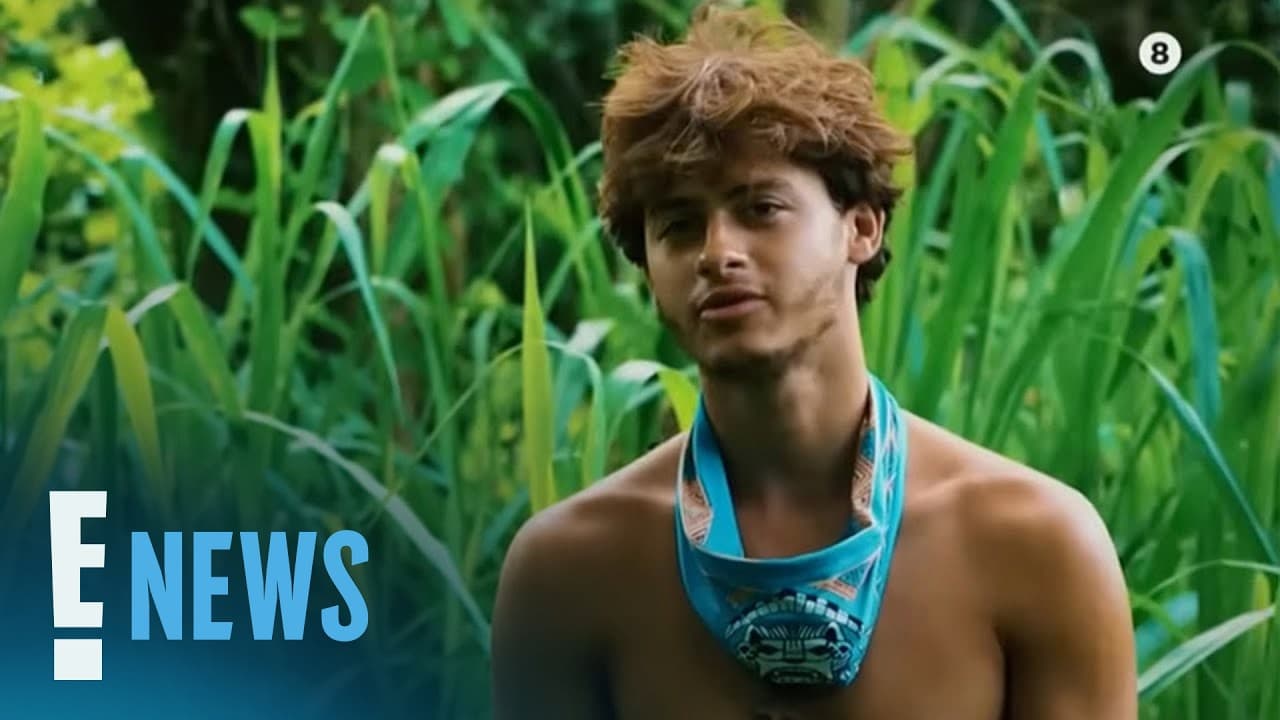
The left leg was never recovered. That single detail, buried in the filing obtained by E! News, strips away whatever gentler framing a production company might otherwise apply to what happened to Stavros Floros in the waters off the Dominican Republic in May. A propeller from a tourist vessel struck him while he was spearfishing, an activity the lawsuit alleges he was required, incentivized, and expected to perform as part of Survivor Greece's 13th season. The leg was gone. The show, according to the filing, kept filming.
Floros is now seeking $100 million in damages, naming Acun Media and Sky TV as defendants and accusing the production team of negligence so fundamental it borders on recklessness: no marker buoys, no safety personnel, no spotter boats, no meaningful barrier between a cast member swimming in open water and the local nautical traffic that routinely crosses those same waters. The lawsuit also alleges that after the incident, remaining contestants were supplied with cocaine and marijuana to manage their emotional distress, a claim that, if substantiated, would transform a liability dispute into something far more damaging for the production ecosystem around Survivor's international franchises.
The case lands at a peculiar moment for the reality-TV industrial complex. The Survivor format, originally developed by Charlie Parsons and made globally dominant by Mark Burnett's American version, has been licensed into dozens of territories, each carrying its own production standards, local regulations, and risk profiles. Acun Media, the Turkish production house that operates Survivor in Greece and several other markets, sits at the center of a franchise machinery that has largely avoided this kind of catastrophic public reckoning. That changes now.
What the lawsuit actually alleges against the production team
Stavros Floros' legal team alleges that Acun Media and Sky TV failed to establish any physical boundary separating contestants from open nautical traffic, provided no safety personnel or spotter boats, and continued filming after Floros' left leg was severed by a tourist vessel's propeller in May during filming in the…
The core negligence theory is not complicated, and that simplicity is what makes it legally potent. Contestants on Survivor Greece were, the filing argues, structurally required to spearfish to eat. That is not an incidental activity, it is baked into the format's survival premise. If production mandates that cast members enter open water, then production assumes a corresponding duty of care over the conditions in which that activity occurs.
The filing as reported by E! News is specific about what was absent: no buoys, no rope perimeters, no safety boats, no spotters whose job it was to wave off approaching vessels. Those are not exotic precautions. They are the standard toolkit for any commercial open-water operation in a tourist corridor. The Dominican Republic, where the season was filmed, is one of the busiest recreational maritime zones in the Caribbean. Tourist boats are not an unpredictable hazard there; they are the environment.
The lawsuit adds a second layer that amplifies the duty-of-care argument: because contestants are stripped of all outside communication by the format's rules, they cannot call for help, cannot check maritime traffic, cannot self-protect in the ways a private citizen swimming in open water might. The filing argues that isolation, a intentional production choice, transfers the entire burden of environmental awareness onto the production team. If you remove someone's ability to protect themselves, you inherit that obligation. That is a theory a plaintiff's attorney can work with.
Then there is the allegation that filming continued after the incident, and that cocaine and marijuana were distributed to the remaining cast. Neither claim has been independently verified, and Acun Media has not yet responded to E! News's request for comment on the lawsuit's specific allegations. But if either holds up under discovery, the liability picture expands well beyond one man's injury, into questions of institutional response, participant welfare protocols, and whether the production treated an active medical catastrophe as a logistical inconvenience.
What Acun Media's prior statement actually concedes
In a May statement following initial reports, Acun Media said Floros had been diving without a surface marker buoy in an area frequented by tourist vessels, and that assistance was provided immediately, language that implicitly confirms the absence of a buoy while framing it as Floros' own omission rather than a production…
Read the Acun Media statement from May, surfaced by the Toronto Sun, against the lawsuit's allegations and something interesting emerges. The production company confirms, by omission, several of the plaintiff's foundational claims. Floros was indeed in water frequented by tourist vessels. He was indeed without a surface marker buoy. The company's defense is essentially that these facts were Floros' own doing, not theirs.
That framing may be legally coherent, but it is strategically perilous. The moment a production company acknowledges that a cast member was in tourist-trafficked water without a buoy, the next question is obvious: whose job was it to ensure the buoy was there? If the answer is 'the contestant's,' that defense requires the production to argue that a person stripped of outside communication and placed in open water for a mandatory food-gathering exercise bears sole responsibility for his own maritime safety. That is a hard argument to make to a jury.
The statement's language, 'from the very first moment, there was an immediate response' and references to port authorities investigating, reads like a company that was advised in May to establish a paper trail of responsiveness before litigation materialized. The lawsuit materialized anyway. Now that trail has to survive discovery, depositions, and the scrutiny of whatever internal communications existed between the moment of the accident and the moment filming resumed.
"When you strip someone of their ability to self-protect, you inherit that obligation, and no buoy, no spotter, no safety boat means production owned the risk it refused to manage."
How the international Survivor franchise model creates liability blind spots
The Survivor format is licensed across dozens of territories, with each local production operating under its own regulatory framework and safety standards. That decentralized model means the parent format's brand reputation is exposed to the risk standards, or failures, of its lowest-resourced licensee.
The American version of Survivor, now deep into its run on CBS, operates under union contracts, SAG-AFTRA adjacent performer protections, and a production culture that has been pressure-tested by decades of litigation, regulatory scrutiny, and the kind of institutional memory that comes from being the market leader. That infrastructure does not automatically travel with the format when it is licensed to a new territory.
Acun Media is a serious operation, a major Turkish media company with multiple international formats under management. But 'serious' and 'operating to the same safety standard as a CBS production in a domestic American jurisdiction' are not the same thing. The Dominican Republic location adds another layer of complexity: local maritime authority, local emergency response, and local regulatory enforcement are not the same as those a production would encounter in, say, Fiji, where the American version has filmed repeatedly and developed deep location-specific protocols.
The franchise model's economics encourage aggressive cost management at the local level. License fees flow back to the format holder; production costs are borne by the local producer. When those costs are being managed tightly, safety infrastructure, spotter boats, buoy systems, additional personnel, is precisely the category that gets trimmed. It is invisible until it isn't.
This is the structural tension that the Floros case puts on the table for the entire international reality format business. The liability question is not just 'did Acun Media fail Stavros Floros?' It is also 'what obligation does the format licensor have to enforce minimum safety standards across all territorial productions, and what happens when those standards are set by the territory with the weakest incentive to maintain them?'
Why the $100 million figure is a negotiating instrument, not a prediction
A $100 million demand in an initial filing reflects the outer boundary of speculative damages, lifetime medical costs, lost earning capacity, pain and suffering, and punitive exposure, rather than a number the plaintiff expects to collect in full. It is designed to compel a settlement before discovery forces wider disclosure.
Headline damages figures in personal injury suits at this scale serve multiple functions, almost none of which involve the court actually writing a nine-figure check. The $100 million demand is a statement of maximum exposure, a pressure instrument, and a signal to the defense that the plaintiff's team believes the facts are bad enough to justify going to trial. It is also, candidly, a media strategy. A filing that seeks $4 million generates a news brief. A filing that seeks $100 million generates this.
The actual calculus that will drive any resolution is narrower. Sixty-one days of hospital care across multiple surgeries in Miami, one of the most expensive medical markets in the United States, generates real numbers. Lifetime prosthetics, rehabilitation, and ongoing care generate real numbers. Lost future earnings for a person whose professional identity, physical capacity, or public profile was materially altered by the injury generate real, if contested, numbers. The pain and suffering component is where plaintiff's attorneys swing for the fence, and where defendants negotiate hardest.
The drug allegation is strategically significant here beyond its moral dimension. If discovery reveals that production knowingly supplied controlled substances to contestants in the aftermath of a catastrophic injury, whether to manage their distress, to suppress their instinct to leave, or for any other reason, the punitive damages exposure grows substantially. Punitive damages are designed to punish and deter, not to compensate. They are the lever that can make even a well-resourced corporate defendant want to settle quickly and quietly.
For Acun Media and Sky TV, the calculus is about more than the money. A public trial produces testimony, internal documents, and the kind of narrative that attaches to a brand for years. The Survivor format's international licensing value depends on the perception that it is a professionally managed, globally exportable product. A protracted lawsuit that puts production practices on trial is damaging in ways that a settlement payment, even a large one, is not.
The 61 days in Miami: how medical jurisdiction shapes the case
Floros reportedly received treatment at a Miami hospital for 61 days following the accident, a detail that is legally significant because it establishes a substantial connection to the United States judicial system and potentially subjects the defendants to American tort law and damages standards.
Where an injury victim receives medical care matters in cross-border litigation. The fact that Floros was transported to Miami, rather than treated exclusively in the Dominican Republic or Greece, creates a genuine American nexus for this case. Medical bills incurred in the United States are subject to American pricing, which is among the highest in the world. Those bills become the documented foundation of the compensatory damages claim.
More importantly, the choice of American jurisdiction, if it holds, exposes the defendants to American civil litigation mechanics: broad pre-trial discovery, the potential for a jury trial, and a damages culture that is substantially more plaintiff-friendly than what Acun Media would face in a Greek or Turkish court. The defense will almost certainly challenge jurisdiction and attempt to move proceedings somewhere more favorable to their position. That fight alone could take years.
Sixty-one days of inpatient care involving multiple surgeries for a traumatic amputation, in Miami, generates a medical bill that is likely to reach well into the millions of dollars before rehabilitation and prosthetics are factored in. That number, whatever it actually is, anchors the compensatory floor. Everything above it, in a $100 million filing, is the room the plaintiff's team has created to negotiate and, if necessary, litigate.
What the drug allegation does to the broader narrative
The lawsuit's claim that remaining contestants were supplied with cocaine and marijuana after Floros' accident, if substantiated, would constitute a separate category of production misconduct that transforms the case from a safety-failure lawsuit into evidence of systematic disregard for participant welfare.
Set aside for a moment whether the drug allegation is true. Consider what it would mean structurally if it is. A production team that, following the loss of a crew member's limb, responds by sourcing controlled substances for the remaining cast has revealed something specific about its decision-making hierarchy: keeping the show going ranked above the wellbeing, and the legal status, of the people making it.
That reading, if supported by evidence, is the kind of detail that plaintiff's attorneys prize because it reframes every other decision made that day. The absence of safety boats is no longer an oversight; it is consistent with a pattern. The continuation of filming is no longer a callous business call; it is the natural end point of a culture that prioritized production over people. Pattern evidence changes jury psychology in ways that isolated facts do not.
For the broader reality television industry, this is the allegation that will generate the most internal anxiety. Every major production company in the unscripted space has protocols, written, documented, legally vetted protocols, about what happens when a participant is injured. Those protocols exist precisely because of the liability exposure of not having them. Whether Acun Media had comparable protocols, and whether those protocols were followed, will be among the first questions answered in discovery.
The talent welfare conversation in reality television has been gaining volume for several years, driven by mental health crises among former contestants on shows like Love Island UK and The Bachelor franchise. Physical safety has received less sustained attention, perhaps because catastrophic physical injuries on set are rarer and easier to treat as anomalies. The Floros case makes that argument harder to sustain.
What this means for Survivor's global brand and future licensing
A $100 million lawsuit alleging systematic safety failures on a licensed Survivor production forces format holders and international broadcasters to reassess the due-diligence and contractual oversight standards they apply to territorial licensees, or face being drawn into the liability chain themselves.
The Survivor name is among the most valuable in the international format business. Decades of American primacy have made it a guaranteed ratings performer in new markets, and the format continues to generate licensing revenue well into its third decade of existence. That brand equity is now entangled with this lawsuit, whether or not the American rights holders are named defendants.
Sky TV's presence in the filing is notable. Sky operates across multiple European markets and is a significant player in the international content ecosystem. Its association with a production that a court may ultimately find to have been negligently managed is a reputational exposure that its compliance and legal teams will take seriously, regardless of how the underlying facts resolve.
The likely industry response, if this case proceeds meaningfully, is a push toward more rigorous contractual safety standards in format licensing agreements. Format holders have a direct economic interest in ensuring that territorial licensees do not damage the brand. The mechanism for enforcing that interest is the license agreement itself. Requiring documented safety protocols, third-party audits of high-risk production activities, and minimum insurance thresholds as conditions of licensing is entirely achievable. Whether it happens depends on whether the industry treats this case as a signal or as an anomaly.
For a deeper read on how broadcast institutions absorb reputational crises while protecting their underlying economics, the Jim Thornton suspension from Wheel of Fortune offers a useful parallel, a single incident that forced a reckoning with how a long-running format manages the gap between its public image and its internal machinery.
Floros as a public figure: career and identity after the incident
Stavros Floros entered Survivor Greece as a competitor seeking the exposure and platform the show provides; he exits the episode of his participation as an involuntary symbol of production negligence, a transformation that carries its own complex relationship with public attention and future opportunity.
There is a brutal irony embedded in the Survivor format that the Floros case crystallizes. Contestants sign on for a show premised on physical endurance, risk, and the performance of resilience under pressure. The audience's appetite for that content is precisely what gives the format its commercial value — see Diddy's Moving Release Date and Hollywood's Appetite for Redemption. And yet the physical risks that generate that entertainment value are, in the Floros lawsuit's telling, managed with a casualness that borders on indifference.
Floros is now, involuntarily, one of the most prominent figures in the international Survivor universe, not because of anything he did competitively, but because of what was done to him. How he navigates that public position over the coming months and years will be one of the stranger celebrity-adjacent storylines in the reality television space. Advocacy, memoir, speaking, and media appearances are all available paths. So is privacy.
The lawsuit itself is a form of public narrative management. By filing, Floros and his legal team have seized control of the story's terms. The production company's May statement framed the incident as a diver's error; the lawsuit reframes it as a systemic failure. Both framings will compete for dominance in public perception, and that competition will be adjudicated as much in media coverage as in any courtroom.
For anyone tracking the intersection of reality television, personal injury litigation, and the business of celebrity, you'll find our latest reporting continuing to follow this case as it develops, and the other wealth and business profiles in our archive provide context for the production companies at the center of it.
The underlying economics of participant safety on reality television
Reality television contestants occupy a legal gray zone, neither employees with labor protections nor fully independent contractors with the autonomy to manage their own risk, and that ambiguity has historically allowed production companies to minimize safety investment while retaining maximum control over participant conduct.
The question of how reality television participants are legally classified has been contested for years across multiple jurisdictions. In the United States, the IRS and various labor boards have periodically examined whether contestants, who are directed, scheduled, and controlled by production in ways that look a great deal like employment, should be treated as employees for legal purposes. The industry has consistently resisted that classification, in part because the financial implications of employee status are substantial: workers' compensation, overtime protections, and the duty-of-care obligations that attach to a formal employment relationship.
The Floros situation illustrates why that classification question matters so much in practice. If he is an employee, the analysis is straightforward: the employer failed in its duty to provide a safe workplace. If he is an independent contractor, or simply a 'participant' under a standard reality show contract, the legal framework is murkier, and the burden of proof shifts in ways that favor the production company.
What is clear, regardless of classification, is that the production exercised the kind of total control over Floros' environment, location, activities, communication, resource access, that is ordinarily associated with employment. When you control the environment, you control the risk. And when you control the risk, you own the consequences of failing to manage it. That logic, applied to open water in a tourist corridor without a buoy or a spotter boat, is the argument at the center of this $100 million lawsuit.
The sports wealth profiles on our site track how professional athletes have increasingly used legal action to reshape the duty-of-care expectations that govern their labor. Reality television contestants, who lack agents, unions, and the market use that star athletes carry, have historically had far less power to make similar demands. Stavros Floros, whatever the outcome of his case, has just made that power imbalance very difficult to ignore.