Perez Hilton's Livestreamed Crisis and the Industry That Profits From Public Pain
A disturbing self-harm livestream, a hospital transport, and the uncomfortable question nobody in celebrity media wants to answer: what do we owe the people whose suffering we built our business on?
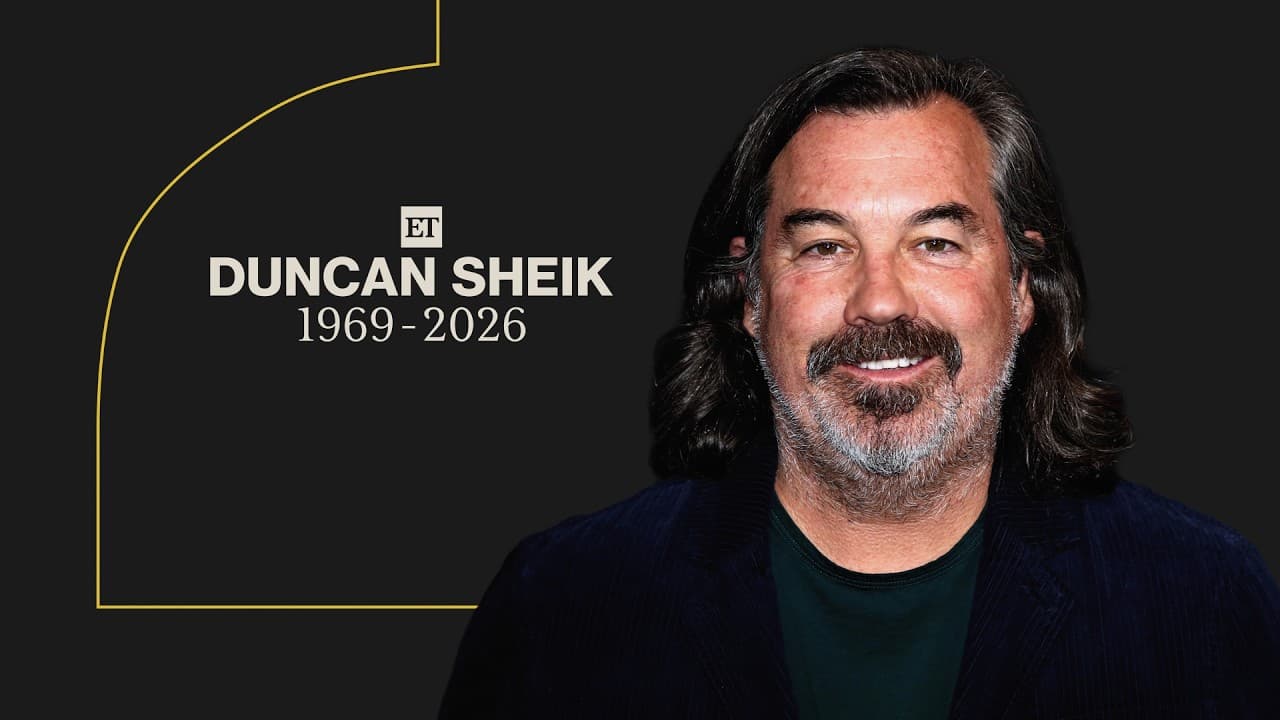
The video moved fast. It populated across X first, then fragmented into screenshots, reaction clips, and quote-posts that spread further than the original. By the time Miami-Dade Sheriff's deputies had tactically staged outside the home and confirmed the individual inside was alone, thousands. Possibly tens of thousands. Of people had already watched Perez Hilton, covered in blood and holding a knife, livestreaming what appeared to be a self-harm episode from his Miami residence. The Miami-Dade Fire Rescue transported him to a local hospital, where he was placed under psychiatric evaluation. That much is confirmed.
What is harder to confirm, and harder still to sit with, is the machinery that made this moment both possible and, in its grotesque way, inevitable. Perez Hilton did not become famous through talent in the conventional sense. He became famous by being maximally, sometimes cruelly public. About other people first, and then, as the media landscape shifted beneath him, about himself. He built an audience on exposure. And when the worst night of his life arrived, that audience was there, watching, because the infrastructure of modern social media made watching the obvious and frictionless thing to do.
This is not a story about one man's breakdown. It is a story about what the attention economy does to the people who have lived entirely inside it. And what it asks of the rest of us when that living goes visibly, publicly wrong.
What happened: the confirmed facts of the Miami incident
On the night of August 4, 2026, Miami-Dade Sheriff's deputies responded to multiple 911 calls about a man livestreaming self-harm from a Miami home, which was confirmed to be Perez Hilton's residence. He was transported to a local hospital by Miami-Dade Fire Rescue and placed under psychiatric evaluation.
The sequence of events, as reported by the TMZ podcast, began with calls flooding into Miami-Dade dispatch from viewers watching a live social media broadcast. The platform appears to have been TikTok, with co-streamers. Other accounts sharing the live session. Visible in the feed. Those co-streamers were reportedly urging viewers to call emergency services in real time, which many did. Comments scrolling through the stream included users confirming they had already dialed 911.
When deputies arrived and established that Hilton was alone in the home. Family members outside confirmed he was solo. The tactical calculus changed. Rather than a forced entry that could escalate a confrontation with a person in acute crisis holding a knife, authorities chose what the Miami-Dade Sheriff's Office described as 'tactically disengaging while continuing to monitor the situation.' It is the kind of decision that reads as frustratingly passive in a news summary and reads as correct procedure to anyone who understands crisis negotiation: sudden police presence can accelerate rather than defuse a mental health emergency.
By the time Hilton was safely removed from the home and transported by fire rescue, his management company. Golden Artist Entertainment, co-led by Dante Rousielli and Rebecca Cochen. Had issued a statement confirming they had not yet been able to make direct contact with their client despite active attempts. That detail is telling. His own representatives, the people paid to know where he is and what he is doing, were learning about this the same way the public was: through social media.
Who Perez Hilton is and why his fame model matters here
Perez Hilton is a celebrity blogger who built one of the internet's earliest and most-trafficked gossip platforms in the mid-2000s, his name on purpose constructed as a play on Paris Hilton's at the height of her tabloid dominance.
To understand why this moment lands differently than, say, a celebrity hospitalization disclosed through a publicist's press release, you have to understand what Hilton's career actually was. He did not sell a product or a performance. He sold access to his reaction. His unmediated, often savage take on the famous people of the moment. He annotated paparazzi photos with crude drawings. He outed celebrities. He wrote things that, by the standards of any other publication, would have been unpublishable. And it worked, for years, at enormous scale.
The name itself was a piece of performance art in branding: Perez Hilton, a riff on Paris Hilton, the woman who in 2004 and 2005 represented everything the tabloid internet found both glamorous and mockable. By attaching his identity to hers. Even nominally. He signaled exactly what kind of content he would produce and exactly who his audience was. It was a sharp move, and it made him genuinely wealthy and famous at a time when 'blogger' was not yet a credential anyone took seriously.
But the blog era ended. The gossip monopoly that perezHilton.com once held was dissolved by Twitter, then Instagram, then TikTok. Every celebrity now controls their own narrative distribution. Every fan account is a gossip operation. The economic model that made Hilton a star collapsed slowly and then, as Hemingway would have it, all at once. What replaced it, for Hilton, was a pivot to personal content: his children, his faith, his daily walks, his Bible readings. The weeks before this incident, he was posting videos about Exodus and gratitude and the Rihanna song that was stuck in his head. The contrast with the video that followed is almost impossible to process.
"The platform architecture he used to broadcast his children's milestones was available in that moment, and the audience was conditioned to watch."
The livestream as medium: why this was always possible
Livestreaming platforms like TikTok provide real-time, unmoderated access to an audience with no meaningful delay between action and broadcast. A structural feature that makes mental health crises visible at scale before any intervention is possible.
There is a reason the video spread to tens of thousands of viewers before deputies arrived at the door. Livestreaming, by its design, removes every editorial gate that once stood between a person in crisis and a mass audience. A tweet can be deleted. A photo can be taken down. A live broadcast, while it runs, simply runs. And the co-streaming feature on TikTok, which allows other accounts to simultaneously amplify a live session to their own audiences, multiplies reach geometrically in real time.
Platform content moderation has improved at detecting and removing recorded video depicting self-harm. It has not solved the live problem, because solving the live problem at scale is genuinely hard: automated detection lags behind human action, and by the time a stream is flagged and pulled, it has already been screen-recorded by dozens of viewers and reposted elsewhere. X. Formerly Twitter. Has effectively reduced content moderation investment, which is why, according to TMZ's reporting, the footage spread there first and widest.
The uncomfortable subtext is that the same infrastructure that allowed Hilton to build his post-blog career. The direct, always-on parasocial connection with an audience. Is what made his worst night into a spectacle consumed by strangers. He did not choose to livestream this. But the platform architecture he had used for years to broadcast his children's milestones and his morning walks was available to him in that moment, and the audience was conditioned to watch. This is the bargain at the center of influencer-era celebrity: radical access goes both ways.
For a deeper look at how celebrity mental health intersects with the machinery of public scrutiny, our piece on Ariana Grande's recent step back maps the same tension in a different register. How the industry that demands constant presence struggles to make room for the human cost of that demand.
The gap between public performance and private reality
In the weeks before the incident, Perez Hilton was posting cheerful, faith-oriented content about morning walks and Bible readings. Behavior that offered no visible signal of distress to his audience or, apparently, to his management team.
TMZ's team pulled footage from the preceding weeks to establish a baseline. What they found was unremarkable in the best sense: a man filming himself outdoors, talking about Exodus 36 and its repeated instruction to 'do the work,' finding a Rihanna parallel, laughing at his own joke. Smiling. Content, or performing contentment well enough that nobody. Not his viewers, not his representatives. Flagged concern.
This is the double edge of parasocial media. The audience for that kind of content believes it is seeing the real person. The unfiltered, no-publicist, direct-to-camera self. And sometimes it is. But the format also rewards performing wellness: the morning walk, the gratitude post, the scripture reference. The algorithm promotes content that makes people feel good. A creator who is struggling has an economic incentive, whether they consciously feel it or not, to keep performing the version of themselves that the audience rewards.
One of the viewer comments that TMZ's podcast cited captured this dynamic with accidental precision: 'He always came across so happy on his channel. Just shows you can only believe 20% of what you see on social media.' That is true, and it is also the fundamental premise on which the entire influencer economy is built. The audience knows the window is curated. The creator knows the audience knows. And the performance continues anyway, because stopping it means losing the connection. And for someone whose entire identity has been built on public attention, losing the connection is its own kind of crisis.
What his management's statement actually reveals
The statement from Golden Artist Entertainment. Acknowledging they had not been able to reach Hilton despite 'ongoing efforts'. Signals a management structure that learned about the crisis from social media rather than from their client, a breakdown in the care infrastructure around a high-risk public figure.
Management statements in moments of celebrity crisis are almost always carefully parsed documents. Golden Artist Entertainment's statement was careful in the right places: no speculation on cause, explicit concern for Hilton's family as well as Hilton himself, a request for privacy. What it could not conceal was the admission embedded in its second sentence. That despite their efforts, they had not been able to make direct contact.
That gap, between a client in acute crisis and the people whose job it is to manage that client's welfare, is not unusual. It is, in fact, the norm in talent management, where the professional relationship is built around a person's output and public profile rather than their mental health. Managers track bookings, deals, and brand relationships. They are not therapists, and most talent contracts do not build in mental health monitoring beyond whatever the talent voluntarily discloses. The system works when the talent is functioning. It shows its structural limits when the talent stops functioning visibly, in public, at scale.
The question of what duty of care the entertainment business owes the people who generate its revenue is one the industry has been debating in fragmentary, crisis-driven ways for years. It rarely produces lasting structural change. It produces statements, wellness initiatives, and, eventually, the next crisis. For a look at how the business models around celebrity function across different entertainment verticals, our latest reporting tracks how this conversation is evolving in real time.
The economics of a career built on publicness. And what happens when publicness becomes…
Perez Hilton's career was built entirely on the commercial value of public attention, first directed at others and then at himself. A model that generates income as long as the creator can sustain performance, but offers no floor when that performance breaks down.
The wealth Hilton built during the peak blog years was real and substantial. PerezHilton.com at its height was among the most-visited celebrity news destinations on the internet, commanding advertising rates that reflected that traffic. But blog advertising is a commodity market, and as traffic fragmented across social platforms, the revenue that once flowed to destination sites followed. Hilton made the pivot that most legacy bloggers attempted and few executed cleanly: he moved to YouTube, to Instagram, to TikTok, building an audience around his personal life rather than his celebrity commentary.
That pivot works, economically, as long as the creator's life generates content that holds an audience. Children are reliable content. Hilton has documented his family extensively. Faith is reliable content. Wellness walks are reliable content. But this model has no severance package. There is no salary continuity, no disability leave, no sick days. The moment a creator stops creating, the algorithm stops distributing. Sponsorship revenue, which is the economic engine of personal-brand content at Hilton's level, is contingent on consistent posting and engagement. A hospitalization is, by the brutal arithmetic of the creator economy, a revenue interruption.
This is the trap that the attention economy sets for the people who enter it early and deeply enough that public identity and private identity become functionally indistinguishable. Hilton did not have a day job he returned to when the blog slowed down. He had himself. His voice, his face, his willingness to be watched. As the asset. When that asset is in a psychiatric hospital, the business stops. There is no other business to carry it.
You can track the careers that avoided this trap by diversifying early. Pivoting from attention to equity, from fame to ownership. Across our full coverage of celebrity wealth profiles. The contrast between those trajectories and a career that remained purely attention-dependent is instructive.
The Diddy release-date footnote and what it tells us about TMZ's editorial economy
The same TMZ podcast episode that covered Hilton's hospitalization pivoted to an update on Sean Combs's prison release date. Which has moved between January and February 2028 following a reported fight and solitary confinement. Illustrating how celebrity crisis coverage is produced and packaged as continuous content.
It would be easy to note the tonal whiplash of the TMZ podcast moving from a man's acute mental health crisis to a discussion of Sean Combs's adjusted release date and leave it at that. But the editorial choice is itself revealing. TMZ's business model is built on the continuous production of celebrity news content, and a podcast recorded in the middle of a breaking story — see The Reverse Megxit: What Meghan's Return to Acting Reveals About the Sussex Business Model. With the co-host literally off-phone working the story while the solo host holds the audience. Has to fill time. The Diddy release-date update is a genuine news item. It also functions as a palate cleanser, a return to the familiar rhythms of celebrity news after something that disrupted those rhythms.
The release-date update itself: Combs's projected release from federal custody has fluctuated recently, moving from summer 2028 to April, then February, then January 2028, before settling back to February following a reported altercation that landed him in solitary confinement. TMZ's host noted, with some candor, that it is unclear whether the January-to-February shift represents a disciplinary consequence or a clerical rounding in the prison system's scheduling software. That uncertainty is appropriately reported as uncertainty.
What the pairing of these two stories reveals is the editorial economy of celebrity journalism at its most transparent: crisis and continuity, the alarming and the procedural, packaged together because the audience for one is substantially the audience for the other. That is not a moral failing. It is a business model — see The 90 Day Fiancé Tell All Is Chaos intentionally, and That's the Whole Business Model. But naming it clearly is part of what serious celebrity journalism owes its readers.
What comes next: recovery, return, and the question of who this industry protects
Perez Hilton was confirmed to be undergoing psychiatric evaluation and in stable condition as of TMZ's reporting. But the path from hospitalization back to public life for a creator whose livelihood depends on continuous presence is longer and harder than the initial crisis suggests.
The immediate news is, genuinely, the best possible version of a bad night. Hilton is alive. He is in professional care. The deputies who responded made the right tactical call. His management issued an appropriate statement. None of this was guaranteed. A different set of decisions at any point in the chain could have produced a different outcome.
But the post-crisis path for a creator at Hilton's career stage is not obvious. He does not have a studio contract that obligates a return date or a record label managing his image rehabilitation. He has a personal brand and an audience that is now waiting to see what happens next. That audience will have questions. Some will be compassionate. Some will not be. The media coverage will require a response eventually. A statement, an interview, a return to posting. And that response will be consumed and analyzed and rated for authenticity by an internet that has seen enough celebrity recovery narratives to be skeptical of all of them.
The hard structural question. The one this industry reliably defers after each individual crisis. Is whether the creator economy can be designed to catch people before this point rather than after. That would require platforms to invest in intervention infrastructure rather than just content moderation. It would require management contracts to include mental health provisions with teeth. It would require the audience itself to develop instincts that distinguish between content and crisis faster than an algorithm can. None of that is happening at scale. What is happening is that a man who spent twenty years making himself maximally public is now, at his most vulnerable, in the most public moment of his life.
The industry that profits from celebrity attention. From the blogs and the broadcasts and the brand deals and the podcast ad reads. Has a stake in the health of the people who generate that attention. It does not, as currently structured, have a mechanism for protecting it. That gap is the story underneath this story, and it will remain the story long after Perez Hilton comes home.