Ariana Grande Is Stepping Back. The Industry That Built the Scrutiny Carries On.
A music video, a wave of online alarm, and a rep's statement signal something larger than a tour wind-down: the machinery of pop celebrity is eating one of its own most profitable products.
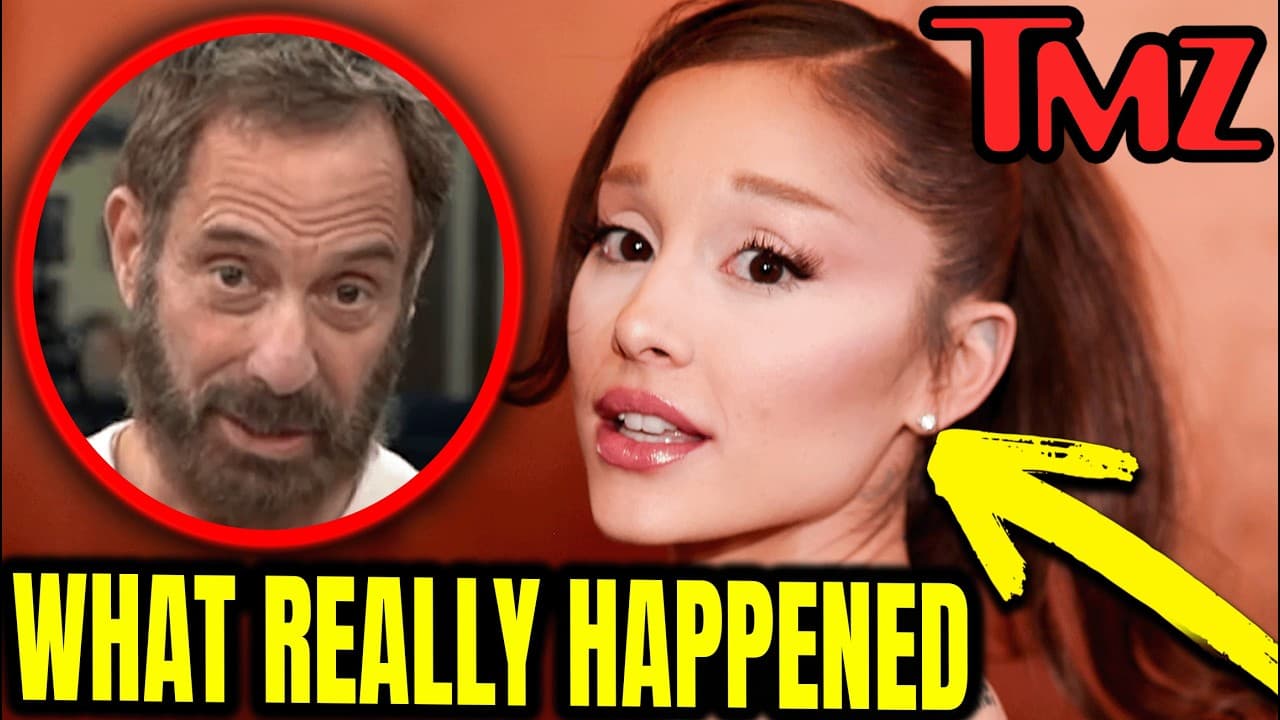
The video for "Petal" dropped over the weekend, and within hours the discourse had outrun the song entirely. Whatever Ariana Grande intended the clip to communicate artistically landed somewhere else. In the feeds of health advocates, eating-disorder specialists, and a particularly toxic corner of the internet that catalogues female bodies as aspirational data points. The image that spread was not about the music.
By Sunday the conversation had a second protagonist: Jameela Jamil, whose public statement. That the world was "literally watching someone dying" and that Grande's own team bore responsibility for allowing it. Landed with the blunt force of an accusation, not a plea. A rep's response followed, insisting Grande is in fine health, attributing her appearance to the physical demands of a touring schedule that runs through London on September 1st. The rep confirmed she would be stepping back from select appearances. The play with Jonathan Bailey, her Wicked co-star, is off the schedule.
What is happening to Ariana Grande right now sits at the intersection of four uncomfortable truths about the modern music business: that pop stardom is still, in 2026, a deeply corporeal transaction; that the internet has industrialised the surveillance of women's bodies in ways that legacy media never quite managed; that the same platforms profiting from that surveillance have no structural incentive to stop it; and that the people closest to a star. The team the rep speaks for. Operate inside a commercial logic that does not always align with the person at the center of it.
Why "Petal" became the flashpoint, not the tour
The music video for "Petal" concentrated months of diffuse online commentary into a single, unavoidable visual moment, giving the discourse a concrete image to circulate and react to rather than scattered tour photographs.
Tour photographs are episodic. They surface, generate a cycle of comment, and recede. A music video is different. It is a produced, lit, intentionally framed artifact that a label releases on its own timeline, amplified by its own promotional machinery. Whatever the creative intent behind "Petal," the visual result became the most-viewed evidence in a case that fans and critics had been building for months. That is the flashpoint problem: not that the conversation was new, but that the video gave it permanence and reach.
The timing compounded everything. Grande's Eternal Sunshine tour is in its final stretch, which means she is simultaneously at peak visibility and peak physical depletion. Touring at a serious commercial level. Multiple nights per week, stage performance, travel, promotional obligations. Strips weight from almost everyone who does it at scale. The question the internet could not agree on this week was whether what showed up on screen was the expected toll of a touring body or something that had crossed a different line. Her team's position is the former. A significant portion of the public, including Jamil, argued the latter.
The debate will not be settled by any statement a publicist writes. That is partly because the evidence is visual and interpretive, and partly because trust between Grande's public and her team has been complicated by the very nature of how celebrity image management works. Which is to say that the instinct of any professional communications operation, when a client's health becomes a subject of scrutiny, is containment first.
What pro-anorexia groups' use of Grande's image actually means
Pro-anorexia communities using Ariana Grande's image as a "goal" body represent a specific, documented harm that is distinct from ordinary celebrity body commentary. They function as recruitment and reinforcement tools for a disorder with the highest mortality rate of any mental illness.
Anorexia nervosa carries the highest death rate of any mental health condition. That is not a contested statistic. It is the clinical baseline that makes the pro-anorexia phenomenon. Sometimes called "pro-ana". Something categorically different from gossip about a famous woman's weight. These communities do not express worry. They express aspiration. When they attach a celebrity's image to the word "goal," they are not commenting on that person's health; they are weaponising her appearance as normative evidence for a pathology.
The harm runs in two directions. For the woman whose image is being used, there is a documented psychological toll in learning that you have become a symbol for something you did not choose and cannot easily refute. Denying an eating disorder publicly can read as defensive. Confirming one is an enormous personal disclosure with professional consequences. The trap is nearly perfect. For the young women and girls consuming that content, the harm is more direct: a public figure's body, circulated as proof of what is achievable and desirable, provides exactly the kind of social reinforcement these communities are built to deliver.
The platforms hosting this content. And as TMZ Live reported, these communities are reaching significant audiences. Have spent years nominally prohibiting pro-eating-disorder content while struggling to enforce those policies at scale. The revenue logic of engagement-optimised feeds is built that way opposed to the therapeutic logic of harm reduction. That tension does not resolve because a pop star's representative issues a statement.
"The concern and the exploitation run on the same pipes. And every click on a 'worried' article is a monetised impression."
The Jameela Jamil intervention: advocacy or overreach?
Jameela Jamil's public statement that Grande's team is complicit in her visible weight loss places professional image managers in an accountability frame that is rare and commercially uncomfortable, regardless of whether the specific accusation is accurate.
Jamil has built a substantial second career out of this exact type of intervention. Her I Weigh platform grew from a single Instagram post into a media enterprise precisely because she was willing to name names and assign blame in a cultural conversation that usually prefers vague concern. That is not a criticism. It is a description of a coherent strategic identity. When she says a celebrity's team is "watching" while harm occurs, she is operating entirely within her established public persona.
The accusation lands differently, though, when it is directed at a specific named person who has not spoken publicly about a medical condition. Grande's team denies any eating disorder. In the absence of any confirmed diagnosis, Jamil's statement functions as public pressure on people who may or may not deserve it. Applied at the expense of a woman who may or may not want this conversation happening at all. The ethics of that are genuinely complicated, and the TMZ panel this week reflected that complication honestly: is speaking out protective, invasive, or both simultaneously?
What Jamil's intervention does accomplish, regardless of its accuracy, is shift the frame of accountability. Instead of the story being 'the internet is being cruel to Ariana,' it becomes 'the people paid to protect Ariana may be failing her.' That is a harder story to dismiss with a single rep's statement, and it is likely to have a longer shelf life in the coverage cycle.
How the Karen Carpenter parallel illuminates the industry's unchanged incentives
Karen Carpenter's death in 1983 demonstrated that commercial music infrastructure will absorb early warning signs of an eating disorder into a schedule rather than interrupt it. A dynamic that has not been built that way reformed in the decades since.
Karen Carpenter was visibly ill for years before she died. People around her knew. Some spoke to her privately. The machinery of a touring and recording career kept moving. The music industry in 1975 did not have the language for what it was watching, and it did not have the incentive structure to pause a profitable act even when the signals were unmistakable. She died in 1983, at 32, of heart failure brought on by the long physical damage of anorexia. And even then, she had begun recovery. The system had simply run out of time.
The reason the Carpenter comparison recurs in conversations like this week's is not because it is a perfect analogy. It is because the underlying industry incentive. The economic logic that treats a star's touring body as a revenue-generating asset rather than a person with finite physical reserves. Has not been at root redesigned. Management agreements, label contracts, touring deals: all of them are structured around deliverables. Shows per month. Promotional appearances. Social engagement windows. The human body sits inside that structure as the means of production, not as the primary concern.
Grande's Eternal Sunshine tour ends September 1st in London. Whether that date was set before or after the current level of public concern is immaterial to the structural point: the date exists, the contract around it exists, and the revenue tied to it exists. Stepping back from a theatrical project after that is meaningful. But it is also, notably, after.
What 'stepping back' actually means for Grande's commercial position
Ariana Grande pausing select appearances after her Eternal Sunshine tour concludes in September 2026 carries minimal near-term commercial cost while providing maximum reputational benefit. It is a low-risk strategic retreat that also happens to be the obviously human thing to do.
The Wicked theatrical project with Jonathan Bailey was the most prominent casualty announced so far. That is a significant creative loss. Bailey is one of the most sought-after co-stars in the English-speaking world right now, and a stage project with him would have been a career moment of genuine weight. But it is worth noting that stage productions operate on pre-sale economics and long production windows. The commercial blowback from withdrawing at this stage is manageable in a way that, say, canceling tour dates mid-run would not be.
The tour itself completes. That matters enormously. A completed tour cycle means full revenue recognition on the touring side, no mid-run refund obligations to promoters or venues, and a clean endpoint from which the retreat narrative can be written as intentional recovery rather than collapse. 'She finished the tour and then took time for herself' is a at root different story than 'she couldn't complete the tour.' Grande's team. Whatever one thinks of its broader management of this situation. Has at minimum kept her on schedule through the most financially critical portion of the cycle.
For an artist of Grande's commercial profile, tracked across our music wealth profiles and in the broader celebrity economy we cover, the post-tour period was already likely to be relatively quiet. Albums have promotional windows; they open, peak, and recede. The Eternal Sunshine cycle is mature. A structured retreat now costs less than it would have six months ago, and it buys something genuinely valuable: the image of a person who recognised her limits and acted accordingly. In an era when parasocial audiences reward emotional honesty, that has real long-term brand value.
The body surveillance economy: who actually profits from this week's discourse
The primary commercial beneficiaries of intense public scrutiny of a female celebrity's body are the platforms, publishers, and content creators who generate traffic from the controversy. Not the celebrity herself and not the public-health advocates attempting to intervene.
Every click on a "concerned" article about Grande's appearance is a monetised impression. Every share of a pro-ana post using her image drives engagement metrics that the platform's advertising infrastructure converts into revenue. The concern and the exploitation run on the same pipes. This is not a cynical observation designed to shut down legitimate worry. It is a structural fact that anyone writing or broadcasting about this situation, including this outlet, is participating in the same attention economy that created the problem.
The distinction that matters is intent and framing. Coverage that names the pro-ana mechanism, places it in a harm-reduction context, and treats Grande as a person rather than an image contributes something different to the discourse than coverage that simply circulates the before-and-after visual comparison for engagement. But those two types of content are indistinguishable to the platform's algorithm. Both drive traffic. Both generate revenue for the intermediary.
Grande's own team understands this dynamic better than almost anyone. She has navigated public scrutiny of her body, her relationships, and her mental health for over a decade. The decision to step back is in part a recognition that there is no winning argument to be made inside the attention economy right now. You cannot out-statement a viral video. The only move that changes the story is removing yourself from the content cycle, which is precisely what the rep announced.
The 'don't comment on bodies' norm and where it breaks down
The social norm against commenting on women's bodies exists to protect against cruelty and objectification, but it has an acknowledged ceiling. Most public-health frameworks agree that silence in the face of visible, documented risk is not the same as respect.
The tension this week was made explicit in the TMZ panel's discussion, and it is a real one: the body-positivity movement spent years, correctly, establishing that unsolicited commentary on women's weight is harmful regardless of intent. The framework that produced that norm is sound. Its application to a situation involving a major public figure and an identifiable clinical risk pattern is genuinely complicated.
The complication is not that the norm is wrong. It is that the norm was designed for lateral social interactions. Colleagues, strangers, social media pile-ons. Not for the specific situation of a public figure whose visible appearance is generating active harm in third-party communities. Jamil's argument, whatever its overreach in assigning team blame, rests on a distinction that most clinicians would recognise: there is a difference between commenting on someone's body because you find it aesthetically lacking, and speaking publicly when you believe someone is in medical danger.
Where this debate goes in the coming weeks will depend partly on what Grande herself chooses to say, if anything. She has spoken publicly and candidly about her mental health in the past. She is under no obligation to do so now, and her team is right that a forced disclosure in this environment. Surrounded by pro-ana communities actively waiting to weaponise any new image or statement. Would be its own form of harm. The silence is rational. It just does not make the discourse quieter, and it will not stop the content cycle from running.
What the next chapter of Grande's career most likely looks like
Ariana Grande's post-tour trajectory will almost certainly involve a quieter public presence, a recalibrated promotional strategy, and eventually a creative reemergence framed around recovery and resilience. A narrative arc that the music industry knows how to monetise.
The pop music business has a well-established template for what comes after a public health crisis involving a major female artist. There is a period of managed absence, usually three to twelve months. There are occasional low-key sightings that signal health without inviting full re-engagement. There is eventually a return. An interview, a song, a performance. That is framed explicitly or implicitly as a comeback, and the framing does considerable commercial work because resilience narratives drive streaming numbers. This is not cynicism; it is pattern recognition.
Grande at this point in her career has the catalogue depth, the fan loyalty, and the commercial infrastructure to sustain a long absence without losing her position in the industry. She is not a new artist who needs constant visibility to hold market share. Eternal Sunshine, whatever its promotional cycle cost her personally, added to a body of work that will generate royalties long after the tour buses go dark. The latest reporting on her business position reflects an artist who has built durability into her financial model in a way that affords exactly this kind of strategic pause.
The harder question. One that no business analysis can fully answer. Is what Ariana Grande herself wants the next chapter to look like, separate from what the industry has scripted for artists in her position. The rep can manage the narrative. The labels can track the streaming numbers. The platforms will keep serving the content. But the person at the center of all of it just pulled back from the machinery, and that is the one variable in this entire situation that nobody else controls.