The 2026 Emmys Were a Record-Breaking Night, and a Master Class in Controlled Chaos
Widows Bay's 14-trophy sweep, Matthew Rhys making history twice in one evening, Sally Field rewriting the record books at 79, and Taylor Swift's meticulously staged non-appearance: the business of television's biggest night, unpacked.
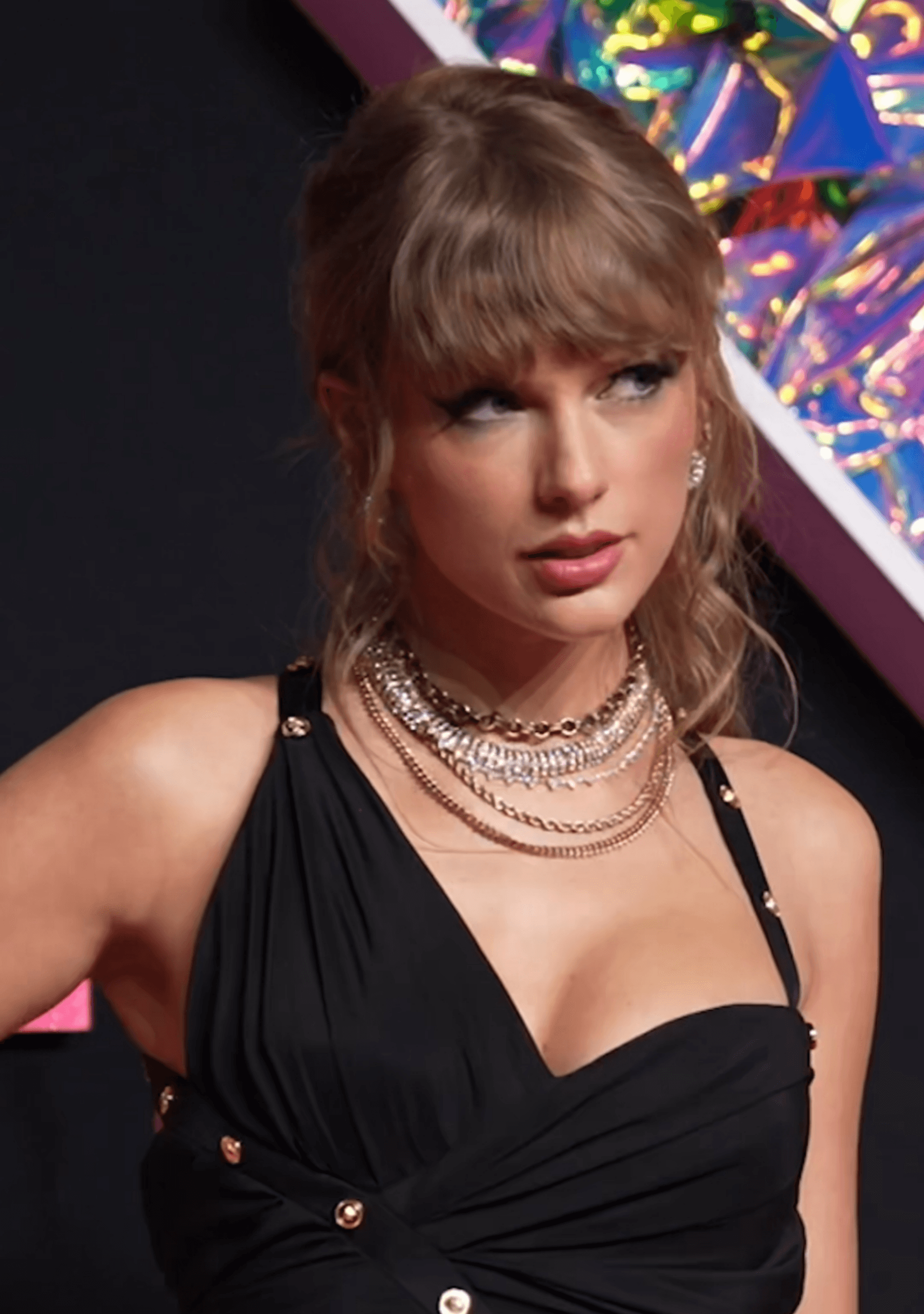
The first thing you need to understand about the 2026 Emmys is that the most talked-about person in the room wasn't in the room. Taylor Swift, five nominations for the Aerys Tour special, zero appearances on the night, managed to dominate Emmy conversation anyway, via a four-minute pre-taped comedy parody so tightly guarded that fewer than ten people knew it existed before it aired. NDAs. No phones on set. A Sunday shoot. A woman who snuck past tourists onto a studio lot in Burbank. The machine that keeps Swift at the center of cultural gravity does not take nights off, even when she is in Kansas City watching the Chiefs.
But Swift's carefully engineered absence was, in a very real sense, just the most polished expression of what the evening kept demonstrating: that in the television industry of 2026, the strategic deployment of image, who shows up, how they show up, and what they choose to say, has become as consequential as the work itself. Widows Bay, Apple TV+'s breakout comedy, did not merely win the night. It dismantled the record books. Matthew Rhys did not merely accept two trophies. He stood at the podium twice and made the room understand, each time, that the surprise was genuine. Jean Smart turned 75 and won her fifth consecutive Emmy for the same role on the same night. Sally Field, 79, became the oldest lead actress winner in limited-series history and immediately started pitching her next project to Coleman Domingo on a red carpet.
This is what a landmark Emmy night actually looks like from the inside: not a clean coronation, but a series of stacking bets, by networks, by performers, by publicists, by producers, that either pay off spectacularly or collapse in front of twenty million people. Most of them paid off on Sunday. told Entertainment Tonight the morning after, the principals were still processing what had happened. So, for that matter, was everyone else.
Widows Bay's 14-trophy haul is the most for any comedy series in Emmy history
Widows Bay won 14 Emmy Awards at the 2026 ceremony, the most ever awarded to a comedy series in a single night, from a field of 19 nominations, establishing it as the dominant new force in prestige television comedy.
Fourteen trophies from nineteen nominations is not a landslide. It is a rout. To put the number in context: past record-holders in the comedy category had their peak nights measured in single digits, and even the most dominant drama sweeps rarely clear twelve. Widows Bay did not just win the comedy category; it reached into technical, craft, and writing awards and cleaned those out too. Apple TV+ now holds the most dominant single-night comedy performance in the award's history, a marketing fact that will be worth hundreds of millions of dollars in subscriber acquisition over the next eighteen months.
The strategic implication matters as much as the number itself. Apple TV+ has been the quiet aggressor in prestige television for several years, spending heavily, acquiring carefully, and accepting that its subscriber base would grow slowly as long as the quality signal remained consistent. Widows Bay is the clearest proof yet that the strategy is working. When a show wins fourteen Emmys, streaming platforms do not simply post the trophy graphics; they restructure the homepage, recut the trailers, and push the show into international markets that had previously been indifferent. The show's season-two renewal, which cast members were already teasing on the carpet, now arrives with a weight of expectation that is both an asset and a liability.
The liability is worth naming plainly. 'It's not easy doing a sophomore attempt after you've had a really big opening,' one cast member acknowledged backstage, a line that landed with the practiced honesty of someone who has thought about this problem at length. The Emmys have a long tradition of crowning a comedy series and then watching it stumble, because the conditions that produce a great first season, creative freedom, low expectations, a writers' room operating without interference, tend to evaporate once the industry is watching. Widows Bay's producers know this. The question is whether knowing it is enough.
Matthew Rhys became the only person to win two lead actor Emmys in the same ceremony
Matthew Rhys won both lead actor in a drama and lead actor in a comedy at the 2026 Emmys, making him the only person in Emmy history to claim two lead acting trophies in a single night across different categories.
The record itself almost defies the architecture of the award. The Television Academy separates drama and comedy categories precisely because the crafts are considered distinct enough to require different benchmarks. That a single performer cleared both bars on the same night is the kind of statistical anomaly that the industry will spend years trying to reproduce and probably never will. Rhys is 51. He has been one of the most respected character actors in prestige television for the better part of a decade. Sunday was the night the industry formally caught up with what a smaller audience already knew.
What made the double win legible, not just statistically remarkable but emotionally coherent, was Rhys's visible disbelief at the second trophy. 'I genuinely didn't think it would happen,' he said, and the room believed him, because the room had watched him win the first one an hour earlier and understood that no amount of preparation covers that specific ground. The honesty was the performance, and it was as well-executed as anything he put on screen. In an era when award-circuit strategy has become so visible that viewers can often see the machinery underneath the gratitude, unaffected surprise reads as its own kind of achievement.
For Rhys, the commercial consequences are straightforward and large. A lead actor who holds two Emmys from a single night has, overnight, renegotiated his position in every future conversation about casting. Streaming platforms pay for certainty; the Emmy double is the closest thing the television industry has to a certified guarantee of audience engagement. His representation will take their time with the next deal. They can afford to.
"The most talked-about person at the 2026 Emmys wasn't in the room, and that was the entire point."
Jean Smart's fifth consecutive Emmy win makes Hackett the first actress to win for every…
Jean Smart won her fifth consecutive Emmy for Hacks at the 2026 ceremony, turning 75 on the same day, becoming the first actress in Emmy history to win a lead acting award for every single season of a series.
Five for five is a record so clean it sounds fabricated. It is not. Jean Smart has now won lead actress in a comedy for every season Hacks has aired, a streak that required not just sustained performance quality but the survival of the show itself, no small thing in a streaming landscape where cancellation decisions are made by algorithm as often as by human taste. The fact that the streak ends (because all streaks end) will eventually be someone else's problem. Tonight, the room gave her a standing ovation and she shared a kiss with her son before walking to the stage.
The birthday coincidence, Smart turned 75 on the same day she claimed her fifth trophy, was the kind of symmetry that publicists dream about and cannot manufacture. It transformed a remarkable professional achievement into a human story with a natural emotional arc. Emmy night coverage that might have devoted four paragraphs to her win instead built full segments around the image of a 75-year-old actress, birthday girl, accepting her fifth consecutive award for the same role. That is not luck. That is a performer whose life and career have aligned in a way that makes every new chapter legible to the widest possible audience.
Smart's trajectory also says something pointed about the industry's evolving relationship with age. The conventional wisdom, that women in Hollywood face a sharp and early horizon, has been quietly dismantled by a cohort of performers in their sixties and seventies whose commercial value is demonstrably rising. Sally Field winning lead actress at 79 on the same night is not coincidence; it is data. The demand for complex, fully-realized female characters who are not defined by their relationship to younger men has been growing for years. Widows Bay and Hacks are two of the most prominent proof points. Our latest reporting on the economics of streaming suggests the demographic driving this demand, women over 50 with high disposable income, is the most under-served and most valuable audience in prestige television.
Sally Field's lead actress win at 79 rewrites the record books, and she's already…
Sally Field, 79, won lead actress in a limited or anthology series at the 2026 Emmys, becoming the oldest actress ever to win in that category, then immediately pitched a future collaboration with Coleman Domingo on the red carpet.
The win itself was, by Field's own description, not something she had prepared remarks for, 'This was not supposed to happen,' she told the room, with the specific dazed clarity of someone who has been in this business long enough to understand that it genuinely was not supposed to happen. The statistical improbability is real: winning a lead acting Emmy at 79, in a competitive category, against the kind of field that the limited series landscape now routinely produces, requires a performance of such unambiguous authority that voters have no graceful alternative. Field delivered that.
The red-carpet moment with Coleman Domingo that followed, a spontaneous, half-joking, entirely genuine creative pitch conducted in front of cameras, was revealing in a different way. Field did not walk the carpet with the body language of someone collecting a lifetime-achievement valediction. She walked it with the energy of someone who has just had an idea. 'I want to work with you,' she told Domingo, directly and without preamble, and the exchange had the quality of two professionals who recognize, without needing to discuss it, that they are operating at comparable levels of craft. The conversation deserves to become a real project. Hollywood should be paying attention.
Field's Emmys night also included a second appearance onstage, a tribute to Dolly Parton, her Still Magnolias co-star, who died earlier this year. The tribute required a different register entirely: grief, warmth, the particular intimacy of a decades-long friendship being compressed into two minutes of live television. Field navigated it without apparent effort, which is its own kind of virtuosity. Two speeches in one night, in completely different emotional keys, both landing. The industry spent thirty years treating Sally Field as a legend. She spent Sunday reminding everyone she is still an active participant.
Allison Janney's Diplomat win over The Pit's four nominees explains exactly how vote…
Allison Janney won the supporting actress Emmy for The Diplomat, likely benefiting from a vote split among the four Pit nominees in the same category, and now shares the all-time record for most acting Emmy wins.
The vote-split scenario is one of the most structurally interesting recurring phenomena in Emmy history, and Sunday's supporting actress result was a textbook example. When four performers from the same show compete in the same category, their combined vote share, however large, is divided among them, while a single strong nominee from a different series concentrates her support cleanly. Janney, a six-time Emmy winner before Sunday night, is precisely the kind of performer whose reputation with Academy voters is deep and consistent enough to absorb that structural advantage. She did not win despite the competition. She won because of how the competition was configured.
The record she now shares, most acting Emmy wins of any performer, is the kind of distinction that reframes a career even for someone whose career already needs no reframing. Janney has spent three decades building a body of work across film, television, and theater that resists easy categorization. She is not, strictly speaking, a television actress; she is an actress for whom television has repeatedly provided the best available material. The Diplomat is the latest example. Her reaction on the night, 'Oh my gosh, no. I didn't plan for this', had the ring of genuine shock, which is either an impeccably maintained illusion or the honest response of someone who was aware of the vote-split math and did not expect it to resolve in her favor.
For The Pit, the category result was the one cloudy note in an otherwise strong night. The show won back-to-back outstanding drama trophies, back-to-back wins in drama is a feat requiring both quality and voter loyalty, but the supporting actress split is a problem the show's producers and network will need to think about before next season's Emmy campaign. Four nominees in one category is, paradoxically, a sign of strength that can produce a losing outcome. The campaign strategy needs to evolve.
Taylor Swift's Emmys skit was a four-minute intelligence operation, and it worked…
Taylor Swift filmed a four-minute Emmy parody skit on a Sunday with fewer than ten people informed in advance, NDAs enforced, no phones allowed on set, and multiple Easter eggs embedded for fans, all while physically absent from the ceremony, attending a Chiefs game in Kansas City.
The logistics, described in detail by Emmy host Marisha Hargitay and her producing team, read less like a television production and more like a covert insertion. A tight circle. NDAs. A Sunday shoot date chosen specifically for its low-traffic profile. Swift entering the studio lot without announcement, walking past tourists who did not recognize what they were seeing. No phones. A four-minute final product that landed with the precision of something that had been stress-tested against every possible leak scenario, because it had been. This is what Swift's creative operation looks like when it is working at full efficiency: invisible until the moment it is supposed to be visible, then impossible to ignore.
The Easter egg architecture embedded in the skit is worth examining as a separate business operation. The clock set to 10:13. Nods to the Reputation and debut albums woven into set dressing. The word 'TV', deployed as a punchline, readable simultaneously as Taylor's Version. These are not afterthoughts; they are the intentional product of a team that understands fan engagement as a stacking asset. Every Easter egg that gets decoded on TikTok in the week after the broadcast is a piece of organic content that costs nothing and reaches millions. Swift has, over the course of the last several years, essentially industrialized fan discovery. The Emmys skit was the latest production run. For a deeper look at how that machine translates into financial architecture, our breakdown of Swift's music wealth profile remains the most complete public accounting available.
The more analytically interesting element of the night, though, is the non-appearance itself. Swift was nominated, five times, for the Aerys Tour special. She did not attend. She watched football in Kansas City instead, and was photographed high-fiving Tom Cruise in the stands while the Chiefs beat the Broncos. The message embedded in that choice is not subtle: Swift is a figure of such cultural magnitude that the Emmys need her more than she needs the Emmys. Whether or not that is precisely true is almost beside the point. The perception has been established, the skit has been aired, and the October 13th album-drop speculation, seeded by the clock on the skit's set, is already running at full volume across social media. She did not need to be in the room. She was already controlling the conversation from outside it.
For more on how the evening's host shaped the night's biggest secret, our analysis of Marisha Hargitay's role at the 78th Emmys covers the logistics and the longer strategic picture.
Michael J. Fox's Bob Hope Humanitarian Award was the evening's emotional anchor, and a…
Michael J. Fox, 65, received two standing ovations at the 2026 Emmys while accepting the Bob Hope Humanitarian Award for his decades of Parkinson's disease advocacy, appearing on the red carpet with his wife Tracy Pollan and their four children.
There is a version of the humanitarian award presentation that functions as scheduled sentimentality, a break in the competitive programming, an obligation to decency, an opportunity for the room to feel good about itself before returning to the business of winning and losing. What Fox delivered on Sunday was not that. 'Accepting Parkinson's didn't mean I had to surrender to it,' he told the room, from a director's chair he sat in rather than stood at, in a line that was specific enough to carry real weight. The room stood twice. That is not a production outcome. That is a response to substance.
Fox's appearance, with his wife Tracy Pollan and their four children on the red carpet, the chair onstage, the speech that named the disease directly and without euphemism, was the evening's most unmediated moment. In a night built substantially on managed image and strategic positioning, the Fox segment operated by different rules. His foundation has raised hundreds of millions of dollars for Parkinson's research. The Bob Hope Humanitarian Award, historically a recognition of sustained institutional commitment rather than a single gesture, was the appropriate vehicle for that work. The five Emmy wins he referenced, accumulated across a career that predates the modern prestige-television era, gave the moment historical grounding. He has been in this industry long enough that his presence commands the room's full attention without effort.
The image of Fox in that chair, family beside him, receiving a room full of standing television professionals, it will be one of the photographs that defines the 2026 Emmys in retrospect. Award nights produce many images; very few of them carry meaning beyond the week. This one will.
The Pit's drama back-to-back win confirms sophomore success is possible, but the…
The Pit won outstanding drama series for the second consecutive year at the 2026 Emmys, making it one of a small group of shows to achieve back-to-back drama wins, a result that raises the creative and commercial stakes for every subsequent season.
Back-to-back drama wins are not common. The Emmy history of consecutive drama victories is short enough that each new entry in it arrives with serious analytical weight. The Pit's second win confirms that the first was not a fluke, which is the specific thing that sophomore success has to prove, that the show is a durable creative system, not a one-time event. That proof now exists, and it changes how the industry prices the show, how the network positions it, and how the cast negotiates their next contracts.
The candid backstage remark about a big scene shooting the following morning, with the suggestion that the cast would 'look like holy hell for about 8 minutes in episode 8', was a small but telling detail. A cast celebrating a back-to-back Emmy win, still under production, shooting the next day: this is what a healthy, functioning prestige drama actually looks like from the inside. The work does not stop for the awards. The awards are supposed to reflect the work. In The Pit's case, they appear to.
The structural pressure is real, though, and the show's cast acknowledged it openly. The vote-split problem in supporting categories, the sophomore-slump narrative that attaches to any back-to-back winner, the inevitability that other shows will now aim their campaigns directly at displacing it, all of this is incoming. The Pit's producers have roughly eight months to decide how to handle it. Winning tends to clarify the problems rather than eliminate them. For our ongoing tracking of the business dynamics behind prestige television's biggest players, the full picture of this Emmy season's competitive landscape remains essential context.
The Nick Reiner death-penalty ruling, arriving within 24 hours of his father's Emmy…
Prosecutors announced they would not seek the death penalty against Nick Reiner less than 24 hours after Rob Reiner was honored at the 2026 Emmys, with the district attorney citing the views of Nick's siblings as a factor in the decision, the maximum sentence now is life without parole.
The timing was not planned, and it could not have been. The district attorney's announcement, death penalty off the table, maximum exposure now life without the possibility of parole, landed in a news cycle that was already processing Rob Reiner's Emmys tribute, Jamie Lee Curtis's tearful on-air remembrance, and the broader emotional weight of an in memoriam segment that had been genuinely difficult to watch. The collision of those two stories in a 24-hour window produced a specific kind of media moment: one in which the grief for the father and the legal fate of the son became inextricable in coverage, regardless of anyone's intentions.
Jamie Lee Curtis's contribution to the tribute was, by the account of the Emmys producers, an act of creative reclamation. She was given a script. She rewrote it. 'Let me,' she reportedly told the production team, and the version that aired was hers, written from memory and friendship rather than from a briefing document. That distinction matters. The tributes that land are the ones that sound like they were written by someone who actually knew the person. Curtis's did. The room felt the difference.
The Nick Reiner case will continue to generate coverage well beyond Emmy week, and the question of how Rob Reiner's public legacy interacts with that ongoing legal narrative is one the industry will get through carefully. For now, the Emmy night tribute stands on its own terms, a moment of genuine grief, publicly expressed, by people who earned the right to express it.