Julia Stiles Just Turned a Cheap Joke Into a Career Reset
A throwaway Andy Cohen quip, a Dolly Parton anthem, and a standing ovation on Dancing With the Stars, how Julia Stiles is using an unlikely reality-TV run to rewrite her cultural relevance.
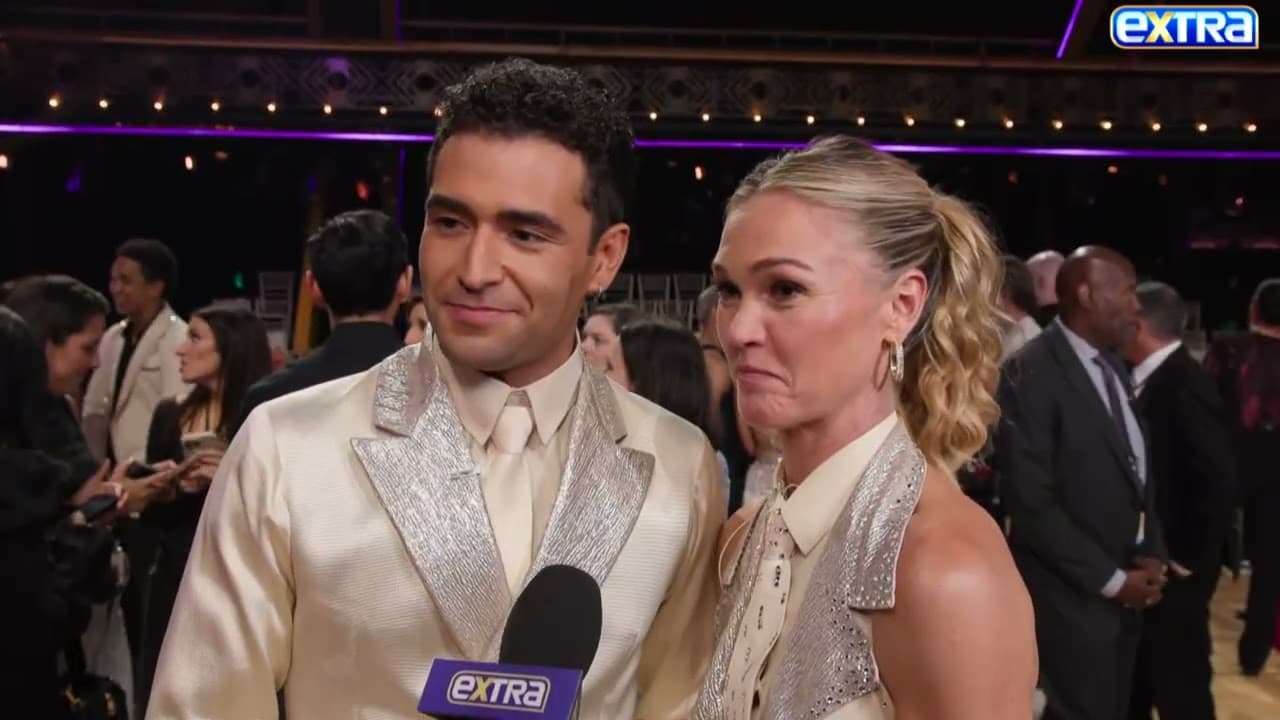
The standing ovation came halfway through. Julia Stiles felt the crowd shift. She tried not to let it break her concentration. It broke anyway, in the best possible way.
This is what a reputation repair looks like in 2026. Not a magazine cover, not a podcast apology tour, not a carefully worded Instagram statement. It is a woman in sequins executing a Dolly Parton number on a ballroom floor while the audience rises to its feet. The mechanism is almost aggressively uncynical. That is precisely what makes it work.
Speaking to Extra TV after her first performance of the season, Stiles was measured and self-aware, already mentally back in the rehearsal space, already cataloguing the critique. But the emotional architecture of that interview told a longer story: a performer who spent years in a cultural holding pattern has found, in the most unexpected of formats, a stage that fits her again.
What Andy Cohen Actually Said, and Why It Matters
Andy Cohen made an offhand remark mispronouncing or diminishing Julia Stiles, the precise wording is unconfirmed, and Stiles has publicly described it as 'a cheap joke' that she chose to treat as fuel rather than an insult.
The full text of Cohen's original comment has not been reliably reproduced in the public record. What Stiles confirmed to Extra TV is the essential shape of it: he said something dismissive, she heard about it, and her first instinct was not rage but calculation. 'He probably never thought I would hear it,' she said. That clause is worth sitting with.
There is a very specific kind of professional slight that functions best as a private motivator. Too small to constitute genuine beef, too pointed to ignore, it operates like a splinter, low-grade, persistent, clarifying. Stiles identified it correctly and immediately. She didn't subtweet. She didn't issue a statement. She went to rehearsal.
The public resolution she offered, 'no hard feelings, come to the ballroom, thank you for the motivation', is a masterclass in gracious dominance. She extended the olive branch, claimed the high ground, and converted Cohen's dismissal into a front-row seat he now has to either accept or decline. Either outcome makes her look better. This is not accidental. This is someone who has thought carefully about optics.
Her professional partner, Ezra, put a finer point on it: the dance floor is where she chose to respond. In an era when every grievance is expected to be litigated in public, that restraint is itself a statement. For a film career that has been largely quiet for the better part of a decade, the contrast to louder peers is striking.
The Business Logic of a Celebrity's DWTS Appearance
Dancing With the Stars offers fading or dormant celebrities a primetime platform, scripted narrative arcs, and weeks of consistent media coverage, benefits that no single film or TV guest appearance can match in terms of sustained public attention.
Let's be honest about what Dancing With the Stars is. It is not a dance competition. It is an image-rehabilitation and relevance engine dressed in rhinestones. The show's producers understand this. The celebrities who succeed understand this. The audience, who tune in partly for the transformation narrative, understand this too.
The format delivers something a single movie release cannot: a weekly story. Each episode generates a new news cycle. Each rehearsal package reveals a new layer of personality. Each judges' score creates a fresh stakes structure. Over a full season, a celebrity can accumulate more consistent mainstream coverage than most prestige-streaming projects generate across their entire promotional window.
For Stiles specifically, the timing is sharp. She entered the cultural conversation in the late 1990s as a genuine dramatic talent, '10 Things I Hate About You,' 'Save the Last Dance,' 'The Bourne Identity', but the mid-career years were quieter. Streaming didn't solve it. 'Riviera' on Sky Atlantic built a European audience but didn't move the needle stateside in the way her earlier work had. DWTS offers the American primetime reset that no streaming algorithm can manufacture.
The financial underpinning of these appearances is rarely discussed publicly. Celebrity fees on DWTS have been reported across various seasons in the range of five to six figures per episode by outlets including Variety and The Hollywood Reporter, though specific amounts are not confirmed for the current cast. The money is real. The long-term value, in booking momentum, brand partnership attractiveness, and public goodwill, is almost certainly larger.
"A standing ovation is one thing. Turning a dismissive quip into a front-row seat for the person who made it, that is image management at full professional altitude."
Why Dolly Parton's '9 to 5' Was the Right Song at the Right Moment
Dolly Parton died in early 2026, and Julia Stiles's team had already selected '9 to 5' as their performance song before Parton's death, making the number an unplanned but deeply resonant tribute that carried emotional weight the production could not have scripted.
Dolly Parton's death earlier this year left a genuine hole in American popular culture. She was not merely a country legend. She was a shared inheritance, a figure who crossed genre, generation, class, and political line in a way that almost no other entertainer managed. The grief was wide. The tributes were predictable. This one was not.
Stiles and her partner chose '9 to 5' because the year 1981 demanded it. The brief was simple: find the defining song of that year. 'It has to be this song,' Stiles told Extra TV. She wasn't wrong. The track is as close to a time capsule as pop music gets, urgent, funny, righteous, and built around a hook that has lost precisely nothing in four decades.
The fact that the selection predated Parton's death transforms the tribute from a reactive gesture into something more interesting: an accidental act of genuine feeling. Stiles was explicit about the emotional resonance. She described invoking Parton's spirit whenever doubt crept in during rehearsals. That is either deeply sincere or expertly performed sincerity. On a dance competition, the distinction barely matters. The effect is identical.
What it creates, for Stiles's image, is an association with Parton's specific set of values: joy as radical act, warmth as strength, the refusal to be diminished by small people. If you are trying to rebuild public warmth after years of relative quiet, and if you are doing so in the same breath as responding to a dismissive comment from a prominent TV personality, the Parton association is the ideal frame. It recontextualizes everything around it.
You can track how Dolly's cultural footprint continues to expand across the music wealth profiles we maintain, her legacy estate is now one of the more complex royalty structures in Nashville. '9 to 5' alone has generated decades of sync licensing revenue. Using it on primetime television is, among other things, a gift to that estate.
How Julia Stiles Built Her Dance Credibility Before This Moment
Julia Stiles trained seriously in dance before her acting career took hold, most visibly in the 2001 film 'Save the Last Dance,' where she performed hip-hop choreography that required months of preparation, giving her a genuine physical foundation that most celebrity DWTS contestants lack.
Most celebrities arrive at DWTS as blank slates. Their journey from beginner to competent is the narrative engine. Stiles's situation is more complicated, and more interesting, because she is not a blank slate.
'Save the Last Dance' required real preparation. The role was a ballet-trained teenager who crosses into hip-hop, and Stiles trained for months to make that transition legible on screen. That was 2001. The muscle memory of serious dance training is long. It doesn't vanish entirely. What it creates, two-plus decades later, is someone who understands weight, timing, and spatial awareness at a level that pure beginners simply do not.
Her partner Ezra's reaction after their first performance told the story plainly. He described 'disbelief' when they first met, a word that implies expectation management. He expected less. She delivered more. That gap between expectation and delivery is exactly where the television narrative lives, and it was genuine rather than manufactured.
The judges scored the performance at 91, a figure that Stiles's partner mentioned in the Extra TV interview. That is not a sympathy score. That is a number that positions them competitively in the early rounds and creates a floor of expectation for everything that follows. Managing that new, higher floor is the challenge Stiles acknowledged when she said she would be back in the rehearsal space the next morning processing the critique.
The Emotional Intelligence Stiles Is Putting on Camera
Across her DWTS appearances so far, Julia Stiles has consistently displayed emotional transparency, describing nerves openly, crediting her partner generously, and acknowledging imperfection without self-deprecation, a public persona that contrasts sharply with the guarded image many actors project.
There is a version of this interview that goes badly. The celebrity deflects every personal question. The answers are polished to the point of emptiness. The partner gets three words of credit. The audience watches a promotional appearance rather than a person.
Stiles gave none of that. She described the audience energy mid-dance as something she 'felt pump' through her. She credited her partner for carrying the performance. She acknowledged, without the false modesty that is its own kind of vanity, that she would be replaying the critique in her head by morning. These are not the answers of someone managed into positivity. They are the answers of someone who has genuinely decided to let the experience be real.
Ezra's visible emotion, he described crying multiple times throughout the day, watching her 'live her dreams', adds texture without sentimentality. He is not a hype man. He is a trained professional describing what he actually witnessed. That credibility lands differently than choreographed enthusiasm.
For Stiles's longer career narrative, the emotional openness is strategically valuable even if it is completely unstrategized. Audiences who watched her play controlled, self-possessed characters across the late nineties and 2000s now see a different layer. Vulnerability, handled well, is its own form of strength. The performers who project only competence are ultimately less compelling than the ones who show you what competence costs.
What a Successful DWTS Run Does for a Film Career in 2026
A deep run on Dancing With the Stars typically generates casting conversations, brand partnership offers, and social-media follower growth for celebrity contestants, all three of which translate into negotiating use when an actor returns to film and television projects.
The conventional industry wisdom about DWTS, held for years by agents and managers who would say it privately but not publicly, was that the show marked the end of something rather than the beginning. The logic was simple: serious actors don't do reality television. The logic was also wrong.
That calculation shifted somewhere in the mid-2010s. The show's audience is large and demographically diverse in ways that pure streaming audiences often are not. A celebrity who exits DWTS having genuinely won the crowd, regardless of whether they win the mirror ball, carries momentum that translates across categories. They are more searchable. They are more bookable for press. Brand partnerships that require mainstream recognition rather than niche cultural cachet become accessible.
The more interesting downstream effect is on casting. Stiles was always a credible dramatic actress. She remains one. But a DWTS run that reads as warm, self-aware, and physically impressive adds a dimension of likability that the industry sometimes codes as 'bankable.' Casting directors and studio development executives watch these shows. They notice when an actor commands a room of twelve million viewers.
The comparison to other performers getting through similar career moments is useful. Selena Gomez's transition from musician to mogul, which we analyzed at length in our piece on Rare Beauty's billion-dollar moment, worked partly because she had already established emotional authenticity with a mass audience before asking them to follow her into a new lane. The mechanics are different, but the logic is the same. You build the trust first. Then you ask for something.
The Broader Trend: Reality TV as the New Prestige Platform
In 2025 and 2026, a growing number of critically respected actors and musicians have used reality competition formats to rebuild mainstream profiles, suggesting that the stigma around 'celebrity television' has effectively collapsed among Hollywood's working professional class.
The stigma existed for real reasons. The early celebrity reality formats were extractive, designed to create embarrassment, not triumph. The dramatic arc was humiliation. Smart performers avoided them, and the ones who participated often came out smaller.
DWTS was always slightly different, because the format is structured around learning and growth rather than exposure and elimination. But even so, the cultural wall between 'real actor' and 'reality contestant' held for a long time. What dissolved it was not a single moment. It was the slow erosion of broadcast prestige combined with the explosion of cable and streaming options that scattered audiences into fragments.
When twelve million people watch something together on a Wednesday night, that is now a remarkable concentration of shared attention. The 2026 Emmys demonstrated something similar, a record-breaking night built partly on controlled chaos, which is that live, appointment television carries a cultural weight that algorithmic streaming libraries cannot replicate. DWTS is live, communal, and emotionally direct. Those are not small things.
For performers getting through the current landscape, the calculus has shifted. The question is no longer 'will this hurt my credibility?' The question is 'will this reach the people I need to reach?' For Stiles, the answer to the second question is clearly yes. The audience is there. The narrative is good. The dancing, as the score confirms, is real.
Who Profits Beyond Julia Stiles Herself
ABC and the DWTS production team profit most directly from Stiles's strong early performance, since a compelling celebrity contestant drives ratings, social engagement, and advertiser interest across the season's full run.
Stiles benefits from the run. Her partner Ezra benefits from the visibility, professional dancers on DWTS build solo choreography careers, brand deals, and social followings from exactly this kind of breakout pairing. But the largest structural winner is the show itself.
DWTS has spent years managing the tension between its legacy audience and the need to attract younger viewers. A contestant with Stiles's specific profile, credible film history, genuine dance background, emotional accessibility, and a built-in media narrative courtesy of the Cohen subplot, is close to ideal casting. She delivers the nostalgia demographic and the drama demographic simultaneously.
The Dolly Parton angle extends the reach further. Country music audiences, who are not always the show's primary constituency, have a strong incentive to engage with a season that includes a tribute to Parton. Tribute episodes and themed performances routinely outperform standard competition rounds in social media metrics. The production did not plan the tribute around Parton's death. The fact that it arrived that way is a genuine piece of luck that the network will exploit to its maximum, and fairly so.
You can track the broader economics of entertainment-adjacent wealth, how celebrity appearances convert into lasting financial architecture, across the Atlas, where we maintain updated net worth profiles for figures across every sector of the industry. The through-line is almost always the same: sustained visibility is the asset. Everything else is the vehicle.
What Comes Next for Stiles, and What This Season Has to Deliver
For Julia Stiles's DWTS run to translate into lasting career momentum, she needs to advance deep enough into the competition to sustain the media narrative, typically the final four or five, while continuing to build the emotional story that audiences have already begun to invest in.
The opening week is the easy week. The story is fresh. The scores are generous. The media clips themselves. What tests a celebrity contestant is weeks four, five, and six, when the novelty has worn off and what remains is either a genuine competitor or a sympathetic early exit.
Stiles's physical foundation gives her a real shot at depth. Her emotional honesty gives producers the material they need to build weekly narrative packages. The Cohen throughline, which she has handled with enough grace that it can resurface without becoming toxic, gives the show a recurring story engine that costs nothing. These are advantages that most contestants don't arrive with.
The risk, as with any public image exercise, is overexposure of the wrong register. The warmth that reads well in small doses can curdle into something perceived as performed if it appears in every weekly package. Stiles's self-awareness, that instinct to return to the rehearsal space rather than rest in the ovation, suggests she understands the difference. She has been in this industry long enough to know that the moment you believe your own press is the moment the press gets interesting for the wrong reasons.
The latest entertainment-business storylines we're tracking, including how actors are getting through the post-strike industry landscape, are collected in our latest reporting. The Stiles story fits a wider pattern: performers who were mid-career when the industry convulsed are finding unconventional routes back to the center. A ballroom floor, it turns out, is a perfectly legitimate one.