The D4VD Murder Case Has a Grand Jury Problem Nobody Can Explain
Prosecutors couldn't. Or wouldn't. Secure an indictment against the singer David despite months of grand jury sessions. Two weeks before a preliminary hearing, the strategy gaps are telling a story of their own.
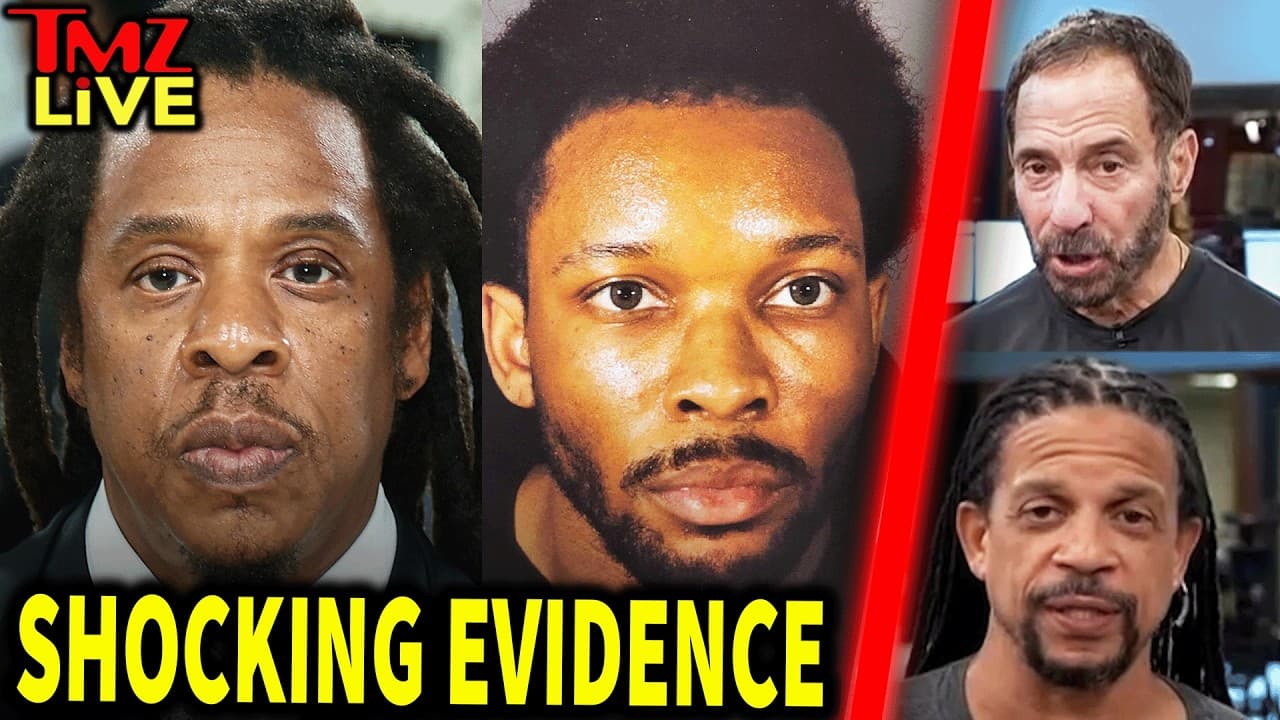
The body was found in his car. The grand jury convened at least seven times across three months. And still, there is no indictment. That is the central, stubborn fact of the criminal case against David. The singer known as D4VD. And it is the fact that every lawyer TMZ's team has spoken to, covering this case almost since it broke, cannot adequately explain.
Prosecutors in the death of Celeste Rivas have charged David with her murder. A preliminary hearing is scheduled in two weeks. By the ordinary logic of American criminal procedure, none of that sequence makes sense. Because if the evidence is as strong as the prosecution has publicly claimed it to be, the grand jury route should have been the faster, cleaner, more strategically advantageous path to trial. It wasn't taken. The question of why is not a procedural footnote. It is the whole story.
What TMZ Live's coverage on July 13 laid out. The repeated grand jury sessions, the unusual prosecutorial brief, the unexplained gaps in the timeline. Amounts to a portrait of a high-profile case that may be considerably weaker beneath the surface than the district attorney's office has wanted the public to believe. In a case built partly on the scaffolding of press releases, that is a precarious place to be standing two weeks before the first real courtroom test.
What the grand jury timeline actually reveals
A grand jury in the D4VD murder case convened multiple times across November, December, and February. Yet produced no indictment.
Grand jury proceedings are secret by design. What broke that seal here is the procedural obligation to release transcripts to both the prosecution and the defense. And through that mechanism, the shape of the process became visible. The jury met on multiple days in November, returned in December, came back again in February. Seven sessions, by one count offered to TMZ's cameras. That is not the rhythm of a body working briskly toward an obvious conclusion. That is the rhythm of something complicated.
The legal logic for pursuing an indictment, rather than letting a case proceed by preliminary hearing, is almost always overwhelming: skip the preliminary hearing entirely, deny the defense a pre-trial look at the prosecution's witness list and argument structure, and go straight to trial. Grand jury proceedings offer subpoena power, compelled testimony, and a standard of proof so low. Probable cause only, not proof beyond reasonable doubt. That experienced prosecutors routinely describe the indictment process as close to automatic when the evidence is substantial.
TMZ's senior editorial team, drawing on years of criminal case coverage, made the observation plainly: a victim's dismembered body found in the defendant's car is, by itself, the kind of fact that grand juries indict on. You do not need a complete timeline. You do not need motive laid out in a flowchart. You need enough. And yet here, across seven sessions, either enough was never quite reached or the prosecution made an active choice not to push for the vote. Neither explanation is comfortable for the district attorney's office.
Why the prosecution brief read like a press release
Prosecutors filed an unusual written brief laying out their case in detail ahead of the preliminary hearing. A move legal veterans describe as nearly unprecedented outside racketeering cases. The brief appeared designed to shape public perception rather than serve any routine procedural purpose.
This is the detail that ought to sit uneasily with anyone following the case. A few weeks before the scheduled preliminary hearing, prosecutors filed a memorandum. Lengthy, detailed, argument-forward. Making the case that David committed murder. In standard practice, you do not need such a document ahead of a preliminary hearing. The hearing itself is the presentation. You call a witness. The judge decides whether probable cause exists. The brief is not required. It is not customary. It is, in the words of one veteran observer cited in TMZ's coverage, something they had never seen in a non-racketeering context across an entire career.
The explanation that fits the facts most cleanly is that the brief was aimed at an audience of one: the public. DA Nathan Hawkman ran on a law-and-order platform and, by the account of those tracking this case, has been consistently visible at microphones in high-profile matters. When a grand jury fails to indict and court observers start asking questions, a detailed written document asserting the defendant's guilt performs a specific function. It tells the story the prosecution wants told before a judge gets the chance to tell a different one.
That is not necessarily improper. Prosecutors have always operated in a media environment, and high-profile cases demand communication with the public that purely procedural documents do not provide. But it becomes significant when read alongside the indictment gap. If the brief were supporting a position of overwhelming evidence, the grand jury would already have acted. Instead, the brief is doing work the grand jury did not do. And that inversion matters. For readers tracking how criminal cases intersect with public narrative, this pattern is recognizable: the machinery of public persuasion running slightly ahead of the machinery of legal proof.
"A body in the car. Seven grand jury sessions. No indictment. That gap between evidence and action is the whole story."
The specific evidentiary hole prosecutors haven't closed
Even in the prosecution's own detailed brief, a critical gap remains: what happened in the minutes immediately after Celeste Rivas arrived at David's home. Prosecutors assert she was killed almost immediately upon entry, but have not publicly established how they know this or what evidence supports that precise sequence.
The prosecution's theory, as laid out in their brief and as TMZ's coverage synthesized it, is that David believed Rivas was coming to end their relationship and to expose information that would damage his career. The account has her arriving at his home, and him lying in wait, and the killing happening within seconds of her entry. It is a specific, intentional narrative. Premeditated murder, not a confrontation that escalated.
The problem, visible even in the prosecution's own document, is the arrival window. There is an evidentiary leap between what is established. A body, a car, a relationship context. And what is asserted: that the killing was instantaneous and predatory. The brief does not close that gap. It acknowledges it by implication, asserting the conclusion without demonstrating the factual chain that would make a grand jury vote it as probable cause.
That gap is exactly the kind of thing a preliminary hearing will expose. Unlike a grand jury, where only the prosecution presents evidence and the defense sits silent, a preliminary hearing allows cross-examination. David's defense team will be in the room. They will have read the transcripts. They will know every witness who has testified, every question Beth Silverman asked, every place where the prosecutor pushed hard and the witness did not fully deliver. The prosecution's written brief, intended to set the public narrative, also served as a roadmap for the defense. Which is precisely why experienced lawyers typically avoid filing such documents in the first place.
What Beth Silverman's conduct before the grand jury signals
Lead prosecutor Beth Silverman was aggressive with witnesses during grand jury sessions. Including David's manager, whom she pressed on his silence and failure to come forward.
TMZ's reporter Alexa was present outside the grand jury proceedings on multiple occasions. Close enough that her presence drew the attention and irritation of Silverman herself, which tells you something about how tightly the prosecution was trying to control the information environment around the sessions. What filtered through was the texture of those sessions: witnesses being pushed, the manager in particular being questioned about why he stayed quiet, why he didn't come forward.
Aggressive grand jury questioning is not inherently unusual. Prosecutors use the sessions to pin witnesses to statements, to surface inconsistencies, to build a record. But the specific thrust of the questions. Why didn't you say something, why did you stay silent. Suggests the prosecution was working to establish consciousness of guilt through the behavior of people around the defendant, not solely through direct physical evidence. That is a harder case to make. It depends on inference and interpretation rather than laboratory results.
Taken together with the failed indictment, Silverman's aggressive posture reads less like confidence and more like pressure. A prosecutor with an airtight case does not need to lean on a manager quite so hard. They let the forensics carry the weight. The fact that witness behavior is apparently central to the prosecution's strategy. Rather than incidental to it. Is the clearest signal yet that the evidentiary picture is genuinely complicated.
What the preliminary hearing in two weeks will actually test
The preliminary hearing will be the first live, adversarial examination of the prosecution's evidence in the D4VD murder case.
There is a clarifying irony at the center of this moment: by declining to seek an indictment, prosecutors have handed the defense something valuable. They will get to watch the prosecution's case assembled in real time, with cross-examination rights, before trial. That intelligence. Knowing exactly which witnesses are called, how they hold up under pressure, where the timeline goes soft. Is exactly what an indictment would have denied them. The prosecution's choice, whatever the reasoning behind it, has made the defense's preparation considerably easier.
The standard at a preliminary hearing is not guilt beyond reasonable doubt. It is probable cause. Enough evidence that a reasonable person could believe a crime was committed and this defendant committed it. Courts clear that bar regularly in murder cases, and it would be surprising if Judge whatever-the-bench-assignment-is dismissed the charges here. The physical evidence, at minimum, establishes enough for the case to proceed.
But probable cause and a strong trial position are different things. What the preliminary hearing will reveal, more than any outcome, is the shape of the prosecution's argument under adversarial fire. If witnesses hold up, if the timeline survives cross-examination, if the arrival-window gap can be papered over with circumstantial evidence, the DA goes into trial with momentum. If the defense finds cracks. And they will have read every grand jury transcript looking for exactly those cracks. The next two weeks become a preview of a much longer problem. For anyone watching how legal narratives are constructed and tested publicly, this case is a case study in real time.
The DA's political exposure and why the case was ever this public
DA Nathan Hawkman's law-and-order campaign platform has put him personally in the spotlight in the D4VD case. His repeated, high-visibility public statements have tied his political identity to a prosecution that now carries visible evidentiary uncertainty. A bet that becomes riskier the closer the case gets to trial.
Prosecutors do not typically file detailed public briefs laying out their murder theories. District attorneys do not typically appear before microphones at every high-profile development as a matter of routine. When they do, there is almost always a political calculus underneath the legal one. Hawkman ran on a platform that made prosecutorial toughness its central promise. In a case with a notable defendant. A recording artist with a public profile, a murder charge, a victim whose story carries its own weight. The temptation to be visibly present, visibly forceful, is understandable.
The risk is what happens when visibility outpaces evidence. Every public statement the DA's office has made has raised the stakes for the prosecution's performance. The brief that read like a press release was a promise: we have this. The grand jury failure is a complication: apparently, not completely. That gap between the public posture and the legal reality is not just a procedural headache. It is a political one. If the case weakens further, or if a preliminary hearing reveals more fissures than it closes, Hawkman's personal connection to the prosecution becomes a liability rather than an asset.
This dynamic. The celebrity-adjacent criminal case that doubles as a DA's public audition. Is not new. It has played out in courtrooms across the country for decades, always with the same underlying tension: the machinery of public accountability and the machinery of legal process run on different schedules, and when they diverge, somebody absorbs the cost. Right now, that cost is being absorbed by the credibility of a case that may have needed more time in the dark before it was brought into the light. You can follow the latest on this and related matters as the preliminary hearing approaches.
What D4VD's career looks like while the case is open
D4VD. The recording artist David. Faces a murder charge that effectively freezes any conventional career trajectory.
The music business does not pause for court dates, but it does price them in. An artist under active murder charges is not an artist a major label rolls out with a campaign. Streaming numbers do not necessarily collapse. Notoriety has its own dark economics in the attention marketplace. But the promotional machine, the industry relationships, the brand partnerships, the festival slots: all of that is in suspension. The business of being D4VD is, for now, the business of waiting.
The specific nature of the charge builds up the commercial problem. A murder case involving a romantic partner, a dismembered victim, a theory of premeditation built around career protection. These details are not the kind of context that resolves cleanly into a sympathetic public narrative. Whatever happens in the courtroom, the story the prosecution has already told publicly will follow this artist for years. The brief that read like a press release was, in that sense, doing lasting reputational damage regardless of whether it ever produces a conviction.
For anyone tracking the economics of music careers under legal duress. And the music wealth profiles tell you how thin the margins can become even in the best circumstances. The D4VD case is a reminder of how quickly the infrastructure around an artist can go silent. Not canceled, exactly. Not over. But paused in a way that, depending on how the legal timeline unfolds, can become permanent by accumulation.
The unanswered questions that will define the next chapter
Three central questions remain unresolved heading into the preliminary hearing: whether the prosecution can establish a coherent timeline of events at the crime scene, whether the grand jury's failure to indict reflects a specific evidentiary weakness or a strategic choice, and whether the DA's public posture will survive…
The timeline question is the most immediately consequential. The prosecution's theory requires a specific sequence. Arrival, killing, disposal. And requires evidence to support each link in that chain. The grand jury transcripts, now in the hands of both legal teams, will have revealed where the chain is solid and where it goes soft. The defense has had time to read those transcripts. The preliminary hearing will be their first public opportunity to test what they found.
The strategic-versus-weakness question may never be fully answered publicly. If prosecutors chose an investigative grand jury rather than an indicting one for reasons that made sense at the time. Building a fuller evidentiary record, compelling witnesses who might not have cooperated otherwise. Then the delay may ultimately strengthen the trial case. But if the failure to indict reflects a jury that heard the evidence and was genuinely uncertain, that is a different and more serious problem. The distinction matters enormously for how the trial unfolds, and right now, from the outside, it is impossible to know which version is true.
The DA's posture is the variable that will be hardest to unwind. Hawkman has made himself the face of this prosecution in a way that ties his political fortunes directly to its outcome. That is a bet that pays off handsomely in a conviction and costs significantly in anything less. For a case that has already produced more questions than answers at the investigative stage, the distance between those two outcomes is shorter than the office's public confidence has suggested. The preliminary hearing in two weeks will not resolve this case. But it will, for the first time, give the public a real look at whether the prosecution that has been promised in press releases is the prosecution that actually exists.