When the Camera Lies: What Scripted Police Dramas Reveal About America's Evidence Problem
A ToonHUB clip from a Chicago-set procedural drama condenses every live tension in the American justice debate. Manipulated video, institutional vengeance, and the storytelling machinery that keeps network television profitable.
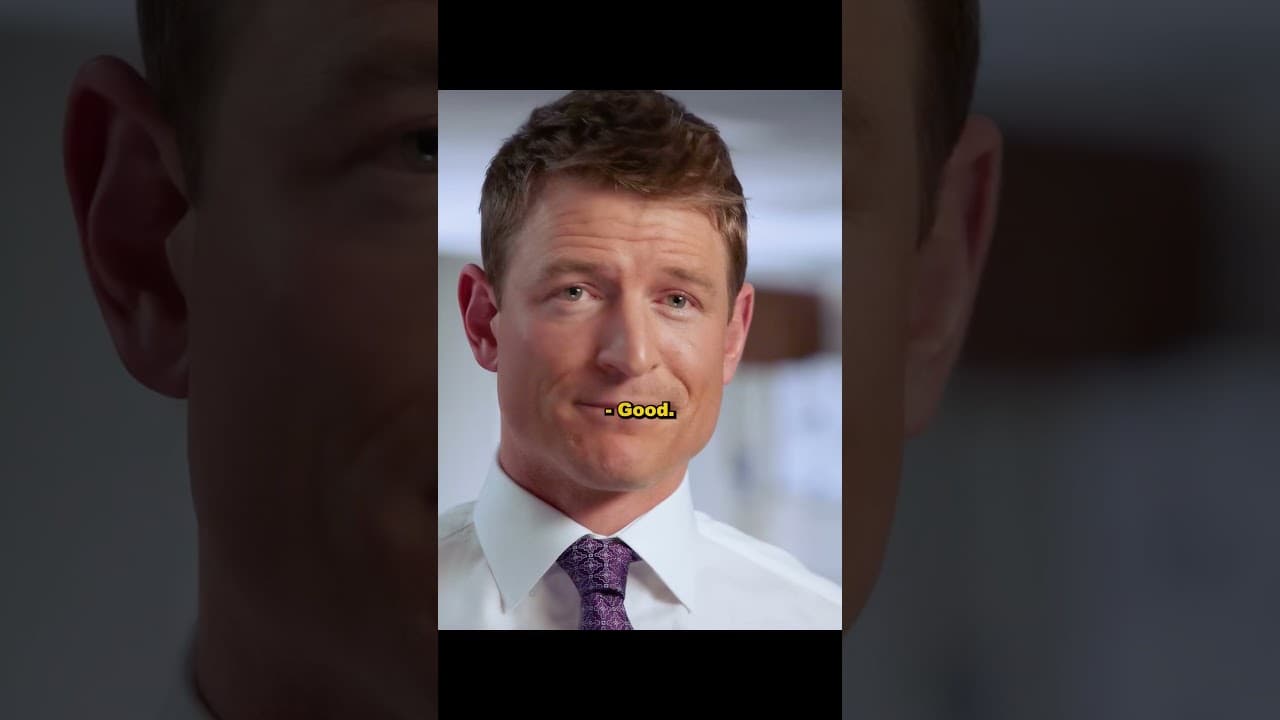
The video looks clean. An officer fires. A teenager falls. And then a defense attorney walks into court, plays a second version of the same footage, and announces. Calmly, almost cheerfully. That she had a graphic designer erase the silver flash in under an hour. The jury has already seen it. The judge instructs them to forget it. Nobody forgets it.
That scene, circulating this week via a ToonHUB short clipped from what appears to be a Chicago-set police procedural, is somewhere between sixty and ninety seconds of screen time. It is also a remarkably compressed version of every argument that American courts, newsrooms, and police reform advocates have been having. Loudly, expensively, and largely inconclusively. For the better part of a decade. A cop shoots the wrong person. The wrong person had a motive to shoot a cop. Everybody's version of events is technically true. Nobody wins cleanly.
The clip is fiction. That does not make its mechanics less worth examining. Network procedural drama. The Dick Wolf industrial complex, the Shonda Rhimes infrastructure, the CBS crime-show archipelago. Is the most-watched narrative form in America, and it has always functioned as a kind of policy seminar dressed up in gunshots and closing arguments. What the scene reveals, beyond its obvious craft, is how much the genre has absorbed from the real world and, more interestingly, how much the real world has started to absorb back.
The Scene's Mechanics Are Legally Precise. And That Precision Is the Point
The courtroom sequence in the clip accurately depicts how video evidence can be challenged under rules of evidence: manipulated footage introduced improperly is excluded by the judge, but the jury has already processed it. A real and documented problem in American trial law.
Watch the scene once for the drama, then watch it again for the procedure. The defense attorney doesn't dispute that the original footage exists. She introduces a doctored version. The gun's silver flash digitally removed. Not to deceive, but to demonstrate how easy deception is. 'It took less than an hour,' her character says. The judge sustains the prosecution's objection, instructs the jury to disregard what it has seen, and sanctions the attorney for the stunt. All of that is correct. It is also, as any trial lawyer will tell you, largely theatrical: jurors who have seen something cannot un-see it, which is precisely why the maneuver works as advocacy even when it fails as admissible evidence.
The concept is sometimes called the 'unring the bell' problem, and it sits at the center of modern evidence law. Judges instruct juries to ignore improperly introduced material routinely. The social science on whether those instructions work is, to put it diplomatically, not encouraging. Studies from the 1990s onward. Produced by legal scholars at places like Northwestern and Chicago-Kent. Have consistently found that curative instructions can actually amplify the salience of excluded evidence by drawing attention to it. The show's writers clearly know this. The attorney's gambit is depicted as a violation; it is also depicted as effective. Both things are true.
What makes this scene unusually sophisticated for the format is the layered implication: if a graphic designer can remove a gun in an hour, a graphic designer can also add one. The clip doesn't spell that out. It doesn't need to. The jury in the fictional courtroom. And the viewer at home. Has just been taught to distrust video evidence in both directions simultaneously. In an era when body-camera footage is simultaneously demanded by reformers and contested by defense attorneys, that's a genuinely complicated epistemological gift to drop into a primetime slot.
The Real Engine of the Story Is Grief, Not Guilt
The shooting suspect in the drama is motivated not by random violence but by the suicide of his incarcerated uncle. A man whose life was derailed by a prior arrest at the same location. Giving the narrative a structural argument that institutional harm cycles into personal tragedy.
Strip the courtroom procedure away and the story underneath is older and simpler. A young man's uncle. Identified in the clip as DeJuan Motley. Was arrested years earlier at the same riverside location where the shooting occurs. During that arrest he put an officer in a coma. He went to prison. The day before Officer Roman was shot, DeJuan hanged himself in his cell. The nephew, Michael, walked to that same corner the following day carrying a gun.
The prosecution frames this as premeditation: revenge motive, same location, armed. The defense frames it as tragedy: a young man in grief, a family destroyed by a prior interaction with the same system now putting him on trial. Both framings are accurate descriptions of the same set of facts. That is, built that way, what the best procedural drama does. It finds the seam where guilt and grievance cannot be cleanly separated and presses on it.
What's worth noting commercially is that this kind of moral ambiguity is now a standard ingredient in the top-performing crime shows, a significant departure from the genre's earlier model. The procedural format that dominated the 1990s and early 2000s. Law & Order's original incarnation, CSI in its first seasons. Generally delivered legible villains and satisfying resolutions. The current iteration, shaped by a decade of publicized police-involved shootings and the mainstreaming of criminal-justice reform arguments, has absorbed a different appetite. Audiences still want resolution; they increasingly want it complicated. The shows that thread that needle. And the networks that commission them. Are the ones that hold their ratings in an otherwise fragmenting broadcast landscape.
"Network procedural drama is the most-watched narrative form in America. And it has always functioned as a policy seminar dressed in gunshots and closing arguments."
Chicago as Setting Is a Studied Business Decision
Chicago has become network television's preferred backdrop for police drama because the city's real-world combination of political complexity, recognizable geography, and documented institutional controversy gives fictional stories built-in credibility and news-cycle relevance.
The dispatcher in the clip calls the shooting address as '580 West Cermak'. A real street in Chicago's Chinatown corridor, close enough to the river to be plausible for the waterfront scene the script describes. Whether this is clipped from Dick Wolf's Chicago P.D. Or a similar production, the choice of Chicago as setting is never accidental. The city is the most narratively productive address in American police drama, and has been for well over a decade.
Part of the calculation is purely logistical: Illinois's film production tax credit, reformed and expanded in recent years, makes Chicago significantly cheaper to shoot than Los Angeles for productions that can stomach the weather. But the deeper value is reputational adjacency. Chicago's documented history. The Jon Burge torture cases, the Laquan McDonald shooting and its cover-up, the subsequent consent decree with the Department of Justice. Gives fictional Chicago police dramas a specificity that, say, a generic 'Midwestern city' setting cannot replicate. The audience knows what Chicago means. The show borrows that meaning for free.
This is the geography-as-brand-equity play, and it runs throughout the franchise model. Wolf Entertainment's Chicago block on NBC. P.D., Fire, Med. Generates not just ratings but a tourism and civic-identity effect that cities have begun actively pitching for. The fictional 21st District, the fictional Firehouse 51: they have fan pilgrimages, merchandise, and a presence in Chicago's hospitality marketing that the city's actual cultural institutions would not be embarrassed to claim. The address '580 West Cermak' dropped into a dispatch call is not set dressing. It is brand reinforcement.
Why the 'Wrongful Shooting' Storyline Is Procedural TV's Most Durable Franchise Asset
Stories in which a well-intentioned officer shoots the wrong person. Rather than a corrupt officer committing intentional misconduct. Allow police procedurals to engage with reform-era concerns while retaining audience sympathy for law enforcement, a balance that protects both ratings and network advertiser relationships.
Officer Burgess. The name used in the clip for the officer who fired. Is not depicted as a monster. She heard something, she saw something silver, she made a decision in a fraction of a second that turned out to be wrong. That is a meaningfully different narrative from the corrupt-cop story, and it is one that network television has leaned into with increasing deliberateness since roughly 2015. The wrongful-but-not-malicious shooting is, from a production standpoint, almost perfectly engineered: it generates the emotional weight of injustice without requiring the show to position its central characters as irredeemable.
The commercial logic is straightforward. A show that regularly depicted its police protagonists as on purpose brutal would alienate the portion of the audience. Still substantial, still advertiser-relevant. That maintains institutional trust in law enforcement. A show that never depicted police error would alienate the growing portion of the audience that considers such errors the central civil-rights issue of the era. The wrongful-but-understandable shooting splits the difference. Both audiences can find their reading in it. Both stay subscribed.
The Officer Burgess detail. She is relieved of her police powers and duties pending separation. Adds another layer. The department acts. Accountability exists within the story's logic, even if it feels insufficient to some characters and viewers. That institutional-response subplot is the procedural's answer to a decade of real-world argument about whether police departments police themselves. The show doesn't resolve that argument. It dramatizes it at a safe enough fictional remove that the argument becomes entertainment rather than accusation.
For the networks that traffic in this material, the balance sheet is clear. Crime and legal procedurals remain among the highest-rated programs in broadcast television, with consistent performance in the advertiser-coveted 25-54 demographic that streaming shows routinely fail to aggregate at comparable scale. The genre's willingness to absorb real social tension. Rather than ignore it. Has extended its commercial life considerably. You can find more on how television power dynamics are shifting in our coverage of the 2026 Emmy snubs and surprises that reveal how TV power is shifting.
The Short-Form Clip Economy and What It Does to Narrative
Clipping courtroom and confrontation scenes from hourlong police dramas into sub-90-second social media shorts strips away character context and replaces it with pure procedural or emotional intensity, which drives engagement metrics while potentially misrepresenting the source show's moral complexity.
The ToonHUB clip runs as a YouTube Short. Vertical, fast-cut, assembled from what appear to be several scenes compressed into a single sequence. The effect is genuinely arresting. Without commercial breaks, without the preceding forty minutes of character setup, the scene lands with almost documentary bluntness: a shooting, a trial, a revelation, a confrontation. The algorithm rewards that density because it drives completion rates, and completion rates drive recommendation.
What gets lost is context that matters. The viewer of the Short sees that Officer Burgess shot someone and was stripped of her badge. They see the defense attorney's video manipulation. They see Michael's confession that he went to the river for revenge. What they don't see. Because it would take the full episode to establish. Is the prior relationship between Officer Burgess and the characters around her, the department's internal politics, the specific beats that made the wrongful shooting feel, within the show's logic, like genuine tragedy rather than negligence. The Short is emotionally complete. It is narratively incomplete. That gap is where most viral clips from scripted drama live.
The clip economy has become its own audience-development mechanism for the networks and studios that produce these shows. A Short that racks up two or three million views on YouTube exposes the source program to viewers who have never watched a full episode. And some of them will. The conversion rate is not high; the top-of-funnel volume is. Dick Wolf's production company and Universal Television, the entities that would own and license Chicago P.D. Content, benefit from this distribution even when they don't control the clipping directly. ToonHUB and channels like it function as unpaid marketing infrastructure for intellectual property they do not own.
Video Evidence Manipulation in Drama vs. Reality
The scripted scene's demonstration that digital video can be altered to remove a firearm in under an hour reflects a genuine and growing evidentiary crisis in American courts, where the proliferation of surveillance and body-camera footage has arrived ahead of legal frameworks for authenticating it.
The attorney's 'under an hour' line is not hyperbole. Deepfake and video-manipulation technology has advanced to the point where federal courts have begun grappling with authentication standards that evidence law has not yet fully addressed. The Federal Rules of Evidence were last comprehensively updated in ways relevant to digital media in the mid-1970s; the amendments since have been incremental. The gap between what technology can do to video and what courts can reliably detect has been documented by legal technologists at Stanford, MIT, and the Department of Justice's own forensic science commission.
What the show dramatizes is the adversarial use of that gap. Not as a future scenario but as a present-tense courtroom weapon. The attorney's stunt is sanctioned, but she makes her point: if she can produce a convincing fake in sixty minutes, how confident is the jury about any video in the record? This is the 'liar's dividend,' a term coined by law professors Danielle Citron and Robert Chesney in 2019 to describe the way deepfake technology benefits bad actors not just by enabling false videos but by providing a general-purpose basis to doubt real ones. A fictional courtroom scene that demonstrates this concept to a mass audience is doing, arguably, more public legal education than most law school clinics.
The irony is that body cameras. Mandated in many jurisdictions precisely to create an objective record and rebuild public trust. Have become a new site of contested authenticity. Departments control the footage. Release timelines are contested. Editing and redaction are documented. The fictional attorney's move in the clip would land differently on an audience that had not spent the last decade watching real police-camera footage become a subject of political argument rather than neutral evidence. The scene works because the audience already half-believes it.
What the Dispatch Address Tells Us About Production Design's Hidden Role
Embedding a real Chicago street address in a fictional police dispatch call is a intentional production-design choice that anchors scripted drama in geographic reality, lending authenticity that purely invented settings cannot provide and creating a parasocial relationship between audiences and actual city spaces.
The detail is small enough to miss: 'Roll two ambulances to 580 West Cermak.' Cermak Road is real. The address, plausibly near the Chicago River's south branch, fits the waterfront scene described. The dispatcher doesn't say 'fictional precinct in fictional city.' She says a number and a street name that Chicago residents will recognize and out-of-town viewers will accept as true.
Production designers on prestige procedurals spend considerable time on this calibration. Too fictional and the show loses the grounding effect that makes its social arguments feel urgent. Too specific and the show risks complications with real locations, real businesses, real residents who find themselves unwillingly cast as backdrop. The Chicago franchises have historically threaded this by using real neighborhood names, real major streets, and real civic geography while placing fictional institutions. Precincts, hospitals, firehouses. Within them. The result is a city that feels intensely real to people who have never been there and intensely familiar to people who live there.
That familiarity has economic consequences. Fan tourism to filming locations is a documented phenomenon for long-running procedurals. The city of Chicago has leveraged its status as the home of the Wolf Entertainment block in its economic development and arts promotion materials. For a show like Chicago P.D., which has aired for over a decade on NBC, the city itself has become a character with equity. And the production has become a civic institution with a budget line that local politicians notice. That relationship between scripted geography and real economic development is one of the underexamined revenue streams in the film industry's relationship with host cities.
The Deeper Business: Who Profits When Justice Feels Complicated
Police procedurals that dramatize systemic ambiguity rather than clear-cut guilt generate higher long-term audience loyalty and broader syndication value than those built on simple moral resolution, because complexity sustains debate. And sustained debate sustains viewership.
Follow the money past the ratings. A procedural episode that delivers a clean villain and a clean verdict plays once and is largely exhausted. An episode that leaves a jury. Fictional or real. Genuinely uncertain about what it just saw has a second life: in water-cooler debate, in Reddit threads, in the clip economy, in the classroom if the show is sophisticated enough to land there. That second life translates, at the licensing and syndication stage, into a catalog of episodes that remain discussable years after their initial air date. Complexity is not just ethically honest storytelling. It is a durable asset.
The executives who commission these shows. At Wolf Entertainment, at ABC Signature, at the streaming platforms that have begun bidding for procedural libraries. Understand this in roughly the same way that a real-estate developer understands location. The right kind of difficult story in the right kind of recognizable setting produces content that holds value across market cycles. Syndication deals for established procedural franchises run into nine figures. The Chicago block's combined catalog, across all three shows, represents one of the more valuable intellectual property portfolios in American broadcast television.
None of that calculus is visible in the ninety-second clip circulating on ToonHUB this week. What's visible is a teenager, a shot officer, a manipulated video, and a defense attorney making an argument the judge forbids and the jury cannot forget. But the business underneath it. The commissioning decisions, the location incentives, the short-form clip economy, the syndication math. Is exactly as carefully constructed as the courtroom scene itself. Fame and justice both have machinery. In this genre, the machinery is the same. For more on how entertainment industry power and image are constructed and maintained, our latest reporting tracks the moments where the business becomes visible.