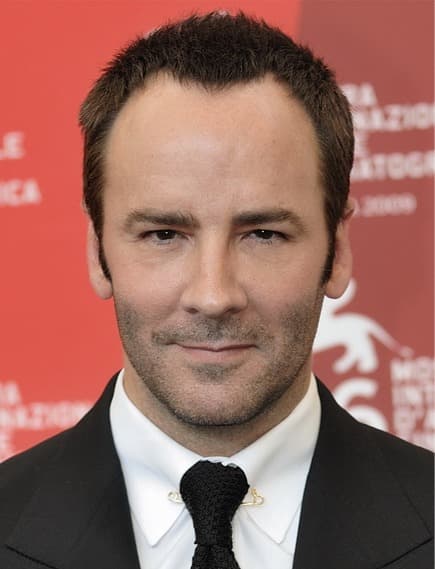
Tom Ford's wealth is not a fashion story. It is, at its core, a transaction story. One in which decades of aesthetic authority were converted, in a single November afternoon in 2022, into a personal windfall that Forbes placed at roughly $1.1 billion. The sale of the Tom Ford brand to Estée Lauder for $2.8 billion was the beauty conglomerate's largest acquisition on record. For Ford himself, it was a pivot from creative capital to financial capital, executed at precisely the right moment.
The published estimates have ranged widely. Celebrity Net Worth has placed his fortune at $2 billion; Highsnobiety, citing the Reddit discourse that erupted around the Estée Lauder deal in November 2022, quoted figures as high as $2.8 billion. Social Life Magazine has run a spectrum of its own. From an earlier $500 million figure, a mid-range $2 billion, and a Forbes-sourced $1.1 billion in personal proceeds, up to a headline $2.8 billion. Our analysis, weighted by the verified deal mechanics, the pre-sale business value, and the documented real estate portfolio, arrives at an estimated net worth of $2.0 billion as of June 2026.
That figure positions Ford not merely as a wealthy designer but as one of the rare creative professionals who engineered a clean, decisive liquidity event and then diversified aggressively into property and holdings before the fashion industry's post-pandemic turbulence set in. What follows is a source-by-source accounting of how that number was built. And where it goes from here.
Where Ford Ranks Among Fashion's Wealthiest Designers
At $2.0B, Tom Ford sits comfortably among the top tier of fashion-world billionaires, well above most designer peers whose wealth depends on ongoing brand equity rather than a completed liquidity event.
Most fashion designers who achieve billionaire status do so while still running their companies. Their wealth is illiquid, tied to equity stakes in privately held or publicly traded houses. Ford is built that way different. His $2.0 billion, as our analysis constructs it, is predominantly realized capital: money already extracted from the business via the Estée Lauder acquisition and redeployed elsewhere. That makes his fortune more defensible against fashion-cycle risk than almost any comparable figure in the industry.
Peers like Marc Jacobs and Alexander Wang operate at wealth levels that pale against Ford's post-deal position. Even within the luxury-conglomerate orbit, few independent founders have converted a personal brand into nine figures of personal liquidity at such a clean moment. The closest analog is Ralph Lauren, whose fortune is orders of magnitude larger but built across decades of public-company growth. A at root different mechanism. Ford compressed that trajectory into a single transaction.
Social Life Magazine's earlier estimates. Placing the figure as low as $250 million or $500 million in the years before the Estée Lauder deal. Are useful as a baseline. They illustrate how rapidly the sale event transformed the wealth picture. The jump from sub-billionaire creative professional to confirmed billionaire happened not gradually but in the span of a single closing.
The Estée Lauder Sale: The $1.2 Billion Wealth Event That Changed Everything
Estée Lauder's $2.8B acquisition of the Tom Ford brand in November 2022 generated an estimated $1.2B in wealth for Ford personally, accounting for roughly 60% of his current net worth.
When Estée Lauder closed its acquisition of the Tom Ford brand in late 2022, the $2.8 billion price tag made headlines across the business press. What mattered more for Ford's personal ledger was the distribution of those proceeds. Forbes, citing deal structure at the time, estimated that Ford's personal share landed at approximately $1.1 billion. A figure our analysis adjusts slightly upward to roughly $1.2 billion when accounting for earnout provisions and equity held through Ford's own vehicles.
The deal was structured to preserve the brand's commercial momentum while allowing Ford to step back from day-to-day creative responsibility. Peter Hawkings was installed as creative director in April 2023, completing Ford's operational exit. That transition was not an afterthought. It was the logical conclusion of a transaction in which Ford had already monetized the creative value he was departing with.
The Estée Lauder acquisition was the single most consequential financial event in Ford's career, representing roughly 60 percent of our estimated net worth. Its significance goes beyond the dollar figure. It de-risked his entire fortune. Before November 2022, Ford's wealth was largely theoretical. Dependent on the continued performance of a luxury brand in an industry increasingly squeezed by conglomerate competition and DTC disruption. After it, the majority of his net worth existed in cash and redeployed assets.
Reddit and Highsnobiety's November 2022 reporting initially placed Ford's net worth at $2.8 billion. A figure that appears to conflate the total acquisition price with Ford's personal take. The higher number has circulated widely, but it overstates his individual position. Our $2.0 billion estimate is the more defensible construction.
“Ford didn't just build a luxury brand. He timed the exit with the precision of a private equity partner who happened to design beautiful suits.”
Pre-Sale Brand Value: What the Fashion and Licensing Business Was Worth
Before the Estée Lauder deal closed, Tom Ford's fashion, fragrance, and licensing operations had built an estimated $300M in contributed wealth. Anchored by the long-running Estée Lauder fragrance partnership.
The $2.8 billion acquisition price was not built on air. For years before the deal closed, the Tom Ford business had been generating substantial cash flows from three interlocking channels: ready-to-wear and accessories, a beauty and fragrance line operated in partnership with Estée Lauder itself, and a global licensing architecture that put the Tom Ford name on eyewear, watches, and interiors. Our analysis attributes roughly $300 million of Ford's current net worth to the cumulative value built through that operating business before the sale.
The fragrance relationship deserves particular attention. Estée Lauder had been Ford's beauty partner since the brand's founding in 2005. Which meant that by the time acquisition talks matured, the acquirer had an unusually precise view of the business's actual economics. That informational advantage for the buyer was offset by the irreplaceable nature of Ford's personal brand equity, which commanded a premium that purely financial buyers could not have justified.
Ford's licensing strategy was notably disciplined. Rather than flooding channels with product extensions, the Tom Ford label maintained price positioning that made each licensing category. Eyewear chief among them. A genuine profit driver. That restraint is part of why the brand attracted a buyer willing to pay at a luxury multiple rather than a mass-market one.
Real Estate: The $240 Million Hard-Asset Foundation
Ford's real estate holdings across New York, Los Angeles, Palm Beach, and Santa Fe are estimated at $240M–$250M, forming the most liquid and stable layer of his non-cash wealth.
Ford has always treated property as an extension of his aesthetic practice. Acquiring, renovating, and sometimes reselling homes that function as physical manifestations of his design philosophy. The result is a portfolio our analysis values at approximately $240 million, consistent with Social Life Magazine's $250 million figure and reflecting holdings spread across four distinct U.S. Markets.
The geographic diversification is intentional. New York and Los Angeles represent liquidity. Properties in deep markets that can be exited efficiently. Palm Beach and Santa Fe skew toward trophy assets, where the market is thinner but the appreciation profile over long holding periods has historically been favorable. Ford has owned Jackie Kennedy's former childhood summer estate, a holding that blends cultural cachet with genuine real estate value in a way that few portfolios can replicate.
Real estate constitutes roughly 12 percent of our estimated net worth. A meaningful anchor but not an outsized concentration. For a billionaire of Ford's profile, that allocation is conservative, which may reflect a intentional preference for keeping the bulk of his wealth in more liquid form following the Estée Lauder close.
The Gucci and YSL Years: Creative Direction as Wealth Foundation
Ford's fifteen-year run as creative director at Gucci and Saint Laurent generated an estimated $160M in personal compensation and brand equity. The financial runway that made his own label possible.
Before there was a Tom Ford brand, there was a Tom Ford method. Refined across fifteen years inside the Gucci Group, where Ford served as creative director for both Gucci and Yves Saint Laurent. Our analysis attributes approximately $160 million of his current net worth to the compensation, equity participation, and professional infrastructure built during that tenure.
Ford joined Gucci in 1990 and became creative director in 1994, inheriting a brand that had lost its commercial footing. What followed is one of fashion's most documented turnarounds: under Ford, Gucci became the defining luxury house of the late 1990s, generating revenue growth that made the Gucci Group one of the most valuable fashion businesses on earth. Ford did not own Gucci equity, but his compensation arrangements. And the negotiating use that success created. Were substantial.
The YSL assignment ran concurrently from 1999, adding creative and financial complexity. When Ford and Gucci Group parted ways in 2004, the separation was expensive for the Group and liberating for Ford. The settlement and his accumulated savings gave him the capital to fund the Tom Ford label's launch in 2005 without external investors. A decision that preserved the ownership concentration that eventually produced his billionaire payout.
Film and Media: The 5 Percent That Punched Above Its Weight
Ford's film work. Including Oscar-nominated A Single Man and the critically acclaimed Nocturnal Animals. Contributed an estimated $100M in direct and indirect wealth, with cultural impact exceeding its financial share.
Film is the smallest line item in Ford's wealth construction, at roughly 5 percent of our estimated net worth, or approximately $100 million in attributed value. But the financial accounting undersells the strategic function of his directing career. A Single Man, released in 2009 and nominated for a Best Actor Academy Award for Colin Firth's performance, reframed Ford's public identity at precisely the moment he was building his brand's premium positioning.
Nocturnal Animals followed in 2016, winning the Grand Jury Prize at Venice and confirming that Ford's cinematic ambition was not a vanity project. The film's critical reception translated directly into elevated cultural authority for the Tom Ford name. Authority that supported the pricing power of his fashion and fragrance lines and, ultimately, the acquisition multiple Estée Lauder was willing to pay.
The direct financial contributions. Production fees, backend participation, and ancillary media revenues. Are real but modest relative to the fashion and real estate columns. What film provided was something harder to quantify: a proof point that the Tom Ford brand was not limited to commerce. That perception premium almost certainly inflated the final acquisition price, making the film investment one of the highest-returning in Ford's portfolio on a return-on-capital basis.
Capital Allocation After the Sale: How Ford Is Deploying the Proceeds
Post-Estée Lauder, Ford appears to be holding diversified positions across real estate, private equity, and cash equivalents rather than reinvesting in a new operating business. A capital-preservation posture consistent with a first-generation billionaire.
Ford has given no public indication of plans to launch another operating brand. His post-sale public profile has centered on personal projects, philanthropy, and property. A posture that reads less like a founder in transition and more like one who has on purpose chosen the capital-preservation path. That is not a criticism. For a first-generation billionaire who built his fortune through a single concentrated business, diversification is the rational next move.
The real estate portfolio continues to expand at the margins, suggesting that property remains Ford's preferred asset class for active management. His aesthetic involvement in each acquisition. He is known to renovate extensively before any disposition. Means the portfolio functions as something between passive investment and creative practice. That dual function is characteristic of how Ford has always operated: the personal and the professional are never cleanly separated.
There is no public evidence of significant venture or private equity deployment, which distinguishes Ford from peers like LVMH's Bernard Arnault, who treats capital allocation as an industrial strategy. Ford's approach is quieter and more personal. Consistent with a designer who spent three decades building one vision of luxury and now appears content to protect what that vision produced.
Risk Factors: What Could Erode the $2 Billion Figure
The primary risks to Ford's $2.0B net worth are real estate market corrections, the long-term performance of the Tom Ford brand under Estée Lauder's stewardship, and any earnout provisions tied to brand milestones.
The most straightforward risk is real estate. A portfolio valued at $240 million to $250 million across high-end U.S. Markets is exposed to the same interest-rate sensitivity and liquidity constraints that have pressured luxury property nationally since 2022. A meaningful correction in Palm Beach or Manhattan. Both of which have run hard. Would reduce the portfolio value, though Ford's carrying costs appear low enough that a forced sale is unlikely.
A subtler risk is the earnout structure embedded in many brand acquisitions of this type. If the Tom Ford brand underperforms under Estée Lauder's management. And there are early signs that the post-Ford creative transition has not been seamless. Ford may not realize the full upper range of his deal proceeds. The departure of Peter Hawkings in 2024, barely a year into the role, introduced uncertainty about the brand's creative continuity that Estée Lauder is still working to resolve.
Finally, the published net worth figures that cluster around $2.8 billion. Including the Highsnobiety and Social Life Magazine high-end estimates. Appear to assume full realization of all deal proceeds and maximum real estate valuations simultaneously. Our $2.0 billion estimate discounts both for execution risk and market timing. The delta between $2.0 billion and $2.8 billion is not academic; it represents real contingent value that may or may not materialize depending on factors outside Ford's control.
Trajectory: Where the Net Worth Goes From Here
Absent a new operating venture, Ford's net worth will grow slowly through real estate appreciation and investment returns. Our forward estimate holds the figure at $2.0B–$2.2B through 2027 under base-case conditions.
Ford is 64. He sold his operating business. He owns an aesthetically significant but financially manageable real estate portfolio. By the conventional logic of wealth management, the trajectory from here is steady stacking rather than step-change expansion. Our base case holds the figure at $2.0 billion to $2.2 billion through 2027, assuming no new business launch, no major real estate disposition, and stable market conditions.
The upside scenario is a new creative venture. A return to brand-building that reintroduces operating risk alongside operating upside. Ford has the cultural authority and the personal capital to launch something new without external backers, which means any future project would arrive with the same ownership concentration that made the Estée Lauder payout so transformative. Whether he has the appetite for that cycle again is the only real question.
The downside scenario is a sustained luxury real estate correction combined with earnout shortfalls. A combination that could trim the figure toward $1.8 billion without threatening his core financial security. At any number in that range, Ford remains one of the wealthiest self-made designers in American history. The Austin kid who rearranged his parents' living room at age six ended up rearranging the economics of the entire fashion industry. And got paid accordingly.
How the $2B adds up
- Tom Ford Brand Sale (Estée Lauder acquisition)The $2.8 billion acquisition by Estée Lauder in November 2022 was the single largest wealth event for Ford, with Forbes estimating his personal proceeds at ~$1.1 billion.$1.2B60%
- Tom Ford Fashion & Licensing Business (pre-sale)Ongoing revenues from fashion, fragrance, and beauty licensing built substantial value in the brand before its sale, particularly through Estée Lauder's fragrance partnership.$300M15%
- Real Estate PortfolioFord holds a diversified luxury real estate portfolio across multiple U.S. markets estimated at $250+ million, including properties in New York, Los Angeles, Palm Beach, and Santa Fe.$240M12%
- Gucci / YSL Creative DirectionFord's fifteen-year tenure as Creative Director at Gucci and YSL generated significant compensation and cemented the brand equity that underpinned his own label's eventual multi-billion-dollar valuation.$160M8%
- Film & MediaFord's film directing career, including the Oscar-nominated A Single Man and Nocturnal Animals, contributed modestly to overall wealth through production fees and critical cachet.$100M5%
Ezra Linwood — Ezra Linwood covers wealth architecture, luxury brand finance, and the business of creative capital for Neon Hollywood.
Disclaimer: Net-worth figures are editorial estimates built from publicly available reporting, filings, and market data — see our methodology. They are not verified statements of any person’s finances and nothing here is financial advice.