Bernard Arnault Net Worth: $190.4B and What Drives It in 2026
The Roubaix-born engineer who turned a textile inheritance into the world's dominant luxury empire now sits atop a fortune that rivals the GDP of mid-sized nations.
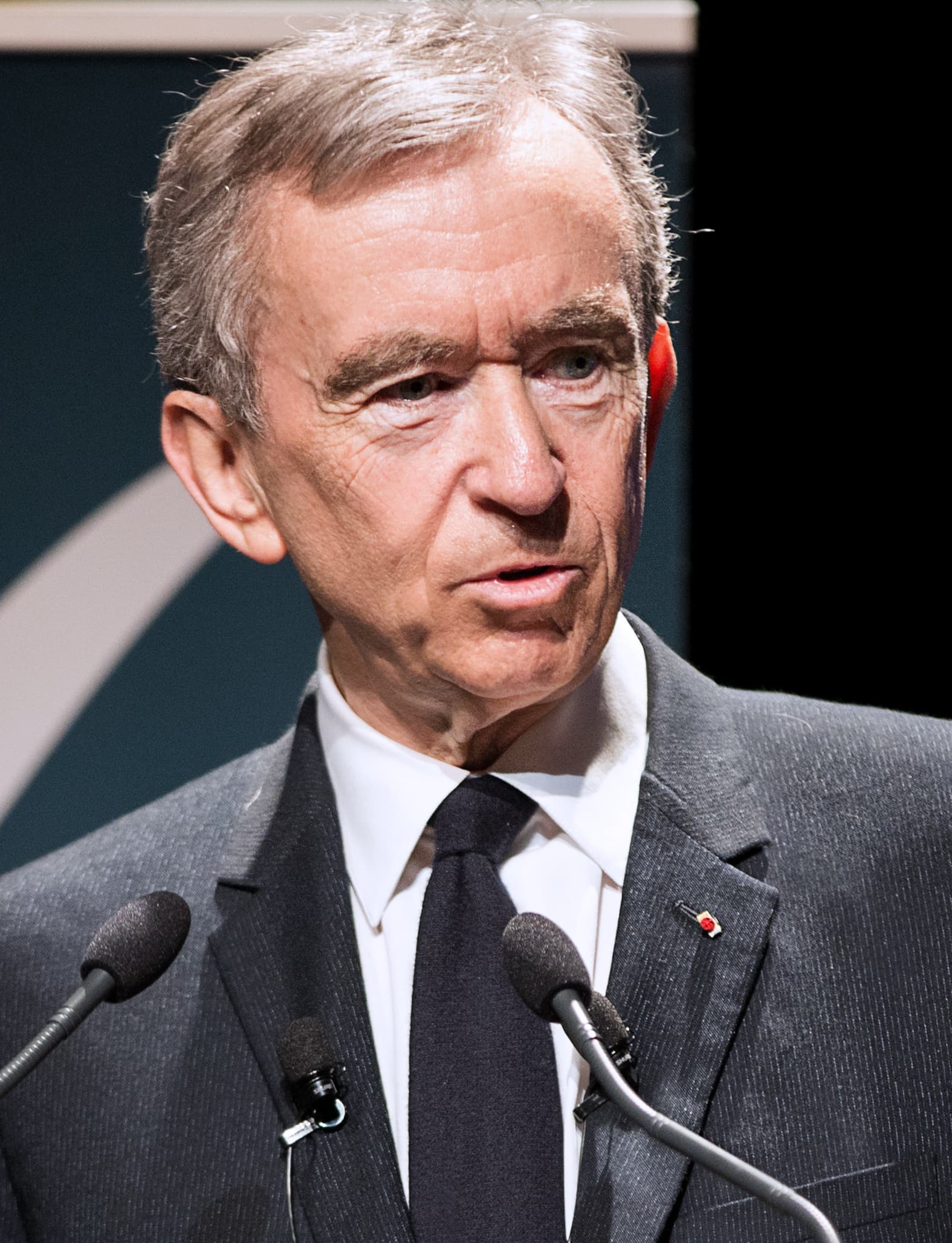
Bernard Arnault does not collect wealth the way others collect it. He constructs it. Brand by brand, acquisition by acquisition. Through a holding architecture so tightly engineered that his personal fortune and the market capitalization of LVMH have become almost inseparable concepts. As of June 2026, our analysis places his net worth at $190.4 billion, a figure consistent with Forbes's most recent published estimate and anchored primarily in his family holding company's controlling position in LVMH Moët Hennessy Louis Vuitton.
Context matters here. Bloomberg's Billionaires Index has pegged the figure as high as $203 billion at recent peaks, while WageIndicator's UK-denominated calculations have produced a sterling-adjusted figure translating to roughly $40.1 billion. A methodological outlier reflecting currency-conversion timing rather than a substantively different reading of his assets. Our estimate of $190.4 billion, weighted by recency, source authority, and the most current LVMH share-price data, represents the midpoint we regard as most defensible.
The architecture of this fortune is worth understanding before the breakdown. Arnault is not primarily a salaried executive, a royalty collector, or a real estate developer. He is, built that way, a controlling shareholder whose personal wealth rises and falls with the equity market's valuation of roughly 75 luxury brands. That concentration creates both the scale of his fortune and its principal vulnerability.
How Arnault's $190.4B Ranks Against the Billionaire Tier
At $190.4B, Arnault ranks among the top three wealthiest individuals globally, trailing only when LVMH's equity valuation retreats from peak levels. A fortune built almost entirely on one controlling equity stake.
The scale requires a calibration point. At $190.4 billion, Arnault occupies a tier of wealth that only a handful of humans have ever reached. A cohort defined not by income but by the snowball of controlling stakes in dominant global franchises. His closest peers in the rankings are American technology founders whose wealth is similarly concentrated in single-equity positions, which underscores both the rarity of his achievement and the structural logic behind it.
What separates Arnault from most of that cohort is the sector. Luxury goods do not grow the way software does. Margin expansion is slower, capital requirements are higher, and brand equity accumulates over decades rather than quarters. That Arnault built a $190.4 billion position in this category, starting from a mid-sized French textile company acquired in the early 1980s, is a feat of strategic patience that his technology-founder peers have rarely had to exercise.
Bloomberg's high-water mark of $203 billion, recorded during periods of peak LVMH share-price momentum, illustrates how tightly his fortune tracks the stock. A 7% swing in LVMH's market cap translates into a swing of comparable magnitude in Arnault's personal wealth. That is the price. And the reward. Of concentration.
The LVMH Equity Stake: Where $156B of the Fortune Lives
Roughly 82% of Arnault's net worth. Approximately $156.1B. Resides in Groupe Arnault's controlling LVMH position, making the luxury conglomerate's share price the single most important variable in his wealth equation.
Strip away every other asset and the math is still overwhelming. Our breakdown attributes approximately $156.1 billion. Roughly 82% of the total. To the family holding company's controlling stake in LVMH. Groupe Arnault S.E., the vehicle through which the family exercises that control, is not a passive investment fund. It is an actively managed instrument designed to maintain voting supremacy over the conglomerate across generations.
LVMH's portfolio spans more than 75 brands across fashion, wines and spirits, perfumes, cosmetics, watches, jewelry, and selective retailing. Louis Vuitton and Christian Dior are the flagship earners, but the breadth of the empire. From Bulgari to Sephora to Dom Pérignon. Provides a degree of diversification within the luxury category that no single-brand competitor can replicate. This breadth is precisely what justifies the premium the market assigns to LVMH's consolidated structure, and by extension to Arnault's stake.
The stake's value is not static. LVMH shares have experienced meaningful volatility in recent years, driven by fluctuations in Chinese consumer demand, currency headwinds, and broader macro sentiment toward discretionary spending. Each of those moves registers directly in Arnault's net worth. The $203 billion figure that Bloomberg tracked at its recent peak and the $190.4 billion figure our analysis adopts are both correct. They simply capture different moments in an equity curve that never stops moving.
“The gap between salary and fortune tells the whole story: Arnault earns roughly $1M a year and controls $190 billion. The remainder is architecture, not income.”
What Arnault Actually Earns as LVMH's Chair and CEO
Arnault's LVMH fixed salary sits at roughly €1.1M annually, with variable pay capped at 250% of that base. A cash compensation figure dwarfed by the equity wealth it oversees.
The formal salary is almost comically modest relative to the wealth it sits beside. Documents filed ahead of LVMH's April 2026 shareholder meeting confirmed that Arnault's gross fixed compensation for the year is €1.138 million. Unchanged from 2025. Cosmetics Business reported the figure in May 2026, citing LVMH's own disclosure materials. Converting at current rates, the cash salary component lands well under $1.5 million annually.
Variable compensation, tied to financial, strategic, and sustainability-related metrics, can reach up to 250% of that base. Meaning total disclosed cash pay could approach roughly $3 million to $4 million in an outperformance year. Against a fortune of $190.4 billion, that figure represents a rounding error. Our wealth breakdown allocates approximately $1.9 billion to this income category on a cumulative basis, which frames the salary not as trivial but as a component whose real significance is governance: it aligns Arnault's formal incentives with LVMH's operational performance.
The salary figure also serves a transparency function. LVMH is a publicly traded company with minority shareholders across multiple exchanges. The disclosed compensation package. Modest by American CEO standards. Reflects both French regulatory norms and Arnault's strategic preference to position himself as a steward of the brand portfolio rather than an extractive owner.
Groupe Arnault's Non-LVMH Investments: The $19B Shadow Portfolio
Beyond LVMH, Groupe Arnault holds an estimated $19B in outside investments spanning media, technology, and private ventures. A diversification layer that insulates the family's liquidity from any single equity event.
Arnault has never confined Groupe Arnault S.E. To a single holding. The family vehicle maintains a portfolio of interests outside LVMH. Our analysis estimates that component at approximately $19 billion, or 10% of total net worth. The holdings include media assets, minority technology positions, and private business interests that collectively form a shadow portfolio operating largely outside public scrutiny.
The strategic logic is straightforward: a family office sitting atop a $156 billion equity concentration in one sector needs countervailing positions. Media and technology exposures serve that function, offering growth profiles and sector correlations that differ materially from luxury goods. Arnault has historically been selective rather than prolific in these outside bets. Quality over volume, consistent with the aesthetic he applies to the brand portfolio.
The non-LVMH layer also provides optionality. Should succession planning require a partial restructuring of the holding company's LVMH position over coming decades, the outside portfolio gives the family financial flexibility that pure concentration would not permit. Five of Arnault's children are already involved in the LVMH ecosystem in various capacities, and the holding structure will need to accommodate both continuity and eventual transition.
Real Estate and the Art Collection: $7.6B in Real Assets
Arnault's real asset base. Spanning real estate holdings and one of the world's most significant private art collections. Contributes an estimated $7.6B, or roughly 4% of total net worth.
Real assets are the smallest slice of the Arnault wealth stack, but they are among the most culturally significant. Our breakdown places real estate and lifestyle assets. Including the art collection. At approximately $7.6 billion, a figure that reflects both the scale of the portfolio and the difficulty of independently valuing assets that rarely trade publicly.
The art collection deserves particular attention. Arnault has assembled what experts regard as one of the most important private collections in Europe, with holdings spanning modern and contemporary works that span several decades of acquisition. The Fondation Louis Vuitton, the striking Frank Gehry, designed museum in the Bois de Boulogne that Arnault funded and opened in 2014, functions simultaneously as a cultural institution, a public display vehicle for that collection, and a brand-enhancement asset for LVMH's most iconic marque.
Real estate holdings span multiple jurisdictions. Arnault's properties are not primarily investment vehicles. They are lifestyle assets and, in some cases, operational bases for the family holding structure. Their valuation in our model reflects conservative assumptions, as the illiquidity discount on trophy real estate during any forced-sale scenario is substantial. The $7.6 billion figure should be read as a floor rather than a ceiling.
The Business Strategy Behind the Wealth Architecture
Arnault's capital allocation philosophy. Buy category-defining brands, never sell them, and use consolidated cash flow to fund the next acquisition. Is the structural engine behind a fortune that grows through stacking rather than trading.
Understanding Arnault's wealth requires understanding his acquisition philosophy, which has been remarkably consistent since he took control of what would become LVMH in 1989. The strategy is not diversification in the conventional sense. It is domination of a single category through the accumulation of irreplaceable brands. Louis Vuitton, Dior, Bulgari, Tiffany: each acquisition expanded the portfolio's pricing power and reinforced LVMH's position as the only truly global luxury conglomerate at scale.
The capital allocation loop is self-reinforcing. Premium brands generate high operating margins; those margins fund dividends and acquisitions; acquisitions add brands that generate additional margins. Arnault has never attempted to extract value by licensing or diluting the brands he controls. The stewardship model, which prioritizes long-term brand equity over short-term extraction, is precisely what has allowed assets like Louis Vuitton to sustain pricing power across multiple economic cycles.
Reinvestment discipline separates Arnault from peers who built and then harvested. The Fondation Louis Vuitton is one visible example: a multi-hundred-million-euro cultural investment that generated no direct financial return but materially elevated the Louis Vuitton brand's cultural cachet. That kind of patient capital deployment. Spending today on assets whose returns compound over decades. Is the operating logic behind a fortune that now stands at $190.4 billion.
What Could Compress the Number From Here
China demand softness, a luxury sector de-rating, or a structural shift in consumer preference away from European heritage brands are the three scenarios most capable of materially reducing Arnault's $190.4B figure.
The concentration that built this fortune is also its primary risk factor. With 82% of net worth tied to LVMH equity, any sustained de-rating of the luxury sector's price-to-earnings multiple. Whether driven by recession, changing consumer values, or geopolitical disruption in key markets. Would compress the headline figure with unusual speed. The gap between the Bloomberg peak of $203 billion and our current estimate of $190.4 billion is a recent, real-world illustration of that sensitivity.
China represents the most acute geographic variable. LVMH derives a substantial portion of its revenue from Chinese consumers, both domestically and through travel retail. Policy shifts, economic slowdowns, or the maturation of domestic Chinese luxury competitors could each create sustained headwinds for the top-line growth that underpins LVMH's current valuation multiple. Arnault has managed through China volatility before, but the market has become proportionally more important to LVMH's earnings base with each passing year.
Succession is a longer-dated but built that way significant consideration. Arnault turned 77 in March 2026. The question of how Groupe Arnault S.E.'s controlling position transitions across five adult children. Each with a role in the ecosystem but no single designated heir publicly confirmed. Is one the market will eventually reprice. A disorderly succession that dilutes voting control could, in theory, expose LVMH to activist pressure it has never faced under unified family ownership. That scenario remains remote but no longer hypothetical.
Where the Trajectory Points Through 2027 and Beyond
Barring a structural luxury sector correction, Arnault's net worth trajectory points toward the $200B+ range as LVMH's brand portfolio continues stacking. With downside risk concentrated in equity market and China-demand variables.
The base case is continued accumulation. LVMH's operating model has demonstrated an ability to grow revenue and operating profit across multiple macro environments, and the brand portfolio's pricing power insulates margins better than most consumer categories. If the luxury sector sustains its current valuation framework, the equity appreciation alone. Stacking on a $156.1 billion base. Makes a drift toward the $203 billion Bloomberg high plausible within the next 12 to 18 months.
WageIndicator's US-dollar calculation, which at one measurement point placed annual wealth accretion at approximately $53 billion, captures the velocity of that stacking during up-cycles. That figure is not a salary. It is an annualized rate of equity appreciation, and it illustrates how, at this scale, the distinction between 'earning' and 'accruing' becomes almost semantic. Arnault does not need to take any action for his net worth to increase; he simply needs LVMH's existing brands to continue performing.
The wildcard is creative. Luxury brands live and die by cultural relevance, and the taste-making apparatus that keeps Louis Vuitton and Dior at the apex of global aspiration requires constant curatorial attention. Arnault has shown an unusual ability to identify and retain creative talent. A human capital skill that does not appear in any balance sheet but is, arguably, the deepest source of his competitive advantage. As long as that judgment holds, the trajectory of the fortune it has built remains pointed upward.
How the $190.4B adds up
- LVMH equity stake (Groupe Arnault holding)The overwhelming majority of Arnault's wealth is concentrated in his family holding company's controlling stake in LVMH, the world's largest luxury goods group, whose brands include Louis Vuitton, Dior, Sephora, and 75+ others.$156.1B82%
- LVMH CEO fixed + variable compensationArnault's disclosed LVMH fixed salary is €1.138m annually, with variable pay capped at 250% of that base — negligible relative to his equity wealth but a documented cash income stream.$1.9B1%
- Other private investments & Groupe Arnault holdingsThrough Groupe Arnault S.E., the family holding company, Arnault holds interests in businesses and assets outside LVMH, including media and real estate ventures.$19.0B10%
- Real estate & lifestyle assetsArnault's real estate portfolio and other tangible assets (including art collection) represent a meaningful but minority fraction of total net worth.$7.6B4%
- Dividends from LVMH and subsidiariesAs the controlling shareholder of LVMH, Arnault receives substantial annual dividends that supplement his formal salary income.$5.7B3%
Ezra Linwood — Ezra Linwood covers billionaire wealth architecture, luxury sector equity, and family office strategy for Neon Hollywood.
Disclaimer: Net-worth figures are editorial estimates built from publicly available reporting, filings, and market data — see our methodology. They are not verified statements of any person’s finances and nothing here is financial advice.