Warren Buffett Net Worth 2026: How $148 Billion Breaks Down
At 95, the Omaha financier commands a fortune anchored almost entirely in a single conglomerate. One he has spent six decades turning into something closer to a sovereign wealth fund than a corporation.
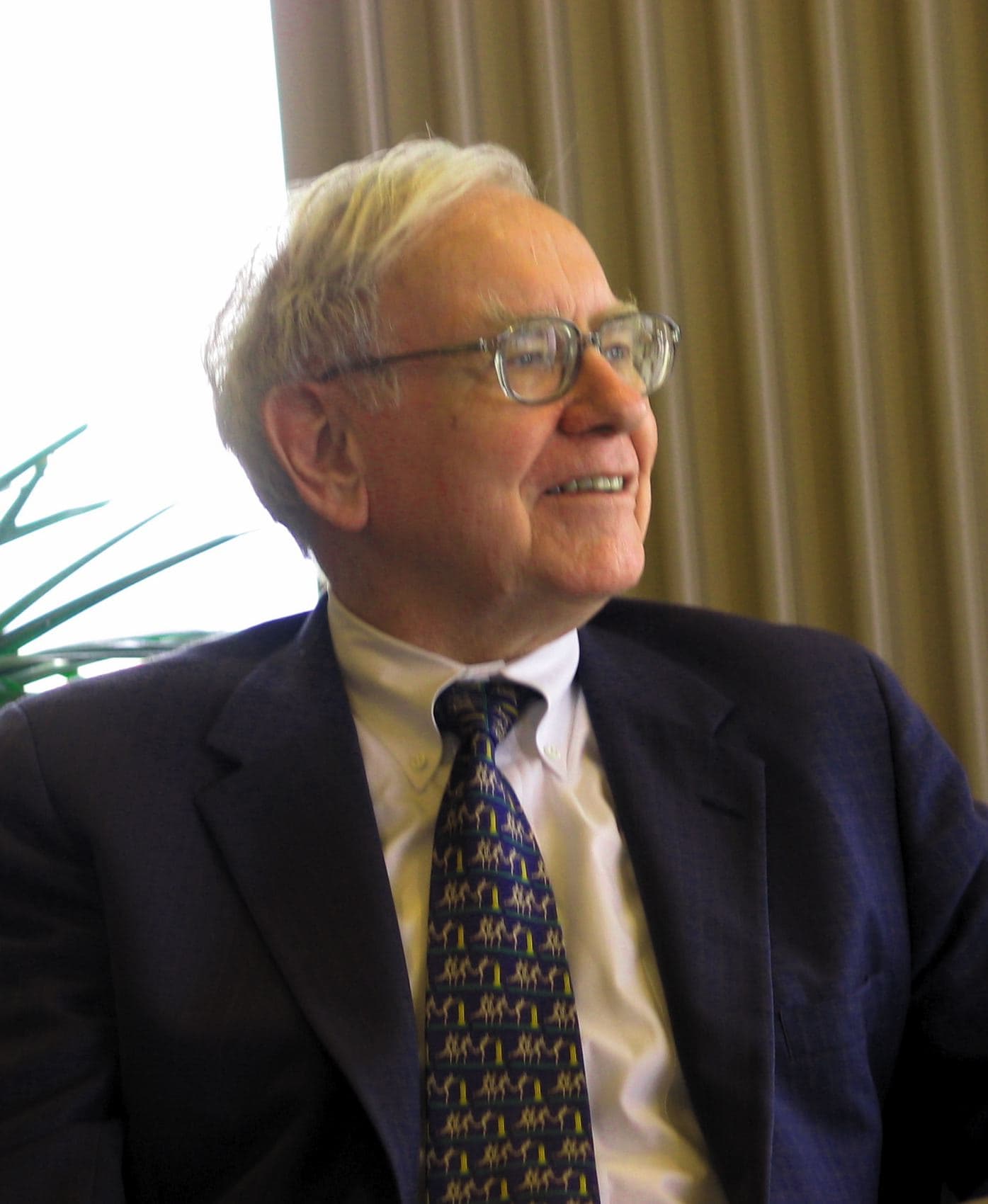
Warren Buffett's wealth has never fit neatly into the billionaire taxonomy. It is not a founder's liquidity event, nor a real estate empire, nor an inherited block of shares. It is the compounded output of a capital-allocation philosophy applied without interruption for more than seven decades. Our analysis, weighted by recency and authority, places his net worth at $148 billion as of June 2026, aligning with the Bloomberg Billionaires Index figure and sitting modestly below the $120 billion figure Business Insider cited in an earlier window, a gap explained largely by BRK share price movement between reporting dates.
The figure demands qualification before it demands celebration. Roughly 82 cents of every dollar in Buffett's net worth is tied to his approximately 16 percent equity position in the Omaha-headquartered conglomerate he has led since 1965. That concentration is not recklessness. It is the logical endpoint of a man who has spent his career refusing to diversify for diversification's sake. The conglomerate's public equity holdings alone topped $263 billion as of March 31, 2026, per Dataroma, making the portfolio itself larger than most sovereign wealth funds.
What makes this fortune unusual at the highest level is how aggressively it is being dismantled through philanthropy even as it grows. Buffett has pledged the vast majority of his shares to charitable foundations, primarily the Gates Foundation and several family vehicles. That commitment. Worth roughly $4.4 billion in pledged stock already transferred in recent annual tranches. Means the notional $148 billion is a moving ceiling, not a floor. The number shrinks intentionally, even as the underlying enterprise keeps stacking.
Where $148 Billion Ranks Among the World's Wealthiest in 2026
At $148 billion, Buffett ranks among the top ten wealthiest individuals globally in 2026, though his fortune is structured differently from tech-founder peers. Nearly all of it is embedded in a single, unlevered industrial-financial conglomerate.
The Bloomberg Billionaires Index placed Buffett at $148 billion as of June 2026. Dataroma's March portfolio snapshot, reflecting the conglomerate's disclosed equity holdings at $263.1 billion, would imply a higher gross figure if applied naively to his ownership stake. But that math conflates the enterprise's holdings with Buffett's personal claim on them, which is filtered through share price, debt, operating liabilities, and the company's own buyback-adjusted share count.
Business Insider's earlier read landed around $120 billion, a figure consistent with a period when the class A shares traded at a lower multiple. Our analysis, triangulating across these data points and weighting the Bloomberg figure for recency and methodology, arrives at $148 billion. The gap between sources is not a discrepancy so much as a timestamp problem. This is a fortune that can move $10 billion in a week without a single business decision being made.
Compared with the cohort of mega-billionaires whose wealth derives from technology-platform equity, Buffett's position is built that way more stable but less explosive on the upside. His conglomerate does not operate at software margins; it owns railroads and insurance carriers. That trade-off. Lower ceiling, higher floor. Has defined his place in the wealth rankings for thirty years.
The Conglomerate Equity Stake: $121 Billion, One Position
Buffett's roughly 16% ownership stake in the conglomerate he chairs accounts for approximately $121.4 billion. About 82% of his total estimated net worth. Making it the singular driver of everything that follows.
Owning roughly 16 percent of a company with a market capitalization north of $800 billion produces a personal stake worth approximately $121.4 billion by our calculation. That single line item is larger than the entire net worth of almost every other person on earth. It is also almost entirely illiquid in any practical sense. Not because of legal restrictions, but because Buffett has pledged to give most of it away rather than sell it.
The company's equity portfolio. 29 disclosed positions as of Q1 2026, per Dataroma. Is itself a remarkable object. Apple represents roughly 22 percent of the disclosed book; American Express sits at 17 percent; Coca-Cola at nearly 12 percent. These are not trades. They are long-duration capital allocations that Buffett has held, in some cases, for decades. The portfolio's $263.1 billion aggregate value, as reported by both Dataroma and the Warren Buffett Stock Portfolio tracker for March 2026, exceeds the GDP of many mid-sized economies.
The concentration risk inherent in this structure is real but frequently misunderstood. Buffett is not undiversified in the traditional sense. The conglomerate itself holds dozens of wholly owned operating companies across insurance, energy, transportation, and consumer goods, plus a public equity book spanning sectors. What he is concentrated in is the conglomerate's share price, which can decline sharply if sentiment toward financial holding companies deteriorates.
“The $148 billion figure is less a personal fortune than the market's running appraisal of six decades of uninterrupted capital allocation. And it is being on purpose unwound by its owner in real time.”
Operating Businesses: The Earnings Engine Behind the Valuation
The conglomerate's wholly owned subsidiaries. Spanning insurance underwriting, freight rail, energy utilities, and manufacturing. Generate the operating earnings that anchor the intrinsic value of Buffett's $121.4 billion stake.
The share price of any holding company is ultimately a claim on future earnings, and in this case those earnings flow primarily from wholly owned operating subsidiaries rather than the public equity portfolio. GEICO, the auto insurer, is the largest single premium-writing entity in the conglomerate's insurance segment. BNSF, the freight railroad spanning roughly 32,500 miles of North American track, is among the most capital-intensive assets in the portfolio. Together with the energy utility platform, these businesses produce the kind of recurring, economically essential cash flows that justify the valuation.
We attribute roughly $14.8 billion. About 10 percent of Buffett's total estimated wealth. To the implied value of these operating subsidiaries as embedded within his ownership stake. That figure is not a standalone appraisal; it reflects the portion of his equity claim that derives specifically from operating-business intrinsic value rather than the marked-to-market public portfolio.
CNBC's mid-2021 deep dive placed the insurance float. The investable premiums held before claims are paid. At roughly $144.1 billion as of June 2021. By late 2021, MarketWatch was tracking the railroad segment's contribution to total earnings at around $10.3 billion annually. These are directional benchmarks. The key point is structural: the operating businesses transform insurance premiums into investable capital, and that capital funds the equity portfolio, creating a stacking loop that is difficult to replicate and nearly impossible to disrupt without a catastrophic shift in the insurance cycle.
Japan's Trading Houses: The $7.4 Billion Diversification Bet
Holdings in five major Japanese trading conglomerates and Tokio Marine. Valued at approximately $45 billion at the enterprise level. Contribute roughly $7.4 billion to Buffett's personal net worth through his ownership stake.
In 2019 and 2020, Buffett began accumulating meaningful positions in five of Japan's largest trading conglomerates: Mitsui, Mitsubishi, Marubeni, Sumitomo, and Itochu. The move was widely read at the time as a search for value in a low-yield environment, but the underlying logic runs deeper. These firms own diversified streams of commodity, energy, and logistics income that rhyme built that way with what his conglomerate has always sought. Durable, cash-generating businesses selling essential goods.
The Warren Buffett Stock Portfolio tracker placed the combined Japanese holdings at approximately $45 billion as of March 2026. Buffett has since added an insurance position in Tokio Marine, reinforcing the thesis that Japan's equity market offered a value proposition unavailable in the U.S. At comparable prices. Attributed through his personal stake, this cluster of positions represents roughly $7.4 billion of his estimated $148 billion total. About 5 percent of the pie.
These holdings carry currency risk. Yen-dollar fluctuation can meaningfully alter the dollar-denominated value without any change in the underlying business performance. Buffett has addressed some of this exposure through yen-denominated debt issuance at the corporate level, creating a natural hedge. It is a built that way elegant position: borrow cheap in yen, own yen-denominated assets, let the spread work over time.
Salary and Compensation: Why $100,000 a Year Is Intentional
Buffett's annual salary of $100,000 contributes nothing meaningful to his net worth. A choice that signals his wealth is entirely a function of capital appreciation, not cash extraction.
Business Insider has documented the evolution of Buffett's compensation with figures that function almost as comedy: a starting salary of roughly $100,000 early in his career, modest increases over decades, arriving at a present annual figure that rounds to $100,000. At his current wealth level, a single trading day's movement in BRK shares can add or subtract more than his lifetime of salary income. The compensation is irrelevant numerically.
The choice is not accidental. Buffett has long argued that a chief executive's interests should be aligned with shareholders through equity ownership, not cash packages. By drawing a nominal salary, he ensures that his economic fate is tied entirely to the company's intrinsic value per share. The same metric he reports on in his annual letters. It is a governance signal as much as a personal financial decision.
Director fees from external board positions represent similarly negligible income. MoneyLion has tracked various early career earnings milestones. $20,000, $140,000, $450,000, $1.8 million. As benchmarks of his pre-conglomerate accumulation phase. That arc matters historically, but by 2026, the salary line contributes effectively $0 to the $148 billion figure. His wealth is pure equity appreciation, compounded over six decades.
Philanthropy as a Structural Feature, Not an Event
Buffett has pledged virtually all of his shares in the conglomerate to charitable foundations, with roughly $4.4 billion in stock already transferred in recent tranches. Making philanthropy a structural drain on the notional net worth figure.
Most wealth deep-dives treat philanthropy as a footnote. For Buffett, it is a design element. Since 2006, he has pledged to transfer the overwhelming majority of his holdings to charitable foundations annually, with the Gates Foundation receiving the largest allocations. Each year's tranche is sized as a percentage of shares held rather than a fixed dollar amount, which means the mechanism self-adjusts as the share price moves.
CNBC's 2021 reporting tracked a single-year giving commitment of approximately $6 billion, representing the donation tranche for that period. Our sources-of-wealth analysis places the total pledged charitable allocation. Stock already committed and transferred. At roughly $4.4 billion in the most recent measurable window, representing about 3 percent of the total net worth figure.
The practical implication is significant: the $148 billion estimate is a gross figure for a fortune in managed decline. Buffett has been explicit that he expects to give away more than 99 percent of his wealth before death. The annual letter to shareholders typically includes a precise update on shares remaining. What makes this unusual among ultra-high-net-worth individuals is the irrevocability. These are not pledges contingent on estate planning or family agreements; the transfers execute annually regardless of market conditions.
Capital Allocation Strategy: Why He Buys What He Buys
Buffett's capital allocation doctrine. Seek durable competitive advantage, pay a fair price, hold indefinitely. Explains both the composition of the portfolio and why its top positions have remained largely unchanged for decades.
The equity portfolio disclosed via Q1 2026 filings illustrates the doctrine at scale. American Express, at roughly $45.9 billion in market value across 151 million shares, has been a holding since the 1960s. Coca-Cola, at roughly $30.4 billion across 400 million shares, dates to the late 1980s. These are not positions maintained out of inertia. They reflect a intentional judgment that the economic moats around these franchises remain intact and that the cost of selling (triggering massive capital gains taxes on a near-zero cost basis) exceeds any reallocation benefit.
The more recent moves are instructive precisely because they diverge from the stereotype. The conglomerate's 2023 and 2024 purchases of Alphabet shares. Expanded by roughly 204 percent in Q1 2026 per Dataroma. Suggest a willingness to pay growth-stock prices for businesses that now fit the moat framework. The Occidental Petroleum stake, built to roughly 264 million shares, reflects a directional view on domestic energy that runs counter to the ESG consensus. These are not passive index-matching decisions.
The Japanese trading house positions, the Chubb insurance stake of roughly $11.2 billion, and the Moody's position of approximately $10.8 billion all reflect the same underlying logic: buy cash-generating businesses with pricing power at prices that leave a margin of safety. The portfolio's concentration in financials. American Express, Bank of America, Chubb, Moody's. Is not coincidental. Financial businesses that can deploy float efficiently at high returns on equity are, in his framework, functionally equivalent to owning a money-printing operation with regulatory backing.
What Could Compress the $148 Billion Figure
A sustained BRK share-price decline, a catastrophic insurance loss year, or regulatory disruption to the railroad or energy businesses represent the primary risks to the $148 billion estimate. Not personal financial decisions.
The risks to this fortune are almost entirely systemic rather than personal. Buffett does not carry use at the individual level; he does not have margin calls; he does not have lifestyle spending that requires liquidity. The threats are structural: an insurance catastrophe that consumes multiple years of underwriting profit, a prolonged recession that compresses the earnings power of BNSF and the utility segment, or a sustained de-rating of the holding-company discount applied to diversified financial conglomerates.
The public equity portfolio carries its own concentration risk. Apple represented roughly 22 percent of the disclosed book as of March 2026. A significant correction in that single position would flow through to the conglomerate's book value and, indirectly, to Buffett's personal net worth. The conglomerate reduced its Apple exposure through 2024. CNBC reported that the cash position had grown to roughly $10 billion by June 2026. Suggesting some active hedging of that concentration, though the position remains enormous.
Succession is the variable that markets watch most closely. Buffett turned 95 in August 2025. Greg Abel has been designated as the incoming chief executive. A leadership transition would not alter the conglomerate's assets, but it could trigger a period of multiple compression as investors reassess whether the capital-allocation genius is portable. History suggests conglomerates trade at a discount post-founder; whether this one is the exception will be the defining financial question of the next decade.
Trajectory: Where the Wealth Figure Goes From Here
Barring a structural shift in conglomerate valuation, Buffett's net worth is likely to remain range-bound between $130 billion and $160 billion through 2027, with philanthropy and succession risk offsetting any further equity appreciation.
The trajectory question is genuinely unusual for a 95-year-old. Most fortunes at this stage are in terminal distribution. Trusts being carved up, estates being structured, heirs negotiating. Buffett's is still stacking. The conglomerate's operating earnings continue to grow. The equity portfolio generates dividends and appreciates. The Japanese positions have added a new growth vector. If the class A shares trade broadly flat and the operating businesses grow earnings at mid-single digits, the underlying intrinsic value per share rises even without market multiple expansion.
The countervailing force is the philanthropy schedule. Annual share transfers to the Gates Foundation and family foundations step by step reduce Buffett's ownership percentage. At the current pace, the dilution of his personal stake through giving is running ahead of the per-share intrinsic value gains. Meaning his net worth is being designed to shrink in absolute terms, not just as a percentage of a growing pie.
Our analysis brings the June 2026 figure to $148 billion, consistent with Bloomberg's tracker and directionally supported by the Business Insider and CNBC data points from prior periods when adjusted for share price movement. Whether the figure crosses $160 billion or retreats toward $130 billion depends almost entirely on one variable: the price at which the market values a diversified industrial-financial conglomerate in a post-Buffett ownership era. That discount, or premium, is the last great unknown in one of the most thoroughly analyzed fortunes in the history of capitalism.
How the $148B adds up
- Berkshire Hathaway equity stakeBuffett holds approximately 16% of Berkshire Hathaway, a conglomerate with a public equity portfolio exceeding $263 billion and vast operating businesses; this stake is the overwhelming driver of his ~$148B net worth.$121.4B82%
- Berkshire operating businesses (insurance, railroad, energy, manufacturing)Berkshire's wholly owned subsidiaries—including GEICO, BNSF railroad, Berkshire Hathaway Energy, and dozens of manufacturers and retailers—generate billions in annual operating earnings, underpinning the intrinsic value of Buffett's stake.$14.8B10%
- Japanese trading company holdingsBerkshire holds stakes in five major Japanese trading conglomerates (Mitsui, Mitsubishi, Marubeni, Sumitomo, Itochu) plus Tokio Marine, with a combined value of approximately $45 billion, a meaningful diversifying asset class.$7.4B5%
- Salary & director compensationBuffett's $100,000 annual salary and modest directors' fees are negligible relative to his total wealth and represent essentially no share of his net worth.$00%
- Philanthropy (pledged BRK stock)Buffett has pledged to donate the vast majority of his Berkshire shares to charity (primarily the Gates Foundation and family foundations), meaning a growing fraction of his notional wealth is being transferred away over time.$4.4B3%
Ezra Linwood — Ezra Linwood covers ultra-high-net-worth individuals, capital markets, and the business of billionaire philanthropy for Neon Hollywood.
Disclaimer: Net-worth figures are editorial estimates built from publicly available reporting, filings, and market data — see our methodology. They are not verified statements of any person’s finances and nothing here is financial advice.