Richard Branson Net Worth 2026: How $2.9 Billion Survives a Decade of Turbulence
Once flirting with $8 billion at his pandemic-era peak, Branson's fortune has been reshaped by SPAC collapses, airline distress, and a strategic retreat to hard assets. Yet it remains formidable.
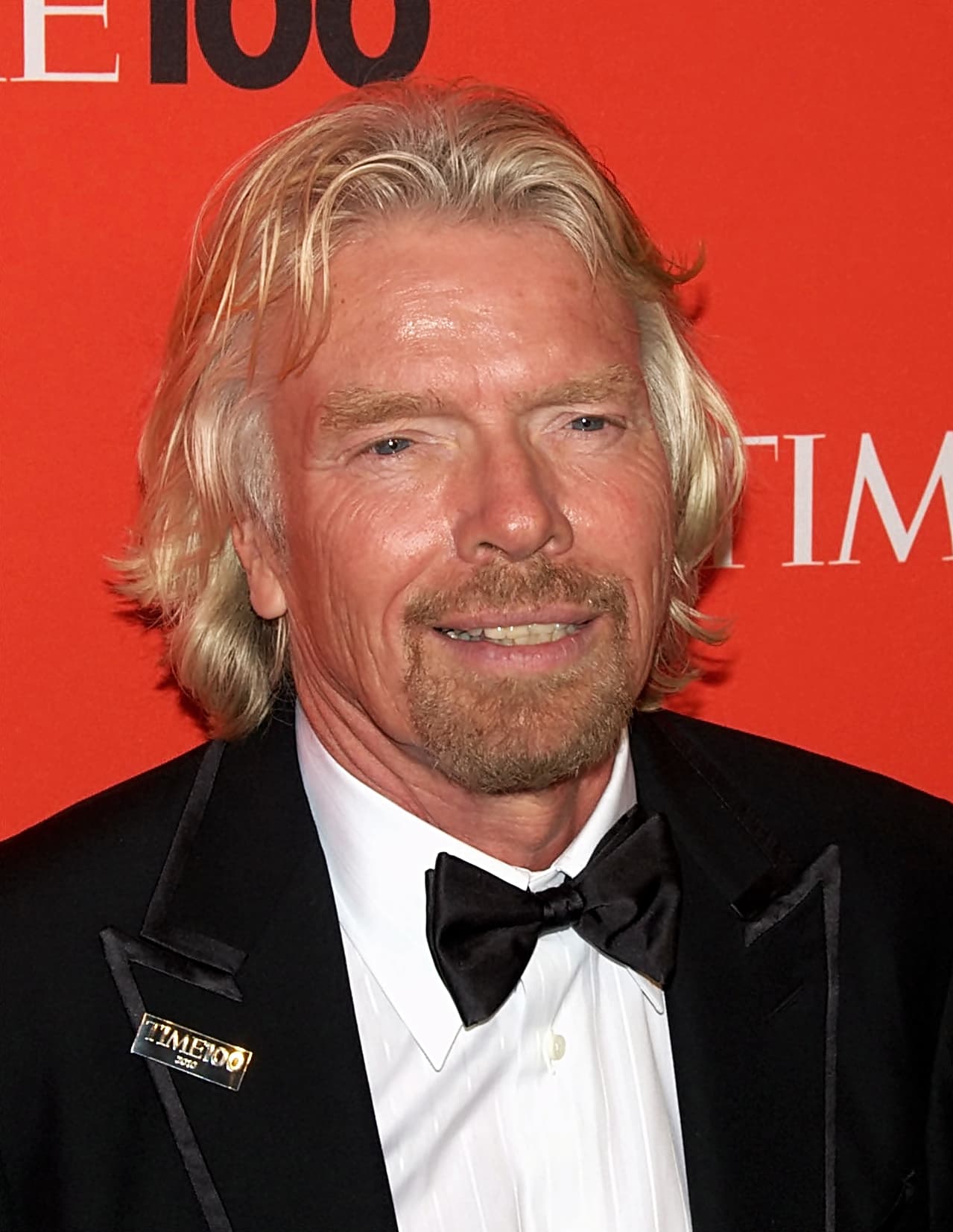
Richard Branson's wealth has never been a simple number. Spread across several hundred Virgin-branded entities, denominated partly in sterling, and anchored to a private-company empire that resists clean quarterly disclosure, the figure shifts depending on who is doing the counting. And when. Quora commentators have pegged it at $4.0B; Reddit threads have ranged from $2.8B to $8.0B; Fortune's 2024 reporting landed at $3.0B. Our analysis, weighting recency and source authority, arrives at $2.9B as of June 2026.
What matters more than the precise digit is the structural story underneath it. Branson's fortune peaked around $8.0B during the pandemic bull market. A moment when special-purpose acquisition vehicles were minting paper billions and every growth-adjacent equity was priced for a future that never arrived. The unwinding of that era cost him roughly half his peak worth. What survived is a leaner, more defensible base: private operating businesses, hard real estate, and a brand that still licenses across hundreds of companies worldwide.
The result is a fortune that belongs in its own category. Not the tech-founder stacking machine of a Zuckerberg or Bezos, not the inherited capital of an aristocratic landowner, but something rarer: a serial-entrepreneur portfolio built on brand use, hospitality, and the audacious deployment of personal celebrity as a business asset. Understanding Branson's $2.9B means understanding how all of those threads pull simultaneously. And occasionally against each other.
Where Branson Ranks Among the World's Entrepreneur-Billionaires
At $2.9B, Branson sits comfortably inside the global billionaire cohort but well below the ultra-wealth tier. A fortune shaped by diversification and brand use rather than a single stacking equity.
At $2.9B, Branson occupies a specific stratum of global wealth: substantial enough to fund private space programs and Caribbean island ownership, modest enough that a single bad year in public markets or aviation can visibly dent the headline figure. Fortune's 2024 reporting noted that his worth had retreated to the same territory it occupied around the year 2000. A striking signal of how much ground the pandemic era's boom-and-bust cycle consumed.
Peer context helps calibrate the number. Among serial entrepreneurial billionaires. Those whose wealth is distributed across operating companies rather than concentrated in one equity. Branson's $2.9B is typical of the upper-middle range. The Elon Musks and Jeff Bezoses of the world compound through single dominant equity stakes; Branson's structure is on purpose the opposite: breadth over concentration, brand over product, lifestyle positioning over pure shareholder return.
That architecture has trade-offs. It limits upside in hypergrowth environments. But it also distributes risk across geographies and sectors in a way that few single-company founders can claim. The $2.9B figure our analysis produces reflects that resilience. A number that has absorbed airline crises, SPAC implosions, and a global pandemic, and still holds above the $2.8B floor that Reddit's most cited recent estimates suggest.
Virgin Group Private Interests: The $1.4 Billion Core That Everything Else Orbits
Private Virgin Group entities. Spanning travel, hospitality, health, and telecoms. Account for roughly half of Branson's total wealth, estimated at approximately $1.4B in our breakdown.
Strip away the public-market noise and what remains is a constellation of privately held Virgin-branded businesses in travel, hospitality, health, and telecoms. These entities, estimated at roughly $1.4B in our breakdown, form the gravitational center of Branson's wealth. They are not easily valued. There are no quarterly earnings calls, no analyst price targets. Which is precisely why published estimates diverge so dramatically across sources.
Virgin Atlantic is the flagship of this private cohort, and its history doubles as a tutorial in use and survival. Branson famously described starting an airline as the fastest way to convert a large fortune into a small one. And the past several years have tested that thesis repeatedly. COVID-19 forced the carrier into a restructuring that diluted Branson's stake and required asset pledges that included Necker Island as collateral at one point. The airline survived, but the equity retained is worth less than it was at the decade's start.
The broader private portfolio. Virgin Hotels, Virgin Voyages, Virgin Active, and assorted telecoms franchises. Represents a different profile: slower-burning, hospitality-driven businesses with steadier cash generation. Virgin Voyages, the cruise line targeting younger premium travelers, has expanded its fleet and represents one of the more credible growth vectors in the private bucket. The collective output of these ventures supports Branson's lifestyle infrastructure and provides the operating cash flow that underwrites his more speculative bets.
Private-company valuations are inherently imprecise, and our $1.4B figure should be read as a central estimate with meaningful error bars on both sides. A sustained aviation recovery in the UK and Caribbean markets would lift this figure; another demand shock would compress it.
“Branson's $2.9 billion is not one fortune but five simultaneously. Each pulling toward a different recovery timeline and a different definition of risk.”
SPAC Wreckage: How Public Equity Stakes Fell to Around $580 Million
Stakes in SPAC-listed companies including Virgin Galactic and others collapsed more than 90% from peak valuations, leaving Branson's publicly listed equity at roughly $580M. A fraction of its 2021 highs.
The most dramatic chapter in Branson's recent wealth history is written in the wreckage of the SPAC era. Between 2020 and 2021, several Virgin-affiliated entities went public through blank-check vehicles at valuations that reflected speculative enthusiasm rather than operating fundamentals. Virgin Galactic was the most prominent. A company that had not yet achieved commercial scale but was briefly valued by markets as though it had.
The subsequent correction was severe. Our analysis places Branson's remaining publicly listed equity. Spanning Virgin Galactic and other listed entities he has held positions in. At approximately $580M, down from figures that would have exceeded several times that at the 2021 peak. That decline alone accounts for a meaningful share of the gap between his $8.0B peak wealth (cited by Fortune in its historical range and by Reddit sources tracking his career high) and the current $2.9B our analysis produces.
The lesson embedded in this decline is structural, not incidental. SPACs rewarded celebrity sponsorship and brand association in ways that later proved unsustainable once interest rates rose and retail investor appetite for pre-revenue space tourism receded. Branson was not uniquely exposed. Dozens of high-profile SPAC sponsors suffered similar losses. But given the scale of his involvement, the impact on his net worth was outsized.
Whether this portion of his wealth recovers depends largely on Virgin Galactic's commercial trajectory and the broader re-rating of space-adjacent equities. As of mid-2026, neither catalyst appears imminent at the scale required to restore prior valuations.
Global Equities: A $435 Million Allocation That Rode the Bull. Then Pulled Back
Branson's diversified global equity holdings, estimated at $435M, surged during the pandemic bull market before partially reversing. Mirroring the broader pattern of his SPAC-era wealth erosion.
Beyond his operating businesses and listed stakes, Branson maintains a portfolio of diversified global equities estimated at approximately $435M in our current breakdown. Bloomberg's reporting has noted a substantial allocation to global equities that expanded significantly during the era of quantitative easing and near-zero interest rates, before partially retreating as monetary conditions tightened from 2022 onward.
This portion of the fortune behaves differently from the private business interests. It is more liquid, more sensitive to macro cycles, and more amenable to rapid repositioning. It also provides a hedge of sorts: when Virgin's operating businesses face sector-specific headwinds (aviation disruption, hospitality slowdowns), a broadly diversified equity book can partially offset the damage.
The $435M figure represents our estimate of the current value after that partial reversion. At the bull market's peak, this allocation would have contributed more substantially to the figures approaching $8.0B that historical sources have cited for Branson's peak wealth. Its current level reflects both the macro environment and what appears to be a more conservative allocation posture following the volatility of the prior three years.
Necker Island and the $290 Million Real Estate Foundation
Branson's real estate holdings, anchored by Necker Island in the British Virgin Islands, contribute an estimated $290M to his net worth. Hard assets that have survived debt pledges and catastrophic weather events.
Hard assets anchor the bottom of Branson's wealth structure in a way that neither equities nor private-company stakes can replicate. Real estate, headlined by Necker Island. His private retreat in the British Virgin Islands. Contributes an estimated $290M to our total, representing roughly ten percent of his overall fortune.
Necker Island's history is as eventful as its owner's. Hurricane Irma destroyed much of the property in 2017; it was subsequently rebuilt at considerable expense. During Virgin Atlantic's COVID-era financial stress, the island reportedly entered discussions as potential loan collateral. An illustration of how tightly Branson's personal and business finances are interwoven. That it remains in his possession is itself a statement about the resilience of his balance sheet.
Beyond Necker, Branson holds property interests across multiple jurisdictions, reflecting a intentional strategy of maintaining real assets that are insulated from the market sentiment swings that can devastate publicly listed equity values overnight. Real estate does not rerate on a Tuesday morning because of a macro data print. For a billionaire whose liquid wealth has proven volatile, that characteristic has genuine portfolio value.
Brand Licensing and Media: The $145 Million Royalty Stream Most Analysts Undercount
The Virgin brand, licensed across hundreds of companies globally, generates an estimated $145M in licensing and royalty-equivalent wealth. A passive income layer that most net-worth estimates fail to model accurately.
The Virgin brand may be Branson's most underappreciated wealth asset. Spanning healthcare, fitness, telecoms, aviation, hospitality, and consumer products, it licenses across hundreds of companies in dozens of countries, generating royalty and fee income that accrues whether or not Branson is actively running anything. Our analysis attributes approximately $145M in wealth-equivalent value to this stream. Modest relative to the private business interests, but notable for its passivity and durability.
Brand licensing is an unusual wealth vehicle in that its value is largely a function of perception. The Virgin name trades on associations with irreverence, adventure, and quality. Attributes that Branson has cultivated through decades of personal publicity stunts, record-breaking balloon and boat crossings, and, latterly, his own trip to the edge of space. Each of those episodes renewed the brand's cultural currency and, by extension, its licensing power.
The risk to this stream is reputational rather than operational. A sustained period of Virgin-branded business failures. Particularly in consumer-facing categories. Could erode the licensing premium that underpins these royalty flows. So far, despite high-profile stumbles in individual ventures, the brand has retained sufficient equity that new licensing agreements continue to be signed.
Capital Allocation Strategy: Why Branson Keeps Betting on Businesses Most Founders Avoid
Branson step by step targets capital-intensive, consumer-facing sectors with high brand use. A strategy that maximizes publicity and licensing value while accepting elevated operational risk.
Branson's capital allocation decisions follow a pattern that is internally coherent even when individual outcomes are not. He targets sectors. Aviation, space, cruise, health. That are capital-intensive, operationally complex, and deeply unfashionable with conventional venture capital. The logic is that in those sectors, brand differentiation and consumer trust are scarce, which means a well-positioned operator can extract premium margins that more commoditized markets would not support.
The corollary is that failures are expensive and visible. When Virgin Galactic underperforms or Virgin Australia needs restructuring, the losses are real and the headlines are unflattering. Branson's approach treats those losses as partially offset by the brand publicity generated. A calculation that works over a portfolio of dozens of ventures even if it fails in any given individual case.
His reinvestment behavior also reflects a preference for greenfield bets over acquisitions. Rather than buying existing businesses at established multiples, Branson has historically preferred to seed new ventures under the Virgin umbrella, limiting acquisition premiums while maintaining brand control. This approach compresses near-term returns but preserves the option value of future licensing upside if any of those ventures achieve scale.
The Wealth Trajectory: Can Branson Rebuild Toward $3B+ and Beyond?
From a $2.9B base, Branson's wealth trajectory depends on Virgin Atlantic's sustained recovery, Virgin Voyages' growth, and a potential re-rating of space-sector equities. None of which is guaranteed on any near-term horizon.
The path from $2.9B back toward the $3.0B that Fortune noted as the rough threshold Branson occupied in 2024. And well beyond it toward the $4.0B that Quora sources have cited as a prior consensus. Runs through a handful of specific catalysts. Chief among them is Virgin Atlantic's sustained commercial recovery in a transatlantic market that has proven more resilient than expected post-pandemic but remains sensitive to fuel costs, currency movements, and geopolitical disruption.
Virgin Voyages represents the most credible growth variable in the private business bucket. Premium cruise demand has proven built that way solid among younger affluent travelers, and the brand positioning Branson has cultivated. Experiential, music-forward, adults-only. Is differentiated enough to sustain pricing power. If the fleet expansion planned for the mid-2020s delivers on occupancy targets, this could meaningfully lift the private portfolio valuation over the next three to five years.
The wildcard remains the space sector. Virgin Galactic's commercial viability is still unproven at scale, and the broader market for sub-orbital tourism has not yet achieved the demand density required to justify current infrastructure investments. A genuine commercial breakthrough. Multiple flights per month at sustainable price points. Would trigger an equity re-rating that could add hundreds of millions to the publicly listed portfolio. The probability of that outcome arriving before 2028 remains uncertain.
Our base case holds $2.9B as the defensible floor, supported by the private businesses, real estate, and licensing income. The upside scenario. Sustained aviation recovery, Voyages growth, and partial SPAC rehabilitation. Could push the figure toward the $3.0B range cited by Fortune within two to three years. The downside scenario, anchored by another macro shock or aviation disruption, compresses back toward the $2.8B floor that Reddit's most bearish-but-credible estimates have suggested.
How the $2.9B adds up
- Virgin Group private business interestsThe bulk of Branson's wealth is tied up in privately held Virgin Group entities spanning travel, hospitality, health, and telecoms ventures globally.$1.4B50%
- Publicly listed company equity (Virgin Galactic, 23andMe, Grove Collaborative)Branson held significant stakes in SPAC-listed companies that suffered 90%+ value declines post-pandemic, dramatically eroding this portion of his wealth.$580M20%
- Global stock market investmentsBloomberg reported approximately $2 billion tied to global equities, which ballooned during the pandemic bull market before partially reversing.$435M15%
- Real estate and island assets (e.g., Necker Island)Branson owns significant real estate including Necker Island in the British Virgin Islands, which represents a tangible hard-asset component of his wealth.$290M10%
- Brand licensing and mediaThe Virgin brand has been licensed across hundreds of companies worldwide, generating royalty and licensing income as a supplemental wealth source.$145M5%
Ezra Linwood — Ezra Linwood covers entrepreneur wealth, private-company valuations, and the business of personal branding for Neon Hollywood.
Disclaimer: Net-worth figures are editorial estimates built from publicly available reporting, filings, and market data — see our methodology. They are not verified statements of any person’s finances and nothing here is financial advice.