Ralph Lauren Net Worth: $11.9B and the Architecture of an American Fortune
From a Bronx childhood and a necktie start-up to a publicly traded empire spanning six continents, Lauren's fortune is one of fashion's most durable capital stories.
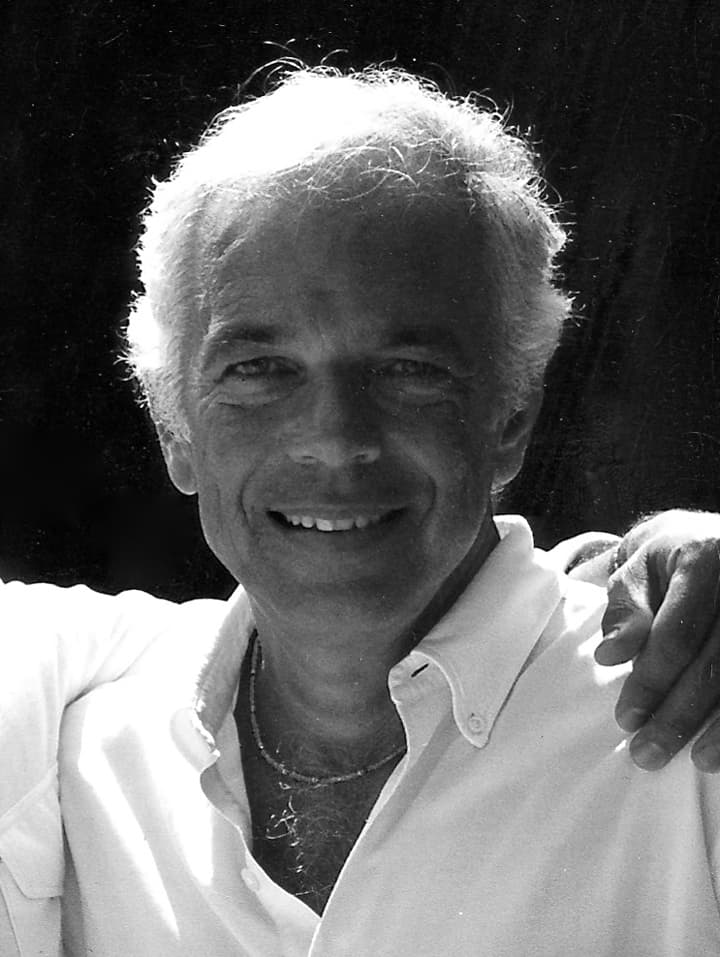
Ralph Lauren built a fortune the slow way. Not through a single buyout or a viral moment, but through sixty years of stacking equity in a brand he refused to relinquish. The result is a wealth figure that looks different depending on who is measuring it and when. Celebrity Net Worth has placed him at $8.0B; Bloomberg's Billionaires Index, drawing on a more expansive treatment of his equity position, has run as high as $18.3B; Wikipedia's aggregated figure settles at $11.9B. Our own analysis, weighted for recency, methodology rigor, and the corporation's publicly reported market capitalization, arrives at $11.9B as of June 2026. A figure that sits comfortably between the most conservative and most aggressive reads.
That number tells a specific kind of story. Lauren's wealth is not the product of a diversified holding company or a late-stage venture windfall. It is almost entirely a function of one asset: his founding equity stake in Ralph Lauren Corporation, a publicly traded luxury and lifestyle group whose market capitalization has hovered in the neighborhood of $24.2B. Everything else. Real estate, alternative assets, accumulated compensation and dividends. Orbits that gravitational center. Understanding the fortune means understanding the corporation.
What makes the Lauren case analytically interesting is the tension between concentration and durability. Most fortunes this size carry meaningful diversification. Lauren's does not, by conventional standards. Yet the brand's multigenerational resonance and the company's consistent earnings trajectory. Ralph Lauren Corporation beat analyst EPS expectations in each quarter of fiscal year 2026. Suggest the concentration risk is partially offset by the franchise's unusual staying power.
How Lauren's fortune ranks among fashion's wealthiest founders
At $11.9B, Ralph Lauren ranks among the top tier of fashion-world billionaires globally, trailing only a handful of European luxury conglomerate heirs and founders while comfortably ahead of most American designer-entrepreneurs.
Fashion billionaires tend to cluster around two archetypes: the conglomerate builder who rolls up dozens of houses under a single holding structure, and the single-brand founder who bets everything on one identity. Lauren belongs emphatically to the second camp. That decision carries trade-offs. But the scale of what he built from a single label puts him in genuinely rare company.
Celebrity Net Worth has published estimates for Lauren ranging between $6.0B and $8.0B across different reporting periods, figures that appear to apply a conservative discount to his equity stake or lag the market's rerating of Ralph Lauren Corp. Stock. Bloomberg's methodology, which accounts for the full market value of his shareholding without haircuts, has placed him as high as $18.3B. A figure that likely reflects a peak valuation window. Our $11.9B estimate threads those extremes, applying a modest liquidity discount to his concentrated position while crediting the portfolio's other components at fair market value.
Among American designer-founders specifically, Lauren's accumulated wealth has no close peer. The nearest comparisons. Calvin Klein and Donna Karan sold their labels decades ago and captured their wealth in exit proceeds rather than ongoing equity appreciation. Lauren kept his stake. That decision, sustained across bull and bear markets alike, is the single most consequential financial choice of his career.
The equity engine: how a ~33% stake in a $24B company anchors everything
Lauren's roughly 33% founding equity stake in Ralph Lauren Corporation, a company with a market cap near $24.2B, accounts for approximately $8.9B of his estimated net worth. The dominant driver by a wide margin.
Ralph Lauren Corporation trades on the New York Stock Exchange under the ticker RL. Its market capitalization, which has traded in a range reflecting both the strength of its direct-to-consumer business and the ambient uncertainty in global luxury spending, stood near $24.2B at Macrotrends' most recent reporting point in mid-2026. Lauren's founding ownership concentration. Approximately one-third of the company. Translates that market cap into an individual equity position worth roughly $8.9B on our analysis, or as much as the Bloomberg figure implies when no liquidity discount is applied.
The corporation has delivered consistent operating performance to underpin that valuation. In its fiscal fourth quarter of 2026, the company reported earnings per share of $2.80 against analyst expectations of $2.54. A beat of roughly ten percent. Full-year fiscal 2026 revenue grew fifteen percent on a reported basis and twelve percent in constant currency. Global direct-to-consumer comparable store sales climbed meaningfully across both physical and digital channels, giving management enough confidence to issue an initial outlook for fiscal 2027.
Concentration in a single public equity creates volatility exposure that a more diversified billionaire wouldn't face. But Lauren's stake is not easily reduced. Large insider sales move the stock, trigger disclosure requirements, and send signals the market rarely rewards. His long-term approach has been to hold, draw dividends, and allow the stacking of retained corporate earnings to lift his net worth passively. That discipline has worked. Macrotrends' earlier data point showed his implied stake worth approximately $8.1B; the more current reading approaches $24.2B at the full market cap level, illustrating how materially the valuation has moved across reporting windows.
The company's earnings momentum heading into fiscal 2027. Analysts are projecting EPS of $4.27 for the first quarter of that year. Provides a near-term tailwind. Barron's noted after the Q3 2026 earnings release that while the print itself was strong, investors wanted management to raise revenue guidance even more aggressively, which caused the stock to slip despite the beat. That dynamic. Strong fundamentals, impatient capital markets. Captures the tension that perpetually surrounds Lauren's net worth calculation.
“Lauren's defining financial move was not building the brand. It was never selling it. Sixty years of equity retention turned one necktie label into an $11.9B personal fortune.”
Decades of compensation, dividends, and selective equity sales
Accumulated executive pay, regular dividends on his large share position, and periodic equity sales have added an estimated $1.4B to Lauren's lifetime wealth. A secondary but substantial stream built across more than five decades.
Lauren served as chief executive of the corporation he founded for decades before transitioning to the executive chairman role. Those years generated compensation packages that, individually, might seem modest relative to his equity wealth. But compounded across half a century, they represent a meaningful secondary accumulation. Our analysis attributes approximately $1.4B to this category, encompassing salary, bonus structures, long-term incentive awards, and the dividend income generated by holding a roughly one-third stake through years when the company paid consistent quarterly distributions.
Periodic equity sales have also contributed. Lauren has from time to time trimmed his position. Always within the limits that preserve his controlling shareholder status. Monetizing a portion of his paper wealth into liquid assets that can be deployed into real estate, alternative investments, or simply held as cash. The exact timing and scale of those transactions shape the spread between the lower Celebrity Net Worth estimates and the higher Bloomberg reading: depending on which share sales are included and at what price, the lifetime proceeds figure changes considerably.
Dividend income is easy to underestimate as a wealth driver. A one-third stake in a company that pays regular quarterly dividends produces substantial annual cash flows without requiring Lauren to sell a single share. Over time, that stream has funded lifestyle expenditures and investment activity while leaving his principal ownership position intact. A classic founder's capital allocation strategy.
Real estate: the portfolio behind the portfolio
Lauren's real estate holdings. Spanning properties in New York, Colorado, and Jamaica. Contribute an estimated $833M to his total wealth, representing a meaningful but secondary store of value outside his corporate equity.
Wealthy founders often convert paper gains into real assets as a hedge against equity concentration. Lauren has done exactly that, assembling a real estate portfolio that our analysis values at approximately $833M. The holdings span multiple geographies: Manhattan, which provides proximity to his corporate headquarters and flagship retail; Colorado, whose ranch properties reflect both personal taste and significant land value; and Jamaica, where a private estate represents the leisure-capital intersection that characterizes ultra-high-net-worth real estate strategy.
Ranch properties in the American West have appreciated sharply over the past decade, driven by a combination of remote-work demand, trophy-land scarcity, and the broader inflation in experiential assets. Lauren's Colorado holdings benefited from that trend. At the same time, New York residential and commercial real estate has navigated a more volatile cycle, with a partial recovery in luxury property following the pandemic-era dislocation. The net effect for a portfolio of Lauren's geographic composition has been broadly positive.
It is worth noting that $833M in real estate, while substantial in absolute terms, represents less than eight percent of our total estimate. This is not a real estate fortune layered on top of a fashion career. It is a sensible asset allocation by someone whose primary wealth vehicle remains overwhelmingly a single equity stake.
Licensing, royalties, and the brand's commercial footprint
Licensing deals across fragrances, home goods, and accessories generate royalty streams that flow back to Lauren as a major shareholder and brand steward, contributing an estimated $476M to his overall wealth picture.
Ralph Lauren Corporation's business model has always included a licensing dimension. Arrangements under which the company's intellectual property travels into product categories managed by third-party partners. Fragrances, home furnishings, and selected accessories categories have historically operated under licensing structures that generate royalty income. Our analysis attributes roughly $476M to this wealth category, treating it as both accumulated royalty receipts and the capitalized value of ongoing licensing relationships.
The licensing business is strategically significant beyond its direct financial contribution. It extends the brand's reach into price points and product categories that the company's owned-and-operated business might not efficiently serve, keeping the Ralph Lauren name present in department stores, specialty retailers, and e-commerce channels where a purely direct-to-consumer model would leave gaps. For Lauren personally, the royalty streams represent cash flow that accrues regardless of near-term swings in the stock price.
As the company has shifted strategic emphasis toward its higher-margin direct-to-consumer channels. The fiscal 2026 results showed particularly strong comparable store sales growth across both physical and digital touchpoints. The licensing mix has evolved. Some categories previously held at arm's length have been brought back under the corporate umbrella, which changes the royalty profile but increases the operating use of Lauren's equity stake. The net financial effect on his personal wealth is captured in the equity valuation rather than the licensing line.
The automobile collection and alternative assets: passion with a price tag
Lauren's renowned private automobile collection and other alternative assets account for an estimated $238M. A small percentage of his total wealth, but representing one of the most valuable privately held car collections in the world.
Among collectors, Lauren's automobile holdings occupy a category of their own. The collection spans decades of automotive history, with a particular emphasis on pre-war European grand tourers, postwar American muscle, and mid-century racing machines whose scarcity and condition command prices that regularly set auction records. Our analysis values the collection and associated alternative assets at approximately $238M. A figure that sounds large in isolation but represents barely two percent of the total estate.
Alternative assets are both the most difficult wealth category to value and the most interesting to observe. Unlike public equity, there is no daily mark-to-market. Automobiles of the caliber Lauren owns appreciate in line with the broader collectibles market, which has historically tracked, and at times outpaced, traditional asset classes during periods of low interest rates and high liquidity. As that environment has shifted, some collectors have seen valuations moderate; Lauren's collection, by virtue of its depth and provenance, is less exposed to that repricing than more recently assembled holdings.
The collection also functions as a form of brand advertisement. A physical manifestation of the aesthetic values the Ralph Lauren label projects. It is not incidental that Lauren's cars, frequently exhibited and documented, reinforce the aspirational heritage positioning that his fashion business sells. That brand alignment between personal passion and commercial identity is one of the subtler use points in his overall wealth strategy.
How Lauren has allocated capital across decades of wealth accumulation
Lauren's capital strategy is defined by equity retention, selective real estate accumulation, and the use of alternative assets as both inflation hedges and brand-aligned stores of value. A coherent framework built over six decades.
The financial biography of Ralph Lauren is, at its core, a study in patience. Where many founders exit. Selling to a conglomerate, taking a private equity recap, or distributing equity broadly enough to dilute their position. Lauren has consistently chosen retention. That choice has its costs: concentration risk, reduced liquidity, and a net worth that moves dramatically with a single stock. But across the specific arc of Ralph Lauren Corporation's history, retention has produced returns that an exit strategy almost certainly could not have matched.
Real estate and alternative assets serve a dual purpose in his allocation: they provide genuine diversification away from the equity position while remaining thematically coherent with the brand's visual language of American aspiration and European craftsmanship. A Colorado ranch, a Jamaica estate, and a garage of vintage motorcars are not arbitrary asset choices for someone whose commercial identity rests on projecting a particular image of the good life. Form and function coincide.
Dividend income, compensation, and periodic equity sales have funded the alternative and real estate holdings without requiring Lauren to make large-scale disposals of his core corporate stake. That three-stream capital structure. Equity appreciation plus cash yield plus episodic liquidity. Is elegant in its self-sufficiency. It allows him to fund consumption, philanthropic activity, and investment simultaneously without disturbing the asset that generates most of his wealth.
What could move the number. In either direction. From here
Ralph Lauren's $11.9B net worth is acutely sensitive to the performance of Ralph Lauren Corporation's stock; a sustained rally could push the figure toward $18B, while a prolonged market de-rating would compress it toward the $8B range seen in earlier estimates.
The asymmetry of Lauren's wealth structure means that the upside and downside scenarios are not symmetric in their mechanisms but are very nearly symmetric in their magnitude. If Ralph Lauren Corporation sustains its fiscal 2026 momentum. Revenue growing at double digits, EPS consistently beating expectations, and the direct-to-consumer channel continuing to expand margins. The stock's multiple could expand, pushing the total market cap well above the $24.2B level and lifting Lauren's stake toward the range Bloomberg's higher estimates imply. A move of that scale would bring our $11.9B figure closer to $18.3B.
The downside scenario runs through the same single variable. A luxury goods cycle downturn, a significant misstep in the brand's positioning, or a broader equity market de-rating of consumer discretionary stocks would compress the market cap and with it Lauren's paper wealth. The Macrotrends data point of $8.1B and Celebrity Net Worth's persistent $8.0B figure represent what that compression looks like. They likely capture periods or methodologies in which the equity stake was valued more conservatively.
Beyond market dynamics, the structural question for the long-term trajectory of the fortune is succession. Lauren is in his mid-eighties. How the corporation manages the eventual transition of his executive chairmanship. And how markets price that change. Will be among the most significant determinants of whether the family's equity wealth holds, grows, or contracts in the decade ahead. The brand has demonstrated extraordinary longevity without him needing to reinvent it; the question is whether the institutions, aesthetic codes, and leadership pipelines he has built are durable enough to maintain that momentum independently. The fiscal 2026 results suggest the operational foundation is strong. The harder variable to price is irreplaceable founder mystique.
How the $11.9B adds up
- Ralph Lauren Corp. equity stake (~33% ownership)Lauren's dominant wealth driver is his large founding equity stake in Ralph Lauren Corporation, a publicly traded company with a ~$24B market cap; his ~33% share translates to roughly $8B in stock value at conservative estimates and higher on Bloomberg's methodology.$8.9B75%
- Executive compensation, dividends & historic share salesOver decades as CEO and continuing as executive chairman, Lauren has accumulated substantial compensation packages, regular dividends on his large share holdings, and proceeds from periodic equity sales.$1.4B12%
- Real estate holdingsLauren is known to hold a significant real estate portfolio including properties in New York, Colorado, and Jamaica, which contribute meaningfully to his overall net worth.$833M7%
- Licensing & brand royaltiesRalph Lauren Corp. operates a broad licensing business across fragrances, home furnishings, and accessories, generating royalty streams that flow partially back to Lauren as a major shareholder and brand steward.$476M4%
- Automobile collection & alternative assetsLauren owns one of the world's most valuable private automobile collections, along with other alternative assets, representing a smaller but notable component of his total wealth.$238M2%
Ezra Linwood — Ezra Linwood covers billionaire wealth architecture, luxury brand equity, and the intersection of creative identity and capital markets for Neon Hollywood.
Disclaimer: Net-worth figures are editorial estimates built from publicly available reporting, filings, and market data — see our methodology. They are not verified statements of any person’s finances and nothing here is financial advice.