Giorgio Armani Net Worth: A $12.1B Empire Built in Plain Sight
Born in postwar Piacenza with no formal design training, Armani died in September 2025 having built one of fashion's last true privately held fortunes. A structure that made his wealth both extraordinary and impossible to replicate.
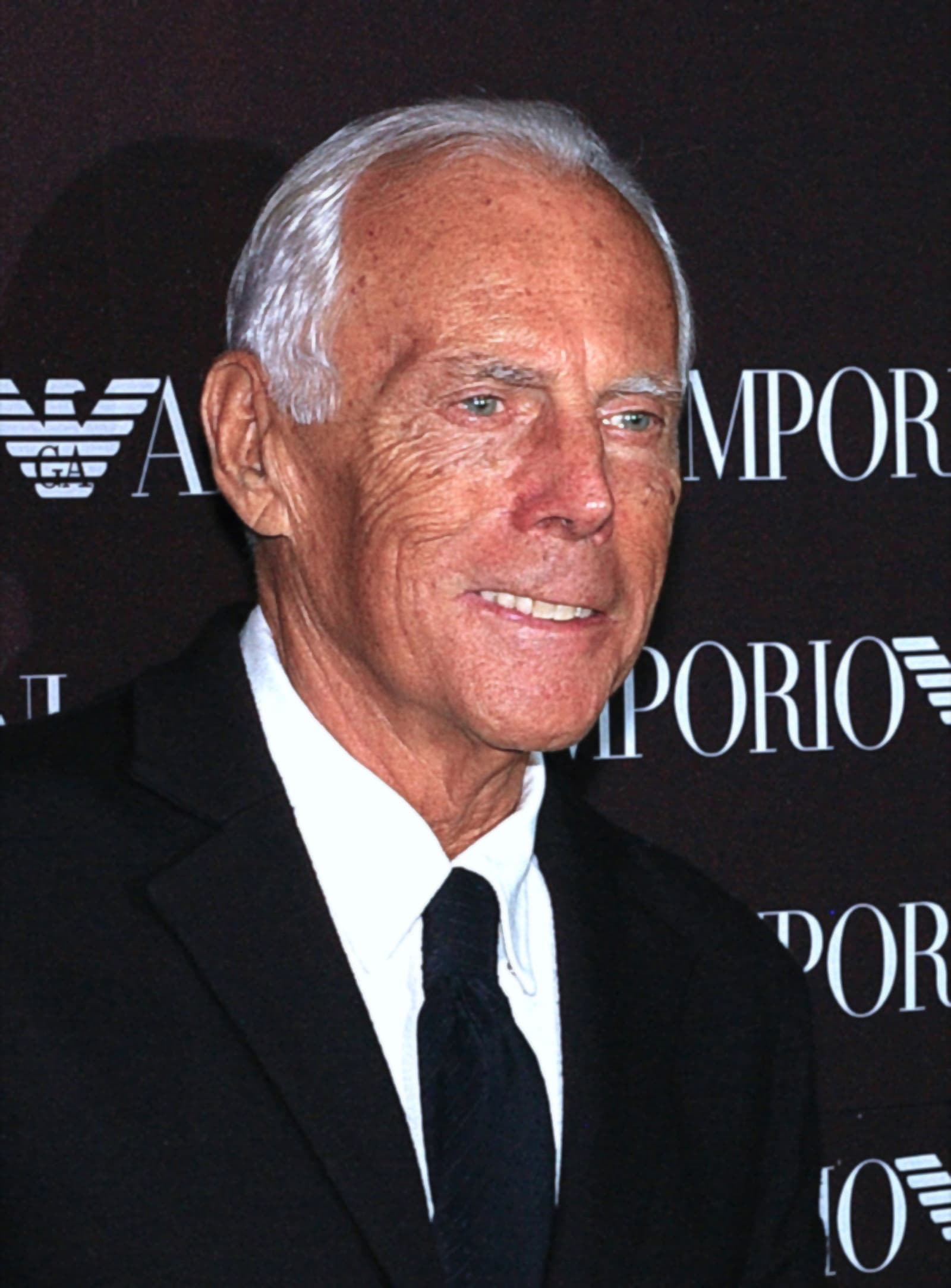
Giorgio Armani spent half a century proving that the most durable luxury strategy is refusal. He refused venture capital. He refused an IPO. He refused to license the label's soul away to a conglomerate. By the time he died on September 4, 2025, at 91, those refusals had compounded into a fortune that ranks among the largest ever accumulated by a single designer working under his own name.
The figure itself requires careful triangulation. Forbes and Newsweek independently converged on $12.1 billion in the weeks surrounding his death. Celebrity Net Worth placed the number closer to $9.5 billion. A gap that likely reflects different treatment of private-company valuation multiples. SuperYachtFan settled on a round $12 billion. Our analysis, weighting recency and methodological transparency, arrives at $12.1 billion as of June 2026, treating the Forbes and Newsweek figures as the most robustly sourced and most recent.
What is less discussed is the architecture of that number. This is not a fortune built on a single blockbuster product or a well-timed IPO exit. It is the accumulated equity value of a privately held operating company. Giorgio Armani S.p.A.. Amplified by decades of brand licensing, beauty royalties, and a hospitality pivot that embedded the Armani name inside the world's most recognizable skyscraper. Unpacking those layers is the only honest way to read the $12.1 billion.
How Armani's $12.1B Ranks Against Fashion's Wealthiest Designers
At $12.1B, Giorgio Armani's fortune placed him among fashion's wealthiest self-made designers globally, well ahead of peers like Ralph Lauren and far behind only the conglomerate-owning Arnault dynasty.
The fashion billionaire class divides cleanly into two types: those who built empires and sold them into holding companies, and those who never sold at all. Armani belonged to the second, rarer category. By holding Giorgio Armani S.p.A. Entirely in private hands until his death, he retained 100% of the equity upside across fifty years of brand appreciation. A stacking dynamic that most designers foreclose the moment they accept outside capital.
Ralph Lauren, the most comparable American analog, built a comparable legacy brand but took his company public in 1997, capping his personal ownership stake. Valentino Garavani sold his house to a Qatari investment fund. Domenico Dolce and Stefano Gabbana kept their brand private but operate at a smaller revenue scale. Armani's combination of full ownership and global scale is essentially without precedent in European luxury fashion.
Celebrity Net Worth's $9.5 billion estimate. Lower than Forbes's $12.1 billion by roughly a quarter. Reflects the genuine difficulty of valuing a company with no public float, no disclosed EBITDA, and no comparable transaction for reference. Our analysis treats the $12.1 billion as the more credible ceiling, not because we dismiss the lower figure, but because private luxury companies at Armani's revenue scale have consistently commanded premium multiples in the handful of comparable deals that have closed.
The Core Fashion House: Where the Bulk of the $8.5B in Equity Lives
Giorgio Armani S.p.A.. Spanning mainline, Emporio Armani, A|X Armani Exchange, and licensed eyewear. Accounts for roughly 70% of his fortune, or approximately $8.5B in estimated equity value.
The fashion operation is not one brand but a on purpose tiered system of four distinct labels, each targeting a different income demographic. The mainline Giorgio Armani sits at the apex. Bespoke suits, couture-adjacent eveningwear, the kind of garment that appears in museum retrospectives. Emporio Armani addresses the aspirational middle, where volume actually lives. A|X Armani Exchange reaches the entry-level consumer. Each tier cross-subsidizes the next, and the mainline's prestige gives the diffusion lines permission to charge prices they could not otherwise sustain.
The eyewear licensing agreement with Luxottica. The Italian optical giant behind Ray-Ban and a dozen other premium frames. Contributes an estimated $800 million in royalty-weighted value to the overall company. Licensing is built that way superior to manufacturing: Armani collected the brand premium without owning factories, managing inventory risk, or carrying the capital expenditure that optical production requires.
Annual revenues for the group were reported in the range of $2.7 billion at the time of his death, with some earlier-period sources citing figures closer to $1.6 billion. A spread that reflects both genuine growth and different accounting perimeters. The company privately held its books, so published revenue figures derive from Italian mandatory filings for S.p.A. Entities, which are real but narrowly defined. Regardless of which revenue figure one anchors to, the equity value our analysis assigns. Roughly $8.5 billion. Is consistent with valuation multiples applied to other tightly controlled European luxury operating companies.
“Armani's greatest financial achievement was not building a $12.1 billion business. It was refusing, for fifty years, to let anyone else own a piece of it.”
Beauty and Fragrance: The $1.2B Royalty Machine Nobody Talks About
Armani's beauty and fragrance portfolio, licensed through L'Oréal, contributes an estimated $1.2B in wealth. A royalty-based model that generates income with minimal operating overhead for the Armani group itself.
The arrangement with L'Oréal is a masterclass in brand use. Armani does not manufacture Acqua di Giò or the Armani Beauty foundation line. L'Oréal does. Handling formulation, production, distribution, and retail relationships across more than 150 markets. Armani collected the royalty, the brand equity appreciation, and none of the supply-chain headaches.
Fragrance is built that way one of the highest-margin segments in luxury goods precisely because the physical product. A bottle of scent. Costs a fraction of its retail price to produce. The majority of what a consumer pays is brand premium, which accrues disproportionately to the licensor. For Armani, that meant the beauty segment consistently punched above its revenue weight in terms of net contribution to his personal wealth.
Our analysis assigns approximately $1.2 billion. Roughly 10% of the total estate. To this segment. That figure reflects both the royalty stream's present value and the brand equity embedded in the beauty line's market position, which L'Oréal's own reporting has historically described as one of the most productive designer licensing partnerships in its portfolio.
Armani Hotels and Hospitality: Putting the Name Inside the Burj Khalifa
The Armani hospitality portfolio. Anchored by the Armani Hotel Dubai inside the Burj Khalifa. Represents an estimated $1.2B, or 10% of total wealth, built on brand licensing rather than property ownership.
The Armani Hotel Dubai, which occupies the lower floors of the Burj Khalifa, is the most vivid expression of what the brand became under Armani's stewardship: not merely clothing, but an entire sensory environment. Guests sleep in rooms where the linen thread count, the ambient lighting temperature, and the bathroom fixtures were all specified to Armani's aesthetic standards. The hotel does not belong to Armani. The structure is owned by Emaar Properties. But the Armani name commands a licensing fee and a management premium that flows back to the group.
This model, replicated at additional Armani Hotel locations, mirrors the logic of the fashion licensing playbook: deploy the brand, not the balance sheet. Armani captured the luxury hospitality margin without assuming real-estate development risk or the capital-intensive process of building and maintaining physical properties. The result is a revenue stream that scales with brand strength rather than with construction budgets.
Our analysis allocates approximately $1.2 billion to hospitality and associated real estate holdings. The same percentage weight as beauty, reflecting similar royalty-based mechanics. What differentiates the hospitality segment is its visibility: an Armani Hotel is a three-dimensional advertisement that reinforces the brand's positioning with consumers who may never buy a suit but who will remember the experience for decades.
Beyond Fashion: Books, Chocolate, and the Long Tail of Lifestyle Licensing
Armani's ventures into lifestyle categories. Books, chocolate, home décor, and media. Account for roughly $363M, or 3% of estimated wealth, a small but strategically coherent extension of the core brand.
Armani Dolci. The chocolate and confectionery line. Is the kind of category extension that invites skepticism until you consider the strategic logic. Luxury chocolate sold in Armani-branded packaging, available at Armani retail locations, functions less as a food product than as an accessible entry point to the brand world. A consumer who cannot afford a suit can purchase a bar of Armani chocolate. The brand impression is the product.
The home décor line operates on similar principles, extending the Armani aesthetic into furniture, lighting, and objects. The publishing output. Including a significant autobiography. Added a narrative layer to the brand story that no advertising campaign could replicate as efficiently. Each of these categories contributes modest revenue individually; collectively, they reinforce the brand's omnipresence in the luxury lifestyle register.
Our analysis assigns approximately $363 million. 3% of total estimated wealth. To this diversified lifestyle segment. The figure is on purpose conservative: these ventures are brand amplifiers as much as revenue generators, and their primary financial contribution is the halo effect they extend to the core fashion and beauty businesses.
Capital Allocation: How Armani Reinvested Fifty Years of Cash Flow
Armani consistently reinvested profits into brand infrastructure. Retail expansion, design studios, and hospitality. Rather than financial markets, making the company itself the primary vehicle for wealth accumulation.
Armani was not known as an allocator of capital in the hedge-fund sense. He did not build a family office with a diversified portfolio of public equities and alternative assets. His capital allocation was entirely brand-centric: profits from the fashion house funded the next tier of brand extension, whether that was the first Armani Hotel or the expansion of the Emporio Armani network into Asian markets where aspirational luxury demand was accelerating.
That concentration created both the fortune and its principal risk. A company valued entirely on its founder's singular aesthetic identity carries succession risk that no financial engineering fully resolves. The question of who leads the creative direction after Armani. And whether the brand's pricing power survives the transition. Is the dominant variable in any forward projection of the estate's value.
The fashion house's statement at the time of his death pledged continuity, describing the commitment of employees and family associates to carry the company forward. Continuity statements from luxury houses are common; the structural challenge they face is less common. Armani's brand equity was inseparable from the man in a way that, say, a consumer goods conglomerate's brand portfolio is not. That is not a weakness, exactly, but it is a post-mortem variable that any honest assessment of the estate's forward value must price in.
Succession and Contested Estimates: Why the Range Spans $9.5B to $12.1B
The spread between the $9.5B Celebrity Net Worth estimate and Forbes's $12.1B figure reflects genuine uncertainty about private-company valuation multiples. Not factual dispute about the underlying business.
Forbes and Newsweek's $12.1 billion figure and Celebrity Net Worth's $9.5 billion are not in conflict about the facts of Armani's business. They disagree about what a controlling interest in a privately held luxury company of this scale is worth. Forbes applies a higher revenue multiple; Celebrity Net Worth applies a more conservative one. Both approaches are defensible, which is why we present the full range rather than pretending to a false precision.
Newsweek also cited a $2.7 billion figure in certain contexts. A number that corresponds closely to the company's reported annual revenue rather than its equity valuation. That conflation between revenue and net worth is common in general-interest financial reporting and should be read as a description of the business's scale, not the founder's wealth. Revenue and enterprise value are related but not interchangeable.
Our own estimate of $12.1 billion as of June 2026 treats the question of succession as a known uncertainty embedded in the valuation rather than a reason to downgrade the figure. The brand is intact. The product lines are active. The licensing agreements with L'Oréal and Luxottica continue. Until there is evidence of brand erosion or a below-market transaction that reprices the equity, the higher figure remains the more defensible anchor.
Where the Fortune Goes From Here: Trajectory After the Founder's Death
The estate's $12.1B valuation is most likely to hold or modestly decline in the near term, with the key variable being whether creative leadership can sustain the brand's pricing power without Armani's singular authorship.
Luxury brand equity does not evaporate on the founder's death. Chanel, Givenchy, and Yves Saint Laurent all survived their creators and, in some cases, grew more valuable under institutional stewardship. The question for the Armani estate is whether the brand's identity, so thoroughly constructed around a single person's aesthetic sensibility, can transfer its authority to a new creative regime without the pricing power eroding at the margin.
The licensing architecture is the estate's most durable asset. Royalty agreements with L'Oréal and Luxottica do not require Armani to be alive to generate income; they require the brand to remain relevant. As long as Armani Beauty performs at retail and the eyewear line maintains distribution, those income streams persist largely independently of who runs the design studio in Milan.
The hospitality segment is similarly insulated from creative succession risk. An Armani Hotel guest is purchasing a physical environment that was designed and fixed; the experience does not change with leadership transitions the way a seasonal collection does. Our view is that the estate's value is most vulnerable in the mainline fashion category. Where seasonal creative decisions directly affect pricing power. And most stable in licensing and hospitality. Over a five-year horizon, absent a disruptive transaction or a significant brand misstep, we would expect the total figure to remain within the $9.5 billion to $12.1 billion range established by the pre-death estimates, with downward pressure from creative uncertainty offset by the stacking value of the licensing portfolio.
How the $12.1B adds up
- Giorgio Armani S.p.A. fashion empire (clothing, accessories, eyewear)The core fashion house — including mainline, Emporio Armani, A|X, and licensed eyewear with Luxottica (~$800M stake) — represents the overwhelming majority of his wealth, with the business generating $1.6–2.7B annually.$8.5B70%
- Perfumes, cosmetics & beauty licensingArmani Beauty and fragrance lines (licensed through L'Oréal) are a major revenue stream within the broader brand portfolio.$1.2B10%
- Hospitality & real estate (Armani Hotels, restaurants)Armani licensed his brand into luxury hotels including the Armani Hotel Dubai inside the Burj Khalifa, diversifying income into the hospitality sector.$1.2B10%
- Retained private ownership premium & asset appreciationArmani's insistence on keeping his company 100% privately held means the full equity value accrued solely to him, amplifying net worth relative to revenue multiples.$847M7%
- Other ventures (books, chocolate, home décor, media)Armani extended the brand into lifestyle categories including books, chocolate, and home goods, contributing a small but incremental share of overall wealth.$363M3%
Ezra Linwood — Ezra Linwood covers billionaire wealth architecture, luxury brand equity, and estate succession for Neon Hollywood.
Disclaimer: Net-worth figures are editorial estimates built from publicly available reporting, filings, and market data — see our methodology. They are not verified statements of any person’s finances and nothing here is financial advice.