Carl Icahn Net Worth 2026: The $4.8B Reckoning After a Historic Fall
Once Wall Street's most feared corporate raider, Icahn has watched roughly three-quarters of his peak fortune evaporate. Yet the architecture of his remaining $4.8 billion remains formidable.
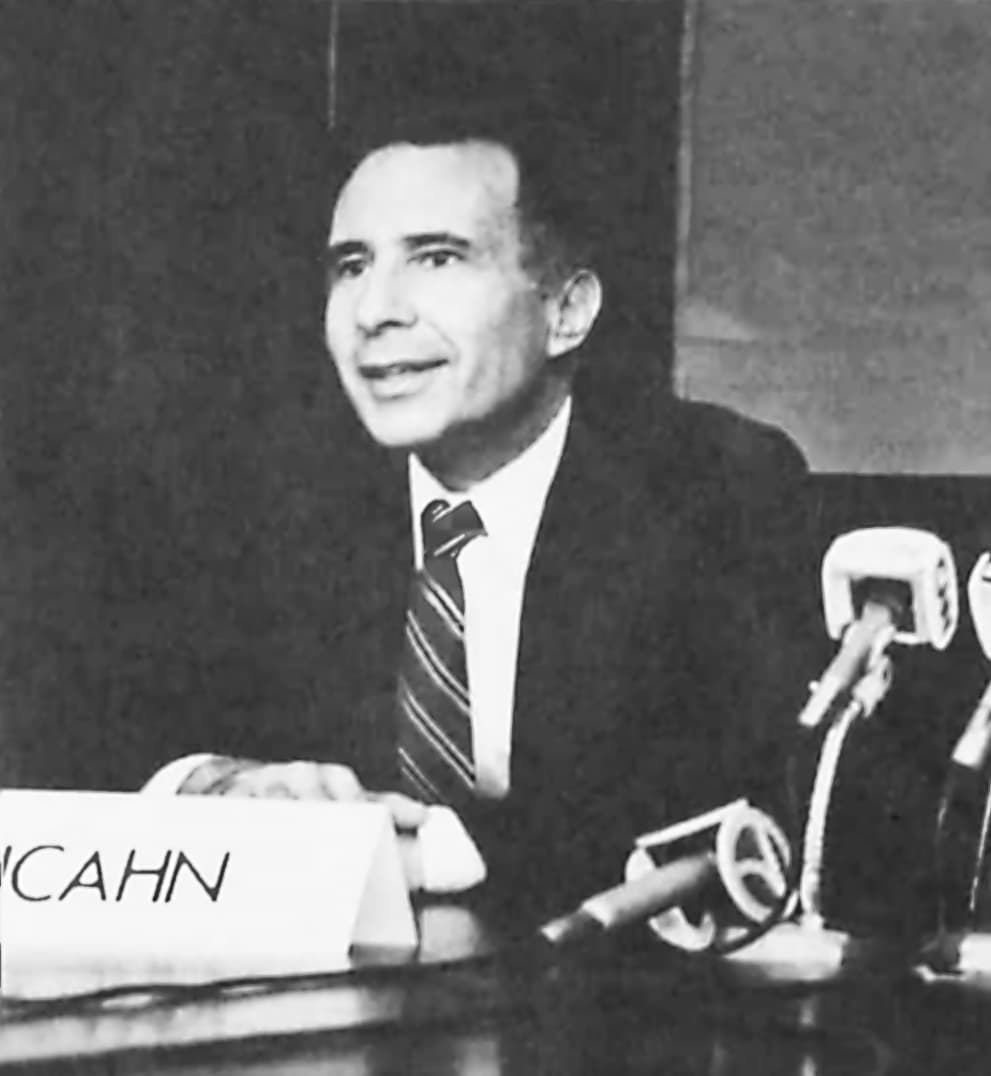
Carl Icahn turned 90 this February. He did so with a fortune that, by any conventional measure, remains extraordinary. And yet the number that defines his current standing is best understood not as a destination but as a residual. Our analysis, weighting recent reported figures by source authority and recency, arrives at an estimate of $4.8 billion as of June 2026. That places him comfortably inside the global billionaire tier while marking the steepest personal-wealth contraction in his six-decade career.
The shape of his fortune is almost aggressively concentrated. A single vehicle. Icahn Enterprises, the publicly traded conglomerate he built from a 1960s brokerage arbitrage shop. Accounts for roughly 70 cents of every dollar he controls. The remaining wealth distributes across decades of activist campaign profits, private investment partnerships, and a minor but real estate and miscellaneous asset base. Understanding Icahn's net worth means understanding IEP first and everything else second.
The arc from peak to present is the story that any serious accounting of his wealth must confront head-on. At his high-water mark, sources pegged the figure in the range of $17.5 billion; our current estimate of $4.8 billion reflects what happens when a concentrated, use-heavy conglomerate structure meets a determined short-seller campaign and a rising-rate environment simultaneously. The fortune is real. The losses were, too.
Where Icahn's $4.8B Ranks Among Activist-Investor Fortunes
At $4.8B, Icahn sits below the top tier of activist-investor billionaires but above most peers who built wealth through single-fund strategies rather than a permanent conglomerate vehicle.
Among the cohort of investors who made their money through activist shareholder campaigns. Taking concentrated stakes, agitating for board changes, and monetizing the resulting re-ratings. Icahn's $4.8 billion puts him in a distinctive middle ground. He trails the multi-strategy hedge fund billionaires who diversified early into private equity or technology bets, but he outpaces the generation of activists who operate leaner funds without the perpetual-capital advantages his conglomerate structure provides.
The comparison that matters most is structural, not merely numerical. Most activist investors manage external capital and clip a management fee; their personal fortunes are a function of carried interest and co-investment. Icahn's architecture is different. He is, in effect, the permanent controlling shareholder of a publicly traded holding company. That means his wealth moves directly with IEP's market capitalization, amplifying both gains and losses in ways that externally managed funds do not.
At his 2023 peak, before Hindenburg Research published its critical report on IEP, sources including the New York Post cited figures approaching $17.5 billion. The same publication later revised its assessment to approximately $4.8 billion. A decline of nearly 75%. Our analysis concurs with the lower figure as the more defensible current estimate, given the sustained compression in IEP's unit price and the restructuring of its dividend.
Icahn Enterprises: The $3.4B Anchor That Defines Everything
Icahn's controlling stake in Icahn Enterprises LP accounts for roughly $3.4B. About 70% of his total estimated net worth. Making IEP's unit price the single most important variable in any Icahn wealth calculation.
Icahn Enterprises is not a hedge fund. It is a Delaware limited partnership, publicly traded on Nasdaq, that holds operating subsidiaries across energy, automotive, food packaging, real estate, and investment segments. Icahn is its founder, general partner, and controlling unit holder. When IEP's units appreciate, his net worth rises at scale; when they fall, the damage is immediate and proportional in a way that a more diversified balance sheet would cushion.
Our breakdown assigns approximately $3.4 billion to this stake. The dominant weight in the overall $4.8 billion estimate. That figure reflects the market value of his controlling position after IEP's unit price absorbed the post-Hindenburg correction, a sustained dividend reduction, and broader market volatility. The conglomerate structure, which Icahn spent decades refining as a way to deploy activist profits into permanent capital, became the primary transmission mechanism for the wealth destruction when sentiment shifted.
What the IEP stake also provides is something that pure cash or liquid-securities wealth does not: structural control. Icahn retains effective authority over the conglomerate's capital allocation decisions, which means his paper wealth and his operational influence are inseparable. That is unusual among billionaires at his stage. It also means the path to wealth recovery, should IEP's portfolio companies perform, runs directly through his own management decisions.
The SEC investigation into undisclosed margin loans secured by IEP units. Reported by CNN in 2024. Added legal and reputational overhang to the valuation. Icahn settled charges without admitting wrongdoing, but the episode showed how deeply the IEP stake had been used as collateral, creating a use loop that amplified both his peak wealth and its subsequent compression.
“Icahn's fortune is a masterclass in concentration risk: the same architecture that built $17.5 billion nearly as quickly disassembled three-quarters of it.”
Decades of Activist Campaigns: The $720M Legacy Tranche
Activist shareholder campaigns. From TWA and Texaco in the 1980s through Apple and Herbalife decades later. Have contributed an estimated $720M to Icahn's cumulative wealth, though most of those gains are now embedded in his broader asset base.
Long before activist investing became a recognized asset-management category, Icahn was executing its essential playbook: acquire a significant stake in an undervalued or mismanaged company, agitate publicly for strategic change, and exit at a profit once management capitulated or the market re-rated the stock. His campaigns across airlines, oil companies, consumer brands, and technology giants generated the capital base that eventually funded IEP's expansion.
Our analysis assigns roughly $720 million. Approximately 15% of the total estimate. To the cumulative legacy of these campaigns, with the caveat that most of these gains were realized and recycled into IEP or other investment structures long ago. What remains in this category is less a discrete pool of activist-derived cash and more the residual embedded value from decades of stacking those initial profits through the conglomerate.
The activist track record is also what gives IEP's investment segment its theoretical earnings power. The conglomerate maintains a portfolio of activist and long-short positions through its investment subsidiary, meaning the activist-income machinery has never fully stopped running. It has simply been institutionalized within the holding company rather than executed through ad hoc campaigns.
Private Funds and Investment Partnerships: The $480M Quiet Layer
Private investment partnerships Icahn has managed since the 1960s account for roughly $480M of his estimated wealth. A quieter, less scrutinized layer of capital that predates his public conglomerate era.
Before IEP became his primary vehicle, Icahn ran private partnerships that served as the original testing ground for his capital-allocation instincts. These structures. Some dating to his years as a stockbroker and options dealer in the early 1960s. Generated returns that funded his initial activist stakes and, later, seeded the diversified conglomerate model.
Our estimate assigns roughly $480 million, or about 10% of the total, to this layer. The figure is inherently less precise than the IEP stake, which is publicly traded and therefore mark-to-market daily. Private fund and partnership interests are valued on less liquid terms, and Icahn has not been a prolific discloser of private partnership performance in recent years.
What is clear from public record is that these vehicles provided Icahn with a private-capital cushion that operates somewhat independently of IEP's unit price. In periods when the public conglomerate faced market pressure, the private pool offered a degree of insulation. A structural advantage that purely public-market investors do not enjoy.
Real Estate and Hard Assets: The $240M Floor
Real estate and miscellaneous hard assets contribute an estimated $240M to Icahn's net worth. A modest 5% slice that functions as a wealth floor rather than a growth engine.
For a man whose fortune was built on financial use and equity re-ratings, Icahn's real estate and hard-asset exposure is surprisingly conservative in relative terms. Our estimate places the value of these holdings at approximately $240 million. Roughly 5% of the total. Encompassing property assets accumulated over decades but never scaled into a primary wealth driver.
This is consistent with the profile of many financier-class billionaires who allocate to real property as a store of value and lifestyle asset rather than as a return-generating business. The holdings provide a degree of wealth stability precisely because they are less correlated with IEP's unit price movements. The variable that has done the most damage to his overall net worth since 2023.
The real estate layer also functions as the most durable component of his estate-planning picture. Unlike public equity stakes subject to market re-rating, hard assets offer a more predictable base for wealth transfer. Relevant context given that Icahn is now 90 years old and has long been known to think carefully about the long-term stewardship of his empire.
The Hindenburg Collision: How $17.5B Became $4.8B
A Hindenburg Research short report in 2023 triggered a collapse in IEP's unit price that erased the bulk of Icahn's peak wealth, compressing his fortune from roughly $17.5B to our current estimate of $4.8B over roughly two years.
Hindenburg Research's 2023 report on Icahn Enterprises was one of the most consequential short-seller interventions in recent memory. Not because it alleged fraud in the conventional sense, but because it attacked the structural mechanics that underpinned IEP's premium valuation. The report questioned the sustainability of IEP's dividend payout, the valuations assigned to its private holdings, and the use of margin loans secured by Icahn's own unit stake. IEP's units fell sharply, and they never fully recovered.
The New York Post's reporting in late 2025 captured the magnitude of the shift: a figure that had stood at roughly $17.5 billion at its peak had compressed to approximately $4.8 billion. A decline of close to 75%. Our analysis treats $4.8 billion as the operative figure, consistent with IEP's market-adjusted valuations and the post-settlement legal landscape. The peak figure, while cited by credible sources, reflects a moment that has built that way passed.
What made the collapse so rapid was the concentration risk that had made the ascent so dramatic. A fortune built predominantly on one public vehicle. Where the unit price embeds both the underlying asset values and a sentiment premium for the Icahn brand. Is a fortune that can reprice quickly when sentiment reverses. The short-seller thesis worked partly because the target was so large, so concentrated, and so dependent on a single man's reputation as a guarantor of returns.
The SEC charges regarding undisclosed margin loans, settled in 2024, added a further drag. Beyond the fine, the episode required public disclosure of borrowing mechanics that IEP investors had not fully priced. And it accelerated the de-rating of the control premium that markets had historically attached to Icahn's stake.
Capital Allocation and Business Strategy: How Icahn Deploys the Remaining Billions
Icahn's capital strategy centers on IEP as a permanent-capital vehicle, allowing him to recycle activist gains into operating subsidiaries without the redemption pressure that constrains conventional hedge funds.
The genius of the IEP structure. And the source of both its outsized returns and its outsized risks. Is that it does not face redemptions. External hedge funds must manage liquidity to meet investor withdrawals; Icahn, as the controlling general partner of a publicly traded partnership, answers only to the unit price. That frees him to hold illiquid positions, take concentrated bets, and wait out dislocations that would force a conventional fund manager to exit.
This architecture allowed IEP to accumulate operating subsidiaries across energy refining, automotive parts distribution, and food packaging. Businesses that generate cash flows to fund the investment segment's activist positions. The conglomerate is self-reinforcing in design: operating earnings fund investment activity, and investment gains fund further acquisitions.
Post-Hindenburg, the capital allocation question has shifted. IEP reduced its distribution. A significant signal given how central the dividend had been to the unit's retail investor appeal. And has been more selective about new activist positions. The strategic priority has visibly moved toward stabilizing the existing portfolio rather than pursuing new headline campaigns. Whether that posture is temporary or permanent is the central question for anyone modeling where Icahn's wealth goes from here.
Legal Overhang and Governance Risk: What Could Compress the Number Further
Unresolved governance questions around IEP's succession, continued legal scrutiny, and the conglomerate's use structure represent the primary downside risks to the $4.8B estimate.
The SEC settlement resolved the most immediate legal exposure, but it did not eliminate the governance questions that the Hindenburg episode surfaced. IEP's structure concentrates decision-making authority in a single individual who is now 90. The absence of a clearly articulated succession plan is not merely a philanthropic or estate-planning concern. It is a material input for any investor trying to value the control premium embedded in Icahn's stake.
Use remains a structural risk. Icahn has historically used his IEP units as collateral for personal borrowing, a practice that creates a reflexive dynamic: falling unit prices reduce collateral values, which can trigger margin calls, which require unit sales, which further depress prices. The SEC investigation confirmed the scale of this borrowing was not fully transparent to the market. Even post-settlement, the underlying use mechanics have not disappeared.
A further compression of IEP's unit price. Driven by portfolio underperformance, additional legal action, or broad market deterioration. Would flow directly into the net-worth estimate. At 70% concentration, a meaningful decline in IEP's market value translates to a near-proportional decline in the headline figure. The $4.8 billion estimate assumes current market conditions and no acceleration of the existing headwinds.
Trajectory: Where the $4.8B Figure Goes From Here
Recovery in Icahn's net worth depends almost entirely on IEP's unit price rehabilitation. A function of portfolio performance, restored dividend credibility, and a potential re-rating of the activist-investor brand that Hindenburg temporarily undermined.
The path back toward a materially higher number runs through IEP's operating subsidiaries first. If the energy and automotive holdings generate stronger-than-expected cash flows, IEP's investment segment gains more dry powder, and the unit price has a fundamental basis for re-rating. A restored. Or even just stabilized. Distribution would draw back yield-oriented retail holders who fled after the dividend cut, improving the unit's demand profile.
Activist campaigns, historically Icahn's highest-return activity, have become more complicated in the current environment. Corporate boards are better prepared, the legal and regulatory framework around large-stake accumulations has tightened, and the post-Hindenburg reputational drag has made it harder to attract the co-investor support that amplifies activist pressure. These are cyclical headwinds, not permanent barriers. But they matter for the near-term earnings power of IEP's investment segment.
Our base-case view holds the estimate at approximately $4.8 billion through the balance of 2026, with upside contingent on IEP unit recovery and downside risk concentrated around further legal developments or a market-wide risk-off move. The fortune is unlikely to return to its $17.5 billion peak under any realistic scenario. The structural conditions that inflated that figure, including the dividend premium and the opacity around use, are unlikely to fully reconstitute. What Icahn controls now is a leaner, more scrutinized, but still substantial engine of capital. And at 90, he is still running it himself.
How the $4.8B adds up
- Icahn Enterprises (IEP) controlling stakeIcahn is the founder and controlling shareholder of IEP, a diversified public conglomerate; the bulk of his wealth is tied to his equity stake in this vehicle.$3.4B70%
- Activist investment returnsDecades of activist shareholder campaigns—taking large stakes and pressuring management changes—have generated substantial capital gains across many companies.$720M15%
- Hedge fund / private investment incomeIcahn has managed private investment partnerships and funds that have contributed to his overall wealth accumulation since the 1960s.$480M10%
- Real estate and other assetsIncidental real estate holdings and miscellaneous assets form a minor portion of his overall net worth.$240M5%
Ezra Linwood — Ezra Linwood covers billionaire wealth structures, activist finance, and capital-markets strategy for Neon Hollywood.
Disclaimer: Net-worth figures are editorial estimates built from publicly available reporting, filings, and market data — see our methodology. They are not verified statements of any person’s finances and nothing here is financial advice.