The Secret Wife Next Door: What a Viral Sitcom Scene Reveals About Television's Oldest Trap
A man. A drunk wedding in Atlantic City. A divorce that never quite happened. The Voz Paula clip burning through feeds this week is a comedy sketch. But the legal and emotional machinery underneath it is entirely real.
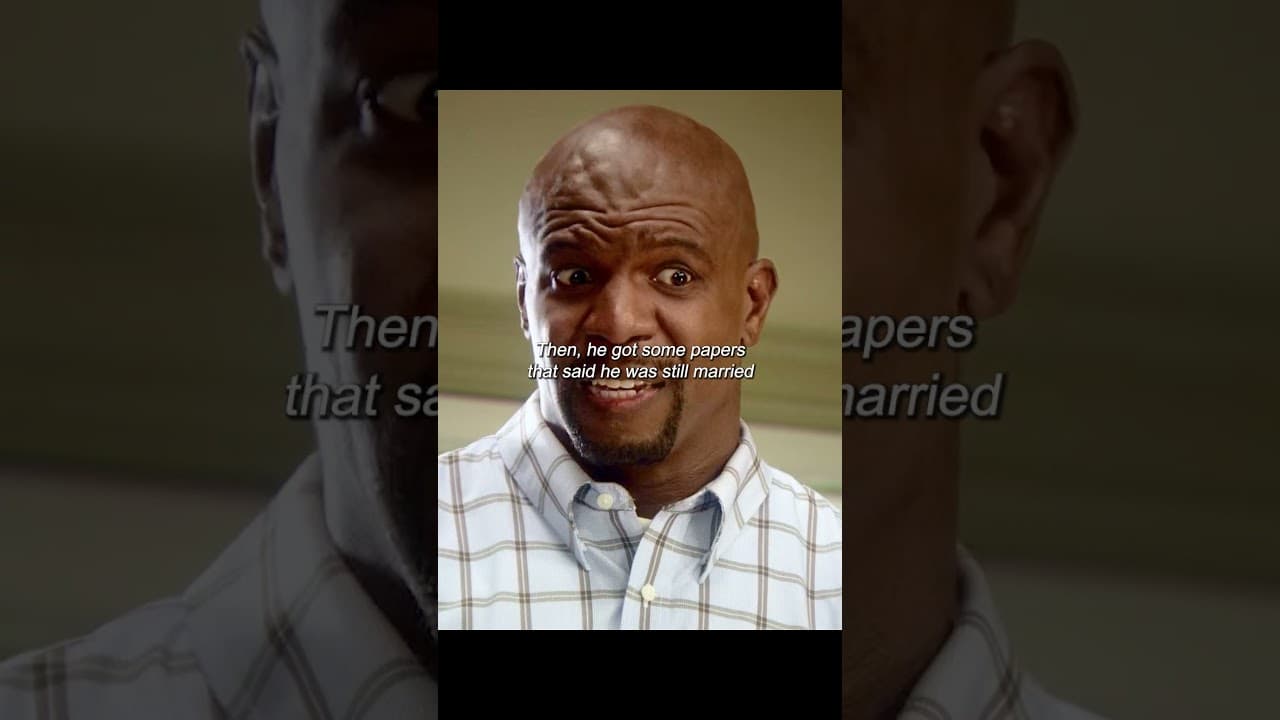
The papers arrived, as they always do in this kind of story, at the worst possible moment. Not during a quiet Tuesday. Not in the abstract. But right in the middle of a marriage that the husband believed was the only one he had. And the wife believed was the only one she was in.
The clip that has been circulating from the telenovela-adjacent format Voz Paula opens inside a scene most people will recognize not from television but from something closer to home: a man caught between a secret he didn't think was a secret, a woman who has every right to be furious, and a lawyer delivering the most useful piece of advice anyone in that situation is ever likely to hear. The setup is played for laughs. A 17-year-old, drunk, Atlantic City, four days of marriage, papers allegedly signed and allegedly returned. The laugh track does its job. But the architecture of the crisis the scene describes is not a comedy. It is one of the more quietly common legal predicaments in American domestic life, and the way television keeps returning to it says something precise about what audiences need their screens to process for them.
What Voz Paula does with this particular scenario. And what makes the clip worth more than a passing scroll. Is compress into roughly four minutes of dialogue a set of questions that family-law attorneys, marriage counselors, and sociologists spend entire careers unpacking. Who is legally married to whom? What does marriage actually mean when the paperwork fails? And what happens to the person who was never told they were, in the eyes of the state, a concubine? The show earns its virality not through shock but through specificity. That specificity is worth taking seriously.
Why the Atlantic City drunk-wedding plot keeps working on television
The drunk-wedding-in-Vegas (or Atlantic City) story works on television because it is legally plausible, emotionally combustible, and socially humiliating in equal measure. The precise combination that drives prestige comedy and melodrama alike.
There is a reason this particular story engine has powered everything from classic network sitcoms to streaming telenovelas: it does not require a villain. The man in the Voz Paula clip is not lying, exactly. He signed the papers. He sent them back. He moved on. He built what he genuinely believed was a real marriage, had children, bought groceries, argued about lightbulb costs per watt. The catastrophe arrived not through malice but through administrative failure. Someone, somewhere, did not file the correct forms with the correct court. That is a much more unsettling premise than a straightforward betrayal, because it implicates systems rather than individuals. Audiences respond to it because they have encountered those systems.
Television's fascination with bigamy-by-accident also reflects something real about the era in which most of these storylines were developed. Before digitized court records and nationwide background-check databases, a divorce that was never finalized could sit in a filing cabinet for decades without anyone knowing. The legal infrastructure simply did not talk to itself. A person could move from Atlantic City to another state, start over, and never receive the notification that the divorce petition had lapsed. Because the notification would have gone to an address they no longer held.
The Voz Paula scene understands this. The husband's defense. 'I signed the papers and sent them back to her, how was I supposed to know she didn't follow through?'. Is not a cartoon excuse. It is the actual argument that appears in family-court filings. The dramatic power of the scene lies in the fact that the audience can hold two things simultaneously: the husband is telling the truth, and the wife has every right to call herself a concubine.
What bigamy law actually says. And why the lawyer's advice matters
In most U.S. Jurisdictions, bigamy is a criminal offense that can result in arrest and imprisonment, but courts typically recognize that an unknowing second marriage, once the prior marriage is properly dissolved, can be validated retroactively through legal remediation.
The lawyer in the clip delivers the best line in the scene with the flattest possible affect: the hypothetical person 'could be arrested and hypothetically sent to jail as a bigamist.' That is not a comedy exaggeration. Bigamy statutes exist in every U.S. State, and while prosecutions are relatively rare compared to the frequency of the underlying situation, they are real. The offense typically requires knowledge. Meaning an unknowing bigamist who genuinely believed a prior marriage was dissolved occupies a legally different position than someone who married again on purpose. But the burden of proving that ignorance can fall on the defendant.
What the lawyer then offers. File the papers, get the final decree, and 'everyone here stays lazy'. Is a compressed description of the remediation path that family-law practitioners actually recommend. The fastest resolution in cases of incomplete divorce is to finalize the original proceeding, which, depending on the jurisdiction and whether the original spouse is cooperative, can sometimes be accomplished in a matter of days. The Voz Paula script has clearly been developed with at least a passing familiarity with how this actually works, because the resolution. Final divorce papers arrive, re-proposal happens. Follows the correct procedural sequence.
The question the wife asks three times. 'Is she white?'. Is a different kind of legal and social text entirely. It is doing the work that subtext does in strong television writing: surfacing the hierarchy of anxieties that operate underneath the formal crisis. The legal question is solvable. The question of what kind of woman her husband chose at 17, and what that says about desire and loyalty and history, is not. The show knows exactly what it is doing each time it circles back to that line.
"Television keeps returning to the secret-spouse plot because the law around marriage is far messier than any wedding vow suggests."
How the 'beauty shop gossip' frame sets the scene's emotional stakes
The beauty-shop subplot in the Voz Paula clip functions as an early-warning system for the marriage's underlying tensions, establishing that the wife already navigates a social world primed to distrust husbands. Long before the secret marriage surfaces.
The clip opens not with the bombshell but with an argument about a child coming home from the beauty shop having absorbed the neighborhood consensus that 'men ain't no good.' It is a warm-up act that does real structural work. By the time the secret marriage arrives twenty seconds later, the audience already understands that this is a household where trust between husband and wife is a managed resource, not a given. The beauty shop is not scenery. It is the social infrastructure of the wife's world. A space where women speak plainly about men in ways they cannot always speak plainly at home.
Television has understood the beauty shop this way for decades. It is a setting that signals a specific kind of community intimacy, one coded as Black American specifically in the cultural register Voz Paula is working in. The husband's anxiety about what his daughter is learning there. And his promise to pay for better. Lands as both comic and slightly tone-deaf. He is trying to manage the information environment around his child. The irony is that he himself is carrying information that makes the beauty shop's generalized skepticism look prescient.
That structural irony. The man who wants to protect his daughter from anti-male sentiment while concealing a prior marriage from her mother. Is not accidental. The writers built it into the cold open on purpose. It means the audience arrives at the bigamy reveal already holding a particular kind of sympathy for the wife, not because the husband is cruel, but because the gap between his self-image and his actual record is visible from the first scene.
What the 'concubine' line reveals about how TV handles women's legal identity
When the wife in the Voz Paula clip calls herself a concubine, she is articulating a precise legal reality: in the absence of a valid prior divorce, her marriage has no standing, making her, in the eyes of the state, a woman in an unrecognized domestic union.
The word lands hard because it is accurate. A woman who enters a marriage in good faith, not knowing her husband was previously undissolved from another union, occupies a position sometimes described in legal scholarship as a putative spouse. A person who believed themselves to be married and is often extended some protections as a result. But 'putative spouse' is not a phrase anyone screams across a kitchen. 'Concubine' is. The choice is a writing decision and a character decision simultaneously: this is a woman who reaches, in extremis, for the most devastating possible framing of her own situation.
The history of women's legal identity being contingent on the administrative accuracy of men's prior relationships is not a sitcom premise. It is a feature of marriage law that predates most of the reforms of the 20th century. Women could find themselves legally unprotected. Unable to inherit, unable to claim benefits, unable to establish custody. Because of paperwork errors they had no hand in making and no knowledge of. The reforms that established putative-spouse doctrine were a direct response to the frequency with which this scenario played out in real courts.
What the Voz Paula scene captures, in the middle of its laugh track, is the specific terror of that position. The wife is not angry because she has been lied to in a conventional sense. She is angry because she has just learned that the legal architecture of her life — see Hayden Panettiere Is Gone at 36: What Her Life Reveals About the Cost of Child Stardom. Her identity as a wife, her children's legitimacy, her standing in any subsequent dispute. Was constructed on a foundation someone else failed to properly pour. That is an existential crisis wearing a comedy costume.
For a broader map of how celebrity and public figures get through the legal dimensions of their personal lives, our latest reporting tracks the intersection of image management and institutional exposure across entertainment, sports, and business.
The 'Utah' joke and what it says about how Americans understand polygamy
The throwaway Utah line in the Voz Paula scene reflects a persistent American cultural shorthand in which Utah equals polygamy. A conflation that is historically grounded in 19th-century Mormon fundamentalism but legally outdated and factually imprecise by the 21st century.
The lawyer's 'or just move to Utah' quip is a well-worn piece of American cultural furniture, and its persistence in scripts like this one is itself worth examining. The joke depends on an audience that has absorbed the association between Utah and plural marriage as a fixed piece of cultural geography. Which most American audiences have, despite the fact that mainstream Latter-day Saint doctrine formally abandoned polygamy in 1890 and that the communities still practicing it represent a small and legally embattled minority.
What the joke actually does, built that way, is release the tension of the scene at its highest point. The lawyer has just told the husband he could go to jail. The Utah line is the pressure valve. It signals to the audience that we are still in comedy territory, that the worst outcome is not going to materialize, and that the resolution is coming. It is a craft decision as much as a cultural one. The writers know exactly where the audience's anxiety is climbing and they drop the deflation at the right moment.
The speed with which audiences recognize and laugh at the Utah reference also points to something broader about how television literacy works. Viewers are not processing these jokes as arguments about Mormon theology or polygamy law. They are pattern-matching to a stored cultural signal. That stored signal. Utah, multiple wives, comic implausibility. Is the product of decades of sitcom writing, stand-up comedy, and true-crime adjacent documentary that has made polygamy simultaneously taboo and familiar as a punchline.
Why the re-proposal ending is built that way inevitable. And emotionally earned
The re-proposal ending in the Voz Paula clip resolves the bigamy crisis by restoring the wife's legal standing and giving her the agency she was denied by the original secret. She is now the one choosing, with full information, to say yes.
The beat is familiar. The legal problem is resolved. Final divorce papers in hand. And the husband gets down on one knee. The wife's response is dry, perfect: 'You're not married to anyone else, are you?' It is a joke, but it is also a contract renegotiation. She is not simply accepting a proposal. She is establishing, on the record, the terms under which she will re-enter a commitment she never knowingly exited. The humor is doing real emotional work.
What the re-proposal accomplishes narratively is the restoration of consent. The first marriage, as it turns out, was legally compromised without the wife's knowledge. The second marriage. The proposal at the end of the clip. Happens with full information, full clarity, and the wife in the active position of choosing. That is not a small thing. The scene's emotional resolution depends on the audience recognizing that the wife has moved from a position of imposed identity (the concubine, the woman whose standing was determined by someone else's paperwork) to a position of chosen identity.
This is why the re-proposal ending feels earned rather than convenient. It is not resolving the conflict through the husband's contrition alone, though there is contrition. It is resolving it by giving the wife something she never had in the first place: a genuinely informed choice. The writers understand that the emotional injury of the scene is not just betrayal. It is the removal of agency. The re-proposal gives it back. The laugh track may be running, but the logic underneath is sound.
Audiences who track how popular culture processes questions of consent, agency, and domestic identity through comedy and drama will find useful context in our coverage of adjacent cultural moments. Including how viral sketches handle charged material in ways that look light but land heavy.
What the Voz Paula format reveals about the telenovela-adjacent American market
Voz Paula operates in a hybrid space between American multicultural sitcom and telenovela emotional register. A format that has found a durable audience by addressing domestic crises with a directness that mainstream network television has largely retreated from.
The clip's production grammar. The shooting style, the confrontational dialogue structure, the compressed dramatic arcs. Places it in a specific lineage of American domestic comedy that runs from the family sitcoms of the 1980s and 1990s through the faith-and-family programming that flourished on BET and its competitors in the 2000s. This is not a mainstream network production. It is something built for a specific audience that wants its domestic dramas both funnier and more direct than prestige television typically allows.
That directness is not a limitation. It is the product. Mainstream prestige television in 2026 has largely retreated from the kind of kitchen-table confrontation the Voz Paula clip stages. The scene where the central conflict is named loudly, argued through completely, and resolved within the episode. The streaming economy has trained audiences to expect ambiguity, unresolved arcs, seasons-long withholding. The Voz Paula format offers the opposite: problem stated, problem solved, marriage restored, credits roll. There is a genuine appetite for that, and the clip's spread across social platforms is evidence of it.
The format also serves a specific demographic function. The beauty-shop opening, the racial subtext in the 'is she white?' question, the particular social world the characters inhabit. These are markers of a Black American domestic experience that mainstream network television has historially underserved at the level of specificity rather than representation. The show is not simply checking a diversity box. It is building its dramatic logic from the inside of a particular community's norms and anxieties. That specificity is what makes the clip resonate beyond its intended audience. Specificity always does.
Readers tracking the economics of niche and multicultural content formats. Who funds them, who profits, how they travel. Will find useful comparison points in our film and business coverage, where the distribution mechanics of independent and platform content have become an increasingly central story.