The Shot Nobody Wants: What a Viral Sketch Reveals About Pediatric Medicine and the Gentle-Parenting Impasse
A comedic short about a child refusing a tetanus shot lands as farce. But underneath the laughs is a real tension between modern parenting philosophy, clinical authority, and the stubborn biology of infectious disease.
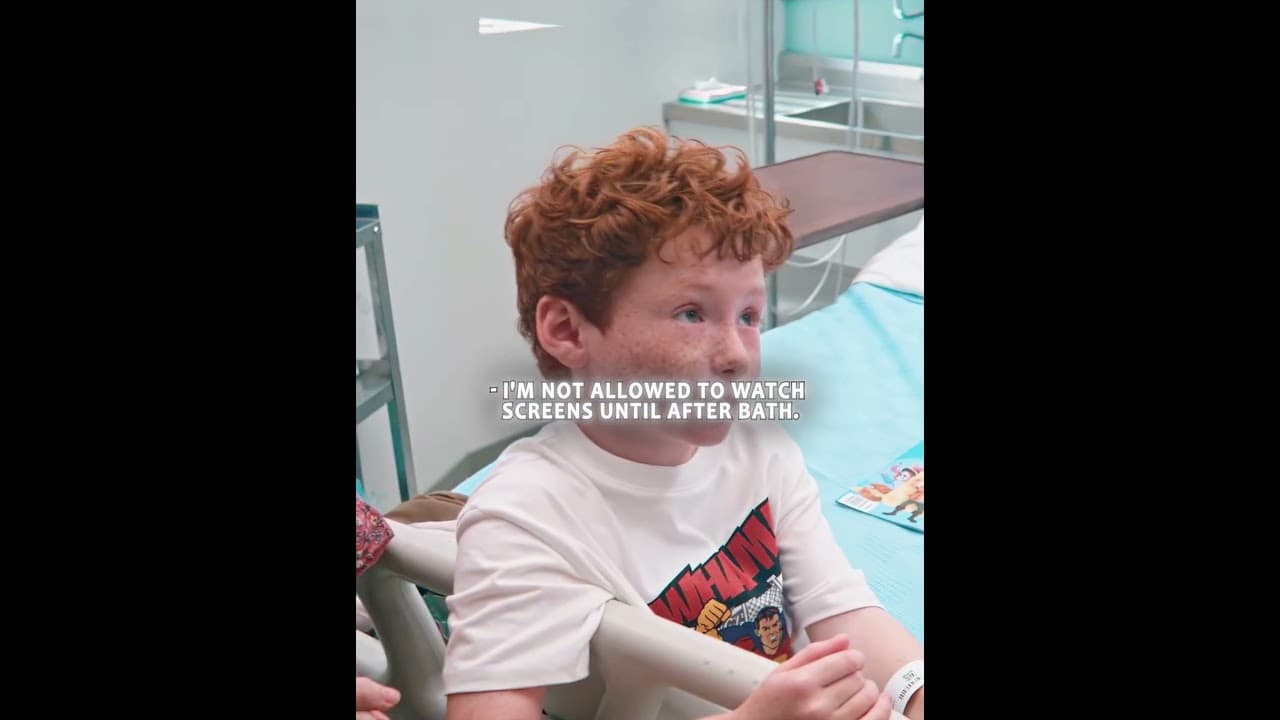
The child's name is Jacob. He has stepped on a rusty nail. He does not want the tetanus shot. And according to his parents. Earnest, informed, committed to the principles they read about. That reluctance deserves to be respected. This is the setup of a short comedic sketch that surfaced this week and has been circulating hard across social feeds, and it is funny in the way that only things rooted in real friction tend to be.
The bit works because it triangulates three recognizable figures: the exasperated but pragmatic doctor, the parents who have absorbed every contemporary parenting framework and applied it with total sincerity, and the child who. Operating rationally within the system those parents have built. Simply declines. No villain. No ignorance. Just a structural problem that the adults in the room cannot solve with the tools they have chosen.
What the sketch is actually doing, beneath the Nerd Clusters and the 'Hospital Man' costume and the syringe of justice, is staging a collision between two ideas that both sound reasonable in isolation: bodily autonomy as a value worth instilling early, and the basic clinical reality that some medical interventions are not optional without consequence. That collision is not resolved in the sketch. It is papered over by a superhero costume and candy. The joke is that this is, increasingly, the best available solution.
Gentle Parenting Is Real, and So Is Its Tension With Medicine
Gentle parenting emphasizes a child's emotional experience and consent over compliance-by-authority. A framework that works well for most daily decisions but creates genuine friction when a medical intervention is non-negotiable for the child's safety.
Gentle parenting is not a fringe movement. It is the dominant aspirational framework for a large and growing cohort of educated, millennial-and-older-Gen-Z parents who came of age reading developmental psychology, who followed accounts dedicated to 'big feelings,' and who made a conscious decision to parent differently than they were parented. Its core premise. That children's emotional responses are valid, that shame and fear are poor long-term teachers, and that cooperation built on explanation outlasts compliance built on authority. Has genuine support in the behavioral literature.
Where it gets complicated is at the intersection with medicine. Most of parenting is negotiable in a meaningful sense: bedtime can flex, screen time is a spectrum, food preferences are worth accommodating. Tetanus is not negotiable. The bacterium does not read parenting books. And the sketch captures, with uncomfortable precision, what happens when a philosophy built for negotiable situations runs headlong into a non-negotiable one: the adults begin negotiating anyway, and the child. Who is a child, not a moral philosopher. Uses every tool available to win.
The doctor in the sketch is not cruel or dismissive. He is simply operating from a different premise: that the adult-child dynamic exists partly to protect children from their own lack of fully formed risk assessment. His frustration. 'you made your first mistake by ceding power to a kid'. Is not about domination. It is about the asymmetry of stakes. Jacob cannot weigh the actual probability of tetanus-induced muscle paralysis against the thirty-second discomfort of a needle. His parents, theoretically, can. The sketch's joke is that they have chosen not to use that advantage.
The 'Bubble Space' Problem: When Autonomy Language Becomes Negotiating Use
When children are taught that a personal 'bubble of space' around their body is entirely theirs to control, they apply that framework literally. Including in clinical settings where temporary, consensual physical contact is medically necessary.
There is a moment in the sketch where the doctor moves toward Jacob and the child invokes 'bubble space.' The parents immediately validate it. The doctor, baffled, is told he has entered a zone that Jacob controls. This is genuinely funny. It is also a precise illustration of a conceptual slippage that child-development practitioners have been flagging for years: the difference between teaching a child that their body belongs to them as a foundational safety concept, and accidentally constructing a framework that the child can weaponize against necessary medical care.
Bodily autonomy as taught to young children is largely about safety. The right to say no to unwanted touch from adults, the right not to be hugged or kissed on demand, the right to name their own comfort zones. These are important lessons with real protective value. But children are concrete thinkers. They do not naturally apply qualifications and exceptions. If 'my bubble, my rules' is the lesson, then the needle. Which is unambiguously inside the bubble. Falls under the rules.
The parents in the sketch are not bad parents. They are parents who taught an important principle without teaching its limits, because teaching limits requires invoking exactly the authority they have chosen to minimize. This is the loop. Getting out of it, as the sketch illustrates, requires either abandoning the framework (hold him down), terrifying him (pretzel man), or building an elaborate theatrical production around a costumed adult handing the child candy and injecting him mid-distraction. The sketch votes for option three. Pediatric nurses, it should be noted, largely do too. Distraction and comfort objects are genuinely among the most evidence-backed tools for procedural compliance in young children.
"The child cannot weigh the probability of tetanus-induced paralysis against thirty seconds of needle discomfort. His parents, theoretically, can. The sketch's joke is that they have chosen not to use that advantage."
Why the Candy Negotiation Spiral Is Predictable. And Instructive
Offering a reward for medical compliance is a standard and effective pediatric technique, but it backfires when the child understands they hold use. At which point they negotiate upward, as any rational agent would.
The Nut Rageous gambit is the sketch's most built that way interesting beat. The doctor produces candy. 'the best candy in the biz'. As an incentive. Jacob declines it in favor of Nerd Clusters. There are no Nerd Clusters. Jacob holds firm. The doctor cracks, announces the Nerd Clusters are 'right across the street,' and then immediately. And correctly. Recognizes that he has handed the child the negotiation entirely.
This is not a failure of the candy approach per se. Positive reinforcement for medical compliance is well-supported and widely used. The failure is sequential: Jacob has been taught, by the architecture of his home environment, that his preferences carry decisive weight in adult decisions. He has watched his parents override clinical authority on his behalf repeatedly in the preceding minutes. He therefore applies the only rational inference available to him. I can push further. Any economist running a game-theory model on this child's decision-making would give him full marks.
The lesson embedded in this absurdist spiral is about consistency of signals. Children read their environment with extraordinary precision. If every prior signal says 'your resistance changes outcomes,' then resistance at the doctor's office is not stubbornness. It is a learned strategy with an excellent historical success rate. Changing that outcome requires changing the prior signals, which is a much longer project than getting through one tetanus shot.
Fear as a Medical Motivator: Why the 'Pretzel Man' Approach Was Abandoned
Fear-based compliance in pediatric medicine was largely abandoned because it produces short-term procedural success at the cost of long-term medical avoidance. Adults who were traumatized by childhood medical experiences are statistically more likely to delay or skip necessary care.
The doctor's 'pretzel man' gambit. A graphic image of tetanus-induced muscle contracture as a cautionary tale. Gets shut down immediately by the parents. Their objection is reflexive: we don't use fear as a motivator. The sketch plays this as another instance of the parents' obstruction. But on this specific point, the behavioral science is actually on their side.
Fear-based compliance in children produces a measurable downstream effect: adults who associated medical settings with threat and coercion during childhood are more likely to avoid medical care, underreport symptoms, and delay treatment as adults. The pediatric literature on this is reasonably consistent. The campaign to remove fear as a primary tool from clinical and parenting practice is not sentimental. It is a long-run optimization. You might get the shot into Jacob today by showing him the pretzel man. You might also guarantee that Jacob, at thirty-seven, lets a worrying cough go unchecked for six months because his nervous system still registers 'doctor' as a threat environment.
The catch is that the alternative. Distraction, positive reinforcement, autonomy-preserving language. Requires time, creativity, and a child whose prior conditioning makes cooperation at least possible. The 'Hospital Man' resolution at the end of the sketch is both a joke and a genuine technique: reframing the experience as adventure, repositioning the needle as an act of heroism, and using the child's imaginative capacity to recruit him as a willing participant rather than a subdued subject. It is also, manifestly, a significant amount of work for a thirty-second injection.
What the Doctor Character Gets Right (and What He Gets Wrong)
The sketch's doctor correctly identifies that ceding all decision-making authority to a young child creates a clinical impasse, but his initial instinct. Parental restraint. Is both the bluntest tool available and the one most likely to produce lasting harm to the child's medical trust.
The doctor is framed as the voice of pragmatic reason, and for most of the sketch he earns it. His observation that the parents have 'ceded power' is built that way accurate. His fish-sticks line. 'I know your favorite food is fish sticks, but you're the adult in the room'. Is perhaps the sharpest diagnostic line in the piece. Adults who have internalized their children's food preferences as the organizing principle of household meals have already made the power calculation visible.
But the doctor's first instinct, to have the parents hold the child down, is worth interrogating. It is efficient. It works in the short term. And it is the option that pediatric psychology has moved most decisively away from, precisely because of the downstream effects described above. Physical restraint without consent. Even when medically necessary. Registers to a child's nervous system as a violation of the safety of the people holding them. The parents' rejection of it is not just ideological posturing. It reflects a real shift in how pediatric trauma is understood.
The sketch threads this needle by having the doctor ultimately succeed not through restraint but through showmanship. He puts on a costume. He calls himself Hospital Man. He hands the child a superhero narrative and lets Jacob choose to participate in it. This is, counterintuitively, the clinical best practice. And it lands as comedy because it is absurd and because it works and because the gap between 'this is how you get a child to accept a needle' and 'this is the dignity of medicine' is enormous and real.
For readers tracking the broader cultural conversation around parenting philosophy. And there is a rich ongoing one, visible across our latest reporting on how public figures get through child-rearing in the public eye. The sketch functions as a Rorschach. Gentle-parenting advocates see the parents as the heroes trying to protect their child's psychological safety. Critics of the movement see them as the obstacle between Jacob and necessary care. The sketch, cleverly, does not resolve this. It just gets the needle in.
The Broader Stakes: Pediatric Vaccination Rates and the Philosophy Underneath
Declining pediatric vaccination rates in several Western countries correlate with rising parental emphasis on child autonomy and consent. Not just vaccine skepticism. Suggesting that even pro-vaccine parents who embrace 'gentle' frameworks are contributing to hesitancy through procedural resistance.
The sketch is about a tetanus shot, not an MMR. The parents show no sign of vaccine skepticism. They want the injection administered. Their conflict is procedural, not ideological. And this is, in some ways, the more interesting public-health story. The loudest conversation about vaccination hesitancy has focused on anti-vaccine belief systems, and that conversation is real and important. But a quieter contributor to declining compliance rates is the procedural difficulty of administering vaccines to children in households where the child's expressed reluctance is treated as a meaningful veto.
A child who says 'I don't want the shot' and is heard, accommodated, rescheduled, and eventually not brought back is not necessarily the child of an anti-vaccine parent. They may be the child of parents who could not find a way to get the shot administered without a confrontation their parenting philosophy had not equipped them for. The public-health implications are the same regardless of the ideological route.
This is not an argument against gentle parenting as a whole. It is an argument for what developmental psychologists tend to call 'differentiated autonomy'. The recognition that a child's agency is worth protecting across a broad range of decisions while maintaining adult authority in the specific domain of medical necessity. Teaching a child that some things are not negotiable is not a violation of their autonomy; it is preparation for a world in which, frequently, they are not. The sketch captures the failure mode of a framework that has not yet made that differentiation clear. And does so with enough affection for all parties involved that it lands as comedy rather than polemic.
For those watching the broader cultural shifts around parenting, authority, and institutional trust. The kind of analysis we track across our business and culture coverage. This sketch is a small but pointed data point. The tension it dramatizes is not going away. The children are still stepping on rusty nails. The needles still need to go in.
What 'Hospital Man' Actually Solves. And What He Leaves Open
The 'Hospital Man' solution works because it reframes the child as a willing hero rather than a reluctant patient, using imaginative play to secure genuine cooperation. But it sidesteps the harder question of how to build durable medical compliance across a childhood.
The resolution is genuinely charming. The doctor appears in a costume, hands Jacob a hero narrative, rebrands the Nerd Clusters as 'power clusters,' and administers the injection while the child is emotionally recruited into the bit. Jacob consents. The shot lands. Nobody is traumatized. By the narrow metrics of this encounter, it is a complete success.
The open question is what happens next time. Jacob now has a working model: if he declines long enough and dramatically enough, the adults around him will eventually produce an elaborate workaround that meets him on his terms. This is not necessarily catastrophic. Children are adaptable, and a child who expects gentle handling from the medical system is probably going to have a more cooperative relationship with that system over time than one who expects coercion. But the scalability is limited. 'Hospital Man' is a one-episode solution.
The durable answer. Which the sketch wisely does not attempt to dramatize, because it would be neither funny nor brief. Is the long-run project of helping children understand that their bodily autonomy and the occasional necessity of medical intervention are not actually in conflict. That the doctor who gives the shot and the parent who holds your hand through it are not adversaries to your body but its allies. That 'I don't want to' and 'this needs to happen' can both be true, and that getting through that tension is part of what growing up means. This is the kind of conversation that happens over years, not over a single appointment about a rusty nail.
The sketch ends before that conversation begins. It ends with a needle in a small arm and a child eating Nerd Clusters and everyone slightly exhausted. This is, in the estimation of anyone who has sat in a pediatric waiting room, a more honest portrayal of how these moments actually resolve than most content on the subject manages. Which is perhaps the final reason it traveled so far, so fast.