The Wedding at the Garden: What Taylor and Travis Built in One Night
Madison Square Garden, a comedy legend behind the mic, Paul McCartney on a guitar not touched in six decades. The Swift-Kelce wedding was a masterclass in image architecture, and every choice tells you something about where both careers are headed.
The sign went up on a billboard. Not a social post, not a publicist's statement. A billboard. After two-plus years of security protocols and careful silence, Taylor Swift announced her marriage to Travis Kelce in the bluntest, most public format available to a human being in 2026. That choice alone tells you most of what you need to know about the strategic mind at work here.
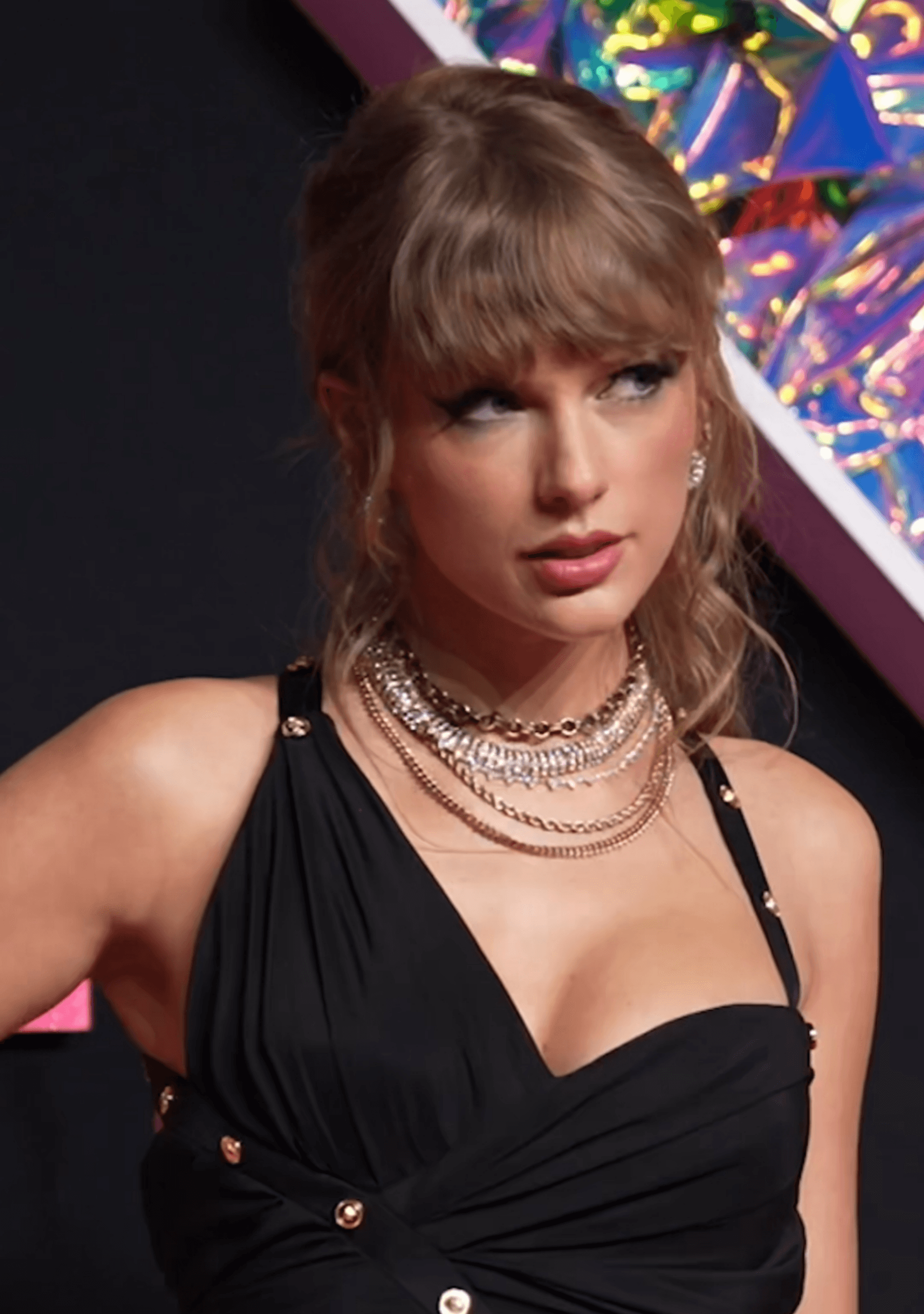
The ceremony happened inside Madison Square Garden, turned, according to CNN Entertainment correspondent Elizabeth Wagmeister reporting for Extra TV, into a full-scale garden set. The vows were irreverent and endearing. Both wore Dior. Adam Sandler officiated. Paul McCartney performed a song he hadn't played live in more than sixty years. None of that happened by accident.
What the coverage has mostly missed. In the breathless guest-list rundown and the diamond-encrusted rehearsal-dinner gift boxes. Is the business logic underneath the fairy tale. A wedding of this scale, constructed with this much intention, is not just a personal milestone. It is a brand event. And for two people who each sit atop their respective industries, the event was designed to do something very specific: fuse two audiences into one, while giving each of them exactly what they already loved about their own star.
Madison Square Garden Was the Only Venue That Made Sense
Taylor Swift and Travis Kelce held their wedding at Madison Square Garden, transforming the 20,000-capacity arena into an elaborate garden setting. A venue choice that signaled both scale and symbolism for two of the most famous people on the planet.
Most celebrities with serious money and a desire for privacy get married in Tuscany, or on a compound in Montana, or on a private island with a two-page NDA stapled to every invitation. Swift went the other direction entirely. She booked the most famous arena in the world. Her arena, given how many record-breaking nights she's logged there across multiple tours. And filled it with, as one guest told Extra, neighbors and high school friends alongside the A-list names.
That tension is the whole point. 'As intimate as it could possibly be given it was Madison Square Garden,' one on-camera commentator noted, and the paradox is not a bug. It reflects exactly how Swift has always positioned herself: the girl next door who happens to sell out every seat in every room she enters. The venue is a statement of scale. The guest list — see Jordyn Woods and Karl-Anthony Towns Got Married. And the Guest List Told the Whole Story. High school friends, neighbors, a mix of entertainment royalty and genuine personal relationships. Is the statement of sincerity. Both have to be true for the brand to work.
For Kelce, the venue carries its own symbolism. He is, foremost, a stadium athlete. The Garden is not a football field, but it is the canonical American arena. The place where Ali fought Frazier, where the Knicks chase ghosts, where the biggest music acts plant a flag. Marrying inside it puts Kelce in a cultural context that transcends the NFL calendar. It says: this man belongs in rooms this large all year round, not just on Sundays in the fall.
Why Adam Sandler Officiated. And What It Signals
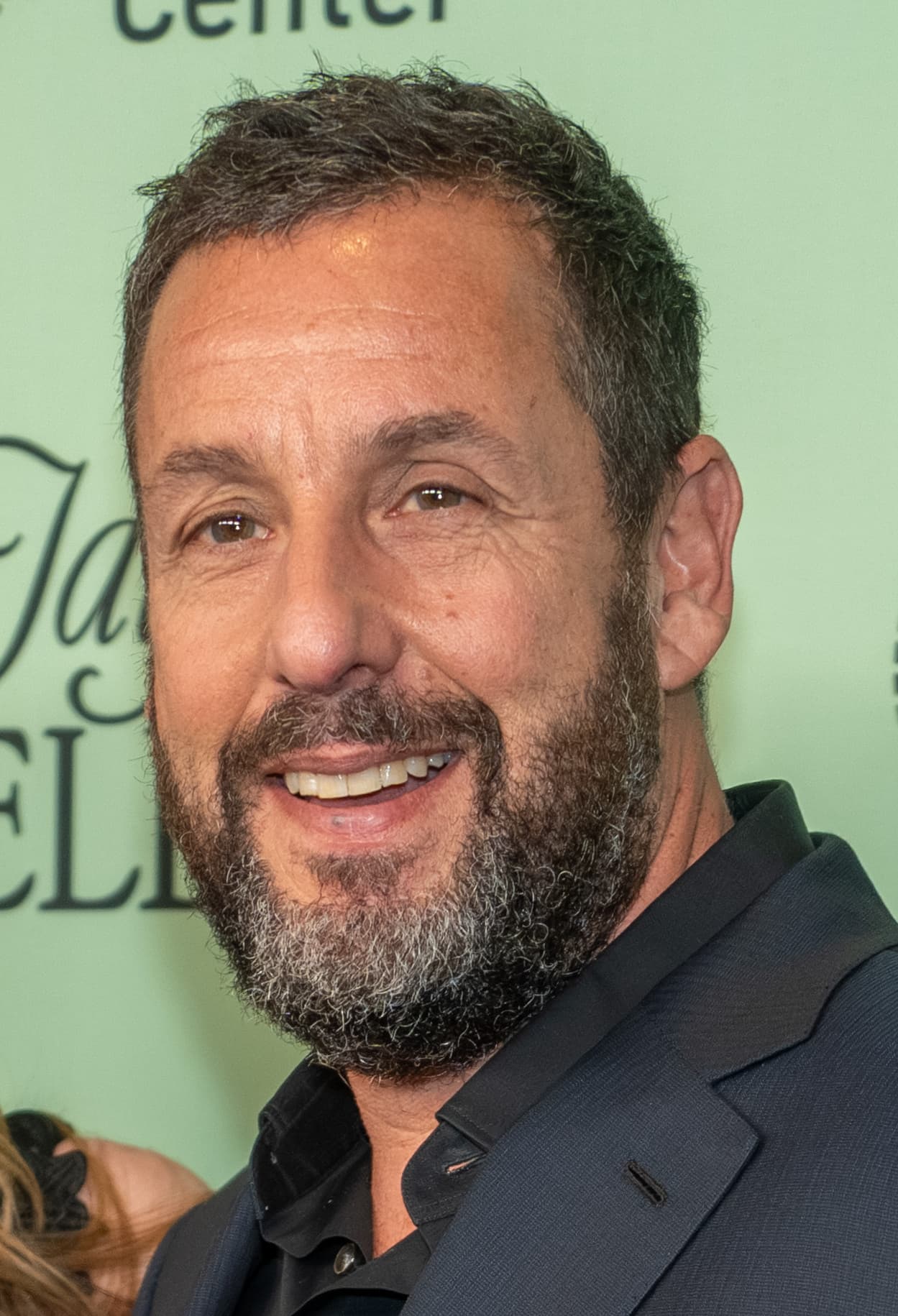
Adam Sandler officiated the Swift-Kelce wedding because both stars share a genuine personal bond with him. Swift through years of backstage meetings with his daughters at her shows, Kelce through his role in Happy Gilmore 2. Making Sandler a rare figure who bridges both of their worlds authentically.
The choice reads, on the surface, like a fun celebrity cameo. It is considerably more calculated than that. Sandler exists in a very particular cultural lane: beloved, unpretentious, legitimately funny, and allergic to the kind of prestige-chasing that makes celebrities seem remote. He is the anti-gala figure. Choosing him as the person who speaks the words that legally bind you sends a message about the kind of couple Swift and Kelce want to be seen as. Warm, a little silly, genuinely connected to people rather than to status.
The Entertainment Tonight reporting on the backstory matters here. Sandler has been attending Swift's shows with his daughters for years; she has, by his own account, been 'ridiculously nice' to his family every time. Kelce's connection runs through Happy Gilmore 2, where he landed a small part. And where Sandler told ET that being around Kelce reminded him of his own close friends. These are not manufactured relationships. That authenticity is exactly why the pick works: it cannot be easily spun as a stunt because the receipts are too long.
There is also the comedy angle, and it matters strategically. Sandler officiated with a microphone and, presumably, the energy of a man who has been waiting his whole life for exactly this assignment. Kansas City Chiefs coach Andy Reid told CNN the ceremony was 'phenomenal,' and that Sandler's central piece of advice. Kiss every chance you have, every day. Landed in exactly the register the couple wanted: simple, heartfelt, and wrapped in enough warmth to make a full arena feel like a backyard. That is a hard trick to pull off.
For Kelce specifically, the Sandler association is a soft career asset. Happy Gilmore 2 gives him a film credit. The wedding officiant story gives him a cultural story. Together, they push his identity further into the entertainment mainstream. Useful for an athlete who will eventually need a post-playing identity, and who has already shown, through his podcast, his TV appearances, and his comedy timing in interviews, that he intends to build one.
"The absence of a documentary is, in its own way, the most Taylor Swift move of the entire evening."
The Guest List Was Engineered to Merge Two Fan Bases
The Swift-Kelce wedding guest list mixed NFL figures like Patrick Mahomes and his wife Brittany with entertainment names like Selena Gomez, Benny Blanco, and Jennifer Lopez. A intentional construction that put both stars' core audiences in the same room and the same social-media frame.
Patrick Mahomes and Brittany Mahomes. Ciara and Russell Wilson. Andy Reid. On one side of the room, you have the NFL's most visible family and some of the league's biggest stars. The guests who confirm Kelce's standing inside the sport he's defined for a decade. On the other side: Selena Gomez and Benny Blanco sharing a pre-ceremony selfie, Jessica Alba and Danny Ramirez posting their before-and-afters, Kelsea Ballerini, Camila Cabello serenading her phone on the way in — see Gwyneth Paltrow Had No Idea. That Was the Point.. The music world in full attendance.
Then there are the bridge figures. Robin Roberts, George Stephanopoulos, and Michael Strahan from GMA, all of whom exist at the intersection of sports, entertainment, and morning-television culture. Hugh Grant, Ethan Hawke, Jason Sudeikis. J.Lo in diamonds and a black gown. These names don't belong to one tribe; they float between several. Their presence at the wedding reflects how Swift and Kelce want their marriage to read: not as a sports story or a music story, but as a culture story.
The Karlie Kloss invitation is worth a separate line. Kloss was an original member of the famous Swift squad, and there had been public speculation about a falling-out between them. Her presence on the guest list is either a genuine reconciliation or a pointed signal. Possibly both. Either way, it lands in the press as evidence of a bride who cleans up her relationships before walking down the aisle. That narrative serves Swift's long-standing 'drama behind her, growth ahead' positioning.
Paul McCartney's Performance Was the Night's Defining Flex
Paul McCartney reportedly performed 'I Want to Hold Your Hand' at the Swift-Kelce wedding. His first live performance of that song in more than 60 years. A moment that elevated the event from celebrity spectacle to genuine music history.
Sixty years is not a trivial gap. 'I Want to Hold Your Hand' was the song that broke the Beatles in America. The single that shipped 250,000 copies in its first three days in 1964 and set the stage for the Ed Sullivan appearance that rewired popular culture. If the Extra TV reporting holds, McCartney played it live for a wedding audience at Madison Square Garden in 2026 — see Harry Styles Stopped a Sold-Out Madison Square Garden for Dolly Parton. That Tells You Everything.. That is not a wedding detail. That is a music history footnote.
For Swift, securing a performance of that magnitude says something about where she sits in the industry ecosystem. McCartney does not owe anyone a favor. He plays when and where he chooses. The fact that he chose this room, on this occasion, reflects a genuine personal affection. And a peer-level recognition that few artists ever earn. It also gives the night an event quality that no amount of décor budget can manufacture: you cannot buy that story.
Stevie Nicks also performed, confirmed on air during the Extra coverage. Two of the most canonically important figures in Anglo-American rock, on the same bill, for a wedding. The night was not just a party. It was a declaration of cultural rank.
Dior, Cartier, Louboutin: The Fashion Economy of the Night
Taylor Swift wore Dior with Cartier jewelry and Louboutin shoes at her wedding, while Travis Kelce also dressed in Dior. A coordinated brand alignment that turns the couple into a walking luxury advertisement with a global audience of hundreds of millions.
Both Dior. That is not a coincidence and it is not simply a matter of taste. Matching house choices signal a coordinated fashion strategy. The kind that requires conversation between stylists, brand representatives, and the principals themselves well in advance. Dior gets to claim the wedding of the decade. In return, Swift and Kelce get garments made to their exact specifications by one of the most storied ateliers in Paris. The transaction is mutual and the value on both sides is enormous.
Cartier jewels add a second luxury name to the story. Louboutin shoes add a third. Each brand gets organic global coverage. Not a paid post, not a sponsored story, but actual news articles and TV segments that describe the products in detail. For houses that prize aspiration over accessibility, there is no better placement than a wedding that hundreds of millions of people will consume across news cycles, social feeds, and eventually, wherever the couple chooses to release images.
The fashion economy of this one evening likely runs into figures that dwarf most traditional advertising budgets. Whether these were gifted arrangements, paid partnerships, or simply the natural gravitational pull of dressing the world's most famous bride is not established by the sourcing available. What is clear is that every brand mentioned in connection with this wedding benefits immediately and lastingly. And the couple controls the narrative by choosing which houses get that proximity.
No Documentary, No Streaming Deal. The Value of Absence
The Swift-Kelce wedding was not filmed for a documentary or streaming release, according to an ET source, a choice that protects the event's emotional authenticity and keeps commercial exploitation at arm's length. Which, paradoxically, raises its cultural value.
The temptation to monetize must have been considerable. A wedding documentary with this cast, this venue, and these performances would attract streaming interest at a level most content creators will never see. Netflix would have written a check. So would Apple, Amazon, and probably three others. Swift said no. Or at least, that is what the sourcing suggests.
The strategic logic is sound. Swift's relationship with her audience is built on the perception that she shares what she wants to share, on her own terms and timeline — see Sandra Bullock's Comeback Is Quieter Than Her First Act, and Smarter. A streaming deal, with its attendant editorial process and commercial framing, would corrode that. The billboard announcement, the aunt talking to LBC News, the coach talking to CNN. These are the distribution channels she chose. Unmediated. Fragmentary. Emotionally real.
There is also a scarcity argument. The wedding of the decade, undocumented, becomes a story people will tell for years about what they remember hearing. Every guest becomes a primary source. Every leaked detail becomes a small event. Swift has always understood that withholding is its own form of release. That the gap between what fans want and what they get is where devotion lives. The absence of a documentary is, in its own way, the most Taylor Swift move of the entire evening.
What This Does to Travis Kelce's Career Trajectory
The Swift-Kelce wedding accelerates Travis Kelce's transition from elite NFL tight end to cross-industry celebrity, giving him credibility inside entertainment, fashion, and pop culture circles that most athletes never reach. And building the post-football identity he'll eventually need.
Kelce is, by any football measure, already secure in his legacy. Multiple Super Bowl rings, records at his position, the trust of the best quarterback of his generation in Patrick Mahomes. He does not need this wedding to cement his athletic standing. What it does is extend his shelf life as a famous person well beyond the playing career's end.
The entertainment angle is already in motion. Happy Gilmore 2 gives him a film credit. The wedding officiant story. And specifically the way Sandler talked about him, as a natural, a genuinely funny person, someone who reminded him of his own friends. Starts to build a character for him outside the locker room. Add the guest list of entertainment royalty who now have a personal story about Travis Kelce at a wedding, and his network inside the industry deepens considerably.
For a read on where the combined Swift-Kelce business sits in the broader celebrity wealth landscape, our Sports wealth profiles and Music wealth profiles track the underlying numbers. The point is not the wedding cost. The point is what the wedding buys in terms of cultural positioning. And for Kelce, the purchase is a decade of relevance beyond the final whistle.
Donna Kelce, leaving New York the day after the ceremony and telling waiting cameras only that it was 'magical, man, magical,' is the most efficient summary of the public-facing Kelce family brand: warm, a little aw-shucks, present without being calculated. She did not answer questions. She did not need to.
The Billboard Announcement and the Fan Contract
Swift chose a public billboard to announce her marriage rather than a social post or press release, a move framed by those close to her as a direct communication to fans. Fulfilling an implicit promise that the secrecy surrounding her relationship was for security, not permanent exclusion.
The billboard is the most telling detail of the entire event. It is a broadcast medium, not a conversational one. You cannot comment on a billboard. You cannot share it or repost it. You can only see it, and then tell someone else what you saw. For an artist whose entire commercial ecosystem runs on digital participation, choosing a static physical announcement is a intentional inversion. And the people around Swift made the reasoning explicit: after all the security-driven secrecy, this was her way of saying 'I am now sharing this with you.'
Swift's relationship with her fanbase operates under what amounts to an ongoing negotiation. She keeps certain things private; she shares others with extravagance. The Eras Tour was extravagance. The relationship, for most of its public life, was managed privacy. The billboard tips the balance back: 'I kept the details from you for reasons you understood, and now I'm telling you in the biggest possible font.' That is the fan contract honored.
It also closes a loop that began the moment Swift and Kelce were first photographed together. A loop that her audience has been tracking with the attention to detail most people reserve for financial documents. The wedding, the billboard, the aunt on LBC, the coach on CNN: these are the official endpoints. The MSG wedding analysis goes deeper on what the event reshapes for both their brand equations long-term. For now, the immediate read is simple. The story is no longer speculation. And Swift made sure you heard it from a billboard first.