Sarah Duncan's Prison Scene and the Art of the Short-Form Cliffhanger
A viral jailhouse confrontation reveals how character-driven micro-drama is quietly rewriting the rules of digital storytelling. And who controls the narrative economy behind it.
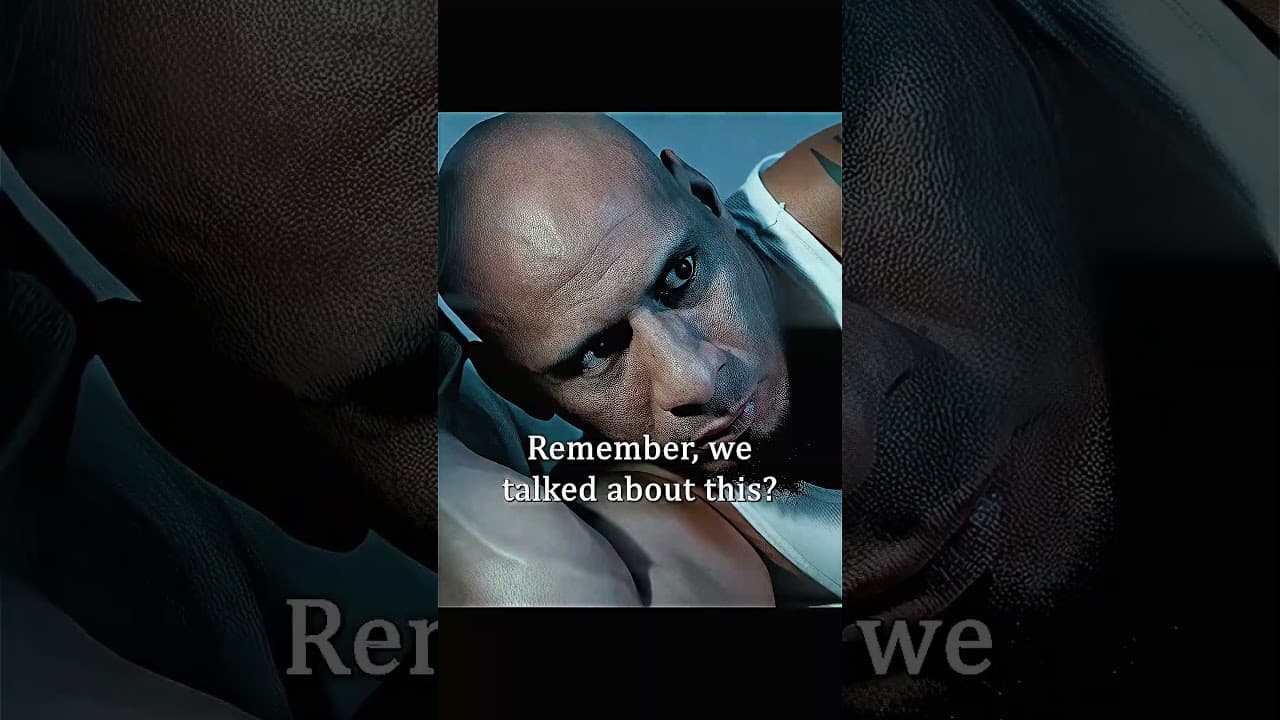
The stereo arrives in the wrong cell. That is the inciting event. An object, a small theft, a chain reaction. In the hands of a lesser creator, it stays exactly that: a prop dispute in a prison corridor. In Sarah Duncan's video published this week, it becomes something closer to a pressure cooker: competing power hierarchies, a sick animal, a forced medical gambit, and a riot-level standoff, all compressed into a single uninterrupted scene that plays, rewatches, and clips into thirty seconds without losing its spine.
Duncan posted the piece. a jailhouse confrontation built around the question of who stole whose stereo. On August 3rd under the blunt title 'Why did you steal my stuff.' The characters carry prison-yard names: Stomper, Rolo, Tuna. The stakes are on purpose miniature. A stereo. A cane. A sick bird. And yet the piece escalates with the structural discipline of a feature screenplay, moving from property theft to a solitary-confinement sentence inside three minutes.
That compression is not accidental. It is craft. And understanding how it works. How micro-drama monetizes, how character economy functions on short-form platforms, and what Duncan's approach signals about where digital storytelling is heading. Is the actual story here.
What Sarah Duncan's prison video actually is
Sarah Duncan's 'Why did you steal my stuff' is a character-driven short-form drama set inside a prison, using named recurring characters and escalating conflict to hold audience attention across a compressed runtime.
Strip the title of its hashtag and you have a provocation, not a description. The video is not a complaint or a reaction piece. It is scripted drama. Tightly plotted, character-specific, and built around a social hierarchy that the audience is expected to already understand. Stomper has history. Rolo is a challenger. The cane is not just a prop; it is a status object that carries prior-episode meaning.
That layering is significant. Duncan is not building a one-off sketch. She is building a world. One where the audience accumulates context across installments, where names land with weight, and where a line like 'he was all, I can take Stomper' functions as both comedy and escalation because the viewer has already catalogued who Stomper is and what getting 'dissed' by a Rolo means inside that ecosystem.
The format sits at an interesting intersection: it borrows the episodic logic of prestige television, the character brevity of sketch comedy, and the algorithmic demands of short-form video. Each scene needing its own resolution while still feeding a longer serial appetite. That combination is rarer than it looks, and harder to execute than the casual presentation suggests.
How prison-set storytelling earns its audience trust
Prison dramas build audience trust by making the internal social rules legible fast. Hierarchy, currency, and consequence. So viewers feel oriented enough to care about small stakes like a stolen stereo.
The genre has a long commercial track record. From classic film to peak-TV drama, incarceration settings work on screen because they are closed systems. The walls do the worldbuilding for you. Escape is impossible. Every object has value. Every alliance is transactional. The audience does not need a map; the institution provides it.
What Duncan does is miniaturize that trust-building to the demands of a platform where a viewer might arrive with zero prior context. The opening exchange. Theft accusation, cane as weapon, parole as use. Delivers the social rulebook in under forty seconds. We know who has power, who is bluffing, and what the costs of miscalculation are. All of that before a single scene heading.
Short. Clear. Loaded. Those three qualities are the whole assignment in micro-drama, and they are harder to hit simultaneously than any of them are alone. Most short-form creators nail one. Duncan is consistently working toward all three. Which is what separates a serial audience from a one-time click.
"The stereo is never really about the stereo. It is about who controls the narrative inside a closed system. And who profits from watching that control crack."
The sick-bird subplot and what B-stories do for short-form retention
A B-story in short-form drama. Like the ailing bird in Duncan's video. Functions as an emotional anchor that slows the pace of escalation and gives the audience a reason to feel something beyond adrenaline, dramatically improving rewatch and share rates.
The bird arrives mid-scene, apparently ill, apparently poisoned. It is a tonal left turn. The piece has been running on confrontation energy. Threats, theft, reputation. And then suddenly it asks the audience to sit with something quieter: an animal in distress, a character who knows enough veterinary logic to diagnose pesticide poisoning, a moral act performed inside an amoral environment.
B-stories serve a specific mechanical function in longer-form work: they provide relief valves, they complicate character, and they buy time for the A-story to reset before its next escalation. In a three-minute format, they do all of that in roughly thirty seconds. That is extraordinary economy. The bird exists, does its emotional work, and then the solitary-confinement standoff resumes. But the viewer is now slightly more invested in the protagonist because they watched someone care for a sick animal before starting a riot.
Audience psychology research in narrative theory has long established that perceived character warmth increases tolerance for moral complexity. Duncan is applying that principle intuitively. The bird is not a digression. It is load-bearing structure.
Why the '#MD' hashtag matters more than it looks
Hashtag taxonomy in short-form video functions as discoverability infrastructure. '#MD' signals a shared universe or creative community that routes new viewers into a pre-existing audience funnel rather than cold-starting each piece.
The tag in the title is not decoration. On platforms where the algorithm distributes content partly through hashtag clustering, a consistent tag attached to a recurring creative universe means every new piece inherits the discovery momentum of everything that came before it. New viewers who land on the prison video and then search '#MD' find the rest of the catalog. The tag is the franchise label.
That is a on purpose sophisticated approach to channel architecture. Most creators treat hashtags as SEO afterthoughts. The better ones treat them as the connective tissue of a world. A signal to returning viewers that this piece belongs to something larger, and a signal to the algorithm that this content has a community around it rather than being a single orphaned upload.
The business implication is real. A world with a named tag and recurring characters is easier to pitch to a platform partner, a streaming buyer, or a branded content team than a collection of unrelated shorts. It is, in miniature, the same logic that turned individual podcast episodes into network deals and individual newsletter issues into book proposals. The tag is a rights claim on a universe.
The economics of character-based digital drama
Character-based digital drama monetizes through audience loyalty. Repeat viewers, merchandise, licensing, and platform partner deals. Rather than the single-view ad revenue that one-off viral content generates.
Ad revenue on a single viral video is a one-time event. A return viewer is a subscriber. A subscriber is a community member. A community member is someone who buys a shirt, attends a live event, or follows the creator to whatever platform they migrate to next. The economic architecture of character-based work is at root different from the economics of the viral moment, and the gap between those two models has widened sharply as platform ad rates have compressed.
The creators who have converted digital audiences into durable revenue streams. Whether through Patreon tiers, YouTube memberships, or licensing deals with streaming platforms hungry for cataloged IP. Have almost all done it through worlds rather than moments. You can track that pattern across our latest reporting on creators who have moved from platform-native to cross-platform businesses.
Duncan's prison world, with its named characters and consistent hashtag architecture, is positioned for that kind of conversion. The stereo subplot, the cane mythology, the veterinary-diagnosis beat. These are all assets in a world that has resale value beyond the original upload. Whether she has a team building that infrastructure around her, or is managing it alone, determines how far that value travels.
Where short-form drama sits in the 2026 content market
Short-form drama occupies a growing gap in the 2026 content market, sitting between expensive prestige television and informal creator content. Attracting streaming platform scouts looking for low-cost IP with proven audience validation.
The streaming landscape has not gotten cheaper to populate. If anything, the economics of prestige TV have made development departments more cautious, not less — see Why That House M.D. Airplane Scene Still Lands Twenty Years Later. The result is a genuine appetite. At mid-tier streamers and at the content arms of major social platforms. For proven IP that arrives with an audience already attached. Short-form drama, when it has recurring characters and documented viewership, fits that brief precisely.
Think of it as the literary small-press model applied to video. A novel that sells fifteen thousand copies in paperback is not a bestseller. But it is a proven quantity. One that a film producer can point to when pitching a studio on the adaptation. Short-form drama with a consistent viewership works the same way. The numbers do not need to be television-scale; they need to be evidence of demand.
For context on how that pipeline has functioned across entertainment categories, the progression from digital micro-format to full production deal mirrors patterns we have covered in film wealth profiles. Where the entry point was almost never the big screen but something smaller, cheaper, and already audience-tested. The ceiling in short-form drama has not been found yet, and the smart money is watching creators like Duncan to see who builds the infrastructure to reach it.
The comparison to other career inflection points is instructive. The question is never whether the work is good. It often clearly is. The question is whether the business architecture around the work is sophisticated enough to capture the value the work generates. That is a different skill set entirely, and it is the one that determines whether a viral prison scene becomes a franchise or a footnote.
What the riot ending signals about narrative strategy
Ending a short-form drama episode on an unresolved riot. Rather than a clean conclusion. Is a intentional retention strategy that transforms a single-view interaction into a subscription behavior, compelling the audience to return for the next installment.
The video does not resolve. Backup is called but has not arrived. The standoff is mid-collapse. The drink may or may not have worked. Solitary may or may not have been avoided. The piece ends inside the crisis, not after it. And that is a structural choice, not a production limitation.
Serial cliffhangers are as old as the nineteenth-century magazine installment. They work because they convert passive viewers into active anticipators. The audience does not just remember the video; they think about what comes next. That cognitive investment is the difference between content that is consumed and content that is followed.
For a creator building a world on platforms where algorithmic amplification rewards watch time and return visits, the unresolved ending is not just narrative strategy. It is product strategy. The next video in the series carries a warm audience that has already processed the premise, knows the characters, and has a specific question it wants answered. That is an extraordinary head start on retention, and it builds up across every installment.
Who profits when digital drama worlds break through
When a digital drama world breaks through to licensing or platform deals, the primary financial beneficiary is the creator-as-IP-owner. Provided they retained rights. Followed by any production partners, managers, or platform revenue-sharing structures that were in place before the breakthrough.
Rights retention is the governing variable. A creator who built their world on a platform that holds licensing rights to uploaded content is in a at root different position than one who uploaded to a platform with creator-favorable terms, or who incorporated the work under their own production entity from day one. The creative value of a fictional prison universe with recurring characters is real. The economic capture of that value depends entirely on the contractual architecture built before anyone was paying attention.
This is the pattern that has played out repeatedly in the transition from digital-native to mainstream: the creators who did well financially were the ones who had structures in place before the deal arrived. Those who did not found themselves negotiating from a weaker position. Or discovered that their most valuable work had already been assigned to a platform they could not claw it back from.
Across the wealth profiles we track in the Neon Hollywood Atlas, the single most consistent variable separating high-ceiling digital careers from stalled ones is IP ownership at the moment of breakout. Not talent. Not audience size. Ownership. The stereo in Duncan's video is a metaphor the piece did not intend to offer, but there it is: the question of who stole what, and what can be done about it once it's gone.
What Duncan's approach reveals about the next generation of storytellers
Sarah Duncan's prison drama represents a generation of digital storytellers who are self-taught in both craft and distribution. Building fictional worlds without network infrastructure and proving audience demand before any institution validates them.
There is no development deal in the origin story here. No writers' room. No showrunner mentor. The character of Stomper was not stress-tested in a pitch meeting or focus-grouped by a streaming executive. He arrived directly in front of an audience, and the audience decided whether he worked. That disintermediation is the defining condition of this generation of storytellers. And it cuts both ways.
The upside is speed and autonomy. A world that would have taken three years to develop through a traditional studio pipeline exists and has viewership now. The downside is the absence of infrastructure: no rights counsel, no licensing team, no distribution network beyond the platform's own algorithm. The talent arrives faster than the business does.
That gap. Between creative sophistication and business infrastructure. Is where careers either scale or plateau. The creators who close it, whether through management, partnership, or self-education, tend to follow trajectories worth watching. The ones who don't make excellent work that someone else eventually monetizes for them. You can see analogous dynamics in the career arcs covered in pieces like Lea Thompson's 40-year retrospective. The lesson being that the business of art has a longer memory than the art itself, and its terms are set early.
Duncan is early. The world is built. The audience is forming. The next move is the one that matters most, and it is not a creative one.