Perez Hilton Made Amends Before the Crisis. Now the Reckoning Is His Own.
The blogger who weaponized celebrity vulnerability spent years quietly trying to undo the damage. This week's events reveal what that project cost him. And what it couldn't fix.
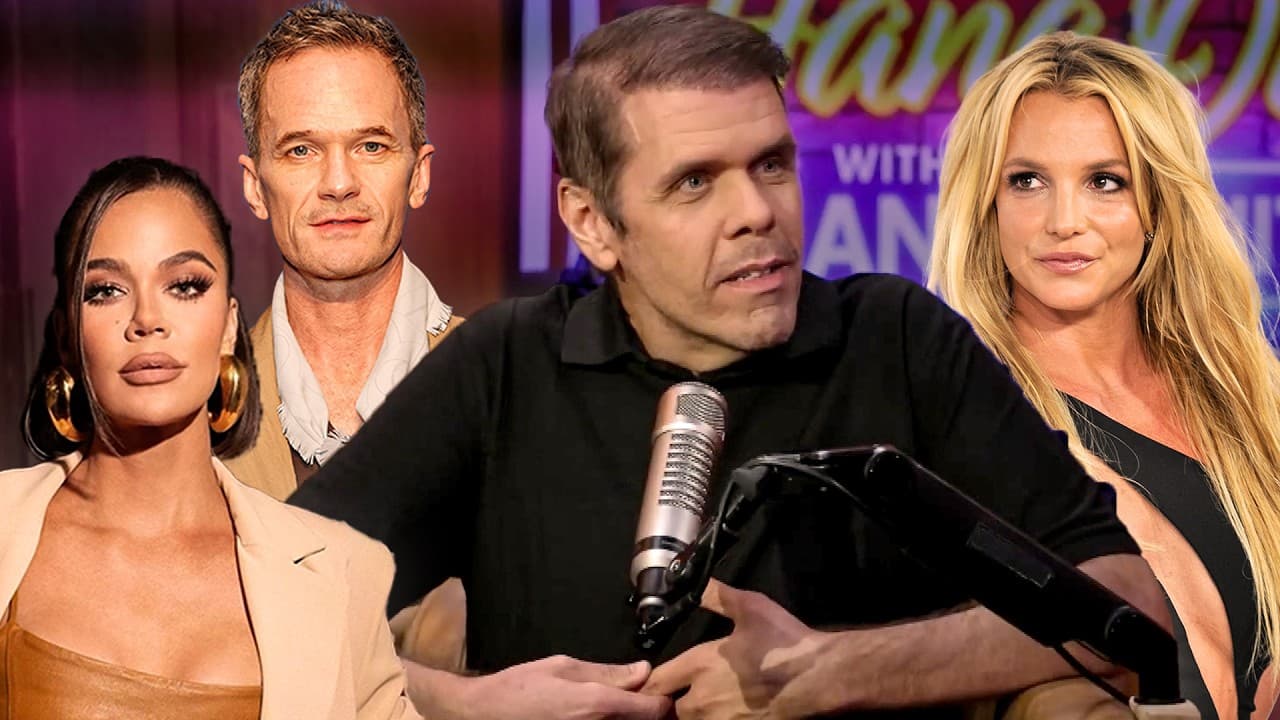
Three days after a livestreamed suicide attempt left the internet and the entertainment press scrambling for language to describe what they had witnessed, Perez Hilton's first words to his mother, according to the Daily Mail, were: 'I need help.' Those three words carry a weight that his decade and a half of blogging rarely allowed for. A man who built a media empire on the refusal to grant celebrities interiority. Who turned the interior lives of Britney Spears, Neil Patrick Harris, Jennifer Aniston, and dozens of others into content. Was finally, in the most extreme possible circumstances, asserting that he had one too.
The family confirmed to Entertainment Tonight that when the crisis began, Hilton's three children were in the home. His sister led them out immediately, the family said, to shield them from further trauma. The priority now, the family told ET, is 'helping the children begin to heal.' That detail. The kids present, then gone, their father mid-collapse. Is the emotional core of a story that keeps pulling in two directions at once: toward sympathy and toward reckoning, toward the man in crisis and the machinery he spent years running.
What Entertainment Tonight reported this week goes beyond the immediate medical emergency. It surfaces something that had been largely invisible: that Perez Hilton had, in the years before Tuesday, made intentional and specific attempts to apologize to the celebrities he harmed. Britney Spears, Khloe Kardashian, Neil Patrick Harris among them. That private accounting, conducted while he continued to work in public-facing media, tells us something complicated about the economics of regret, the limits of personal redemption when the product you sold was someone else's pain, and what happens to an influencer whose entire brand was built on a model the culture has since decided to prosecute.
What triggered the crisis and who was present when it unfolded
Perez Hilton's suicide attempt took place while his three children were in the home. His sister immediately led the children out to prevent further trauma, and Hilton was subsequently rushed to hospital, where he told his mother he needed help.
The family's statement to Entertainment Tonight was careful in its language but stark in its facts. The children were there at the start. The decision to remove them was made quickly, and the family credited Hilton's sister with executing that removal. The framing. 'led by his sister'. Suggests the adults in the house acted with speed and clarity even as the situation around them collapsed. In a crisis that played out partly in public, that detail is a reminder that the most serious consequences were private and domestic.
Hilton was taken to hospital and, days later, the Daily Mail reported his first verbal communication with his mother. The phrase 'I need help' is not analysis; it is an admission. For a man who spent the mid-2000s operating from a posture of total confidence. Who built a media brand on judgment and exposure. It represents a posture he rarely, if ever, performed in public. The gap between those two versions of the same person is where this story lives.
The children's wellbeing, the family made clear, is now the organizing concern. Hilton has spoken publicly over the years about his path to parenthood. He told ET in 2013 that the birth of his son Mario, born four weeks early via surrogacy, had begun to shift something in him. The irony that the public crisis reached its lowest point in the same domestic space he has consistently described as his reason for changing is not a minor biographical footnote. It is the central tension.
Which celebrities Perez Hilton tried to make amends with before the crisis
Before this week's events, Perez Hilton told Sean Hannity that he had made direct attempts to apologize to Britney Spears, Khloe Kardashian, and Neil Patrick Harris. Three of the most prominent targets of his early blogging career.
The list is not random. Each name represents a distinct category of harm in Hilton's editorial model. Britney Spears was the ultimate subject of tabloid cruelty during her 2007 breakdown. A period in which Hilton, like much of the celebrity press, treated her unraveling as a content opportunity rather than a mental health emergency. Khloe Kardashian was subjected to years of body commentary from Hilton's platform, the kind of sustained public scrutiny of a woman's appearance that now has a specific and widely understood name. Neil Patrick Harris was outed. Or near-outed. In 2006, when Hilton publicly pressured the actor to confirm his sexuality before Harris had chosen to do so himself.
That last case was particularly pointed, because Hilton's justification at the time leaned on a kind of in-community logic: as a gay man himself, he framed the outing of closeted celebrities as a political act, a form of accountability for those who benefited from straight-passing privilege. The argument had adherents then. It has almost none now. The consensus that a person's sexual identity is theirs to disclose, at a time of their choosing, has hardened considerably in the intervening two decades. And Hilton, to his credit, has publicly abandoned the position.
What is harder to assess is whether private apologies, however sincere, constitute repair when the original damage was public, published, and archived. The posts still exist. The screencaps circulate. The cultural memory of Hilton's peak-era cruelty is part of the permanent record of that particular moment in celebrity media. Personal reconciliation and structural accountability are not the same thing, and the gap between them is something Hilton's story forces into focus.
"The machinery of early celebrity blogging demanded a certain numbness. And what Hilton's reckoning exposes is that numbness has costs that do not always stay external."
The Jennifer Aniston parking garage encounter and what it cost him
Perez Hilton has described a chance encounter with Jennifer Aniston in a Los Angeles parking garage in which she told him, 'I'm a real person,' a reframe that he said he still carries as 'very heavy baggage.'
The parking garage story is the most revealing detail in Hilton's public accounting of his blogging years, precisely because of what it says about how the work actually operated in his own mind. He told Hannity he had thought of Aniston the way one thinks of a soap opera character. As a figure who exists to generate plot, whose feelings are a narrative resource rather than a lived reality. That is not a cynical position he developed strategically. It is, if taken at face value, simply how the content machine ran.
When Aniston said 'No, I'm a real person,' she was not delivering a rebuke so much as a correction. And that correction, Hilton says, landed. He described it as something he carries, heavy baggage that has not lightened. That is an unusually honest account of moral injury. The recognition that you have caused harm, that the harm was real, and that the recognition itself does not undo anything.
The business logic of early celebrity blogging required exactly the kind of dissociation Hilton is now describing. To publish daily, at volume, about the bodies and relationships and private collapses of dozens of people, you cannot engage with their full humanity. The machinery demands a certain numbness. What Hilton's late-career reckoning exposes is that the numbness has costs. And that those costs do not always stay external. Sometimes they circle back.
How Hilton's shift away from cruel content actually happened. And what drove it
Perez Hilton began publicly moderating his editorial posture after the birth of his son in 2013, describing his shift as the result of maturity and the recognition that his worldview had been self-centered rather than principled.
In a 2013 sit-down with Entertainment Tonight, conducted shortly after his son Mario's birth, Hilton talked about wanting to be 'less me'. A phrase that, in retrospect, reads as a fairly precise diagnosis of the original problem. The early blog was, almost entirely, an extension of a particular personality: competitive, hierarchical, obsessed with status and exposure, fluent in the social grammar of gay male culture at a specific moment in time. The cruelty was not incidental to the brand. It was the brand.
The shift that followed fatherhood was real but gradual and, critically, incomplete. Hilton moved away from the most egregious content. The body-shaming posts, the outing campaigns. But remained in the celebrity commentary space, which is itself structured around the same fundamental premise: that famous people's private lives are legitimately public property. Stepping back from cruelty while remaining inside that economy is a meaningful change, but it is not a departure from the system.
It is worth noting that the culture shifted around him at the same time. The mid-2010s brought a sustained reassessment of tabloid media's treatment of Britney Spears specifically, and of female celebrities more broadly, that made Hilton's peak-era content increasingly radioactive. The 'Free Britney' movement made explicit what critics had been arguing for years. That the press had participated in the public destruction of a woman's mental health and called it journalism. Hilton's personal evolution and the culture's political evolution ran in parallel, which makes it difficult to cleanly separate internal change from strategic adaptation to new norms.
What the business of celebrity blogging looked like at its peak. And why it collapsed
Celebrity blogging, at its early-2000s peak, operated as a high-traffic advertising business with almost no editorial overhead, no gatekeeping infrastructure, and no accountability mechanisms. Social media's rise transferred that traffic directly to celebrities themselves, gutting the intermediary model.
To understand what Perez Hilton built, you have to understand the specific window it occupied. In the years between roughly 2005 and 2012, celebrity gossip lived primarily on blogs and in tabloid magazines. Hilton's site drew traffic numbers that, at peak, rivaled major media outlets. Without the editorial staff, the legal infrastructure, or the ethical frameworks that those outlets nominally maintained. The ad revenue that traffic generated was substantial. The barrier to entry was a domain name and a point of view.
The collapse of that model was structural, not moral. When Instagram and Twitter gave celebrities direct access to their audiences, the intermediary gossip blog lost its information advantage. Fans no longer needed Hilton's site to feel connected to Britney Spears; Spears could speak directly to them. The product Hilton had been selling. Access, proximity, the illusion of inside knowledge. Became redundant almost overnight. The business was not undone by a change of heart but by a change in platform architecture.
What remained after the traffic evaporated was an influencer model: a personality with a following, selling that following's attention to advertisers or brand partners. That model works, but it works differently and at different margins. It also demands a different relationship with the audience. One built on likability rather than notoriety, on parasocial warmth rather than edge. The transition from feared blogger to relatable personality-brand is not a natural one, and the evidence of how difficult it has been for Hilton is visible in his broader career arc over the past decade.
The influencer economy that replaced early blogging has its own crisis dynamics, as we have reported at length. The pressure to perform continuously, to remain visible in a landscape of algorithmic churn, falls hardest on those who built audiences in an earlier era and have been running ever since to stay relevant.
What Hilton's private amends campaign reveals about celebrity redemption as strategy
The decision to seek private reconciliation with specific, named celebrities before any public crisis suggests Hilton understood that reputational repair with industry peers was a precondition for professional survival. Not merely a moral obligation.
It is important to hold two things simultaneously here: that personal apologies can be genuine, and that in Hollywood, relationships with celebrities are also professional infrastructure. A blogger-turned-commentator who has burned every relationship with the talent he covers has a ceiling. The reconciliation attempts. With Spears, Kardashian, Harris, and presumably others. Were, regardless of their emotional authenticity, also practical. They were the maintenance work of a career that runs on access.
This is not a cynical reading. It is simply a recognition that in the celebrity media economy, as in most economies, the personal and the professional are rarely fully separable. The fact that Hilton appears to have carried genuine remorse. 'very heavy baggage,' in his own words. Does not mean the amends campaign had no strategic dimension. The two things coexist without canceling each other out.
What is striking, in the aftermath of this week, is the extent to which the private accounting appears to have preceded a much more public one. The attempt came first. The crisis followed. That sequence does not imply causation, but it does suggest that Hilton has been in an extended period of self-examination. And that the weight of that examination, whatever its origins, was not light.
The children's role in Hilton's public narrative and what it means going forward
Perez Hilton has consistently described fatherhood as the central driver of his personal transformation, making his three children both his stated motivation for change and, after this week, the most urgent consideration in his immediate recovery.
Since 2013, Hilton has returned repeatedly to the theme of fatherhood as reorienting force. It is the explanation he offers for why he softened his editorial approach. It is the frame through which he discusses maturity and accountability. The children. Mario and two younger siblings, all born via surrogacy. Have functioned in his public narrative as both proof of change and motivation for it.
That framework now has to absorb a new and very different chapter. The children were in the house when the crisis began. They were removed. The family's stated priority is their healing. The version of fatherhood Hilton has described publicly. As a stabilizing, clarifying force. Collided this week with something it could not contain. What that means for how he discusses the subject going forward, should he return to public work, is genuinely open.
The entertainment press, tracking these developments across recent days, has been careful to foreground the children's welfare in its coverage. A notable contrast to how the same press handled the children of celebrities in crisis during the early years of Hilton's career. That shift in framing is itself meaningful: it reflects a set of norms that, in part, developed in reaction to the kind of coverage Hilton once produced.