Matt Refe, the Comment Section, and the Cost of Punching Down
A comedian who built a brand on savage takedowns told a fan to "remove yourself from this earth." The fan has autism. What the fallout reveals about the fragile economics of edgy celebrity in 2026.
The comment was still live long enough to screenshot. That's the only reason we're talking about it. Matt Refe. One of the biggest stand-up names on the planet right now, fresh off buying a piece of genuine paranormal folklore. Told a user named Chris Mack to 'please remove yourself from this earth,' added that he didn't matter to anybody, and signed off by threatening to block him into 'non-existence.' Chris Mack, it emerged afterward, has autism. The original comment that apparently provoked Refe had already been deleted by the time the screenshot went viral, as TMZ reported on their August 7th live broadcast.
None of that context absolves the response. It may, however, explain the psychology behind a pattern that keeps surfacing among hyper-successful entertainers: the compulsive need to fight back online, even when fighting back is the one move that can cost you everything.
The incident sits at the intersection of three separate stories. There is the conduct story. What Refe said, and why it crossed a line that even his most loyal fans are struggling to defend. There is the business story. A comedian who just bought the Warren Occult Museum and Annabelle doll provenance in Salem, Massachusetts, now watching that investment's launch events become a liability rather than a spectacle. And there is the structural story, the one that matters most: why fame does not insulate people from the compulsion to respond to strangers, and what happens to a brand built entirely on the premise that cruelty, in the right hands, is comedy.
What Matt Refe actually said, and why the framing matters
Matt Refe wrote to a user: 'Sir, you are a lifeless douchebag. Please remove yourself from this earth. You do not matter to anybody.' The phrase 'remove yourself from this earth' is widely read as a directive to self-harm, and Refe's team has not publicly disputed the screenshot's authenticity.
The specific language is worth sitting with, because the defense Refe's camp is likely to reach for. 'I didn't literally say kill yourself'. Is technically true and entirely beside the point. 'Remove yourself from this earth' is one of those phrases that has a single recognizable meaning in the context of social-media hostility. It does not read as an invitation to move abroad. No reasonable person scrolling past it would parse it any other way.
The second element of the message builds up the first. 'You do not matter to anybody' is not a joke. It is not a setup. It is an attempt to annihilate someone's sense of their own worth. Refe reportedly added that nobody reads Chris's comments and that he would fall back into 'non-existence' once blocked. The cumulative weight of the message is a sustained effort to make one person feel like they should not exist. Which is, by any clinical or colloquial definition, a targeted attack on a vulnerable individual.
Refe's sources told TMZ's team that he is routinely flooded with vile, coordinated troll attacks. People who bait him into responding and then delete their original comments, leaving only his reaction visible. That is a real and well-documented harassment pattern. It doesn't make the response acceptable. It makes it explicable, which is a much smaller thing.
The Warren Museum deal and why it turned the paranormal community against him
Matt Refe purchased the Warren Occult Museum in Salem, Massachusetts, including the Annabelle doll collection, and launched ticketed events priced around $166 per ticket. A price point that drew immediate backlash from the existing paranormal enthusiast community who felt their subculture was being commodified.
The Warren Museum acquisition was, on its face, a smart brand extension. Refe is publicly obsessed with the paranormal. The museum. Built around the case files of demonologists Ed and Lorraine Warren, whose investigations inspired the Conjuring film franchise. Carries genuine cultural weight in horror and paranormal circles. Buying it signals authenticity, not just celebrity tourism.
But the execution lit a fuse. Tickets for launch events came in at roughly $166 a head. To a casual concertgoer that number is unremarkable. You cannot get a decent seat at most arena shows for less. To the paranormal community, a subculture historically defined by accessibility and grassroots investigation, it felt like a velvet rope being strung across something that used to belong to everyone.
This is a recurring tension whenever celebrity money enters a niche fandom. The community feels its identity is being extracted and resold. The celebrity sees an undervalued asset with obvious upside. Both positions are internally consistent. Neither party fully hears the other. Refe's decision to engage. And then weaponize. A critic of the ticket pricing is where the two separate grievances collided into one very bad screenshot.
The backlash to the ticket prices would have cycled through the news in a week. The comment will follow the museum's marketing for considerably longer.
"The same instinct that makes a roast set thrilling makes a late-night Instagram response catastrophic. And fame is supposed to be the thing that makes trolls irrelevant."
Why comedians are uniquely exposed when they punch at civilians
Comedians are granted wider social license for cruelty than almost any other entertainer. But that license is explicitly conditioned on the targets being powerful, famous, or at least complicit in the joke.
Stand-up has always operated on a permission structure that other entertainment formats don't get. A comedian can say things in a set that would end a politician's career before breakfast. The audience grants that license because the comedian is, theoretically, punching up, or at least punching sideways at shared absurdities. The unwritten rule. Older than political correctness as a concept. Is that you don't use the stage's amplification to genuinely destroy a private individual who cannot fight back.
Refe built his following, in significant part, by being willing to say what others wouldn't. That's the brand promise. The problem is that the same instinct that makes a roast set thrilling makes a late-night Instagram response catastrophic. In a club, the bit has context, timing, and a room full of people who chose to be there. On a social-media reply thread, it's just a famous person telling a nobody they don't deserve to exist.
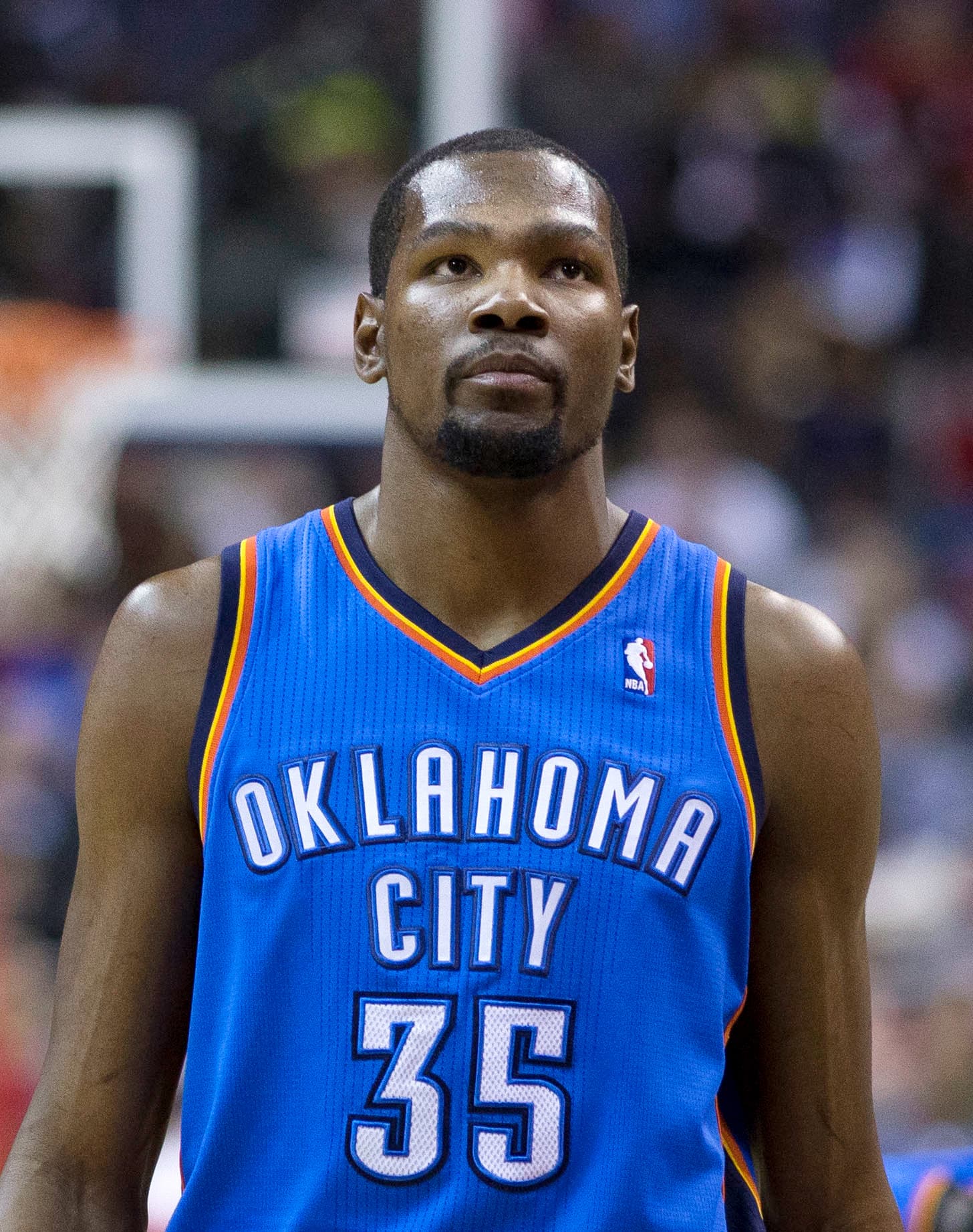
The Kevin Durant comparison that TMZ's hosts raised is instructive. Durant spent years running alleged burner accounts to clap back at critics, and the mockery he received for it. From fans who otherwise revered him as one of the greatest basketball players alive. Showed exactly how much the public will forgive talent while refusing to forgive the inability to ignore strangers. Fame, the logic goes, is supposed to confer the security that makes trolls irrelevant. When it visibly doesn't, audiences find it more unsettling than the original insult.
For Refe specifically, the calculation is harder. His comedy is predicated on being unfiltered. An apology risks undercutting that entire persona. No apology sustains a story that will otherwise fade. Neither option is clean, which is probably why, as of the broadcast, he had said nothing publicly.
The apology math: what Refe has to say, and when
Refe faces a narrow window in which an apology lands as genuine rather than strategic damage control. Every day of silence shifts the public interpretation from 'he's gathering his thoughts' to 'he doesn't think he did anything wrong.'
The calculus on celebrity apologies has been studied enough. Formally and informally. That the broad strokes are not controversial. Speed matters. Specificity matters. The absence of the passive-construction 'I'm sorry you were offended' matters enormously. What Refe's team needs to produce is a statement that acknowledges the specific phrase, acknowledges why it caused harm regardless of the original provocation, and does not lead with the defense about deleted comments.
The deleted-comments defense is not a lie. It is, however, a sequencing problem. If you open your apology by explaining why the other person upset you first, the listener. And the algorithm. Reads it as justification, not remorse. The structure has to be: harm acknowledged, responsibility accepted, context offered third if at all.
The autism dimension adds a layer that Refe's sources are clearly trying to get through. TMZ's reporting indicates that Refe claims he had no knowledge of Chris Mack's autism when he wrote the reply. Which is plausible, since the original provoking comment had already been deleted. But 'I didn't know' is not the same as 'it would have been acceptable if he weren't autistic.' The absence of that explicit clarification in any public statement is a gap his communications team should be worried about.
The longer this sits, the more it becomes a story about evasion. Refe is talented enough, and has enough goodwill banked, that a well-crafted, genuinely contrite statement probably gets him through this. Silence converts it into a character question. And character questions have a way of resurfacing at the worst possible moments, like, say, the launch weekend of a $166-a-ticket paranormal event.
Taylor Swift's wedding photos and the NBC AI segment that broke Swiftie Twitter
NBC aired an AI-generated image appearing to show Taylor Swift and Travis Kelce at their wedding during a preseason NFL broadcast, paired with audio that made clear it was a joke. But the image circulated on social media stripped of that audio context, briefly convincing thousands of fans the photo was real.
The segment was, built that way, a clever piece of broadcast television. NBC's team generated an AI wedding photo of Swift and Kelce, dropped it alongside genuine announcements about Sam Darnold's marriage and Justin Herbert's engagement to Madison Beer, and let anchor Maria Taylor explicitly note. Out loud, on air. That she and her colleagues weren't invited to the wedding and hadn't seen the real photos. If you were watching, the joke tracked immediately.
Social media doesn't watch. It screenshots. The image went wide without the audio scaffolding, and a meaningful portion of Swift's fanbase momentarily believed they were looking at the first real wedding photograph. The correction cycle. The 'it's AI, calm down' wave. Followed about forty seconds behind the panic wave.
What's interesting about the episode is less the fan reaction, which is entirely predictable for the most-discussed celebrity marriage of the decade, and more what it reveals about the current state of AI image quality — see The Reverse Megxit: What Meghan's Return to Acting Reveals About the Sussex Business Model. TMZ's hosts noted that the generated photo was convincing enough to pass for a low-resolution digital camera shot. That is a meaningful benchmark. We are now at a point where AI wedding photos of public figures are indistinguishable, at a glance, from the real thing. Which means the pressure on Swift to release authentic images before the fakes proliferate is only going to increase.
Swift's team has so far maintained the position that she releases things on her own timeline. That is historically accurate and has served her extraordinarily well across a career that is, as we track on our full Atlas of celebrity wealth, one of the most on purpose managed in modern entertainment. But the AI gap is a new variable. Every week without official photographs is a week in which fabricated ones fill the vacuum. And the more convincing the fakes get, the harder it becomes to reclaim the narrative when the real images finally drop. The math, for once, is not in her favor.
The Mitch McConnell carriage house story and what celebrity journalism actually does
A TMZ reporter investigating Mitch McConnell's whereabouts doorstepped what was believed to be his Washington DC home, only to discover that Senator Tom Tillis of North Carolina had been renting the property's carriage house for years. Confirming McConnell had been discharged from rehabilitation but raising fresh questions…
The McConnell segment is, on one level, pure farce. A reporter shows up to stake out the home of a senator who has been conspicuously absent from public life for months, and the person who answers is a completely different senator, cheerfully explaining that he's been living in the back of the property the whole time. It's the kind of scene that writes itself.
But strip away the comedy and the underlying story is not trivial. McConnell has been absent from public view long enough that the question of his health and capacity is a legitimate matter of public concern. Tillis told the TMZ reporter that McConnell had been 'discharged' from rehabilitation. Which aligns with what other outlets have reported. But added the telling phrase 'I understand he's doing okay,' suggesting a degree of distance between the two senators that does not suggest regular contact. Tillis himself is heading out of the Senate in a matter of months, which removes whatever incentive he might have had to actively manage the optics of the situation.
The moment also illustrates something specific about the way celebrity and political journalism intersect at the TMZ model. Traditional political press would not door-knock a senator's house on a tip. TMZ will, and sometimes the result is a senator's tenant telling you more than a press release would. For the latest on stories like this, the methodology. Chaotic, sometimes absurd, occasionally revelatory. Produces information that the more formal press corps misses.
The 'sologamy' moment and what Tracy Cameron's wedding to 50 actually sold
Tracy Cameron, celebrating her 50th birthday, staged a full wedding ceremony. With a walk down the aisle, officiant, bridal party, and Paris honeymoon. In which she married the concept of being 50 years old, generating viral coverage and a gift haul she spent three days opening.
The bit works because it isn't really a bit. Cameron's daughter suggested the idea. A party planner built it out into a complete wedding production. Friends got formal invitations, wore wedding attire, and brought gifts. The ceremony had an officiant delivering real vows about commitment and self-worth. By the time Cameron told TMZ she was heading to Paris on a 'honeymoon' in September, what started as a birthday concept had become a fully realized cultural statement.
The economic logic underneath it is worth noting. A traditional 50th birthday party generates goodwill and memories. A wedding-to-yourself generates content, press coverage, a gift registry's worth of celebration, and. In Cameron's case. A TMZ segment that put her story in front of a national audience. The production costs were presumably comparable to a high-end birthday event. The return, measured in attention and documented joy, was categorically different.
There is a broader trend here that the entertainment business has been slow to fully process. The events that go viral are not the most expensive or the most star-studded. They are the ones with a coherent, emotionally resonant concept that is also visually distinctive. Cameron's wedding had a narrative arc. Proposal, ceremony, honeymoon. That a dinner party does not. In an attention economy, narrative structure is the real luxury good.
The structural problem with being Matt Refe right now
Refe enters this controversy at a moment when his brand valuation. Comedian, paranormal entrepreneur, Warren Museum owner. Is at its most leveraged and therefore most vulnerable to reputational damage. The comment did not happen in a vacuum; it happened at the worst possible time.
This is the part that gets missed in the immediate cycle of screenshot-and-condemn. The Matt Refe who made that comment is not the same commercial entity as the Matt Refe of two years ago. He now has a physical museum, a ticketed event business, a doll that has its own insurance policy and mythology, and a paranormal brand that requires the goodwill of a community already primed to be suspicious of him. That is a lot of invested capital. Reputational and financial. To expose to a conduct controversy.
The comparison that holds is less Kevin Durant and more the pattern we've examined in other entertainer-turned-entrepreneur arcs on our business profiles: the moment a talent's income becomes built that way dependent on a brand extension, the brand extension's vulnerability becomes the talent's vulnerability. A comedian can survive a bad tweet. A museum owner who also runs ticketed paranormal events cannot as easily absorb a story that positions him as someone who tells disabled fans to remove themselves from the earth.
What Refe built in Salem is, potentially, a genuinely interesting business. The paranormal tourism market is real, the Annabelle provenance is commercially valuable, and his authentic enthusiasm for the subject gives the enterprise a credibility it wouldn't have if a private equity firm bought the same assets. None of that survives if the story of the museum becomes inseparable from the story of this comment.
The road out is not complicated, even if it is uncomfortable. Acknowledge specifically. Don't lead with the defense. Move fast. And. As TMZ's own hosts pointed out. If you are going to respond to provocation online, start screenshotting what was said to you before you say anything back. The absence of that evidence is the only reason the 'I was provoked' argument has no legs. It's also, frankly, the kind of advice that a comedian whose entire brand is built on saying sharp things out loud should not need to receive from a celebrity tabloid. But here we are.