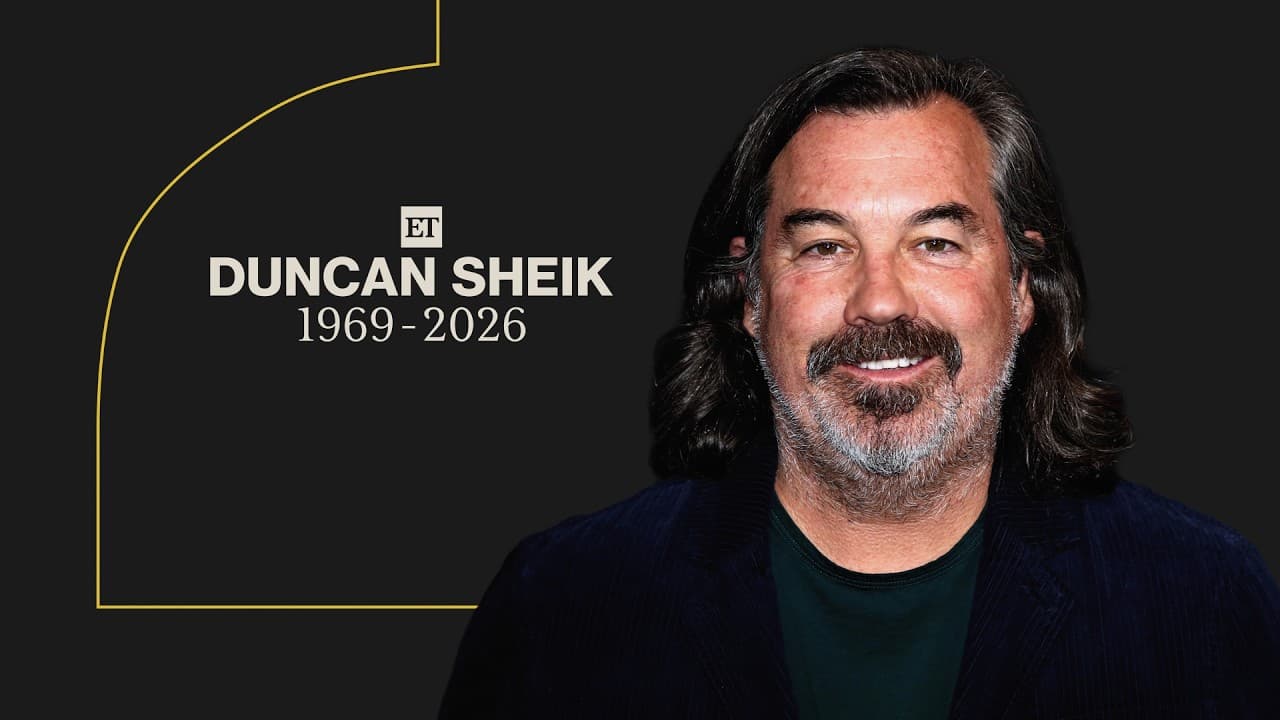
Grown Ups 3 Is Not a Sequel. It's a Business Model Wearing a Punchline.
Adam Sandler reassembles his original comedy squad for a Netflix prequel-turned-sequel, and the move reveals everything about how Hollywood's most durable friendship group became its most reliable franchise machine.
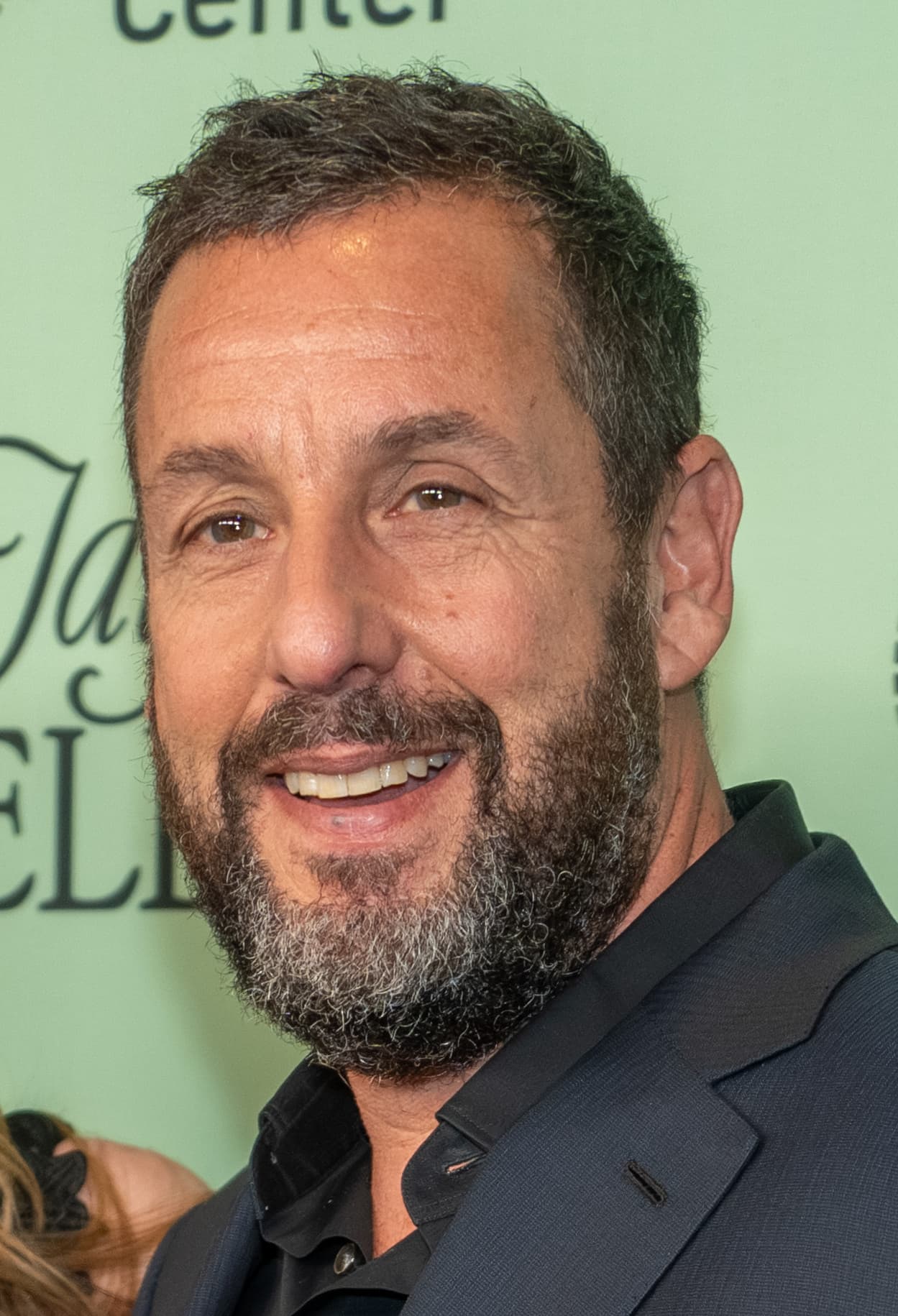
The joke Rob Schneider made on set this week was almost too honest to be funny. He'd need Grown Ups three, four, five, six, and seven, he told Entertainment Tonight, to pay off his house, his kids' private school, the boat, the second house in Portugal. A self-deprecating bit, sure. But strip away the timing and what's left is a clean description of the deal Adam Sandler has been offering his inner circle for the better part of three decades: show up, be yourself, get paid, repeat.
Sandler is back on set with David Spade, Chris Rock, Kevin James, and Schneider. Maya Rudolph, Salma Hayek, and Maria Bello are there too. Jackie Sandler, his real-life wife, has returned to the screen alongside their daughters Sadie and Sunny. The latter of whom made her onscreen debut in the original film as an infant and is now twenty years old. Kyle Newacheck is in the director's chair. The premise pivots on exactly that generational passage: the kids are grown, which means the gang can finally, as the production's own logline frames it, go on the ultimate adventure. Netflix is the platform. The cameras started rolling this week.
What looks, on the surface, like a cheerful reunion special is actually the latest data point in one of the more quietly radical career strategies in the entertainment business. Sandler did not rebuild his commercial standing by chasing prestige. He rebuilt it by building infrastructure. A tight cast of recurring collaborators, a long-term streaming deal that gives him creative latitude most directors twice his stature don't enjoy, and a franchise logic that turns personal loyalty into repeatable revenue. Grown Ups 3 is where all of that converges.
How the Grown Ups franchise became Sandler's most durable IP
The Grown Ups franchise is Adam Sandler's most commercially reliable property, having drawn massive theatrical audiences in 2010 and 2013 before the third installment migrates the brand to Netflix, where Sandler's deal gives him both creative control and a guaranteed global audience.
The first Grown Ups arrived in 2010 at a moment when Sandler's theatrical brand was still largely intact but beginning to show cracks. Critics had been grinding against his output for years, but audiences kept showing up. The film. Five childhood friends reuniting after the death of their old basketball coach. Earned well over $160 million domestically against a production budget that, by the standards of its cast, was relatively modest. It was a proof of concept: the Sandler friend group, deployed as an ensemble, generated returns that none of its members could reliably produce alone.
Grown Ups 2 followed in 2013 and performed nearly as well. More importantly, it confirmed the ensemble structure as a brand in itself. Audiences were not buying tickets to a plot. They were buying tickets to watch a specific group of people exist in proximity to one another. That is a subtly different product, and it ages differently. Films built on story mechanics have shelf lives. Films built on personality chemistry can theoretically run indefinitely, provided the personalities remain.
The shift to Netflix for the third installment is the franchise's logical next move rather than a retreat. Sandler's overall deal with the platform, one of the most discussed arrangements in the streaming era, gave him resources and freedom that theatrical releasing no longer reliably offers mid-budget comedies. The Grown Ups audience. Broad, multigenerational, not necessarily hunting for prestige. Maps cleanly onto Netflix's subscriber base. Moving the franchise there is not a concession. It's an optimization.
What Sandler's Netflix deal actually buys him. And them
Sandler's Netflix deal, now spanning multiple renewals, gives him guaranteed funding, global distribution, and creative autonomy on projects that would struggle to get theatrical greenlight budgets today, while Netflix secures one of streaming's most consistently rewatchable comedy libraries.
When Sandler first signed with Netflix in the mid-2010s, the deal was read by parts of the industry as a sign of diminished theatrical relevance. That reading aged badly. His Netflix films. From the broad comedies to the surprising dramatic turns. Accumulated viewing figures that the platform repeatedly highlighted in its own reporting. The arrangement has been renewed more than once, and the terms have reportedly expanded with each cycle. Sandler is not a filmmaker who stumbled into streaming. He is one who saw the architecture early.
For his collaborators, the deal functions as something close to a repertory theater with a global stage. Spade, Schneider, James, and Rock are not independently in the business of anchoring Netflix originals. But as members of the Sandler ensemble, they have access to production resources, international distribution, and a promotional apparatus that their solo projects cannot easily replicate. Schneider's Portugal joke is funny precisely because it contains a real economic truth: proximity to Sandler is genuinely valuable, and everyone on set knows it.
The creative autonomy clause is the part that gets underreported. Sandler co-writes his scripts. Grown Ups 3 is no exception, per the production's own disclosure. And he has significant influence over casting, location, and tone. For a comedian who came up in a system where studios held most of those levers, the Netflix model represents a structural inversion. He is, functionally, a producer-auteur who happens to also be the lead actor. That dual position is where the real use lives.
It also shapes what kind of film gets made. Grown Ups 3 is being shot as the kids-are-grown premise that the franchise has been building toward since Sadie and Sunny Sandler appeared as infants in the original. That is a long game. A decade-plus narrative arc structured around real people aging in real time. No studio development process produces that kind of continuity. A long-term streaming relationship does.
"His personal relationships are his casting pool. His friendships are his development infrastructure."
Why Sandler keeps casting the same five people
Adam Sandler repeatedly casts David Spade, Chris Rock, Kevin James, and Rob Schneider because the ensemble functions as a trust-based creative unit that lowers production friction, and because audiences have demonstrated they will show up specifically for the group dynamic rather than for any individual.
There is a version of this story that frames the recurring cast as nepotism writ large, a closed circle of friends who pass work among themselves. That framing misses the business logic. Ensemble comedies are notoriously difficult to produce because they depend on chemistry that cannot be manufactured in a casting session. When you have a group whose rhythms are already calibrated. Who have been on tour together, done press together, played basketball together at Sandler's house for twenty years — see Why That House M.D. Airplane Scene Still Lands Twenty Years Later. You are eliminating the most expensive variable in comedy production: the time it takes for performers to find their groove.
Chris Rock's presence in the ensemble is worth dwelling on for a moment. Rock is one of the most analytically sharp stand-up comedians alive, and his recent performance work has carried genuine dramatic weight. He does not need Grown Ups 3. But the film represents something different from the projects he might pursue independently: it is low-pressure, high-warmth, and built on a friendship that predates both men's fame. In the current industry climate. Where Rock's public profile has been complicated by events at the 2022 Academy Awards. A return to a context defined by genuine camaraderie rather than controversy has its own value.
Kevin James and David Spade operate somewhat differently within the group. Both have sustained careers that run largely parallel to Sandler's rather than through it, but both have found that their most commercially visible work tends to cluster around his projects. That is not a coincidence; it is a function of what Sandler's platform does for visibility. And for Spade, whose comedy has always been sharpest in reactive, ensemble contexts rather than as a lead, the fit is structural rather than merely sentimental.
The Sandler family casting strategy and what it signals
Adam Sandler has cast his wife Jackie and daughters Sadie and Sunny across multiple films, transforming his real family into a recurring creative unit whose presence signals authenticity to audiences and keeps production relationships within a circle of genuine trust.
Sunny Sandler's arc is the most pointed example of how the franchise operates as a living document. She appeared in the original Grown Ups as an infant. She is now twenty, returning as a full cast member with her own material. Her father said on set this week that he is proud of her in it. A simple, unguarded statement that lands differently when you consider that he has been constructing the conditions for this moment across fifteen years of production decisions.
This is not a vanity project in the pejorative sense. Casting your family, done poorly, produces uncomfortable films where non-actors are visibly out of their depth. The Sandler approach works because his wife and daughters are genuinely comfortable in front of cameras. They have been on set since childhood. And because the characters they play are, in essence, heightened versions of who they already are. The artifice is minimal. The result is that audiences who have watched the franchise over time feel something like familiarity with actual people.
There is also a control dimension that is easy to underestimate. When your family members are your co-stars, you do not have to negotiate around other actors' schedules, representation conflicts, or salary escalations. You already know who is available, what they can do, and how they respond under pressure. For a producer-performer trying to run an efficient set, that is not a small thing. It is a structural advantage disguised as sentimentality.
The broader pattern. Tracking it across Sandler's film wealth profile alongside the rest of his output. Suggests a intentional blurring of the line between personal life and creative portfolio. His personal relationships are his casting pool. His friendships are his development infrastructure. That conflation makes his creative output unusually stable, because it is not dependent on any external relationship remaining intact.
Kyle Newacheck's role and what it reveals about Sandler's directorial choices
By attaching Kyle Newacheck. A director whose background spans TV comedy and Sandler's own Netflix productions. To Grown Ups 3, Sandler signals a preference for collaborators who understand ensemble tonal work over directors whose signatures might compete with the group dynamic.
The director of a Sandler ensemble film has a specific and somewhat unusual job: to be invisible enough that the performers can breathe, technically proficient enough that the looseness reads as craft rather than chaos, and fast enough to keep a large cast productive across a long shoot. Newacheck fits that profile. His background in comedy television. Where pace, coverage, and ensemble management are survival skills. Translates directly to what Grown Ups 3 needs.
Sandler has historically favored directors who are either close friends or proven collaborators over prestige hires whose aesthetic agendas might chafe against the hang-movie ethos the franchise depends on. That is a intentional creative stance. The auteur in the Grown Ups universe is not behind the camera. It is the person co-writing the script and assembling the cast. Newacheck's role, however skilled, is to serve that vision rather than compete with it.
It is worth noting the contrast here with Sandler's other Netflix output. His more dramatically ambitious films have worked with directors whose own sensibilities were very much present on screen. That he separates those collaborations from his franchise work is not inconsistency. It is compartmentalization. He knows what each project is trying to be, and he hires accordingly.
The premise shift: why 'kids are grown up' was always the third-act plan
Grown Ups 3 advances the franchise by making the next generation of characters central to the story, a structural move that refreshes the ensemble's comedic possibilities while creating a built-in emotional payoff for audiences who have watched the original cast age across fifteen years of films.
The first two films derived most of their energy from adults behaving like children. Grown men reverting to boyhood dynamics under the pressure of reunion, nostalgia, and middle age. It was a reliable engine, but it was also a finite one. You can only go back to the waterpark so many times before the joke needs a new gear.
Making the next generation the lens through which the story moves solves that problem elegantly. The original cast can now play straight. Or straighter. While the comedic displacement shifts to their children getting through a world the parents built. That inversion generates fresh material without requiring the original ensemble to do something tonally alien. Sandler and Spade at sixty play differently than Sandler and Spade at forty-four, but the franchise accommodates that shift rather than pretending it hasn't happened.
The real sophistication is in the casting of Sadie and Sunny Sandler alongside the other franchise children who have now aged into adulthood. The audience's familiarity with them is not manufactured through exposition. It is earned through the accumulated viewing time of the preceding films. That is an audience relationship most franchises spend hundreds of millions of marketing dollars trying to build. Grown Ups achieved it by simply letting time pass.
What the Netflix comedy landscape looks like around this film
Netflix has positioned itself as the dominant home for mid-budget American comedy by locking in established talent like Sandler, filling a theatrical gap left when studios retreated from the genre, and using comedies' strong rewatch numbers to keep subscribers engaged between tentpole releases.
The theatrical comedy genre, as it existed in the 1990s and 2000s. $40-80 million adult comedies with star-driven casts, released in summer or the holiday corridor. Has largely contracted. Studios chasing IP franchises and franchise IP have squeezed out the mid-budget original, and the performers whose careers were built on that model have had to adapt. Some went to television. Some disappeared. A handful found their way to streaming, which has proven far more hospitable to the form.
Netflix in particular has bet aggressively on comedy as a retention tool. Stand-up specials, ensemble films, and family comedies all perform well on the platform's engagement metrics in ways that are built that way different from how prestige dramas perform. A Sandler comedy gets watched, rewatched, put on in the background, and recommended to a cousin. A pattern that the platform's algorithm rewards. Grown Ups 3 is not just a movie on Netflix. It is content infrastructure.
For context on how other entertainers are getting through similar strategic choices in the current streaming landscape, our latest reporting tracks the broader reshuffling of talent relationships across platforms. The Sandler model. Lock in a long-term exclusive deal, use it to produce high-volume, high-familiarity content, maintain creative control. Has become something close to a template. Other comedians and actor-producers have tried variations of it. Few have executed it with the same consistency.
The comedy genre's migration to streaming also changes the economics of sequels. A theatrical sequel requires the original to have performed recently enough that the audience remembers it and is hungry for more. A streaming sequel operates differently. The platform can surface the original on demand in the weeks before the new film drops, effectively compressing the promotional timeline and refreshing the audience's connection to the material. For a franchise like Grown Ups, where the last installment was over a decade ago, that is not a minor logistical point. It is the mechanism that makes the third film viable.
Who profits beyond Sandler. And what the ensemble model means for legacy careers
The Sandler ensemble model generates meaningful financial and visibility benefits for co-stars like David Spade, Rob Schneider, and Kevin James, whose solo commercial profiles have narrowed since their peak years, giving them access to a global platform they cannot easily replicate independently.
Schneider's joke about needing seven sequels to pay for his second house in Portugal is a comedy bit, but it is also a compressed career autobiography. He and Spade rose to prominence on Saturday Night Live in the early 1990s alongside Sandler, and all three rode the theatrical comedy wave through the late 1990s and 2000s. Schneider's solo output has always been more cult than mass-market. Spade's television work has given him consistency, but not scale. Within the Sandler ensemble, both men reach audiences they simply do not command on their own.
Kevin James occupies a slightly different position. His Paul Blart franchise produced genuine theatrical hits, and his television career has been durable. But the comedy landscape that made Paul Blart possible has contracted alongside everything else in the mid-budget theatrical space. His presence in Grown Ups 3 is less a rescue than a reinforcement. A reminder that the ensemble is more than the sum of its parts for everyone in it, including the member with the most successful parallel franchise.
Chris Rock's situation is the most complicated and the most interesting. His career has navigated significant turbulence in recent years, and his public profile now carries layers it did not have in 2010. A return to a warmly familiar ensemble. Shot on a set that Entertainment Tonight described this week as a place where the chemistry is visibly intact. Serves a different purpose for him than for the others. It is a context in which he is simply a funny person among other funny people, which is both the simplest and most useful thing he can be right now.
The broader lesson for the industry is that the ensemble model, executed with genuine relationships rather than assembled-for-the-project casts, creates a career support structure that individual stardom cannot replicate. You can track similar dynamics, with different mechanics, across other corners of the entertainment world. The way long-running musical collaborations generate loyalty that transcends individual projects, for instance, as explored in our music wealth profiles. The principle is the same: durable relationships compound.
What Grown Ups 3 means for Sandler's career arc at this specific moment
Grown Ups 3 arrives as Sandler consolidates a late-career position as one of streaming's most bankable actor-producers, using a franchise built on personal relationships to demonstrate that creative control and commercial reliability are not mutually exclusive outcomes.
Sandler is in his late fifties now, which by Hollywood's traditional accounting should place him in a particular kind of career twilight. The industry has long assumed that comedy stars age out of the broad audience that made them. Sandler has spent the better part of a decade dismantling that assumption in real time. Through his Netflix deal, through the critical reappraisal that followed Uncut Gems, and through the shrewd compartmentalization that lets him make a film like Hubie Halloween alongside more dramatically serious work without either undermining the other.
Grown Ups 3 is the franchise pole of that strategy. The highest-familiarity, broadest-reach project in his current portfolio. It is also the one most directly connected to his personal life, which is not a coincidence. As he moves further from the studio system that shaped his early career, his creative raw material has increasingly been the people and relationships around him. That is a sustainable model in a way that chasing trends or studio mandates never was.
For readers tracking the full arc of his film career and financial profile, the Grown Ups 3 announcement represents something more than a sequel greenlight. It is evidence that the infrastructure Sandler has built. The relationships, the platform deal, the family casting, the writer-producer role. Is now mature enough to sustain franchise activity that most studios would not risk funding in the current market. He has, in effect, become his own studio, using Netflix's resources and his own social capital as the two pillars of a production apparatus that nobody else could have built the same way.
The kids are grown. The set is running. And the man who assembled all of it is right in the middle of it, exactly where he has arranged to be. That is not sentiment. That is architecture.