When the FBI Meets the Militia: What FBI's Port Turner Episode Reveals About TV's Vigilante Obsession
A community erects armed checkpoints, a federal agent finds a prisoner in a basement, and someone blows a bridge. FBI's latest episode isn't just good television, it's a precise barometer of where American procedural drama is placing its bets right now.
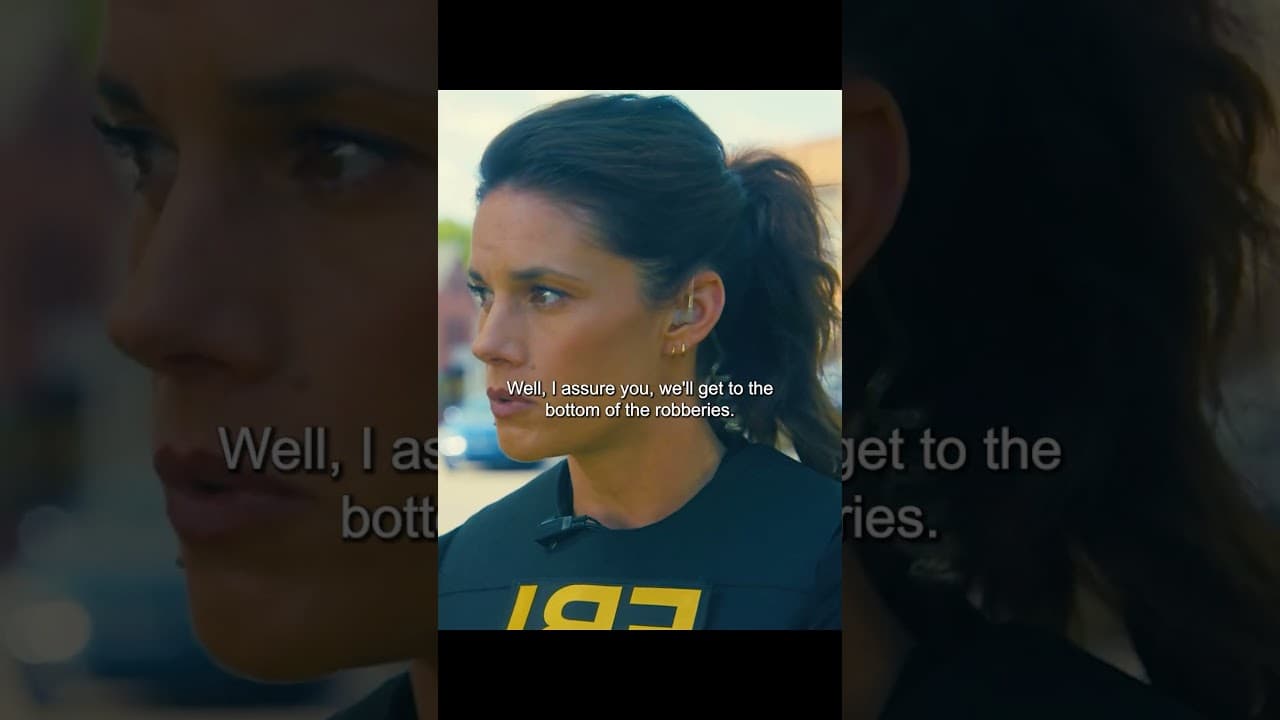
The armed checkpoint goes up first. No badge, no uniform, no warrant, just Caleb and his neighbors, rifles in hand, deciding who enters Port Turner and who does not. By the time Special Agents Bell and Zidane pull up in a government vehicle and identify themselves as FBI, the show has already made its argument: in a community that has been ignored long enough, the private force fills the vacuum the public one left behind.
That scene, surfaced this week by analyst Blaine Rutherford, is the engine of the entire episode. A pharmacy hit. A gas station robbed. A harvest store looted and torched. Local PD called repeatedly and did nothing. So the residents of Port Turner built something of their own, a neighborhood watch, as one character puts it, 'very much on steroids.' The FBI arrives not as rescuers but as uninvited guests in a sovereignty dispute that predates their warrant.
What follows is a tightly constructed moral negotiation, a missing judge's son found in a basement, a bridge ultimately destroyed to prevent federal extraction, that uses the procedural format to ask a question the genre has been circling for years. When institutions fail, and people arm themselves in response, who exactly is the law protecting?
What happens in the FBI Port Turner episode with the militia checkpoint
In the Port Turner storyline, FBI agents Bell and Zidane are stopped at a civilian-run armed checkpoint, then discover missing person Eli McMahon held prisoner in a local resident's basement, and the community blows a bridge to prevent federal agents from removing him.
The episode's structure is classical procedural, missing person leads to search warrant, search warrant leads to discovery, but its texture is something more unsettled. The agents move through Port Turner as strangers in a country that has already organized itself without them. Caleb, the community's de facto leader, isn't hostile in the way procedural antagonists usually are. He is tired. He has been asking for help for nearly a year and getting silence.
That context matters to how the confrontation reads. When Bell tells the checkpoint crew that the FBI is 'here to help,' Caleb's people practically laugh, not from contempt, but from the exhaustion of having heard something like that before. The show earns its tension because neither side is coded as the villain. The agents have a legitimate warrant. The community has a legitimate grievance. The drama lives in the gap between those two facts.
The basement discovery reframes everything. Eli McMahon, the judge's son they are searching for, has been held prisoner and worked over. Tom Clifford, a local resident, is the apparent captor. But Caleb insists Eli is also a person of interest in the robberies and arson that started the whole crisis. What the community built in the absence of law enforcement has produced its own form of detention, rough, extralegal, and not entirely without logic. When the bridge explodes in the final moments, it is less a cliffhanger than a statement: the community would rather be cut off than absorbed back into a system it stopped trusting.
Why procedural TV keeps returning to the vigilante community storyline
Vigilante-community plots resonate on network procedurals because they dramatize a real institutional anxiety, the perception that official law enforcement is slower, more bureaucratic, and less accountable than the communities it nominally serves.
CBS procedurals in particular have spent the better part of a decade doing something interesting with the vigilante archetype. The lone rogue cop, a staple of the 1980s, has been gradually replaced by something more collective and more ambiguous: the community that takes matters into its own hands not out of bloodlust but out of abandonment. Port Turner's checkpoint is, structurally, kin to a dozen storylines that have aired across FBI, Blue Bloods, and NCIS in recent seasons.
The shift reflects a genuine cultural negotiation that showrunners have spotted in the data. Trust in federal institutions has been declining across polling for years, and that decline is not ideologically uniform, it cuts across demographics and regions. A story about rural residents building their own checkpoint after being ignored by local PD plays to audiences from very different political orientations simultaneously. That is a difficult trick to pull off, and when procedural TV manages it, the episodes tend to linger in the cultural conversation longer than their ratings alone would suggest.
What makes the Port Turner execution particularly clean is the show's refusal to adjudicate. The FBI agents are competent and sympathetic. The community members are reasonable and wounded. The wrongdoer, Tom Clifford, exists somewhat apart from the vigilante question. His crime gives the episode its plot, but the episode's argument is really about the checkpoint, the checkpoint's legitimacy, and what happens when two competing systems of order finally have to look each other in the eye.
"The community does not dispute the warrant's legal validity. It disputes its moral authority in a place where federal institutions have been absent for nearly a year."
What the 'blow the bridge' ending signals about FBI's narrative ambitions
The decision to destroy the bridge at the episode's close signals that FBI's writers are deliberately leaving the institutional-authority question open, using infrastructure destruction as a visual metaphor for the permanent severing of trust between a community and the state.
Blowing the bridge is not a random escalation. It is a termination. Roads and bridges are infrastructure of connection, of commerce, of jurisdiction, of rescue. A community that destroys its own bridge is not retreating; it is declaring. It would rather be an island, literally, than accept reintegration on the federal government's terms. The image is almost too neat, but the show earns it because the hour preceding it has made the community's logic feel coherent.
For FBI as a franchise, the ending also represents something strategically interesting. The show has, over its run, trended toward cleaner resolutions, cases closed, perpetrators identified, institutional order restored. A bridge explosion that strands an agent and leaves the vigilante question unresolved is a different kind of statement. It suggests the writers are testing whether their audience can hold ambiguity across episodes, or whether the episode functions as a self-contained moral provocation.
Either way, the moment sits in a line of recent prestige-adjacent network storytelling that has realized moral complexity does not require a premium cable budget. It requires only that you take your antagonists seriously, that you write Caleb not as a zealot but as a man who called the police and was ignored. Once you do that, the bridge explosion stops being a plot twist and starts being the only honest ending available.
The business logic behind FBI tackling institutional-trust storylines
Institutional-trust storylines allow network procedurals to capture audiences across the political spectrum by dramatizing grievances, government unresponsiveness, community self-reliance, that resonate broadly without requiring the show to take an explicit partisan position.
This is, at bottom, a ratings strategy dressed up as thematic ambition. The two goals are not mutually exclusive. Network procedurals survive on broad demographic reach, and broad demographic reach in the current environment means finding stories that do not instantly sort the audience into opposing camps. A community ignored by law enforcement, forced to protect itself, and then challenged by federal authority when the feds finally do show up, that story has purchase from very different kinds of viewers for very different reasons.
The economics of the procedural format reward this kind of controlled ambiguity. CBS procedurals reach some of the largest live-audience numbers in American television, which means their advertisers are buying access to a wide, cross-demographic room. A show that strays too far ideologically bleeds part of that room. A show that finds stories where institutional critique and institutional defense can coexist keeps the room intact. Port Turner is a case study in how to thread that needle.
The deeper business logic connects to how streaming libraries are built. FBI episodes that contain a genuine moral argument have longer shelf lives as on-demand content than episodes that resolve without friction. A viewer encountering the Port Turner episode on Paramount+ six months from now will find something that still has something to say. That evergreen quality is increasingly what distinguishes network procedural content worth licensing from content that exhausts itself in the original broadcast.
How FBI depicts the limits of federal jurisdiction in practice
The episode dramatizes federal jurisdictional limits by showing FBI agents who hold a valid warrant but cannot enforce their authority without triggering a violent confrontation, a scenario that reflects real tensions between federal reach and local resistance that courts and policy debates have long struggled to resolve.
The warrant scene is procedurally precise in a way FBI tends to be. Bell and Zidane have authorization to search Tom Clifford's home. What they do not have, what no warrant can provide, is community consent to operate freely in Port Turner. Caleb's people do not dispute the warrant's legal validity. They dispute its moral authority in a place where federal and state institutions have been absent. That is a different kind of resistance, and it is harder to resolve with legal argument.
The show gestures at a real structural problem. Federal jurisdiction is not self-executing. It requires local cooperation, or the threat of force sufficient to compel compliance. In Port Turner, the community has made clear it is willing to match that force, and when Bell invokes FBI SWAT as a deterrent, Caleb backs down not because he is persuaded but because he is doing math. The bridge explosion that follows suggests the math changed the moment the agents moved to extract Eli.
For audiences tracking this alongside our latest reporting on how institutional authority is being dramatized across prestige television, the Port Turner dynamic reads as part of a broader pattern. Shows are increasingly willing to let federal authority look procedurally correct but humanly insufficient, not villainous, but limited in ways the genre once refused to acknowledge.
Where the Eli McMahon subplot fits the missing-person procedural tradition
The Eli McMahon storyline follows the procedural tradition of using a missing-person case as a vector for exposing deeper community dysfunction, in this case, the extralegal detention system that Port Turner's vigilante network had built in the absence of functioning law enforcement.
Missing-person cases have been the procedural genre's most durable engine since the format consolidated in the 1990s, and the reason is structural. A missing person gives the investigators a goal that is morally unambiguous, find the person, get them safe, while the circumstances of the disappearance can carry almost any thematic freight the writers want to load onto them. Eli McMahon is missing because the community's informal justice system has been holding him. That detail transforms the vigilante storyline from a backdrop into the actual subject of the episode.
The complication, Caleb's insistence that Eli is a person of interest in the robberies and arson, is the episode's most honest moment. The community did not kidnap Eli arbitrarily. It detained someone it believed was connected to the violence that had upended its economy. Whether that belief is correct, the show does not fully resolve. Tom Clifford is the captor, but the community's logic for why Eli should not simply be removed is not dismissed as paranoid. It is taken seriously, which is unusual.
That seriousness is what separates the Port Turner episode from more comfortable procedural territory. In most missing-person resolutions, the extraction is triumphant. Here, it triggers a bridge demolition. The show is arguing, quietly but clearly, that finding the missing person does not automatically restore order, that order, in Port Turner, had already been replaced by something else, and the FBI's arrival disturbs that something else as much as it corrects it.
What Blaine Rutherford's analysis reveals about the scene-breakdown format's reach
Scene-breakdown content from analysts like Blaine Rutherford extends procedural television's cultural conversation beyond its broadcast window, surfacing specific dramatic moments for audiences who engage with television as text rather than passive entertainment.
The scene-breakdown format occupies an interesting position in the media ecosystem around long-running procedurals. FBI does not generate the kind of episodic criticism that prestige cable dramas attract from outlets with full-time TV desks. Its episodes rarely receive the close-reading treatment in the days after broadcast. What fills that gap is creator-driven video analysis, breakdowns that isolate specific scenes, interrogate their logic, and give the show's most engaged viewers a place to think out loud about what they watched.
Rutherford's treatment of the Port Turner material does exactly that. By centering the checkpoint confrontation and the bridge explosion as the episode's load-bearing moments, the analysis helps viewers understand why the episode feels different from a standard FBI resolution, even if they could not immediately articulate why. That service has real value for the show's long-term cultural footprint. Procedurals that attract scene-level discussion become reference points. Those that don't tend to dissolve the moment the credits roll.
The dynamic also has implications for how the television industry thinks about its analytical infrastructure. Premium dramas invest heavily in official companion content, behind-the-scenes footage, showrunner interviews, podcast tie-ins. Network procedurals largely do not. The audience-generated analysis ecosystem that builds around shows like FBI is, in effect, providing that function for free. It is worth noting that this audience investment tends to correlate with the shows that take their material seriously, that write Caleb as a real person, that let the bridge fall, that resist the easy close.
Why the 'trained militia vs. untrained militia' question is the episode's real subject
The question posed by an FBI character, 'What's more dangerous, a trained militia or an untrained one?', functions as the episode's thesis statement, framing the community's armed checkpoint not as criminal behavior but as an improvised security system whose danger lies precisely in its improvisation.
That line lands differently depending on who in the room is asking it. For the FBI characters, it is a tactical assessment, understanding what kind of resistance they are facing. For the viewer, it is something closer to a moral and political question that the episode refuses to answer directly. The community in Port Turner is not trained. It is also not irrational. The combination of those two facts, armed, organized, and self-taught, is what makes the checkpoint genuinely dangerous and genuinely sympathetic at the same time.
The word 'militia' carries enormous historical and political freight in American public life, and the show is not naive about that. By raising the question and then declining to answer it, the episode positions the Port Turner community in the ambiguous middle of a debate that American law, policy, and culture have never fully resolved. You can track echoes of this conversation across our coverage of institutional-authority stories, the pattern of systems failing individuals, and individuals improvising systems in response, shows up in domains far beyond television.
What the episode ultimately argues, through its refusal of a clean resolution, is that the dangerous thing is not the militia, trained or untrained. The dangerous thing is the eighteen months of ignored phone calls that made the militia feel necessary. That is a diagnosis, not a verdict. It is also, for a network procedural, a genuinely ambitious place to end up.