Fear of Dad vs. Fear of Death: What a Runaway-Car Scene Reveals About 9-1-1's Brand of Spectacle
A teenager trapped in a runaway Ferrari tells a 9-1-1 dispatcher he'd rather crash than scratch the car. The scene is two minutes of compressed television. It is also a case study in why Fox's disaster procedural keeps outrunning its competition.
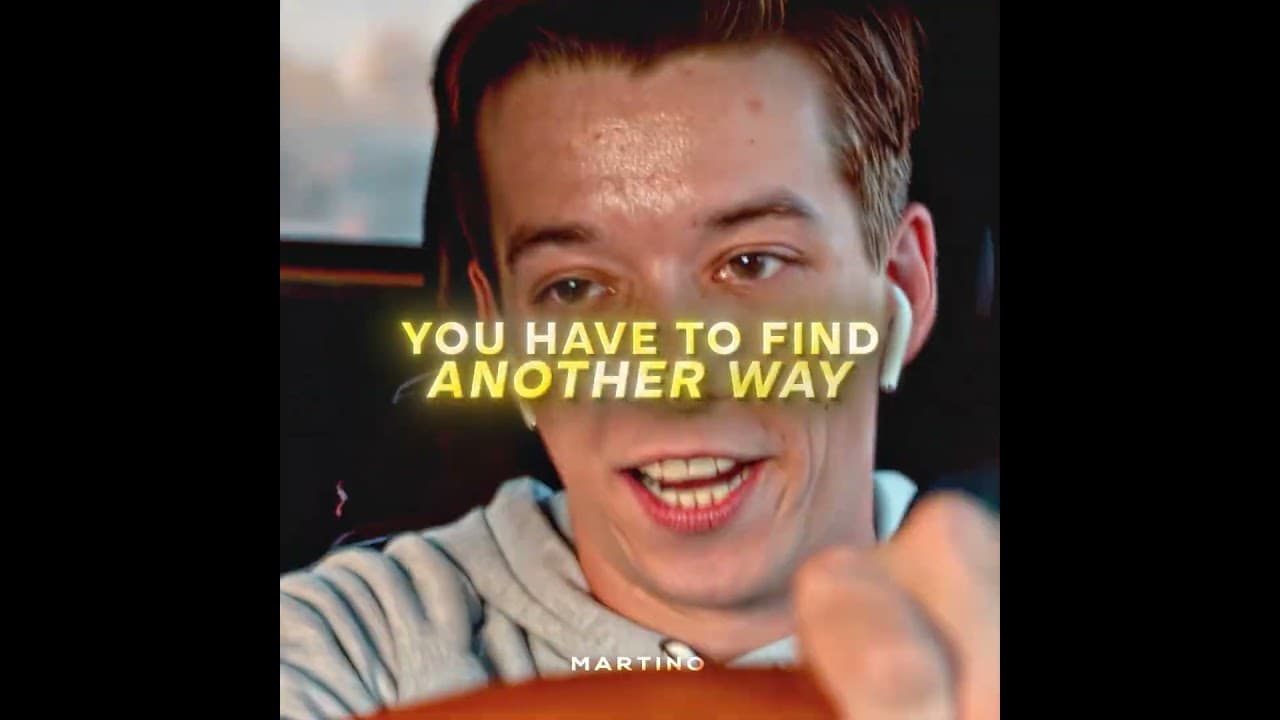
The dispatcher asks if the boy is telling the truth. Her colleague shrugs: children are pathological liars, he says, but this one seems scared. That six-second exchange is doing a lot of work. It establishes stakes, sketches two adult characters, and tells the audience exactly what kind of show it's watching, one that uses absurdist catastrophe as a delivery mechanism for something surprisingly real.
The clip that circulated across social platforms this week shows a fifteen-year-old named Tony behind the wheel of a car he was forbidden to touch, travelling at more than a hundred miles an hour with a broken gearshift and no way to stop. He is not, it turns out, more afraid of the freeway. He is more afraid of his father. That inversion, the mundane terror of a disappointed parent outweighing genuine mortal danger, is the emotional engine of the scene, and it is the formula that has made 9-1-1 one of the most reliably watched procedurals on American network television.
The moment went trending as a short-form clip shared on YouTube, stripped of its original broadcast context and set loose among an audience that may have never watched a full episode. That is not an accident. It is a distribution strategy dressed up as virality, and understanding how it works tells you something important about where network drama sits in the current attention economy.
9-1-1 turns disaster into family therapy, every week
9-1-1 structures nearly every emergency around an underlying domestic or emotional rupture, the physical catastrophe functions as a pressure cooker that forces characters to say things they cannot say in ordinary life.
Most procedurals separate the case from the character work. The crime happens, then the detectives go home and argue with their spouses. 9-1-1 collapses that structure. The emergency is the character work. A man trapped in a runaway car is also, simultaneously, a father being forced to say out loud what he has failed to communicate across fifteen years of parenting. The dispatcher becomes a family therapist by necessity. The fire truck becomes a prop in an emotional reckoning.
This compression is the show's core invention. Writers have roughly forty-two minutes of broadcast time to introduce a catastrophe, escalate it, and resolve it, usually while servicing three or four overlapping character arcs. The solution the showrunners landed on, threading genuine emotional confrontation directly through the physical emergency rather than around it, is structurally elegant and, more importantly, it is repeatable. You can do this with a roller coaster, a sinkhole, a tsunami. The container changes; the formula holds.
The father-son dynamic in the Ferrari clip is particularly well-calibrated because the child's fear is embarrassingly recognizable. Parents who project love onto objects, the restored car, the immaculate lawn, the first-edition book, rarely intend to communicate a hierarchy of affection. They simply do not notice they have. The show puts a dispatcher between the two of them and forces the communication to happen in real time, at speed, literally. That is not subtle. It is also not meant to be.
Why the scene works as a thirty-second clip with no context
The runaway-car sequence from 9-1-1 is self-contained enough to function as a standalone short: the stakes are established in the first exchange, the emotional payload arrives in under two minutes, and the resolution requires no knowledge of the series' broader storylines.
Short-form clipping of long-form drama is as old as YouTube, but the clips that actually travel share a specific architecture. They must establish their premise immediately, no cold-open throat-clearing allowed. They must deliver their emotional moment within the attention window of a scroll. And they must close with something that feels like resolution rather than a cliffhanger, because cliffhangers require investment in what comes next, and a first-time viewer has none.
The Ferrari scene hits all three marks. The dispatcher's opening question, are you the car that the police are chasing?, is an instant orientation. The boy's confession that he fears his father more than a hundred-mile-an-hour crash is the payload. And the final beat, the father promising they'll find a Testarossa at auction and the son asking whether it has airbags, lands as a complete emotional transaction. You do not need to know who these people are. The scene tells you everything relevant in the time it takes to watch it.
This is not accidental craft. It reflects a production approach that has become increasingly common at network level: write scenes that can be extracted and circulated without the surrounding episode. The trend connects to a broader reality about how prestige-adjacent network drama reaches new audiences now. Full episodes on Hulu or the network app serve existing fans. Clips on YouTube Shorts and TikTok serve discovery. The two functions require slightly different writing, and the shows that understand the difference tend to surface in trending feeds more reliably than those that don't.
The result is that 9-1-1 operates something like a greatest-hits machine. Each episode contains at least one sequence designed to clip cleanly, a scene with enough internal logic to stand alone, enough emotional voltage to prompt a share. The algorithm rewards the strategy. The trending placement rewards the algorithm. The cycle is self-reinforcing.
"The dispatcher becomes a family therapist by necessity. The fire truck becomes a prop in an emotional reckoning."
What the 'pathological liars' line reveals about the show's tonal intelligence
The dispatcher's deadpan aside, that children are pathological liars 'as a rule', functions as a tonal pressure valve, signaling to the audience that the show is in on its own absurdity and does not require them to suspend judgment completely before investing emotionally.
Dark comedy inside a life-or-death scenario is a difficult register to hold. Tip too far toward the joke and the stakes collapse. Stay relentlessly grave and the premise, a teenager going 105 miles an hour because he touched his dad's Ferrari, becomes hard to take seriously. The show splits the difference with a single throwaway line, delivered before the audience has fully committed to caring whether Tony lives or dies.
The effect is a kind of permission structure. The show is acknowledging, briefly, that this is heightened. That the setup is a little absurd. That you are allowed to find it slightly funny before the scene asks you to cry. Once that permission is granted, the emotional escalation that follows feels earned rather than manipulative, because the show has signaled enough self-awareness that it doesn't seem to be tricking you.
This tonal calibration is part of what separates 9-1-1 from the network procedurals that take themselves entirely at face value. The show knows it is a show. It doesn't wink too hard, there are no fourth-wall breaks, no camp, but it leaves just enough room for the audience to breathe before it squeezes.
The Ferrari as a character: object attachment and what it telegraphs about fathers on…
Television dramas routinely use prized possessions, cars, houses, collections, as shorthand for emotional displacement in fathers, a device that efficiently communicates years of withheld affection without requiring exposition. The Ferrari in this scene functions exactly that way.
The car in the scene is not really a car. It is the father's failure to say the right thing for fifteen years, given a chassis and a horsepower rating. Tony says his father doesn't even drive it. That detail is load-bearing. A car that is never driven is not transportation. It is a monument to something, pride, nostalgia, identity, and when a child notices that the monument receives more care than he does, the wound is specific and legible.
Television fathers with prized possessions are a durable archetype because the displacement they embody is culturally familiar across a wide demographic range. The man who is more comfortable polishing a car than saying 'I love you' is recognizable to viewers who grew up in houses where emotion was expressed through action rather than language. The show doesn't need to explain the psychology. It trusts the audience to bring it.
What the scene does cleverly is make the object complicit in its own destruction. The resolution requires Tony to physically destroy the thing his father loves, hitting a fire truck at speed, crumpling the car, in order for the emotional reconciliation to happen. The father has to choose, publicly and under pressure, between the object and the child. The show makes the choice literal. It is heavy-handed and it works completely.
The father's final line, 'it's just a car', earns its sentiment precisely because the audience has been shown, for two full minutes, all the evidence that it was never just a car. The dismissal is the declaration. That is the craft.
Isabella Martino and the mechanics of character-driven dispatch scenes
Dispatcher and operator characters in 9-1-1 function as the show's emotional conductors, they are present for every crisis but never physically in danger, which allows them to ask the questions the audience is asking and to push emotional confrontations that the endangered characters cannot initiate themselves.
The dispatcher's role in this scene is structurally interesting. She is the only character with full situational awareness, she can hear both the father and the son, she can coordinate the police response, and she can read the emotional subtext that Tony cannot articulate and the father won't volunteer. This omniscience makes her the audience surrogate. She sees what we see. She pushes where we would push.
The choice to route the father-son confrontation through a dispatcher rather than letting the two characters speak directly to each other is a smart constraint. It forces both parties to perform their feelings for an audience, the dispatcher, and by extension us, rather than having the private argument they would otherwise have. The presence of a stranger raises the stakes. You say things to your child through a 9-1-1 dispatcher that you might not say face to face, because the dispatcher has told you the child will die if you don't.
This structure recurs across the show's run because it is dramatically efficient. The dispatcher can interrupt, redirect, and escalate in ways that a scene between two characters alone cannot. She is a plot device with a personality, and when the writing is sharp, you don't notice the mechanics.
Across the broader landscape of recent television comebacks and career pivots, what stands out about 9-1-1's sustained performance is precisely this kind of structural consistency, the show has a repeatable engine, and it doesn't deviate from it long enough to lose the audience.
What trending procedural clips tell us about the current attention economy
When a procedural drama scene trends as a short-form clip years into a show's run, it signals that the production has successfully engineered for platform-native discovery, a competitive advantage that supplements broadcast ratings with a continuous stream of new-audience acquisition.
The 9-1-1 Ferrari clip trending in September 2026 is not news in the traditional sense. It is a scene from an ongoing series, surfacing on a platform algorithm, reaching people who were not watching the show when the episode originally aired. The trending designation is the story, because it tells you something about how the content was built and how the platform is prioritizing it.
Short-form clip trends function differently from traditional viral moments. A celebrity gaffe or a red-carpet surprise trends because it is novel and time-sensitive. A scripted drama clip trends because the algorithm has identified a match between the content's emotional architecture and the behavior of users who have engaged with similar material. The clip is not new. The recommendation is.
This distinction matters for understanding the business around shows like 9-1-1. The production is not just competing for broadcast viewers against other network dramas. It is competing, every day, for recommendation slots against every other short-form emotional content on the platform. The clips that win that competition are the ones engineered to work at the scene level, not just the episode level. That is a different creative brief than the one network television was built around, and the shows that have adapted to it are the ones still generating cultural conversation well into their runs.
The reality television business has understood this dynamic for years, chaos clips travel because platforms reward the emotional spike, not the narrative context. Scripted drama has been slower to internalize the lesson. 9-1-1 is among the shows that figured it out early, and the trending numbers bear that out.
The latest reporting we track across the industry reflects a consistent pattern: the entertainment properties generating the most durable cultural presence are those that can produce both a satisfying long-form experience and a self-contained short-form artifact from the same raw material. That is a production skill as much as a writing skill, and it is increasingly the thing that separates shows with cultural longevity from those that peak and recede.
The scene's ending, and why the joke lands harder than the sentiment
The Ferrari scene closes with a joke, the father mentions a Testarossa coming to auction, and Tony asks whether it has airbags, which works because it signals that the emotional repair between them is real enough to allow lightness, a harder beat to earn than the straight reconciliation that precedes it.
Reconciliation scenes in network drama usually end on the sincere note. The hug. The 'I love you.' The scored music swelling under held eye contact. 9-1-1 earns its ending by going one beat past that. The father's joke about the Testarossa could read as a reset to exactly the behavior that caused the problem, another car, another object of obsession. But Tony's response reframes it completely. He asks about the airbags. He is not worried about the car. He is, for the first time in the scene, thinking about his own safety as something worth protecting.
That inversion, the child now valuing himself enough to ask about his own protection, is the actual resolution of the emotional arc. The reconciliation was the father saying the car doesn't matter. The proof is the son believing it. The airbag line is the proof. The fact that it arrives as a punchline rather than a declaration is why it lands. The show earns the laugh because it has done the emotional work first.
This is the craft that distinguishes 9-1-1 from procedurals that use disaster purely as backdrop. The catastrophe resolves. The relationship resolves. And the resolution of the relationship is measured in something small and specific and slightly funny, not in a speech, not in tears, but in a practical question about safety features. That is good television writing, and it is the kind of thing that keeps a clip circulating long after the episode has aired.