Sandra Bullock's Comeback Is Quieter Than Her First Act, and Smarter
After four years away, a grief-shaped exit, and one cult classic sequel, Bullock returns on her own terms, and the math behind that decision is more intentional than any publicist's playbook.
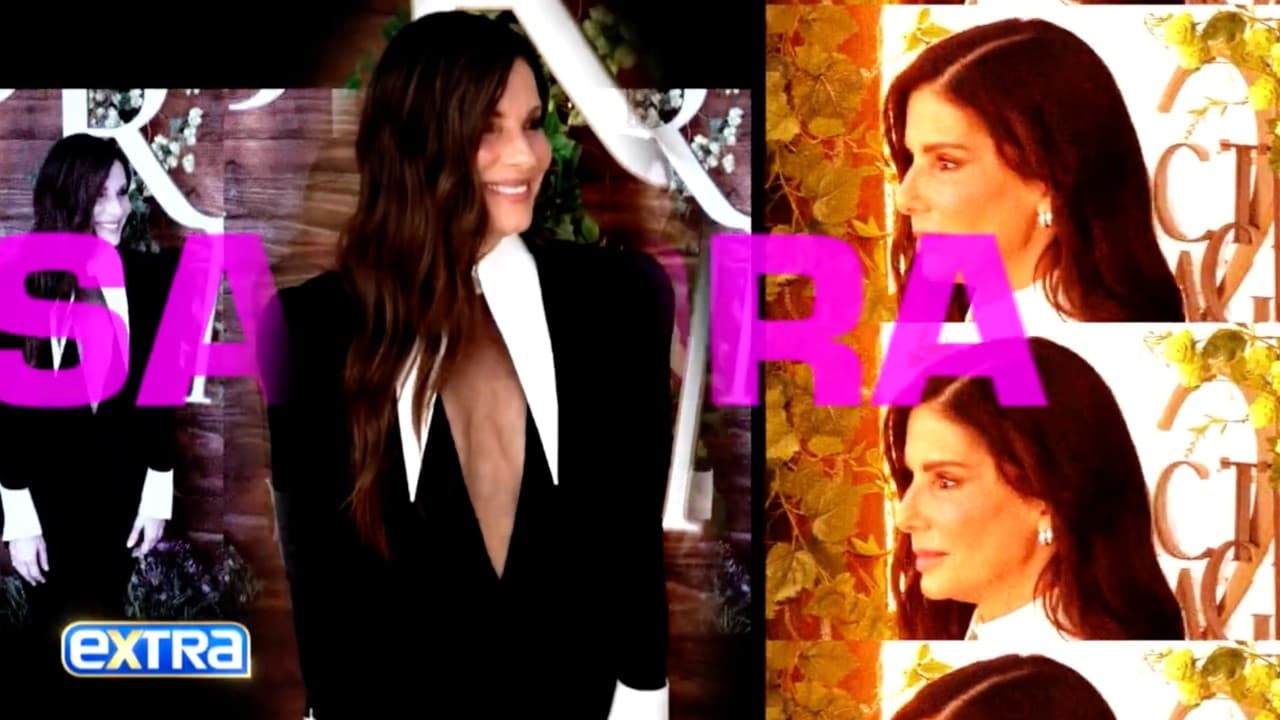
The last time Sandra Bullock stood on a Los Angeles premiere carpet, she was keeping a secret. Her partner Bryan Randall had been diagnosed with ALS. She had told no one. She was performing gratitude for a film, The Lost City, released in 2022, while privately managing the kind of terror that makes red carpets feel like a different planet. Looking back at footage from that night, she told the Smartless podcast on SiriusXM, she could see it on her face. She described herself as a wood block.
Randall died in August 2023 at 57. Bullock stepped back from public life entirely, no interviews, no appearances, no carefully managed 'I'm doing well' quotes to trade publications. The silence lasted more than four years. When she broke it this week, she did so at the premiere of Practical Magic 2, standing beside co-star Nicole Kidman, and she told Extra that she is 'grateful in a way that I couldn't be before.' That sentence, small as it is, carries more career weight than any box-office number she could have quoted.
The question worth asking now is not whether the comeback is emotionally resonant, it plainly is. The question is what kind of career architecture this return reveals, who profits from it, and what Bullock's choices tell us about how A-list stardom functions after a long and legitimate absence.
Why Bullock chose Practical Magic 2 as her vehicle for return
Sandra Bullock chose Practical Magic 2 as her comeback project because the property offered creative safety, an established audience, and a pre-existing co-star relationship with Nicole Kidman that required no new trust-building under pressure.
Most actors returning after a grief-driven hiatus reach for something new, a proof-of-concept role designed to signal range, relevance, and renewed hunger. Bullock went the other direction. She reached for a property she already owned emotionally, a film she had lived with for 28 years, and a co-star she already loved. That is not the move of someone trying to prove she is back. It is the move of someone who knows exactly what she is willing to spend and what she is not.
Variety's awards correspondent, covering the premiere carpet, framed the choice plainly: a lot of actors would have walked away from a sequel to a beloved cult film, afraid of diminishing the original. Bullock's reasoning, as she has shared it across the press run, ran in the opposite direction. She wanted to have fun. She wanted to work with Kidman again. Those are not throwaway answers. For a woman who spent several years in a caregiving role that isolated her from her professional identity, 'fun' is a real and considered criterion.
There is also a structural argument for the sequel. Practical Magic, released in 1998, has accrued genuine cult status over three decades, the kind of audience loyalty that does not require a marketing campaign to remind people why they care. Warner Bros. inherits a pre-sold premise and a pre-sold emotional connection. Bullock inherits a project with a floor. Neither party is gambling in the dark.
Her children, Louis and Laila, appear in the film in small roles. Kidman's family was also on set. Bullock described the experience on the carpet as 'the most selfish and beautiful privilege', working in a form that lets you bring your children rather than leave them. After years of managing her family life in private, often in crisis, that integration of work and home life is not a small thing. It shaped the decision as much as any script consideration.
What four years of silence actually cost Bullock, and what it protected
Four years away from public life cost Sandra Bullock deal flow and cultural top-of-mind status, but it protected her emotional reserves during caregiving and prevented the overexposure that erodes long-term audience goodwill.
The economics of a intentional hiatus are genuinely complicated. At the top of the A-list, absence does not automatically depreciate value, but it shifts value. Bullock entered her break as the highest-paid actress in Hollywood by several historical measures, with a run of films across the 2010s that included Gravity, Bird Box, and The Lost City. She exits the break with that body of work intact and streaming-amplified. Bird Box alone became one of Netflix's most-watched originals in its opening period.
What she surrendered was deal flow, the steady rhythm of projects that keeps an actor in the conversation during development cycles. Hollywood moves fast. Scripts get packaged, directors attach, windows open and close within months. Four years means several cycles missed. The actors who stayed active during that window, many of them a full generation younger, have locked in relationships with the directors and producers who will run the next decade of studio filmmaking.
What she protected is harder to quantify but arguably more valuable at her career stage. There is a specific kind of fatigue that attaches to stars who push through personal crisis visibly, who give the interview too soon, who cry on the right talk show at the right moment and then have to live with that moment forever. Bullock avoided all of it. Her grief was private. Her return carries no residue of managed vulnerability, only the real kind, disclosed on her own schedule.
She said as much to Smartless: when Randall got sick, she had nothing to give. Not managing her public life around his illness was a intentional choice, not an oversight. The result is that her return carries no scar tissue from a poorly timed press cycle. She arrives clean.
"Her grief was private. Her return carries no residue of managed vulnerability, only the real kind, disclosed on her own schedule."
The cult-classic business case: why Practical Magic sequels make financial sense now
Practical Magic 2 is commercially rational because the original film built a decades-long cult following driven largely by streaming and home video, creating a guaranteed opening-weekend audience without the risk of launching an original property with two expensive stars.
Cult classics occupy a peculiar economic niche. They rarely perform at blockbuster scale on original release, the first Practical Magic grossed modestly against its production budget, but they compound over time through cable, DVD, and eventually streaming. By the time a sequel arrives, the audience is older, more financially stable, and nostalgic in a way that translates directly to ticket sales. The core demographic for Practical Magic 2 is women who were in their twenties and thirties in 1998 and are now in their fifties and sixties. That cohort has disposable income and a demonstrated willingness to return to theaters for the right property.
Bullock and Kidman together represent a pairing that no casting director could manufacture from scratch today. Their chemistry in the original was specific and earned. Recreating that, or finding an analogue, would cost more in development time and risk than simply making the sequel. Warner Bros. is effectively paying for a proven product with a pre-existing emotional contract with the audience.
The streaming afterlife is already guaranteed. Whatever Practical Magic 2 does theatrically, it will land on a platform with an enormous built-in audience for the first film. That afterlife has value in licensing and subscription metrics that did not exist when the original was released. The business case for the sequel is, in some ways, stronger now than it would have been at any earlier point in the franchise's history.
For anyone tracking where Hollywood is placing its bets right now, the Practical Magic 2 greenlight fits a clear pattern: legacy IP with proven emotional resonance, stars who carry their own press cycle, and a budget calibrated to the realistic ceiling of the property. You can find parallel logic at work across the film wealth profiles we track, the pattern of stars returning to owned territory rather than chasing new franchises repeats consistently among actors at Bullock's career stage.
Nicole Kidman's role in the return: why co-star dynamics matter strategically
Nicole Kidman's presence in Practical Magic 2 was strategically essential for Bullock's return because it provided emotional cover, shared press obligations, and a co-star whose own recent career momentum could absorb some of the scrutiny that would otherwise fall entirely on Bullock.
Returning to public life alone after a four-year absence is a different proposition than returning alongside someone you trust. Kidman has been one of the most active and awards-decorated performers of the past several years, her run through Moulin Rouge revivals, major streaming projects, and festival circuit appearances has kept her name in constant circulation. Arriving beside Kidman means Bullock walks into a press environment where the attention is shared and where the tone has already been set by someone with recent experience managing it.
Kidman's role on the carpet was visible. She was described as being by Bullock's side as they approached interviewers. In the Vogue segment that ran alongside premiere coverage, Kidman was the one asking Bullock the 'burning question' about which sequel she would most want to make, a framing that positions both women as playful collaborators rather than stars under the spotlight individually. The dynamic deflects pressure. It also reinforces the film's central theme of female solidarity, which happens to be excellent marketing.
Bullock spoke warmly about working with Kidman again, describing the experience in terms of the families they brought with them and the memories they created. That framing, focused on personal meaning rather than professional calculation, is consistent across her current press run. But the professional calculation is clearly there. Kidman is an ideal co-pilot for a reentry of this sensitivity. She is experienced, she is warm in public contexts, and she has no recent association with controversy that could complicate the coverage.
How Bullock's grief disclosure changed the story the press could tell
By speaking publicly about Bryan Randall's ALS diagnosis and her caregiving role on the Smartless podcast before the Practical Magic 2 premiere, Bullock pre-empted the narrative, giving journalists a human story that reframed her absence as dignity rather than retreat.
The sequence matters. Bullock chose to break her silence about Randall's illness on a podcast, Smartless, hosted by Jason Bateman, Sean Hayes, and Will Arnett, rather than in a traditional press junket. That choice is meaningful. Podcasts carry a conversational register that print interviews and television segments cannot fully replicate. A revelation made in that format reads as genuine disclosure rather than managed messaging. It lands differently because the medium signals intimacy.
By the time she reached the Practical Magic 2 premiere carpet, the most difficult question, why did you disappear, had already been answered in full, on her own terms, in her own words. Interviewers at the premiere did not need to ask. The Extra coverage reflected this: the focus was on gratitude, on the film, on family, on joy. The grief had already been contextualized. What remained was the celebration.
This is sophisticated image management, whether it was designed as such or arrived at instinctively. The alternative, arriving at a premiere as the first public moment of disclosure, would have created a very different kind of coverage. Every question would have been weighted with sympathy and loss. The film would have been secondary. By separating disclosure from celebration by a intentional interval, Bullock preserved the premiere for what she actually wanted it to be: a return, not a memorial.
It is worth noting how rare that kind of control is. Most public figures in crisis situations leak information through tabloids, or are forced to confirm through representatives, or wait until they are cornered at an event. Bullock held the line completely for years, then chose her moment and her format with precision. For readers interested in how image machinery operates across entertainment careers, this case study belongs alongside the most instructive examples in our latest reporting.
What the Keanu Reeves reunion question reveals about franchise nostalgia economics
The persistent public demand for a Sandra Bullock and Keanu Reeves reunion, a Speed sequel or adjacent project, reflects how deeply franchise nostalgia has reshaped audience expectations, even when the stars themselves have moved on and no project is in active development.
Extra's carpet correspondent noted it plainly: fans want a Bullock-Reeves reunion. The Speed pairing, from 1994, has outlasted most action films of its era in cultural memory. The chemistry between the two leads read as genuine and charged. Three decades later, the appetite for a return has not diminished, it has, if anything, intensified, because both actors have become larger and more complex public figures in the intervening years.
The honest answer, as reported, is that nothing is in the works. Bullock has not suggested she is opposed to the idea. Reeves has remained one of the most consistently beloved figures in the industry, his public image shaped as much by his generosity and warmth as by any specific performance. The pairing retains enormous theoretical commercial value.
But the gap between theoretical value and actual development is where most reunion projects die. Rights, schedules, creative vision, studio appetite, and the simple question of whether a sequel serves the original, all of these factors have to align. The Speed franchise specifically carries complications: its second film was a significant critical and commercial disappointment, which creates a narrative hurdle any new project would need to clear.
The Practical Magic 2 example is instructive here precisely because it worked around those complications by returning to the source, not the failure. Any Bullock-Reeves project that got made would face the question of which Speed it was a sequel to, the beloved first or the troubled second. That question alone could stop the conversation before it starts. The nostalgia is real. The path to monetizing it is narrow.
The 28-year gap: what it means to revive a property across a generation
Reviving Practical Magic after 28 years means the film's original audience has aged into a demographic with high spending power, while a younger generation that discovered the film through streaming now brings entirely fresh nostalgia, a two-cohort market that is rare for any sequel.
Twenty-eight years is an unusually long interval between a film and its sequel. It is long enough that the actors are visibly different, not just older, but marked by decades of distinct public life. Bullock and Kidman in 2025 are not the Bullock and Kidman of 1998 in any superficial sense, and the film, by all accounts, does not pretend otherwise. The Owen sisters have aged. The story has moved. That honesty about time passing is part of the pitch.
The streaming factor created something unusual. Practical Magic found its cult status partly through cable and home video in the late 1990s and early 2000s, and then was rediscovered by a much younger audience when it became available on demand. Gen Z viewers who were not yet born when the original was released have genuinely strong feelings about it. That is a two-cohort audience, original fans now in their fifties, and new fans in their twenties, that a sequel can serve simultaneously if it is pitched correctly.
Selling a film to two generations at once requires a tone that does not patronize either. Too much nostalgia and the younger audience feels excluded. Too much modernization and the original fans feel dismissed. The reported approach, bringing the original stars back fully, including their families, while advancing the story forward, suggests Warner Bros. is leaning into the nostalgia cohort as primary and hoping the streaming generation follows.
Whether that gamble pays off theatrically will tell us something useful about the limits of cult-classic sequels. But the broader pattern is clear enough: studios are reaching deeper into their back catalogs, extending the window for legacy revivals well past what would have been considered viable even a decade ago. Practical Magic 2 at 28 years is an extreme case, but it is not an isolated one. You can track the economics of that trend across our film wealth profiles, the stars who profit most from it are consistently those who maintained ownership of their original image.
Where Bullock's career goes from here, and who profits from that answer
If Practical Magic 2 performs well, Sandra Bullock will regain use with major studios for original projects on her own terms; if it underperforms, she retains the option to step back selectively, since she has no apparent financial pressure forcing continued output.
Bullock hinted on the carpet that her children may have reached the age where they can no longer be convinced to appear on set with her. That offhand comment is more revealing than it sounds. It signals that the logic that made this project attractive, family integration, controlled environment, trusted collaborator, may not replicate easily on the next one. She described this as possibly the last time she could 'force' her children to participate. The window for that particular kind of shared experience has closed, or is closing.
What comes next, then, is genuinely open. Bullock has nothing to prove and, by any reasonable assessment of her career earnings across a three-decade run at the top of the box office, no financial imperative to work on someone else's schedule. For a full picture of how those career earnings stack up, the Atlas is the place to start, we track the net worth architecture of major film careers in detail. Bullock's position is one of those cases where the use is almost entirely hers.
That use cuts both ways. Studios know she is selective. They also know that selectivity has not diminished her audience's affection, if anything, the return this week suggests it has intensified it. The Extra carpet coverage was unambiguous: the crowd response was enormous. Variety's correspondent noted the cult-classic stakes and framed her willingness to take them on as evidence of confidence rather than risk aversion.
The star who profits most from a successful Practical Magic 2 is not necessarily Bullock in the immediate box-office sense. It is Bullock as a proof of concept, evidence that a long, grief-driven absence followed by a return to owned territory on personal terms is a viable and even admirable career strategy. If the model works, it becomes available to other stars facing similar crossroads. Hollywood takes notes. The next actor who needs to step back and step forward again will have Bullock's arc as a reference point. That is a different kind of legacy than a franchise, and in some ways a more durable one.