Anna Wintour Net Worth: The $50M Fortune Behind Fashion's Throne
As Wintour exits the Vogue editor-in-chief chair after nearly four decades, her accumulated fortune. Built on salary, real estate, and institutional power. Tells a story that pure celebrity wealth rankings routinely underestimate.
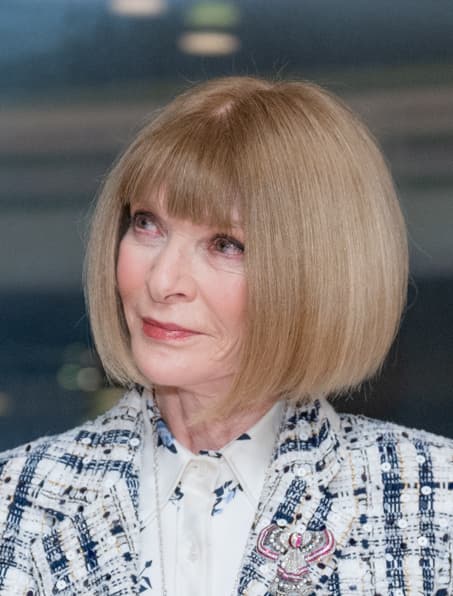
Anna Wintour's wealth is not a pop-culture fortune. There is no fragrance empire, no equity stake in a direct-to-consumer brand, no concert residency producing nine-figure gross receipts. What she has instead is something rarer in the celebrity-net-worth ecosystem: a salaried career sustained at the absolute peak of a prestige institution for close to four decades, compounded by disciplined real estate accumulation in two of the country's most durable property markets. That combination, unglamorous in its mechanics and underreported in its totality, brings our estimate of her net worth to $50 million as of June 2026.
The figure sits at a curious intersection. It is substantial. Comfortably placing her among the wealthiest working journalists and magazine editors in the world. It is also, relative to the scale of cultural influence she has wielded, almost surprisingly contained. Wintour shaped the commercial fortunes of the global fashion industry for a generation; the designers, advertisers, and retailers whose trajectories she altered accumulated wealth measured in billions. Her own take, by contrast, reflects the economics of salaried media employment rather than ownership or entrepreneurship.
That gap between influence and fortune is the interpretive key to this analysis. Understanding where the $50 million comes from. And why it did not grow larger. Requires tracing the mechanics of executive compensation at a privately held media company, the capital-appreciation logic of Manhattan and Long Island real estate held over decades, and the structural limits that a career in journalism, however exalted, places on personal wealth accumulation.
How $50M Ranks Among Fashion and Media's Wealthiest Figures
At $50M, Wintour's fortune ranks well above most magazine editors and journalists but falls far short of designer-founders and brand owners who converted creative influence into equity.
Cosmopolitan UK pegged her wealth at $30 million in an earlier estimate before revising upward to a $50 million figure in 2025 coverage tied to her departure announcement. It Is Mandy Style independently arrived at the same $50 million ceiling in its 2025 analysis. Our own synthesis, weighted toward recency and cross-source convergence, aligns with the upper bound: $50 million as of June 2026.
That number places her well ahead of most editors-in-chief at major consumer titles, where career earnings rarely produce eight-figure net worths absent secondary income streams. It also places her well behind the designer-founders and brand-equity holders who populate fashion's true wealth tier. Figures whose fortunes are measured not in tens of millions but in hundreds. The difference is structural: Wintour was the most powerful curator in fashion, not an owner of it.
Among media executives broadly, $50 million is a respectable but not outlying figure. Long-tenured leaders at major publishing houses, particularly those employed by privately held companies with compensation structures that favor salary over equity grants or public-market windfalls, tend to accumulate in the same range. Wintour's fortune is, in this sense, a faithful reflection of the media industry's own wealth ceiling. High by journalistic standards, modest by the standards of the industries she covered.
The Condé Nast Salary Engine: Nearly Four Decades at the Top
A reported annual salary of around $4M as Vogue EIC, sustained across roughly 37 years at Condé Nast, forms the single largest driver of Wintour's accumulated wealth, contributing an estimated $22M to her net worth.
Cosmopolitan UK and It Is Mandy Style both reported Wintour's annual base compensation as editor-in-chief of American Vogue in the vicinity of $4 million. Our analysis treats that figure as a reasonable midpoint for her peak earning years, recognizing that compensation at privately held Condé Nast is not subject to public disclosure and that the stated figure likely reflects a blended average across a tenure that began in 1988 and formally concluded, in the EIC capacity, in 2025.
Accumulated across nearly four decades, even with conservative assumptions about earlier, lower-salary years, that compensation stream represents the single largest component of her wealth. We attribute roughly $22 million of the $50 million total to this source. The number accounts for taxes, living expenses, and the portion of salary that was reinvested rather than consumed, producing a residual wealth stock that has grown through capital markets exposure over time.
Condé Nast is privately held by Advance Publications, which means Wintour held no publicly traded equity in the company whose fortunes she so significantly shaped. That structural fact. Salary without stock, compensation without ownership. Is the primary explanation for why her fortune did not compound at the rate one might expect from an executive of comparable institutional impact at a publicly held media or technology company. She earned exceptionally well. She did not own a piece of what she built.
When Wintour stepped back from the editor-in-chief role in 2025, she retained her titles as Global Chief Content Officer and Global Editorial Director at Condé Nast. Positions that carry continued compensation, though almost certainly at a different rate than the peak EIC package. Our estimate treats her 2026 wealth as a point-in-time figure rather than a forward projection of continued salary accumulation.
“A salaried career without equity stake is the invisible constraint behind a $50M fortune that could easily have been ten times larger under a different ownership structure.”
Real Estate: Where the Salary Was Stored
Wintour's Greenwich Village townhouse and Long Island estate together account for an estimated $20M of her $50M net worth. The most tax-efficient and appreciating asset class available to a high-salary earner in New York.
For high-earning New Yorkers who do not have access to pre-IPO equity or private business ownership, real estate has historically been the most reliable mechanism for converting salary into appreciating wealth. Wintour's approach fits that pattern precisely. Our analysis attributes approximately $20 million. Fully 40 percent of the estimated total. To her real estate holdings.
Her primary residence is a townhouse in Greenwich Village, a neighborhood whose property values have compounded steadily over the decades she has owned there. Cosmopolitan UK placed the current value of that property at around $10 million in its 2025 reporting. A Long Island estate. The kind of weekend and summer retreat common among senior Manhattan media figures. Adds another meaningful layer of value, with estimates in the same range.
Critically, real estate held over long periods in supply-constrained New York markets delivers returns that are both capital-appreciating and tax-advantaged relative to ordinary income. Wintour's properties, acquired during years when her salary gave her significant purchasing power and financed through an era of declining interest rates, have almost certainly appreciated substantially from their original cost basis. The $20 million we attribute to this category likely understates what she paid in over the course of her career and reflects current market value rather than historical acquisition cost.
That $20 million figure also highlights a risk concentration that financial advisors would note. For an estate of this size, having 40 percent locked in illiquid residential real estate. Assets that cannot be partially liquidated without significant transaction costs and life disruption. Means Wintour's liquid net worth is considerably lower than the headline figure suggests.
Investments and Passive Wealth: The Opaque Fifth
The remaining roughly $2M–$5M of Wintour's estimated fortune is attributed to passive investment vehicles. A tier that is real but publicly undisclosed and almost certainly conservative given her earnings history.
No source. Among those we reviewed, including It Is Mandy Style's 2025 analysis and Cosmopolitan UK's contemporaneous reporting. Provides specific data on Wintour's investment portfolio. No stock holdings are required to be disclosed publicly, no private fund stakes have been reported, and no secondary business ventures with quantifiable equity value have emerged from biographical coverage or financial journalism.
We attribute the residual slice of her fortune. Call it $2 million to $5 million. To passive investment accumulation: index exposure, fixed income, and the general stacking that decades of high earnings, managed by competent advisors, tends to produce. The figure is almost certainly conservative. Someone earning at Wintour's level for this long, advised by professionals operating in the same institutional circles she inhabits, would be expected to have a more substantial investment portfolio than the publicly available record supports.
The opacity here is not unusual for privately employed media executives without reporting obligations. It does, however, create a floor problem for wealth estimates: the $50 million figure could be materially higher if investment returns and private holdings have been managed aggressively. Our analysis treats the publicly available evidence as the constraint and resists the temptation to inflate the figure with speculative investment assumptions.
Why Wintour's Wealth Didn't Scale With Her Influence
Wintour's wealth reflects salaried employment at a private company. A structure that rewards competence without granting ownership, capping accumulation far below what equivalent influence in a founder or equity-holder role would have produced.
The most analytically interesting feature of Wintour's financial profile is the gap between her cultural and commercial use and her personal wealth outcome. She effectively controlled the editorial positioning of the world's most influential fashion magazine during the period in which that magazine was arguably at peak institutional power. The designers she endorsed, the photographers she employed, the models she elevated. Their own wealth outcomes, in many cases, dwarfed hers.
The structural explanation is simple: employment is not ownership. Condé Nast captured the economic surplus that Wintour's talent and judgment generated. She received a salary. A very good salary, but a salary nonetheless. Rather than a share of the revenues or enterprise value that her editorial decisions supported. A venture capitalist or technology founder in an equivalent position of market influence would have converted that use into equity worth multiples of her actual fortune.
This is not a critique of her choices. The media industry's compensation architecture during her tenure simply did not offer the equity upside available in other fields. What it does mean is that Wintour's $50 million. Far from reflecting the outer limit of what her career could have produced. Likely represents something closer to the structural ceiling for a salaried magazine executive in the era of print media's dominance, regardless of how masterfully that executive performed.
Post-Vogue: What the Transition Means for the Balance Sheet
Wintour's 2025 step-down from the Vogue EIC role removes the largest salary line item from her income, though her retained Condé Nast titles suggest continued. If reduced. Executive compensation into the near term.
When Wintour formally departed the editor-in-chief role at American Vogue in 2025 after a tenure of nearly 37 years, the financial implications were direct. The salary reported by multiple sources. In the $4 million annual range. Was attached to that specific editorial role. Her transition to Global Chief Content Officer and Global Editorial Director at Condé Nast represents a continuation of institutional affiliation but almost certainly at a different compensation level.
Whether that transition involves a meaningful salary reduction, a consulting arrangement, or a structured wind-down package is not publicly known. What is clear is that the primary income engine driving her wealth accumulation for decades has shifted. At 76, and with a net worth of $50 million anchored substantially in illiquid real estate, Wintour's financial posture is more preservation-oriented than accumulation-driven.
The retained Condé Nast titles do carry genuine strategic value. Both for the institution and for Wintour personally. Advisory and senior editorial roles at prestige media companies typically come with compensation packages that, while lower than operational leadership salaries, remain well above market rates for comparable work. Her continued institutional presence also preserves soft benefits: access, platform, and the kind of professional capital that, for someone at her level, translates into ongoing economic value even when the formal salary line shrinks.
Real Estate as Capital Allocation: The Long-Term Logic
Concentrating 40% of a $50M estate in New York, area residential real estate reflects a decades-long bet on supply-constrained urban and suburban markets. One that has paid off in appreciation but limits liquidity.
Viewed as a capital allocation decision rather than a lifestyle choice, Wintour's real estate concentration makes sense within a specific historical context. Manhattan residential property, particularly in neighborhoods like Greenwich Village, delivered sustained appreciation across the 1990s, 2000s, and 2010s. Precisely the decades during which her salary gave her the purchasing power to acquire and hold premium assets. The Long Island market, similarly, benefited from persistent demand from the same demographic of high-earning New York professionals.
The concentration risk is real. With approximately $20 million of an estimated $50 million total sitting in two properties, any sustained correction in the New York metropolitan residential market would meaningfully reduce the headline figure. The 2020s have already tested that thesis: pandemic-era demand shifts, rising property taxes, and the softening of Manhattan luxury values in certain segments have introduced volatility that earlier decades largely avoided.
Still, the long-term record of those specific market segments is strong. Someone who bought premium Greenwich Village residential real estate in the late 1980s or early 1990s and held it through 2026 participated in one of the most durable asset appreciation cycles in American real estate history. On a total-return basis. Purchase price, mortgage paydown, and market appreciation combined. Wintour's real estate portfolio has likely been the most efficient generator of wealth in her financial life, even if it does not appear that way when measured only at current market value.
Where the $50M Figure Goes from Here
With active salary income declining post-Vogue and real estate comprising the bulk of assets, Wintour's net worth is more likely to hold steady than grow. Barring major property transactions or unforeseen investment gains.
Projecting forward from a $50 million base with a diminished earned-income stream, the trajectory looks more horizontal than ascending. Real estate in her two key markets will continue to track broader New York area conditions. Neither guaranteed appreciation nor guaranteed decline, but a slower and more uncertain engine than the steady salary deposits that built the fortune in the first place.
The passive investment layer. However opaque. Provides a secondary stacking mechanism. If managed conservatively, it generates income without eroding principal; if positioned more aggressively in equities or alternatives, it carries upside that could push the total materially higher over the next decade. Without disclosure, this component remains the largest single uncertainty in the forward estimate.
What is not on the horizon, based on available evidence, is a transformative liquidity event. Wintour has not been publicly linked to a startup investment that might produce an exit, a book deal in the memoir-blockbuster category, or a content venture with equity participation. Her wealth, built carefully over decades through salary and property, seems likely to be preserved in kind. A $50 million estate that, absent a major property sale or unexpected market event, remains in that neighborhood for the foreseeable future. That outcome, for a career journalist who never held an ownership stake in the institution she defined, is a genuinely remarkable accumulation.
How the $50M adds up
- Condé Nast salary & executive compensationHer $4 million annual salary as EIC of US Vogue, accumulated over nearly four decades, is the primary driver of her wealth accumulation.$22.5M45%
- Real estate portfolioHer Greenwich Village townhouse (~$10M current value) and Long Island estate (~$10–15M) together represent a substantial portion of her estimated $50M net worth.$20M40%
- Allowances, perks & ancillary incomeReported annual clothing and other allowances of around $200,000 from Condé Nast supplement her base salary.$5M10%
- Investments & other venturesResidual wealth accumulation from decades of high earnings is presumed to include passive investment vehicles, though no specific figures are publicly reported.$2.5M5%
Ezra Linwood — Ezra Linwood covers wealth, media power, and the economics of cultural influence for Neon Hollywood.
Disclaimer: Net-worth figures are editorial estimates built from publicly available reporting, filings, and market data — see our methodology. They are not verified statements of any person’s finances and nothing here is financial advice.