Steph Curry at 18 Years: The Business of Staying Indispensable
A night at the ESPYs and a candid ET interview reveal how Curry is converting late-career capital into something more durable than a ring.
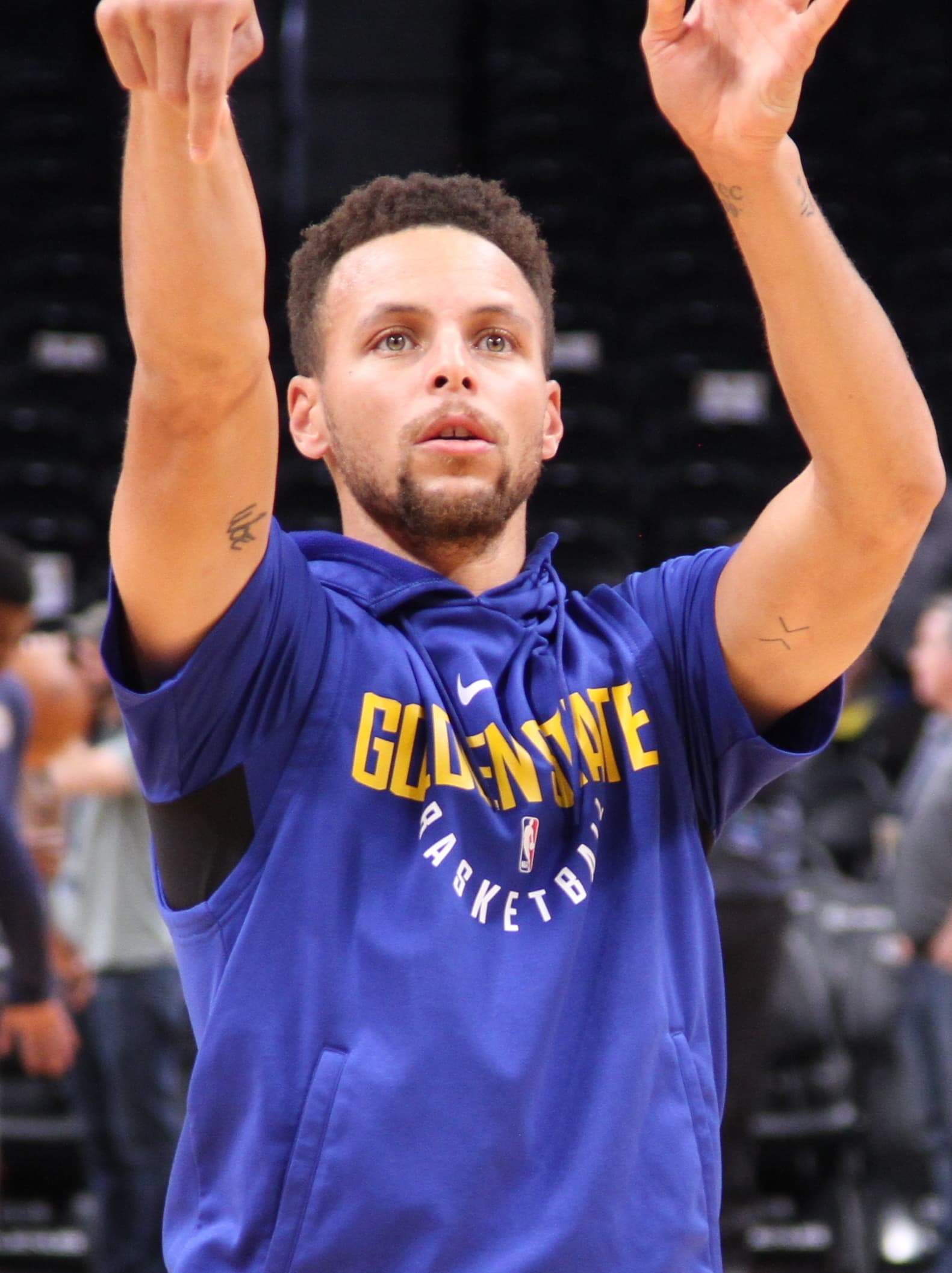
The award was not for basketball. That's the tell. Stephen Curry stepped off the ESPY stage this week having just accepted recognition for Eat Learn Play, the Oakland-rooted foundation he runs with his wife Ayesha, and the first thing he did was reframe the honor outward. Pointing to the community, the kids, the Oakland Unified School District. It was a practiced deflection, but it was also a sincere one. Those two things are not mutually exclusive, and understanding which force is doing more work tells you a great deal about where Curry is in his career arc.
He is entering his 18th NBA season. That number, spoken aloud, lands with a kind of ballistic weight even he seemed surprised by when he said it to Entertainment Tonight this week. 'nuts to say out loud' was the exact phrase. Eighteen years at the top level of the most physically punishing guard position in American sport. The conversation started with highlights from a remarkable year for sports broadly, wandered through his admiration for figure skater Alyssa Liu and the Knicks' long-awaited title run, and landed, inevitably, on the question every journalist eventually asks anyone in their late thirties who still competes at elite level: how much is left, and what comes after?
The honest answer, gleaned from reading the whole interview rather than just its most quotable line, is that Curry is in the middle of the most intentional transition in celebrity sports: the pivot from icon-in-uniform to institution. Not retired. Not fading. But clearly building the infrastructure that will outlast the jump shot. The ESPYs night is a data point. So is the language he reaches for. 'mission,' 'long haul,' 'impact'. Whenever the microphone is on.
What Curry Said About His Sporting Highlights of 2026
Curry's 2026 sports highlights centered on Alyssa Liu's Olympic run representing Oakland, the New York Knicks winning their first title in over 50 years, and quarterback Cade Mendoza's breakthrough season with the Indiana football program.
The Knicks item deserves unpacking. Curry called it 'a great accomplishment not just for the city of New York, but for basketball in general'. A characteristically generous read from a man whose Warriors teams tormented Eastern Conference franchises for a decade. But there is also something strategically gracious about a soon-to-be-retiring superstar celebrating a rival market's triumph. It costs him nothing and earns him enormous goodwill in the sport's biggest media market, which will matter a great deal when broadcast deals, ownership stakes, or ambassador roles come calling post-playing career.
The Alyssa Liu shoutout was the more personal one. Liu is from the Bay Area. From Curry's Oakland, essentially. And the specificity of the mention tracks with how on purpose he links himself to that geography. This is not a man dropping a famous name. It is a man reinforcing a brand identity built around one city. Oakland is not incidental to the Curry story. It is structural.
The Cade Mendoza moment was fresher still: Curry said he had met the Indiana quarterback 'last night, actually, for the first time,' lending the observation a sense of spontaneous enthusiasm rather than a rehearsed talking point. The willingness to celebrate athletes outside his own sport, in real time, is part of what keeps Curry's public profile warm and non-threatening. An asset that becomes more valuable, not less, as his playing days narrow.
What Entering Year 18 Actually Means for Curry's NBA Status
Entering his 18th NBA season in 2026, Steph Curry would be among the longest-tenured active guards in league history, competing at elite level well past the age most explosive perimeter players decline sharply.
Guards age faster than bigs. The game punishes the smaller skeleton harder, and the lateral quickness that makes a great guard great. The asset, not the skill, the raw physical capacity. Starts eroding in the early thirties for most players. Curry's 2026 positioning as an active, motivated competitor heading into year 18 is therefore genuinely unusual. A short list of guards who sustained elite relevance this late: the list is short.
He was careful about the language he used. Not 'dominate.' Not 'win a championship.' The phrase was 'stay at the level I'm at and play at a high level and see how far I can push this.' That is the language of an athlete who has made peace with uncertainty. Who is not predicting transcendence but is also refusing to announce diminishment. It is a psychologically sophisticated position, and it suggests a level of self-awareness that tends to extend careers rather than shorten them.
From a franchise perspective, the Golden State Warriors face a quietly consequential decision in how they deploy and market the Curry brand through what may be his final seasons. The team has a commercial incentive to keep him visible as a competitor rather than easing him into a ceremonial role. But the risk calculus is real: an injury in year 18 would damage his legacy in a way that a quiet, dignified finish would not. These are the tensions that front offices rarely discuss publicly and always discuss privately.
"Curry is not winding down. He is building the infrastructure that will outlast the jump shot."
How the ESPY Win Fits the Curry Brand Machine
Curry's ESPY award recognized his Eat Learn Play foundation's community impact in Oakland, not his on-court performance. A distinction that signals how on purpose he has built a philanthropic identity designed to outlast his playing career.
Awards shows are business infrastructure. They always have been. The ESPY, in particular, functions as a platform where the sports industry signals who it considers important beyond the stat sheet. Winning in a philanthropic category rather than a performance category is a meaningful gradient shift. It means the industry now reads Curry as something larger than a shooter. As a civic figure who happens to still be playing basketball.
He was explicit about the mechanics: 'You never start a foundation or give back for awards.' Fair enough, and probably true in the Currys' case. But he was equally explicit about why the award matters: 'It's a great platform to share what we're doing.' That is not contradiction. That is clarity. The recognition feeds the mission by raising its visibility, which draws donors, partners, and attention that the foundation can convert into Oakland school programs. The award is an input, not an output.
The Eat Learn Play framing. Three verbs, child-centered, Oakland-specific. Is also commercially disciplined in ways that less sophisticated athlete foundations are not. Many celebrity charitable vehicles carry the athlete's name and little else, which makes them effectively impossible to survive the athlete's cultural moment. A foundation built around a city and a community need rather than a personal brand has structural durability. That is an intentional design choice, not an accident.
Ayesha Curry's Role in the Foundation and the Family Brand
Ayesha Curry is a co-founder and active partner in Eat Learn Play, and she maintains her own independent public profile. Including hosting credits. That runs parallel to, rather than beneath, Steph's athletic celebrity.
Curry mentioned, almost in passing, that Ayesha had already met the Savannah Bananas. The viral basketball entertainment troupe. Because 'she hosted a show that they were on.' It was a throwaway line in the context of a light closing question. But it is actually a useful window into the structure of the Curry household as a media entity. Ayesha has her own bookings, her own appearances, her own professional calendar. She does not orbit Steph's schedule. She runs parallel to it.
This matters for the foundation's long-term positioning. A philanthropic enterprise co-led by two people with independent public profiles and separately maintained audience relationships is more resilient than one that depends entirely on a single celebrity's continued relevance. If Steph's playing career ends tomorrow, Ayesha's media presence keeps Eat Learn Play in conversation. That is brand architecture, whether or not it was designed as such — see Tommy Hilfiger's Spring 2027 Show Is a Lesson in Brand Architecture.
For anyone tracking sports wealth profiles and the celebrity-couple industrial complex more broadly, the Currys represent a relatively mature model. The family brand is diversified across cooking, basketball, philanthropy, and media without any single vertical becoming so dominant that it eclipses the others. Compare that to partnerships where one partner's career collapse takes the entire brand with it, and the structural advantage becomes obvious.
Why Curry Champions Other Athletes. And What He Gains from It
Curry's habit of publicly celebrating athletes like Alyssa Liu and Cade Mendoza across sports and demographics builds cross-market goodwill and positions him as an ambassador figure whose influence extends well beyond basketball.
There is a version of celebrity that consumes its own genre. And then there is the version that ranges freely across cultural territory, borrowing credibility from every field it touches while lending some in return. Curry is practicing the second version, and he has been for years. The shoutouts to Liu and Mendoza are not random acts of generosity. They are pattern-consistent behavior that reinforces a persona: the basketball great who cares about sports.
Liu represents a particularly strategic embrace. Olympic figure skating skews toward a demographic. Young, female, aesthetically inclined. That is not basketball's traditional core. Curry's visible enthusiasm for her success signals to that audience that he sees them. That is the kind of soft brand extension that money cannot buy directly and that takes years to build authentically.
Mendoza and Indiana football represent something different: the underdog narrative, the mid-major breakthrough, the sport where Curry has no competitive stake. Celebrating that story costs nothing and signals magnanimity. It also keeps Curry's name circulating in football conversation, which is the largest sports media ecosystem in the country. None of this is cynical. But all of it is effective. The two things, again, are not mutually exclusive.
The 'Find Your Oakland' Line and What It Tells Us About Curry's Post-Basketball Plans
Curry's call for audiences to 'find your Oakland' reframes his foundation work as a replicable civic model, suggesting his post-playing ambitions center on building a scalable philanthropic identity rather than pivoting to entertainment or team ownership.
The line landed quietly in the Entertainment Tonight interview, almost buried. Curry said the ESPY recognition was an opportunity to 'encourage people to find out what their Oakland is.' On one level it is a nice soundbite. On another it is a signal about where he thinks his influence can travel after basketball. He is not positioning Oakland as a unique case but as a template. A proof of concept for community-rooted philanthropy that other people in other cities can replicate using their own context.
That is an ambitious and somewhat unconventional post-athletic lane. Most retiring stars chase ownership stakes, broadcasting chairs, or acting credits. The ones who build genuine civic institutions. And there are very few. Tend to generate a different class of legacy: durable, locally embedded, relatively immune to the cultural cycles that make and break entertainment careers. Think less 'sports media personality' and more 'civic infrastructure.' The ambition implicit in 'find your Oakland' points in that direction.
It also protects Curry from a specific trap that catches many transition-aged athletes: the overextended brand. By anchoring the post-playing identity to a place and a mission rather than to his own name, he creates room for the foundation to grow beyond what any individual celebrity can sustain. Whether the execution matches the vision is a separate question. One that will be answered in the decades after the last jump shot falls short.
How Curry Compares to Other Late-Career Athletes Managing Brand Transitions
Among active athletes managing simultaneous competitive careers and philanthropic or business expansions, Curry's approach is distinguished by its geographic specificity and its avoidance of entertainment-industry pivots, keeping the post-playing identity tightly defined.
The comparison class is narrow because the combination of elite longevity and serious foundation work is genuinely rare. LeBron James is the obvious parallel. Also Oakland-adjacent in his I Promise School work, also running a media company alongside an active playing career. But LeBron's Springfield, Ohio school carries his name and is explicitly tied to his personal narrative. Curry's Eat Learn Play is built that way different: the branding is thematic rather than biographical, which makes it easier to grow without being limited by one person's story arc.
Beyond basketball, the model closest to what Curry seems to be building is something like the late-career Kareem Abdul-Jabbar pivot to writing and cultural commentary. A post-playing identity grounded in genuine intellectual or civic engagement rather than in entertainment or business speculation. The risk with that model is visibility. Substantive work is slower to earn recognition than a Netflix deal or a front-office announcement. Curry's ESPY win suggests the recognition is arriving, even if slowly.
For readers tracking the full landscape of sports celebrity economics, Curry's trajectory is worth watching as a case study in what happens when an athlete actively resists the pressure to monetize every inch of late-career attention. There are more lucrative paths available to him. He appears to be choosing a different one.
What Comes Next: Year 18 and the Questions That Follow
Curry has committed to playing his 18th NBA season with his focus on maximizing performance and staying present, while his foundation work and cross-sport public profile suggest a post-playing infrastructure already well under construction.
The most honest read of everything Curry said this week is that he is not ready to stop competing, and he is not pretending otherwise. The phrase 'see how far I can push this' is forward-looking and genuinely uncertain. An admission that the end exists somewhere without specifying when it arrives. That is the right psychological posture for an athlete at this stage. Acceptance without concession.
The foundation, the family brand, the cross-sport goodwill, the ESPY category shift. None of this was accidental, and none of it happened overnight. It is the product of intentional image management over the course of a career that was itself already improbable. The man was told, early in his draft process, that he was too small and too fragile to anchor a franchise. He became one of the two or three most transformative players in NBA history. Bet against the institutional framework he is building at your own risk.
Where the latest reporting on Curry will eventually land. Whether in an ownership group, a media enterprise, a scaled-up foundation, or some combination. Remains genuinely open. What is not open is whether he has earned the platform to pursue whichever of those paths he chooses. He has. The ESPY night was, in that sense, less a celebration of past work and more a quiet announcement: the next chapter is already in progress. The playing career is not over. But the architecture around it is being built in plain sight, if you know where to look.