MJ Shannon Is Gone. What She Built Outlasted the Cameras.
The death of Mary Jo Shannon. Kris Jenner's mother, the quiet matriarch behind the Kardashian empire. Forces a reckoning with where the brand's foundational values actually came from, and what it costs a reality dynasty when its moral anchor disappears.
Kris Jenner has given thousands of interviews about her family, her instincts, her hustle. But the most clarifying thing she ever said. The line that makes the whole architecture of the Kardashian empire legible. Was about her mother. In a sit-down for Harvey Levin's Objectified, she described Mary Jo Shannon not as a supporting character in her story but as the source code. The work ethic, the presentation, the insistence on showing up dressed and ready: all of it originated one generation back.
Mary Jo 'MJ' Shannon died this week, a loss confirmed by TMZ Live on July 15, 2026. She was a fixture on Keeping Up with the Kardashians across its full run. Not as a talking-head confessional machine, but as the gravitational center that the louder personalities orbited. Viewers who paid attention understood that the warmth the Kardashians project so expertly on camera had to come from somewhere. It came from her.
That she lived long enough to watch her granddaughter's family become a genuinely global brand. Licensing deals, fragrance lines, private equity conversations, a net worth ecosystem you can trace across the Atlas. Is the kind of full-circle narrative that reality television rarely produces honestly. MJ got to see it all. The question the family now faces is whether the values she encoded in Kris, and that Kris encoded in her children, survive as operating instructions once the woman who originated them is no longer in the room.
Who Mary Jo Shannon actually was inside the Kardashian operation
Mary Jo Shannon was Kris Jenner's mother and a recurring presence on Keeping Up with the Kardashians, widely credited. By Kris herself. With instilling the work ethic, fashion sensibility, and presentational discipline that became the Kardashian brand's foundation.
Strip away the cameras and the brand deals and what you find at the base of the Kardashian operation is a value system that is genuinely old-fashioned: show up, dress well, work harder than everyone else in the room, and never let the public see you in anything less than your best. That is not a media consultant's invention. It is, by Kris Jenner's own account, her mother's daily practice transmitted across decades.
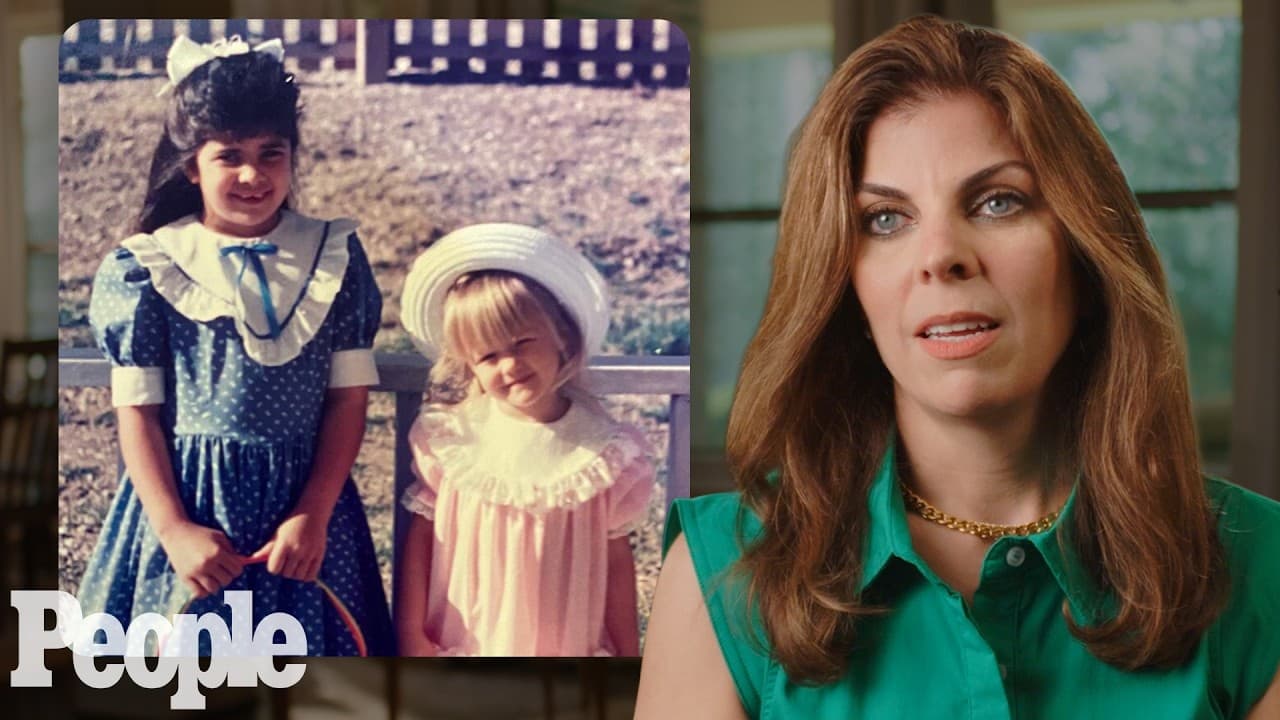
In the Objectified interview Levin referenced on-air this week, Kris drew a direct line from her grandmother to her mother to herself to her children. 'They kind of taught me,' she said, 'and then I taught my kids.' It reads like a corporate succession document disguised as a family story. The discipline of presentation. 'I can't go anywhere until I put my face on,' in her grandmother's phrasing. Became the aesthetic and commercial logic of a franchise that eventually spanned streaming, beauty, shapewear, and private equity.
MJ was also, in her own right, a businesswoman. She ran a children's clothing brand, a detail that tends to get lost beneath the scale of what her descendants built but that matters enormously as context. The commercial instinct in this family was not invented by Kris. It was inherited from a woman who understood, well before Instagram existed, that image and commerce are the same conversation.
Long-time viewers of the E! era understood her role intuitively. She was the person in the room who had seen everything, judged nothing harshly, and grounded the chaos around her. When a family's brand proposition is warmth-at-industrial-scale, you need someone in the frame who generates warmth without artifice. MJ was that person.
How the Kardashian brand encodes generational values. And what losing MJ disrupts
The Kardashian brand's core proposition. Aspirational warmth, family loyalty, and disciplined self-presentation. Was modeled on Mary Jo Shannon's example. Her death removes the living proof of concept that validated those values as authentic rather than manufactured.
The most durable brands in entertainment are not product brands. They are value brands. What consumers are actually buying when they purchase a Kim Kardashian beauty line or a Khloé activewear partnership is a belief system: that this family works hard, sticks together, and cares about how things look. In every sense of that phrase. Authenticity, or the credible appearance of it, is the underlying asset.
MJ was the living evidence that this belief system predated the cameras. You cannot fake a grandmother. You cannot hire one or brand-develop one into existence. When she appeared on Keeping Up with the Kardashians, she functioned as proof of origin. The source to which all the family's stated values could be traced. Her presence answered the cynical question ('is any of this real?') without the family ever having to articulate a defense.
That proof of origin is now gone. It doesn't mean the brand collapses. Empires don't crumble when founders die, and the Kardashians have built infrastructure far too deep for a single loss to undo. But the emotional texture of the content changes. The family's public grief will itself become content, and how they handle it will be scrutinized with the particular intensity reserved for people who have monetized their personal lives so thoroughly that grief becomes, unavoidably, a public transaction.
Kris Jenner, who has managed every significant public narrative this family has produced for nearly two decades, will manage this one too. The question is whether she can do it in a way that honors her mother rather than simply extending the brand. And whether, after years of watching every emotion get packaged for distribution, she even has a private register left to do so in.
"The most durable brands in entertainment are not product brands. They are value brands, and MJ was the living proof that the Kardashians' values predated the cameras."
Kris Jenner's succession problem now has a new dimension
Kris Jenner has been quietly managing her own succession within the Kardashian business for several years. Mary Jo Shannon's death accelerates the emotional stakes of that transition by removing the generational anchor who gave Kris's own authority its sense of inherited legitimacy.
There has been industry conversation for at least three years about what the Kardashian machine looks like when Kris Jenner eventually steps back as its chief executive. Kim has developed her own management instincts. Khloé has demonstrated a credible product-building capability. Kendall and Kylie have carved separate commercial lanes. The talent, in other words, has learned to run itself. Which is exactly what a great manager builds toward.
But succession in a family brand is never purely operational. It is also symbolic. Kris's authority derived partly from competence and partly from the fact that she was the mother. The one the whole enterprise was organized around. Her own authority, in turn, was grounded in her relationship with MJ: the sense that there was someone above Kris who had set the standards, someone to whom Kris was still accountable at some level of conscience.
That vertical is now shorter by one generation. Kris Jenner is, for the first time, the top of the family's matriarchal stack. That is a different psychological position. More exposed, more final. And it will color everything she does in the next phase of her career, both publicly and behind the scenes. Whether she processes that shift in private or uses it to inform a new chapter of the family's ongoing documentary of itself is perhaps the most interesting strategic question the Kardashian operation faces right now.
For readers tracking the full financial landscape of what this family has assembled, the business wealth profiles section of our coverage offers context on how intergenerational value transmission works in entertainment empires. And how rarely it survives the third generation intact.
Why Taylor Frankie Paul's DCFS crisis is an ABC problem as much as a personal one
The Utah Department of Children and Family Services filing for jurisdiction over Taylor Frankie Paul's custody cases. Citing observed parenting concerns. Directly threatens ABC's ability to air her Bachelorette season, since any adverse DCFS finding would become a larger story than the show itself.
Taylor Frankie Paul arrived at The Bachelorette already carrying luggage. The video of her throwing furniture. Chairs, bar stools. During an altercation with her ex Dakota Mortensen, with a child inadvertently struck in the process, existed before ABC cast her. The network made a calculation: the incident was old enough, the audience was forgiving enough, and the Secret Lives of Mormon Wives notoriety was valuable enough to absorb the risk. That calculation is now being stress-tested in real time, as TMZ reported this week.
What the DCFS filing represents is something categorically different from a viral video. A state agency seeking jurisdiction over a family court custody matter is, as TMZ's legal observers noted on air, genuinely unusual. The standard practice is for DCFS to participate in custody proceedings only at the margins, if at all. To go to a juvenile court and argue that the matter is serious enough to warrant agency oversight. That the children may face neglect or harm requiring a guardian. Is a finding of concern significant enough that it cannot be dismissed as a he-said, she-said dispute between warring exes.
ABC's timeline makes this acutely uncomfortable. The network had been internally targeting a summer air date. Specifically July. For the Paul season. That window is now either closed or closing fast. Airing the season while DCFS proceedings are active would mean running a protagonist whose fitness as a parent is literally under government adjudication. Whatever happens in the show's narrative would be immediately overwhelmed by whatever happens in court. No marketing budget resolves that conflict.
Paul's camp has pushed back hard, suggesting to TMZ that the DCFS report's leak is itself suspicious. Implying it serves the interests of her custody opponents, Dakota Mortensen and Tate. That may be true, and it may even be provable. But it doesn't change ABC's calculus. The network was already embarrassed once by the furniture video. Being embarrassed twice, by an active government investigation, while the show is on air, is an unacceptable accumulation of reputational risk.
What the DCFS jurisdiction move actually means legally. And why it's rare
A state DCFS agency seeking court jurisdiction over a private custody dispute. Rather than simply monitoring or advising. Is an uncommon escalation that signals documented, observed concern about child welfare serious enough that the agency believes standard family court oversight is insufficient.
The mechanics matter here. In ordinary custody disputes, DCFS stays outside the family court room. It might conduct a wellness check, file a report, make a recommendation. What it typically does not do is walk into court and ask to control the outcome. To hold the jurisdictional authority over where the children go and under what conditions. That step requires the agency to have documented evidence serious enough to justify the intervention, and to be willing to defend that documentation in front of a judge.
TMZ's sources described DCFS officers observing Paul's interactions with her children directly. Including, reportedly, an eight-year-old child performing caregiving tasks for younger siblings. That detail alone doesn't constitute neglect. But it becomes part of a documented pattern that, combined with other observed behaviors, apparently crossed the threshold at which the agency decided passive monitoring was no longer sufficient.
For Paul, the practical consequence is that she is now getting through not one but effectively three legal fronts simultaneously: the custody dispute with Mortensen, the custody arrangement involving her other children's father Tate, and an agency intervention that could supersede both. Her legal team faces the challenge of addressing DCFS's documented concerns while also managing the political reality that the documentation exists in a public-adjacent system that, as her camp points out, has already leaked.
The broader reality TV business model and what happens when stars become liabilities
Reality television networks accept reputational risk as a structural cost of casting volatile personalities, but DCFS-level legal jeopardy. An active government finding during production or broadcast. Crosses from acceptable risk into liability that no audience upside can offset.
Reality television has always operated on a calibrated tolerance for chaos. The genre's commercial logic depends on conflict, on the revelation of unflattering truths, on the gap between the persona a cast member projects and what the cameras catch them actually doing. A certain amount of personal crisis is not a bug; it is the product. Networks have aired seasons featuring cast members with active legal problems, estrangements, and public meltdowns. The audience frequently rewards them for it.
But there is a line. Not a moral line so much as a commercial one. That separates 'interesting mess' from 'liability.' That line is roughly where the story about the cast member's off-screen situation becomes bigger than anything the show itself can generate — see Kamri Peterson's DWTS Moment Is Bigger Than a Dream Come True. At that point, every scene in the season becomes a different viewing experience: the audience is no longer watching a story unfold, they are watching a document being constructed. The show stops being entertainment and becomes evidence.
For ABC, the calculus on Paul is now firmly in liability territory. The question the network faces with Secret Lives of Mormon Wives. Which is actively in production with her, per TMZ's reporting. Is somewhat different: that show's format accommodates mess as content in a way The Bachelorette's romantic narrative structure does not. A reality docuseries can fold a DCFS investigation into its storyline. A competition show cannot easily make the lead's custody crisis the season arc without destroying the genre premise entirely.
This is the structural tension that the latest reporting on Paul's situation keeps circling: the same quality that made her compelling television. The volatility, the conflict, the willingness to fight. Is precisely what has made her an existential risk to two separate shows simultaneously. The networks that bet on her are now holding tickets they may not be able to cash.
Craig Melvin, the Today Show breach, and what security failures cost morning television
An intruder who breached NBC's 30 Rock backstage during a live Today Show broadcast. Reaching Craig Melvin, hurling a racial slur, and lunging at him before security intervened. Exposed a structural vulnerability in morning television's open, glass-fronted Rockefeller Center footprint.
The geography of morning television is its own kind of security problem. The Today Show's footprint at 30 Rock is not a closed set: it includes a public-facing courtyard, all-glass studio walls visible from a major tourist corridor, and connective tissue to retail and office space that cannot be meaningfully sealed without shutting down a significant portion of midtown Manhattan. The security posture appropriate for that environment is, by definition, porous.
What happened on the morning of July 15. An individual getting backstage while the show was live, reaching talent, and using a racial slur before lunging at Craig Melvin. Represents a failure at multiple checkpoints simultaneously. The individual reportedly entered looking for Al Roker and encountered Melvin instead. That the breach traveled that deep into the facility before triggering a response is the detail that will animate the internal review NBC is clearly already conducting. TMZ's sources described the internal reaction in blunt terms: 'heads are going to roll.'
The incident lands with particular weight given what the network experienced earlier this year with Savannah Guthrie. A separate security-adjacent event that had already put NBC on notice that the show's openness was a vulnerability. Two incidents in close succession, with the second involving a racial attack on a Black anchor, transforms what might have been a one-off into a pattern that demands structural rather than cosmetic response.
For Melvin, who returned to the studio after the incident and continued the broadcast without alerting viewers, the moment reveals something about the professional discipline morning television demands of its anchors. And something about the particular burden carried by Black talent in spaces where their physical safety is not guaranteed. The other reporting on what public exposure costs talent is relevant context here: visibility is a currency, but it is one that exacts a toll that does not appear on any rate card.
Jerry Rice at Tahoe and what celebrity golf incidents reveal about the fame contract
Jerry Rice's pursuit of a heckling fan during the American Century Championship at Lake Tahoe illuminates the ambiguous terms of the fame contract: celebrities accept public scrutiny in exchange for public platforms, but the etiquette of golf. Where silence during a swing is a baseline courtesy regardless of who is swinging…
There is a version of this incident that is simply funny. An NFL legend, still physically capable of giving chase well into the back half of his life, sprinting after a fan who yelled 'four' at an inopportune moment during a celebrity pro-am. The TMZ panel relitigated the Zapruder film's worth of footage to determine whether the shout preceded or followed the swing's point of no return. The debate was genuinely inconclusive.
But underneath the comedy is the perennial question about what fame obligates a person to absorb. The caller from San Diego made the most coherent point in the segment: signing up for public life means accepting attention, not accepting disrespect. Golf etiquette is not a celebrity-specific convention. The rule against making noise during a swing exists because the sport demands concentration, and the rule applies whether the golfer is a Hall of Famer or a 22 handicapper on a municipal course.
What celebrity pro-am events actually sell. To broadcasters, to sponsors, to the crowds at Tahoe. Is the fantasy of proximity. Fans come to stand close to people they have watched perform at the highest level, to see them in a relaxed setting, to feel, briefly, like they inhabit the same world. That fantasy has a cost, which is that the celebrities are performing their approachability rather than living it. When the performance breaks. When Rice breaks into a run. The fantasy collapses and everyone remembers that the terms were never really symmetrical. You can follow sports wealth profiles for more on how athletes like Rice manage the business of their post-playing public lives.
Gleb Savchenko's custody battle and the international child-custody crisis in celebrity…
Dancing with the Stars pro Gleb Savchenko's custody dispute with his ex-wife Elena has expanded to include allegations of unauthorized international travel. Including a trip to Russia. Revealing how international custody arrangements break down when one parent retains deep ties to a country outside U.S. Court jurisdiction.
The Savchenko custody case has the specific texture of a dispute that was always going to become intractable: two Russian-born parents, children split across multiple countries, ongoing conflict in one of the countries the children have been taken to, and no shared geography to anchor the legal conversation. When both parties operate across international borders and neither feels bound by the practical convenience of staying in one jurisdiction, family courts run out of tools quickly.
The WhatsApp exchange Gleb's lawyers obtained. Pressing Elena directly about whether she had authorization to take their younger daughter Zlata to Moscow for a family funeral. Illustrates the documentary problem at the heart of international custody arrangements. Courts typically require written consent for cross-border travel precisely because verbal agreements are unverifiable. Elena's failure to directly answer the question in writing, in a text thread that Gleb's lawyers were actively reading, is either a communication failure or a intentional evasion. His legal team will argue the latter.
The Russia dimension adds a layer that goes beyond standard custody friction. Gleb's court filings reportedly cited concern for his daughter's safety given the ongoing conflict, and he documented a prior incident in which the children took a twenty-hour bus trip to Russia, had no phone access, and he did not learn of the journey until ten days after the fact. When one of the daughters called him from her grandmother's landline — see King Charles Called Him 'Dear Cousin.' What That Word Costs in Royal Diplomacy.. That is not a co-parenting disagreement. That is a communication blackout in a war zone, and it will carry significant weight in any hearing.
The older daughter Olivia, now living with Gleb in the United States after previously being based in Hong Kong with Elena, is reportedly around fifteen. Old enough that her own stated preference about where she lives will be given serious weight by any judge handling the case. Courts in both the U.S. And most comparable jurisdictions treat the stated wishes of a teenager as a meaningful, if not determinative, factor. The fact that Olivia apparently chose her father over her current situation speaks to the strength of Gleb's position on at least that front of a dispute that has grown considerably more complicated than it was when it began — see Dolly Parton Chose Her Funeral Song. It Wasn't the One You'd Expect..