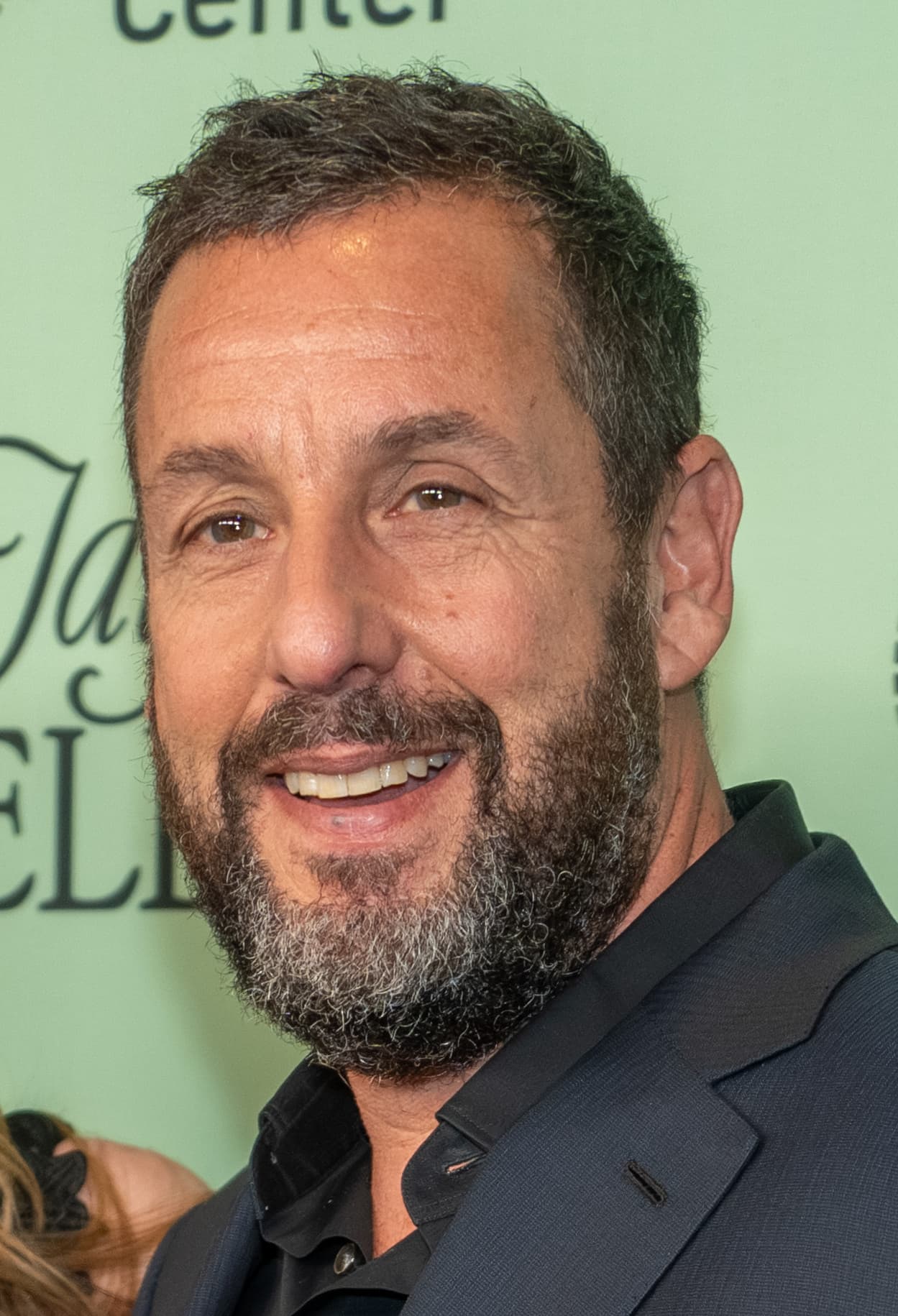
Matt Damon at 50-Something: The Intentional Architecture of a Second Act
A People sit-down about The Odyssey reveals something more interesting than a hard shoot: Damon has rebuilt every system in his professional life. Ownership, collaboration, even his diet. And he's done it quietly, in plain sight.
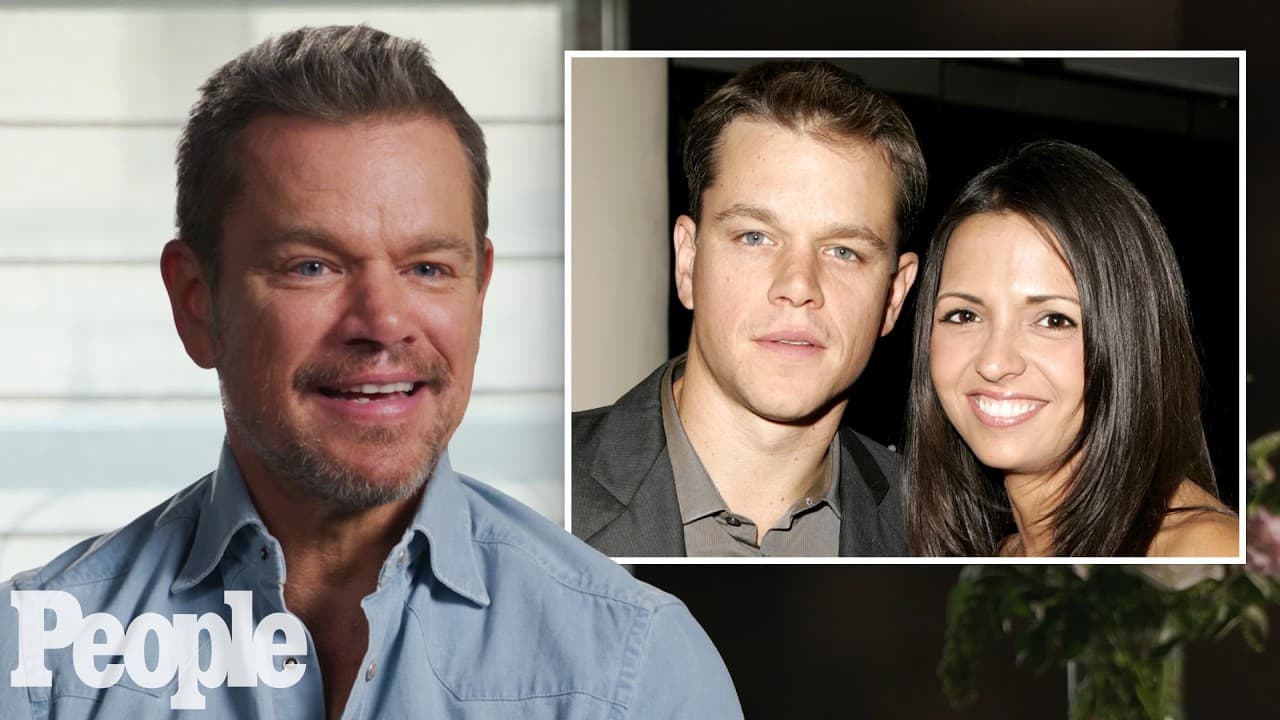
The pasta is a small story, but it says something. Matt Damon, deep in a months-long physical transformation for Christopher Nolan's The Odyssey, sat down with his children at a restaurant, promised them pasta, then flagged the waiter and ordered a steak instead. The kids called him on it. He took a bite of each of their plates and considered the debt paid. That negotiation. Commitment to a goal, a family claim on his attention, a compromise that satisfied neither side fully. Turns out to be the organizing logic of his life right now.
In a sit-down with People published this week, Damon ranged across the Nolan shoot, his four daughters, the production company he runs with Ben Affleck and his wife Luciana, and the specific peace he says he's found after crossing fifty. The interview was promotional. The architecture underneath it was not.
What emerges, if you read the session as a document rather than a press junket, is a portrait of a movie star who has spent the last several years engineering his career so that the work he takes is the work he controls. And who has quietly recruited his oldest friendship and his marriage into the same structure. That is a more interesting story than any single film.
The Odyssey shoot was more expedition than film production
Christopher Nolan's The Odyssey was shot across multiple countries in IMAX. A format never previously used by Nolan at this scale. With cast and crew describing conditions that were physically demanding at every location, from winter Morocco to a water tank at Universal Studios.
Every location, Damon told People, came with its own specific punishment. The company kept telling itself the next stop would be easier. Italy, then Greece, then Iceland. And every stop proved them wrong in a new way. The shoot ended at Universal's water tank, with what Damon described as twin jet engines from a 737 blasting water at the cast. Nobody, by that point, was predicting relief.
The Trojan horse sequence crystallized what the production was. Days before shooting it, Damon asked Nolan how he planned to stage it. Nolan said he didn't know yet. That answer, Damon made clear, is not a failure of preparation. It is Nolan's method. Gather the elements, assemble the right people in the right space, and let the scene find itself. The horse became a literal enactment of that philosophy: Nolan, cinematographer Hoyte van Hoytema, Damon, and the actors playing Odysseus's crew all climbed inside and figured it out together.
Jon Bernthal ended up half-submerged in cold water. The warm water planned for the sequence never materialized, because it was winter in Morocco. Damon's memory of Bernthal pressing his hands together to stop shivering long enough to deliver a line, refusing to call cut, is specific and vivid in the way that only real discomfort produces. Bernthal, Damon said, set a tone for the entire cast: when it's your turn in the cold water, you don't complain. You push until the director says stop.
That ethos. Egalitarian suffering as creative bond. Is not an accident of Nolan's productions. It is a feature of them. And Damon, who has worked at this scale before, read it clearly: the shared difficulty was the point — see Gwyneth Paltrow Had No Idea. That Was the Point.. 'It felt more like an expedition than a movie,' he said, and meant it as the highest compliment.
Why Matt Damon will never bulk up for a role again
Matt Damon says he will no longer gain significant weight for a movie role, a line he has drawn after years of dramatic body transformations. For The Odyssey he focused instead on becoming highly physically fit through strict dietary changes, including cutting gluten.
The physical preparation for The Odyssey was extreme by any standard. A complete lifestyle overhaul, dietary discipline that included cutting gluten, the kind of regimen that requires treating every meal as a variable to be controlled. Hence the pasta negotiation. Hence the steak.
But Damon was careful to separate that kind of effort. Getting fit. From the other kind: gaining weight. He said plainly that putting on mass for a part is something he was willing to do earlier in his career and will not do again. The implication is medical as much as personal. Past a certain age, that particular sacrifice stops being a professional tool and starts being a health risk.
This is not vanity talking. It is a performer recalibrating which costs he's willing to absorb. The calculus has shifted. The movies he's choosing now, the company he's building, the life he's describing. And the body is the most literal expression of that shift. You stop paying prices that no longer make sense.
"Damon has rebuilt every system in his professional life around ownership. And he's done it quietly, in plain sight."
What Artist Equity actually is and why it matters at this stage
Artist Equity is the production company Matt Damon and Ben Affleck founded to make films on their own terms, with Damon describing it as the vehicle for doing 'really good movies with friends'. Prioritizing creative control and collaboration over scale or studio dependency.
The company's logic, as Damon explained it, is not primarily about profit extraction. Though the economics matter. It's about getting to the other side of fifty with enough structural power to say no. To pick projects because they're worth doing. To put friends in positions where they can do the work they actually want to do, whether or not Damon or Affleck are in front of the camera for any given one.
That framing matters because it redefines what success looks like for Damon at this stage. He's not chasing another franchise. He's not trying to prove something to a generation of filmgoers who came up after Good Will Hunting. The goal, as he described it, is intentionality. A word he used repeatedly, and which is doing real work in his thinking right now. You can track Damon's career arc across our film wealth profiles and see the turn clearly: the last five years have been about consolidation and ownership, not accumulation.
The company also functions as a creative infrastructure for the Damon-Affleck friendship, which is something that gets underreported. These two men have known each other since they were teenagers taking buses from Boston to New York to audition for things like the Mickey Mouse Club. They were, Damon said, the only people who believed in each other. That kind of origin story either burns out or becomes the foundation for something built to last. Artist Equity is the bet that it's the latter.
Luciana Damon's role in the operation goes deeper than most people realize
Luciana Damon has been a creative collaborator on Matt Damon's work for over two decades. Reading scripts, giving notes on cuts. And is now an active film producer, most recently on a project directed by Ben Affleck while Matt was abroad shooting The Odyssey.
Twenty-three years of notes. That's the number Damon dropped almost in passing, describing how long Luciana has been reading his material and giving him feedback. Not as a supportive spouse offering encouragement, but as a working creative partner whose opinion he has genuinely relied on. That is a different thing entirely.
While Damon was in Morocco and Iceland and Greece, Luciana was in production on a film Affleck directed. Affleck came out of that experience saying he wouldn't direct another movie without her producing it. That is a serious professional endorsement from a man who has been directing films since Gone Baby Gone. And it means the Damon-Affleck creative axis now runs through Luciana as well.
The domestic and professional have been integrated so thoroughly that separating them becomes almost beside the point. Damon described the foundation of their relationship. Trust, respect, room to grow. In terms that mapped directly onto his description of the Artist Equity philosophy. Sturdy enough to handle change. Built to last rather than built to impress. Those are production-company values and marriage values at the same time.
What the Affleck-Damon origin story tells us about Artist Equity's staying power
Matt Damon and Ben Affleck began supporting each other's careers as teenagers in Boston, making them unusually well-tested creative partners by Hollywood standards. That four-decade foundation is the reason Artist Equity is structured around collaboration rather than star power.
Most production companies built around two names eventually run into the problem that the two names want different things. One goes cold, one goes hot, the power balance shifts, the thing dissolves. The Damon-Affleck partnership has already survived multiple versions of that test. The Good Will Hunting peak, the mid-2000s critical stretch when both were being written off, the separate rehabilitations, the individual franchise runs.
What Damon described in this interview is a friendship that has never actually been about the work in isolation. It's been about two people who vouched for each other when nobody else would, and who have organized their professional lives to keep that vouchsafing going. 'We bolstered each other when we were young,' he said, and the language is exact. Bolstered. Not just supported. Built that way reinforced.
The business implication is real. A company built on that kind of foundation is less exposed to the ego volatility that kills most creative partnerships. See also: our analysis of how Damon is leading again on The Odyssey set, which covers the on-set dimension of the same dynamic.
How Damon's approach to fatherhood became a management philosophy
Matt Damon has four daughters and maintains a non-negotiable family dinner every night, a routine he describes as requiring active attention to prevent it from becoming empty habit. A presence-over-presence distinction that also maps onto how he talks about his creative choices.
The family dinner is the rule. It has always been the rule. But one of his daughters called it out: they'd been sitting at the table without actually talking, phones and work bleeding into the ritual until the ritual was just bodies in chairs. That observation, from a child, prompted a family-wide conversation about presence. What it actually means versus what it looks like.
Damon raised this not as a charming anecdote but as an ongoing project. He and Luciana are actively thinking about it. Two of the four daughters are out of the house; the remaining time with the younger two is finite and accelerating. He used the word 'intentional' again. Same word he used for his career choices. Same word he used for his diet. It is clearly the organizing principle of his life at this point.
There is also something specifically interesting about a man who grew up with one brother now raising four daughters. He talked about it with genuine wonder. The sophistication, the speed, the way a two-year-old girl had him 'totally wrapped around her finger' before he understood what was happening. He described it as a 'whole new world' opening up in his thirties. What's notable is that he doesn't treat it as a difficulty to manage. He treats it as an education. That posture. Curiosity rather than control. Shows up in how he works, too.
The competitive peace Damon says he's found after 50, and whether it's real
Matt Damon says he no longer feels competitive with other actors when they land roles, describing a shift from wanting parts he missed out on to feeling genuinely happy for performers doing good work. A posture he frames as a product of age, ownership, and clarity about what he wants.
Take this claim seriously, because the conditions that would make it true are actually in place. When you own your production infrastructure, when you've stopped needing to prove yourself to a studio, when your oldest friendship is also your business partner and your wife is your creative collaborator. You have materially reduced your dependency on external validation. The competitive anxiety that drives younger performers is, at its root, scarcity anxiety. Damon has engineered his way out of scarcity.
That doesn't mean the peace is permanent or unqualified. The Odyssey is a Christopher Nolan film, which means it will be evaluated against the full weight of Nolan's legacy and the full machinery of awards season. Damon will care about that. But caring about the work is different from caring about the race, and the distinction is real.
His career benchmark, offered almost offhandedly, was Francis Ford Coppola giving him The Rainmaker at twenty-five. That one job changed the trajectory. Now he wants to be the person who creates those moments for others. Through Artist Equity, through the infrastructure he's building with Affleck and Luciana. The ambition hasn't gone anywhere. It has just changed address.
Water.org and the third pillar of Damon's life that the industry ignores
Matt Damon co-founded Water.org, a nonprofit focused on global access to clean water and sanitation, which he describes as one of the three central pillars of his life alongside work and family. A commitment that predates and outlasts any single film project.
Work, family, Water.org. That's his list. Three things. Most celebrity philanthropy is a fourth or fifth item, a reputational accessory. Damon put his nonprofit in the same breath as his children and his career, which tells you where it sits in his actual priority stack.
The organization has operated for well over a decade and works on a problem. Access to clean water. That doesn't generate glamorous press cycles. It is grinding, infrastructure-level work in parts of the world that most entertainment coverage ignores. For a full picture of where Damon's wealth and attention flow, the Atlas gives context on how performers at his level typically divide philanthropic commitments against income streams. Damon's case is unusual in how central the nonprofit is to his self-description.
What Water.org also does, in the context of this interview, is serve as proof that the 'intentionality' Damon keeps invoking is not just a talking point for press tours. The organization has a cost. Time, energy, the opportunity cost of attention. He's been paying it for years, without it doing much for his box-office profile. That's the tell.
What this moment means for Damon's position in the current Hollywood landscape
Matt Damon enters the The Odyssey release cycle as a producer-actor with an ownership stake in his own creative infrastructure. A position that gives him more durable industry power than a star who depends solely on performance fees and studio favor.
The Nolan film is the most commercially significant project Damon has been attached to in years. IMAX, global scale, the full weight of Nolan's release machinery behind it — see Jim Thornton's Suspension From Wheel of Fortune Exposes the Machinery Behind a TV Institution. But Damon's actual position in Hollywood right now is not defined by the film. It's defined by what he's built around the film.
Artist Equity changes the calculus of every project he touches. He and Affleck are not just talent available for hire. They are a development and production entity with its own slate, its own relationships, its own capacity to originate material and attach it to studios or streamers from a position of use. Our latest reporting on the film business tracks how that model. Performer-owned production. Has been gaining ground across the industry, and Damon's version of it is among the more thoughtfully constructed.
The comparison point isn't other actors. It's other owner-operators. What Damon is building, with Affleck and Luciana and the company they've assembled, is a structure designed to outlast any single box-office result. And to keep producing work that he finds worth doing well past the age when studios would otherwise start offering him smaller parts and longer waits. The pasta can wait. The steak is the point.